The Lotus Flower
A Symbol of Transformation, Harmony, and Abundance
Article · 6 min read · ·
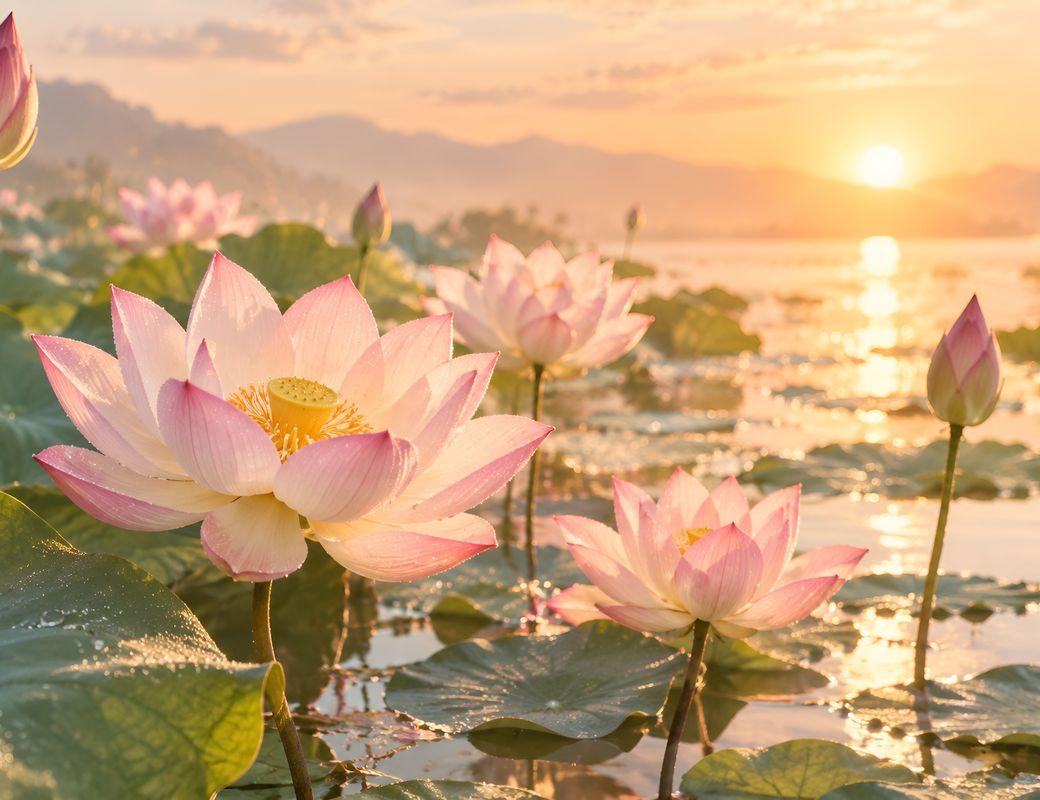
There are flowers that simply decorate a space. And then there are flowers that have become symbols of entire cultures over thousands of years. The lotus belongs to the latter.
Its uniqueness lies in the way it grows: its roots remain in dark mud, its stem rises through the water, and the flower opens above the surface, remaining clean and luminous. This is why the lotus has become a symbol of rebirth, purification, spiritual awakening, inner strength, and the ability to bloom even after difficult periods.
Across different cultures, the lotus has been given sacred meaning and its image has been used in temples, art, meditation, and rituals. Today, we can bring this symbolism into our own homes - as a beautiful decorative element and, at the same time, as a personal reminder of our own journey.
It is important to remember that the magical properties attributed to the lotus belong to cultural and esoteric traditions and are not scientifically proven ways to change circumstances. Its power can instead be understood primarily as a symbol, a focus for attention, and a tool for working with intention.
The Lotus in Ancient Egypt
In Ancient Egypt, the lotus was closely connected with solar symbolism, birth, and rebirth. The flower, which opens in the morning and closes in the evening, reminded people of the daily cycle of the Sun and the eternal renewal of life.
The blue lotus held particular significance and appears frequently in Egyptian art and religious symbolism. Its image was associated with renewal, life, and the transition from one state to another.
Today, we can use the Egyptian symbolism of the lotus as a reminder of new beginnings. Its image can become part of a morning practice: a few moments of stillness, a cup of tea, and a question to yourself:
“What new thing do I want to create today?”
The Lotus in Indian Tradition
In India, the lotus is one of the most important spiritual symbols. It is associated with purity, beauty, wisdom, and the awakening of consciousness.
The lotus is often depicted together with Lakshmi, the goddess of abundance, prosperity, and well-being. It also holds an important place in representations of other deities and in the spiritual tradition of yoga.
The opening of the flower has become a beautiful metaphor for human development: petal by petal, consciousness opens itself to new experiences.
That is why the lotus can be a wonderful symbol for moments when you are beginning a new chapter, learning something new, developing a talent, or daring to step beyond what is familiar.
The Lotus in Buddhism
In Buddhism, the lotus symbolizes purity, enlightenment, and spiritual awakening.
Its image is especially powerful because the flower does not deny the existence of the mud from which it grows. Instead, it passes through it on its way toward the light.
This can be understood as a reminder that difficult experiences do not necessarily determine our future.
We cannot always change what has already happened to us. But we can choose what will grow from that experience.
The Lotus in Chinese Culture and Feng Shui
In Chinese culture, the lotus is also associated with purity, harmony, integrity, and spiritual beauty. Its image frequently appears in art and decorative compositions.
In Feng Shui, the lotus is used as a symbol of harmony, inner peace, purity, and favorable development. It can be seen as an image of balance: its roots are in the earth, its stem is in the water, while the flower reaches toward the light.
That is why an image of the lotus can be especially appropriate in areas of your home where you want to create an atmosphere of peace, clarity, and growth.
Where to Place a Lotus in Your Home?
Living Room
In the living room, the lotus can symbolize overall harmony and a welcoming atmosphere. Choose a painting, poster, or decorative figure that you genuinely enjoy.
There is no need to use many symbols. A single beautiful lotus can be enough to create a meaningful focal point.
Bedroom
For the bedroom, gentle shades such as white, pink, or light blue can work beautifully. Symbolically, they can support themes of peace, love, and emotional balance.
Meditation Space
This is perhaps the most natural place for a lotus. You can position an image of the flower in front of your meditation space and use it as a point of concentration.
During your practice, simply observe the image, steady your breathing, and gently bring your attention back to your intention.
Southeast Sector
In popular Feng Shui tradition, the southeast is associated with wealth and prosperity.
Therefore, a lotus placed in this sector can be used as a symbol of growth, abundance, and the unfolding of your potential. It can look especially beautiful alongside green plants, wooden elements, and natural colors.
At the same time, there is no need to turn this corner into a collection of “money talismans.” What matters more is that the space is clean, pleasant, and creates positive associations for you.
Entryway
A lotus near the entrance can symbolically represent the transition from the outside world into your personal space.
It is a beautiful place for a light-colored image associated with purification, peace, and new beginnings.
Choose Your Lotus Color
Color can give the symbol a more personal meaning.
White - purity, peace, clarity, and inner balance.
Pink - love, tenderness, and harmony.
Red - passion, vitality, and emotional energy.
Blue - wisdom, intuition, and spiritual exploration.
Purple - transformation and inner development.
Gold - success, solar energy, and prosperity.
The meanings of colors can vary depending on the particular culture and tradition, so the most important thing is what that color means to you personally.
A Small “Lotus Unfolding” Practice
Try this simple daily practice.
Sit in front of an image of a lotus. Take a few slow breaths in and out. Look at the flower and imagine its journey: from its dark roots toward the light.
Then ask yourself:
“What do I want to allow myself to unfold?”
It could be a talent, a new idea, a relationship, a financial opportunity, courage, or simply more peace.
Write down your answer and choose one small action you can take today.
In this way, the lotus becomes more than a beautiful symbol. It becomes a reminder that intention needs action.
The Lotus as a Symbol of a New Chapter
When a new period begins in your life, you can create a small personal ritual.
Clear your space, place an image of the lotus in front of you, light a candle, and spend a few quiet moments in silence. Think about what you want to leave behind and what you want to grow in your life.
Write down two things:
“I release…”
and
“I allow myself to develop…”
Then formulate one concrete step that will support your new intention.
A ritual does not change your life by itself. But it can help you pause, listen to yourself, and consciously choose your direction.
Bloom in Your Own Time
Perhaps the most beautiful message of the lotus is that it does not try to be anything else.
Its roots remain in the darkness. Its stem passes through the water. And only then does the flower appear.
Our own journey is not always made of easy and beautiful moments either. Sometimes we find ourselves in our own “murky waters” - experiencing change, doubt, loss, or uncertainty.
But that does not mean we are not growing.
Let the lotus in your home remind you that even from darkness, you can rise toward the light. You do not have to bloom according to someone else’s schedule. Everyone has their own time, their own path, and their own season of flowering.