Apparently the Bees Need to Know
Because sometimes you need to say the damn thing out loud.
Article · 5 min read · ·
I stumbled across an old folk practice called telling the bees, and the first time I read about it I thought it meant people simply talked to their bees. Which didn’t seem particularly remarkable. I talk to dogs, plants, malfunctioning appliances and occasionally myself when I’m trying to remember why the hell I walked into a room.
But no. This was different.
In old beekeeping traditions, when something important happened in the household, somebody actually went outside and told the bees. A death was especially important, but marriages, births and other major changes could be announced too. Depending on the tradition, the hive might be gently tapped before the news was delivered. Hives could be draped in mourning cloth after a death, decorated for a wedding, and sometimes the bees even got a little wedding cake.
That last one stopped me.
Somewhere, hundreds of years ago, somebody was cleaning up after a wedding, looked at the last piece of cake and thought, Shit. We haven’t given any to the bees.
Apparently you did not want them hearing about the marriage from another hive.
The old beliefs around this could get pretty serious. Bees weren’t merely hanging around making honey while everybody else got on with life. They were part of the household, and in some traditions leaving them out of important family news was considered bad luck. There were even stories that neglected bees might stop producing honey, leave or die.
Naturally, I immediately started imagining what would happen if I had a hive.
I’d begin respectfully. Something important would happen and I’d walk outside with my coffee, approach the hive and say, “Morning, girls. We have news.”
That would probably last about three days.
By the following week I’d be outside saying, “Okay, remember what I told you Tuesday? Well, you’re not going to believe what happened next.”
A few bees would buzz around.
“I KNOW.”
At this point I’m no longer practicing an old folk tradition. I’m gossiping with insects.
Eventually Jack would notice me sitting outside having a conversation with several thousand bees. He’d look at me, look at the hive and just keep walking.
After thirty-five years, there are probably things you simply decide you don’t need explained.
But the more I thought about telling the bees, the more I realized the funny part wasn’t actually the part that stayed with me.
It was the telling.
These people didn’t just experience something enormous and immediately go back to whatever needed doing next. Something changed. Someone arrived. Someone left. Something ended. Something began.
So they stopped. They walked outside. And they said it out loud.
That feels surprisingly powerful to me because I’m terrible at that part.
I can pray for something for weeks or months, finally have it happen, say “Thank you, God,” and approximately twelve minutes later I’m worrying about the next thing. Good news arrives and before I’ve even let it sink in, my brain has already opened another tab.
Apparently I have forty-seven running at all times.
Maybe those old women knew something about marking a moment. Not because the bees necessarily needed the information, but because maybe they needed to stop long enough to acknowledge that life had just changed.
And that is a practice I could actually use.
I don’t even need a beehive.
When something I’ve been praying about finally comes through, I can go outside. No phone. No immediately texting six people. No racing ahead to the next problem. Just stand somewhere alive for five damn minutes and acknowledge what happened.
Thank you.
When something ends, I can do the same thing.
This is over.
When somebody I love dies, maybe there’s something meaningful about taking their name outside and saying it where the birds, trees, wind and whatever else God created are carrying on with their ordinary day.
I miss you.
When something new begins:
I’m ready.
And when something wonderful happens:
Look what happened.
Call it prayer. Call it mindfulness. Call it ritual. Call it talking to bees if that makes it less serious. I don’t particularly care what category it belongs in.
I like the idea of giving important moments somewhere to land.
We spend so much time inside our own heads that sometimes I think we forget what happens when we physically step outside, feel the air, notice what’s alive around us and actually speak.
There’s something different about hearing your own voice say the thing your mind has been carrying.
Maybe that’s why rituals have survived as long as humans have. They give our thoughts somewhere to go.
And maybe telling the bees did something else too. It reminded people that their lives weren’t happening in isolation. The garden kept growing. The seasons kept changing. Bees kept leaving the hive every morning and returning again. Life continued around grief, celebration, uncertainty and change.
I find something deeply comforting about that.
So I’m stealing this one.
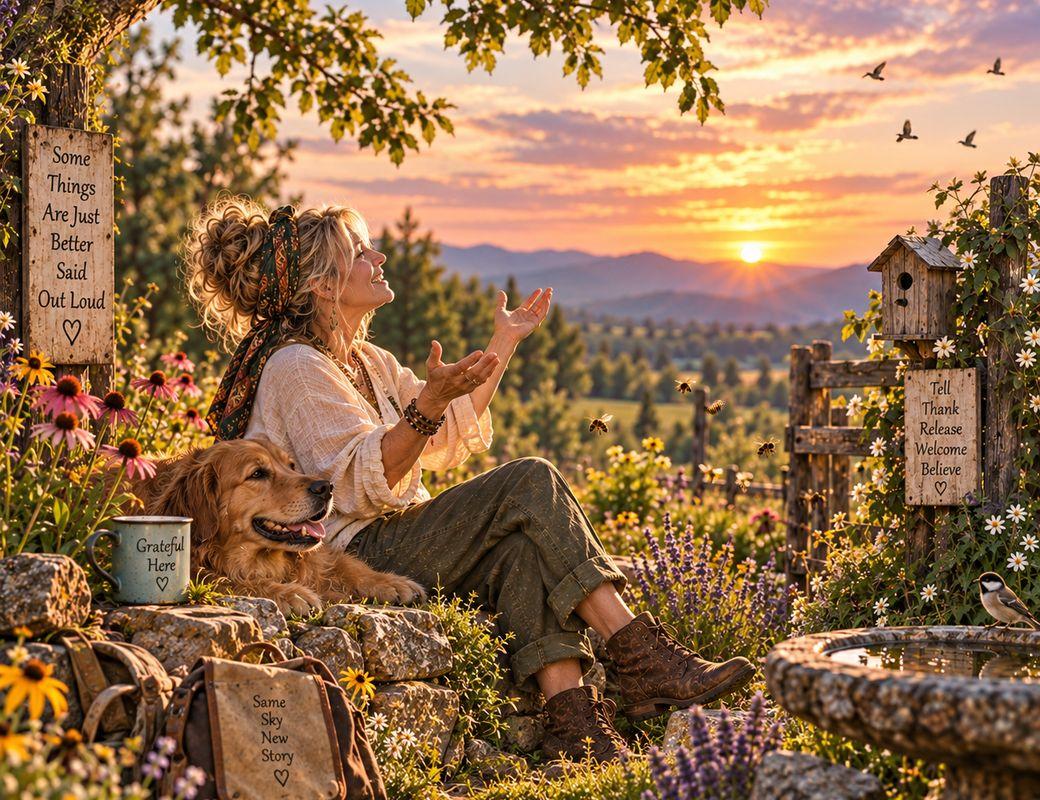
I may not have a hive, but I have a yard. I have flowers. I have trees. I have plenty of bees wandering through when the weather is warm.
The next time something important happens, I think I’ll go outside. I’ll leave my phone inside, take my coffee, sit down and actually give the moment the attention it deserves.
If it’s something I’ve prayed for, I’ll say thank you.
If something has ended, I’ll acknowledge that too.
If I’m stepping into something new, maybe I’ll say what I’m hoping for before I immediately start worrying about how it’s all going to work.
And if a bee happens to wander over while I’m doing it?
Well, obviously she’s getting the whole story.
Because maybe telling the bees was never really about whether the bees understood what we were saying.
Maybe every once in a while, we need to hear ourselves say it.
And if there’s a tiny winged witness sitting on a flower nearby?
Even better.
Girl, you are NOT going to believe this.
Comments