☯ Yin and Yang
The symbol that reveals how life is structured
Article · 2 min read · ·
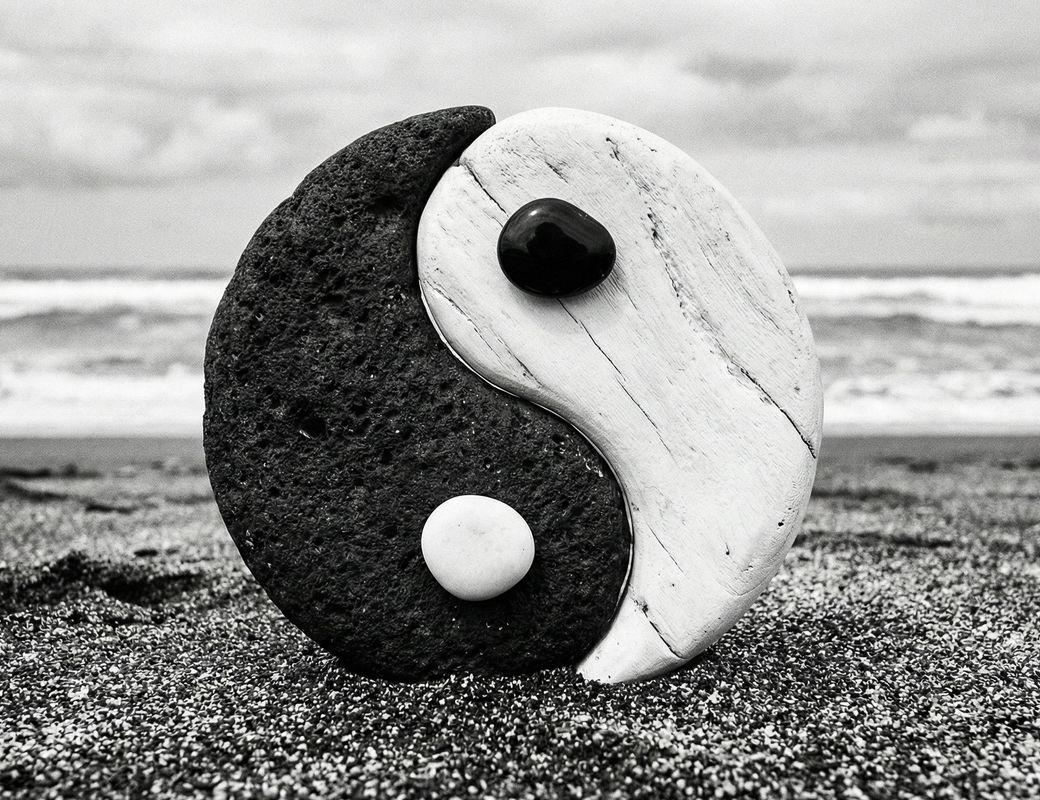
The Yin–Yang symbol is one of the most universally recognized images in the world.
It is often seen as decorative or abstract philosophy, yet in essence it expresses a fundamental law of life, energy, and human nature.
Yin and Yang are not opposing forces locked in conflict. They are complementary principles that exist only through their relationship with one another.
The origin of the symbol
The concept of Yin and Yang originates in ancient Chinese philosophy and Taoist thought.
It emerged from close observation of nature: the cycle of day and night, rest and activity, growth and decline. The dividing line between black and white is fluid rather than rigid.
This reflects a key idea: life is never static — it is a continuous process of transformation.
Yin and Yang as energetic qualities
Yin is associated with: stillness, depth, receptivity, intuition, sensitivity, the inner world.
Yang is associated with: movement, action, expression, logic, initiative, the outer world.
Neither principle is superior. Imbalance arises not from Yin or Yang themselves, but from excess, repression, or loss of rhythm between them.
The meaning of the dots within the symbol
The small white dot within the black field, and the black dot within the white field, are essential elements of the symbol.
They represent the understanding that:
- within activity, there is always the seed of rest
- within stillness, the impulse toward action is born
- no state exists in absolute purity
This expresses a profound truth: each force contains the potential of its opposite.
Yin and Yang in inner psychology
Within the human psyche, Yin and Yang manifest as the balance between:
- feeling and doing
- intuition and reason
- rest and effort
- inner awareness and external engagement
When one principle is consistently ignored or suppressed, a person may experience exhaustion, inner conflict, or emotional disconnection.
True balance is not a fixed proportion, but the ability to sense what is needed in a given moment.
Yin and Yang in everyday life
Yin is the capacity to pause, listen inward, and restore energy. Yang is the ability to act, express oneself, and shape reality.
Harmony appears when a person:
- does not remain stuck in passivity
- and does not live in constant overexertion
The essence of the Yin–Yang symbol
Yin and Yang do not symbolize a struggle between light and darkness.
They illustrate the cooperation of opposites.
Balance is not stagnation. It is a living, adaptive equilibrium.
☯ When Yin and Yang remain in dialogue, life flows with clarity and integrity.
Responses (1)
More from the Magazine

Paws, Hooves, Fins & Furry Energy 🐙💕
How Animals Protect Your Aura & Heal Your Soul.

The Difference Between Incense and Smudge
Understand the distinction between everyday aromatic incense and culturally specific smoke-cleansing

The Reluctant Kitchen Witch
Five-minute rituals, everyday ingredients, and zero recipes, for those who would rather never cook