Guarding the Threshold
The History of Doorway Charms, Protective Herbs, and Seasonal Wreaths
Article · 20 min read · ·
A doorway is just that: a barrier of wood, stone, or metal between two spaces. Yet, for centuries, the concept of a doorway has been viewed as something more significant. To put it more simply, the doorway is where the safe, familiar environment of home meets the unknown outside world.
You can still see these traditions in practice today in old houses, churches, barns, and all manner of buildings. These doorways also act as a link to our lives today, perhaps more than we even realize. Take the wreath we place on our front door in autumn, the evergreens we place around the house at Christmas, or even the small bunch of herbs we hang near a door. While these traditions may not have the same roots, they nevertheless demonstrate our desire to ascribe meaning to the place where the outside world meets the home.
For us folk witches today, this is a chance to explore the links between folklore, architecture, nature, and the meaning of protection in our own traditions.
The Threshold: A Place Between Two Worlds
A doorway is both an entrance and a boundary. It creates a separation between our familiar home environment and the outside world.
In anthropology, the concept of “liminality” refers to a transitional state or “in-between” position or identity. It was formulated by the anthropologists Arnold van Gennep and Victor Turner. A doorway is the perfect example of this concept. It is a place where we are in one space, but preparing to enter another.
Historically, in European folklore, doorways were viewed as weak points through which negative supernatural influences could enter the home. According to Historic England, protective marks were often placed near doorways, windows, and fireplaces. In other words, they were considered important places for protecting the house from supernatural dangers [1].
This makes perfect sense. The home is a place of comfort and familiarity. Outside of this safe place is the wider world, something which we can’t always control. Placing symbols or objects in places like this was a way of creating a sense of protection against perceived dangers, both physical and spiritual.
Witches’ Marks: Protection Carved into the Home
One of the most interesting examples of this type of protection in the home is the apotropaic mark, also known as a witch's mark. Apotropaic is a Greek term meaning to turn away, or avert evil. These markings have been found on historic buildings all over England, including medieval churches, barns, houses, and caves.
A lot of them were carved near doorways, windows, fireplaces, and other openings in buildings. Ritual markings are a common feature of buildings in periods when belief in witchcraft and supernatural danger was widespread, particularly during the 16th and early 19th centuries, according to Historic England [1].
The Daisy Wheel or Hexafoil
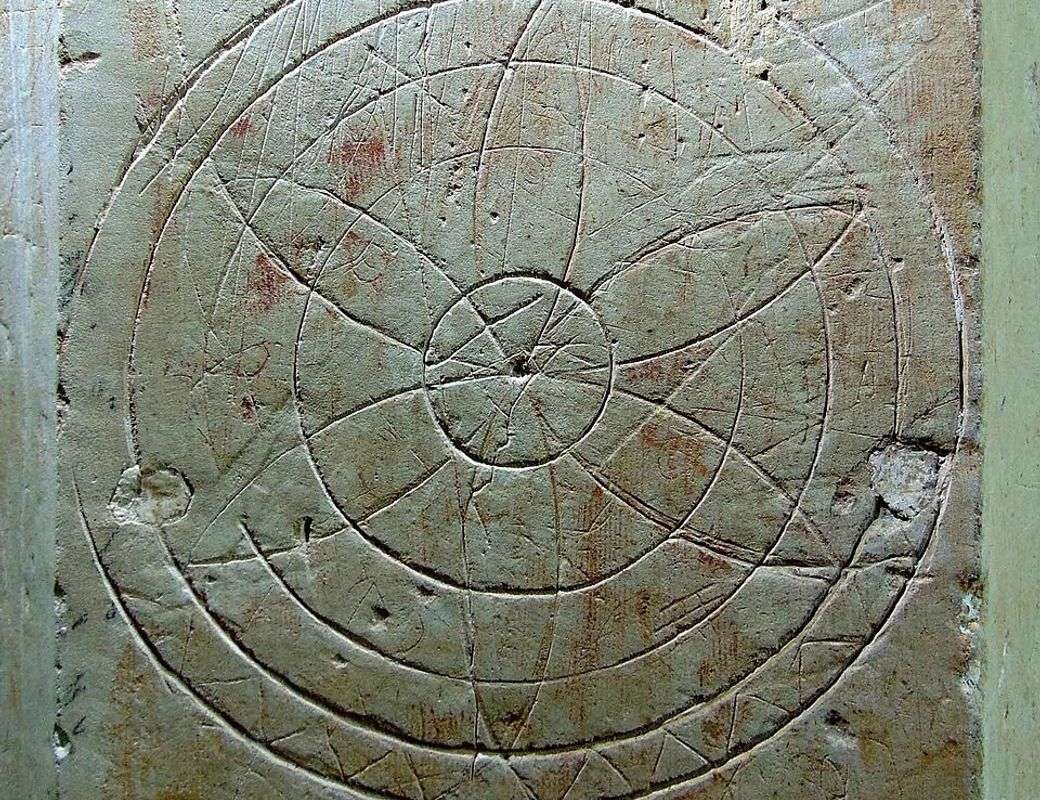
A very familiar marking to most people is the hexafoil or the daisy wheel.
Generally, it is a symbol composed of six overlapping, petal-shaped arcs in a circle, and the marks were often made with a compass or similar instrument, creating intricate geometric designs scratched onto wood, stone, or plaster. Hexafoils have been found in churches, barns, and in private homes throughout England [1]. Many people believe that the geometric design was meant to confuse or trap a harmful supernatural force. The true meaning behind the hexafoil is up for debate, though. There is some thought that some of the marks were not used for magical purposes, but made as decoration, or even as an exercise in geometry. Historic England points out that it is important to consider the symbol's location and context to understand its meaning [1]. But we can only ask ourselves: if so many before us adopted a mark like this at their threshold, including many important structures, then why, and what is its significance? We can assume it was of importance.
Other Protective Symbols
In addition to hexafoils, other markings included pentangles, overlapping letters, and other designs that may be related to Christian devotional language. Some of the letter-like symbols may refer to the Virgin Mary, although their meanings remain in dispute. In fact, according to Historic England, some of the supposed symbols of Mary and other protective marks are difficult to distinguish from regular marks left by builders or other decorative markings [3]. This is important to remember, as history was not always as neat as we might like. A household might include elements of Christian blessing, magical protection, and folk superstitions all at once. These things were just a part of life.
Witch Bottles: The Strange Objects Hidden Inside Homes
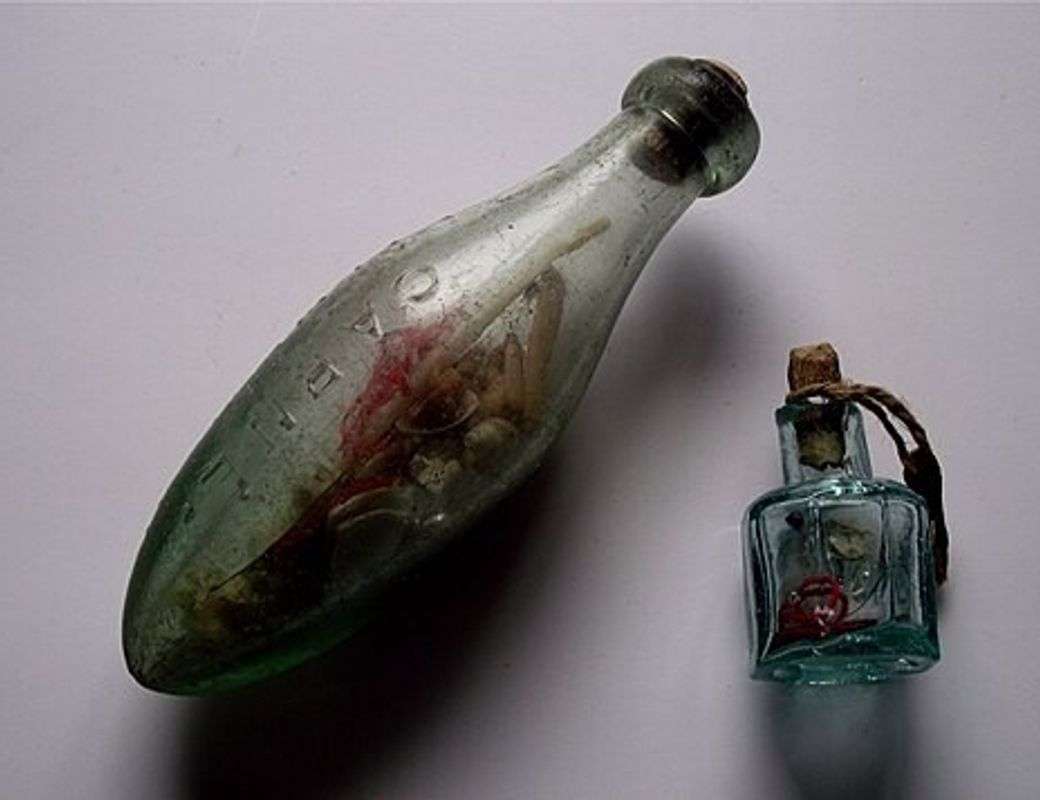
Another type of protective object was hidden beneath the floors, in the walls, or near the fireplaces of many homes. These strange objects were known as witch bottles. The use of witch bottles is very well documented in England, particularly from the 17th century onward. These bottles were often filled with things like urine, pins, nails, or thorns, and were used in rituals to counteract suspected witchcraft. The bottles were part of a belief in sympathetic magic, in which an object associated with someone would create a link between the user and that person. English Heritage points out that over 130 examples of witch bottles have been found by archaeologists, particularly in eastern and southeastern England [2]. While these objects may seem strange, they tell us a lot about how people in the past understood misfortune, illness and unexplained phenomena. They were searching for ways to protect themselves from supernatural harm that they believed had befallen them. The discovery of these objects is not evidence that these spells were effective, but rather evidence that people believed in them.
Concealed Shoes: Good Fortune Beneath the Floor

Shoes have been found hidden in many buildings, behind fireplaces, in walls and floors, and even within the structure of chimneys. English Heritage notes that shoes are among the most common artifacts found in unusual, apparently deliberate places in historic buildings [2]. No one really knows the purpose of hidden shoes. Since there are very few written explanations for this practice, it is up to archaeologists to determine the reasons for hiding shoes by examining their locations and other related folk traditions. Some say that shoes were hidden in buildings for protection, while others believe they were used to bring luck to the household. This is similar to the tradition of throwing shoes after newlyweds and travelers to wish them good luck. The uncertainty surrounding hidden shoes makes them all the more interesting. Sometimes, archaeology serves to preserve an artifact even after the beliefs surrounding it have died.
Herbs and Plants: Nature at the Doorway
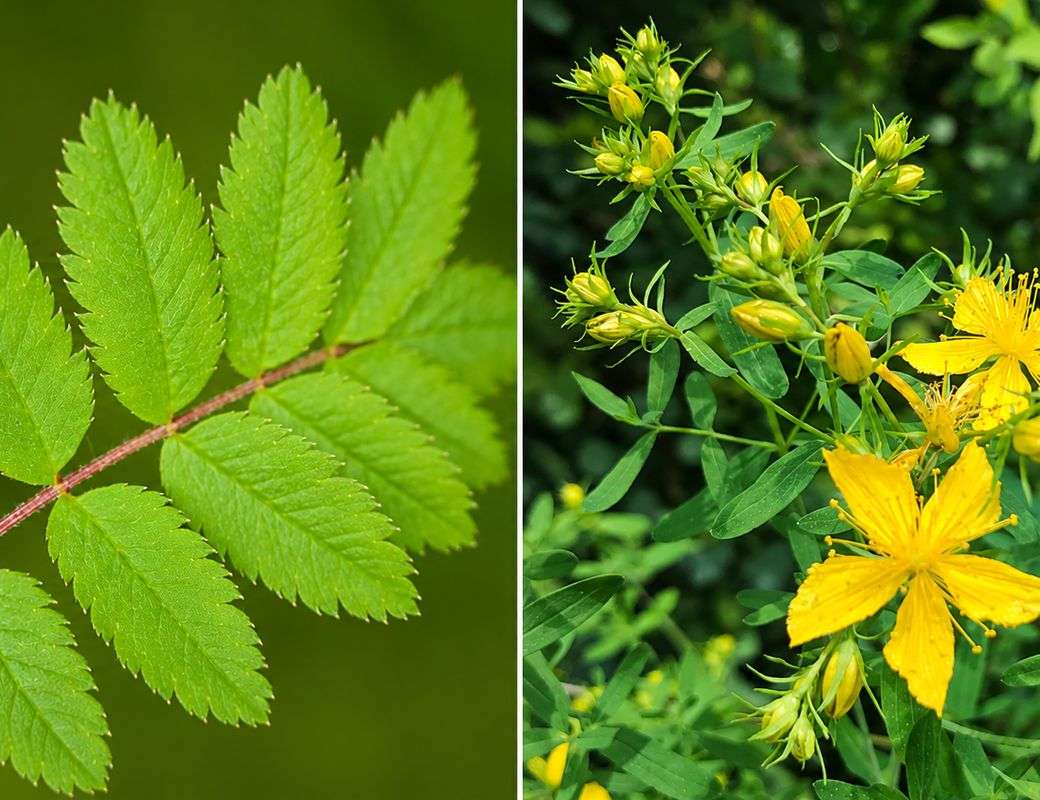
In addition to carvings and hidden objects, the use of plants played an important role in many traditions. Across Europe, many herbs and trees are believed to protect homes from supernatural influences. According to English Heritage, herbs such as vervain, dill, St. John's wort, and rowan were used for protection [2].
Rowan
Rowan (also called mountain ash) is a tree long thought to possess protective properties in British folklore. Its brilliant red berries and leaves make it readily identifiable. According to some traditions, rowan branches were fashioned into small crosses and hung over the building's entrance. The cross was thought to offer protection from harmful supernatural forces [2]. A branch from a well-known tree could be a powerful symbol within a household's cultural world.
St. John's Wort
St. John's wort was also used in protective traditions. In some English traditions, the herb was placed above doorways and windows to keep out harmful spirits. According to English Heritage, this practice was still observed in some parts of the country in the nineteenth century [2]. The associations of St. John's wort with St. John's Day and with midsummer are examples of how seasonal celebrations, Christian traditions, and regional folklore interacted. While the use of plants does not prove that certain plants have special protective powers, it does show that plants can be used as culturally significant objects.
From Protective Charms to the Door Wreath
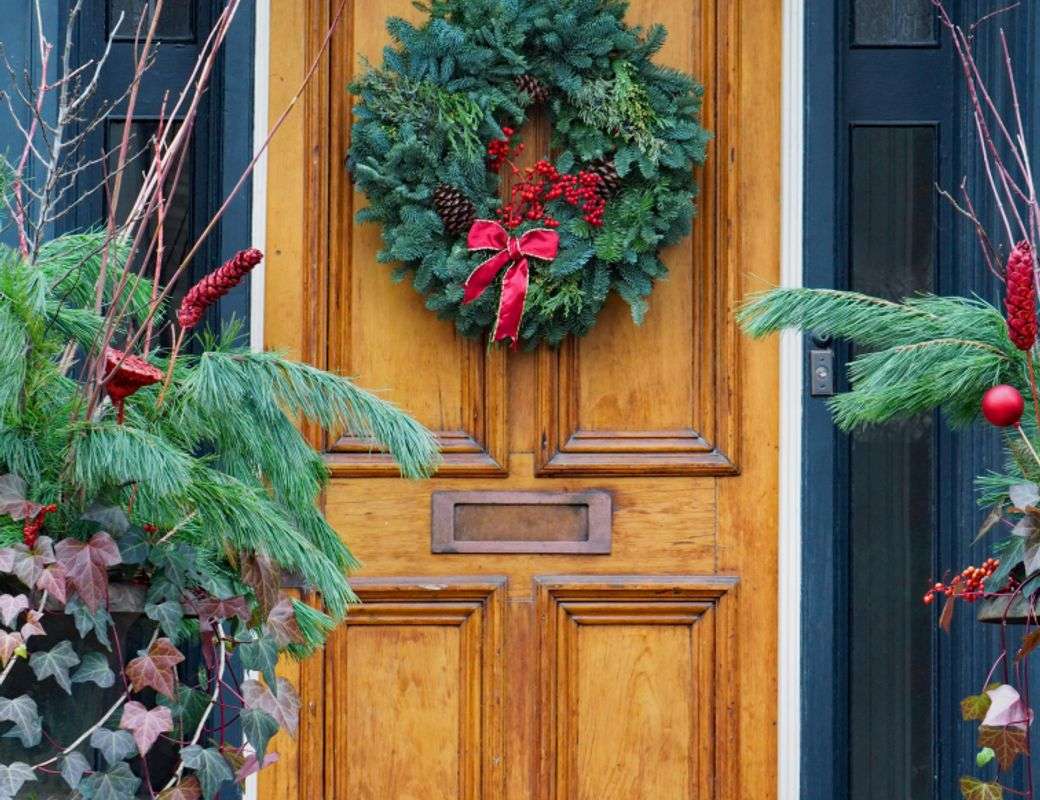
There is another tradition that is very common today, but that deserves mention. Each year, at the onset of autumn, we decorate our doorways with dried leaves, wheat, miniature pumpkins, berries, and twigs. At the beginning of winter, we replace these decorations with evergreen branches, holly, pinecones, and ribbons. Although we think of wreaths today as simply a decorative element of seasonal celebrations, they have, in fact, a long history associated with agricultural celebrations, religious traditions, hospitality, and our relationship with the natural world.
Today's decorative wreaths are not direct descendants of ancient charms to protect the home, but they do share symbolic commonalities with ancient household traditions.
Autumn Wreaths: Harvest and Abundance
In an agricultural society, the harvest season was an important time to mark and celebrate. The successful harvest meant food and survival for the colder months ahead.
In Poland, the harvest festival of Dożynki featured elaborate wreaths called wieńce dożynkowe. These wreaths were made from ears of grain, most commonly wheat and rye, and were often adorned with flowers, ribbons, berries, and other agricultural materials. The Polish Genealogical Society of America refers to these wreaths as symbols of the harvest, and they were traditionally given as gifts at celebrations of the harvest and agricultural abundance [4]. These wreaths were not just decorative; they represented the products of the land and the labor required to keep the community fed. These festivals often incorporated Christian blessings and ceremonies.
While today's autumnal wreaths of wheat, leaves, and berries are not necessarily direct descendants of the Polish harvest wreath or any particular tradition, they do represent a similar appreciation for the harvest and the change of seasons. By hanging an autumnal wreath on our door, we are participating in a decorative tradition, but we are also incorporating some of the ancient associations between plants and seasons into it.
Christmas Wreaths: Evergreen Life and Welcome
As we move from autumn to winter, the greenery we hang in and around our homes shifts from dried leaves and harvested grain to evergreen plants such as holly, ivy, pine, fir, and more. Unlike many deciduous plants, evergreen plants remain green through the winter. This quality made them a powerful symbol of life that continued through the winter months. According to English Heritage, English homes and churches have been decorated with winter greenery for centuries. In London in 1444, an account survives of homes and churches being decorated with holly, ivy, bay, and other winter greenery that was available at the time [5]. Evergreen plants came to be associated with eternal life and a promise of renewal. By the nineteenth century, wreaths were also made to be hung on the front door. According to English Heritage, these door wreaths were often called welcome rings, and were often made from holly, ivy, pinecones, and ribbons [5]. They served a similar purpose to the wreaths on the door, serving as symbols of hospitality and the season's celebration.
This is where we get really interesting regarding the door's symbolism. The charm was intended to ward off evil, but the welcome ring was intended to show hospitality and to welcome guests. Both, however, recognize the importance of the doorway to the home.
It is worth noting the difference between the Christmas wreath on the door and the Advent wreath.
The Advent wreath also has a history of its own. German Lutheran pastor Johann Hinrich Wichern created a tradition of lighting candles on a wheel in 1839 to teach and help children look forward to Christmas. The tradition eventually developed into the familiar Advent wreath - a ring of evergreen with four candles to represent the Sundays in Advent [6].
The Advent wreath is not so much intended as a charm to protect the home as a religious and devotional decoration. As you can see from its history, the symbolism and use of wreaths were continued and developed across various communities and religions.
The horseshoe: another door charm
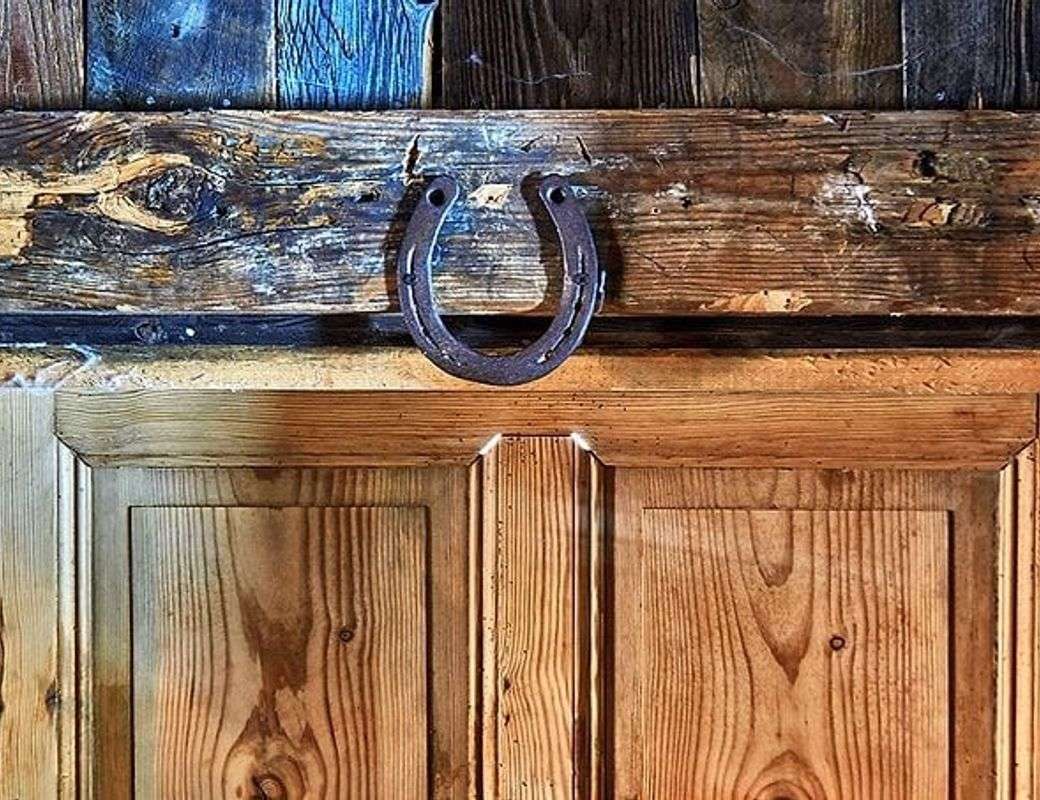
Another very common door charm is the horseshoe, and one that is easily recognizable even to the modern eye. Horseshoes are usually thought of today as a symbol of good luck, but in the past their symbolism was perhaps more specifically one of protection. As English Heritage points out, the horseshoe was connected with accusations of witchcraft and was placed above doorways to ward off supernatural threats - even in the 19th century [2]. Modern custom often suggests that horseshoes should be placed with the open ends facing upwards so that luck does not fall out, but equally, some people put them the other way round, as luck pours out to those who pass underneath them. As with the traditions and objects discussed above, the horseshoe is an example of an object whose meaning and purpose may change over time, while the tradition of using and displaying it endures. What was once a protective charm becomes just a decoration.
Bringing the tradition to modern folk witchcraft
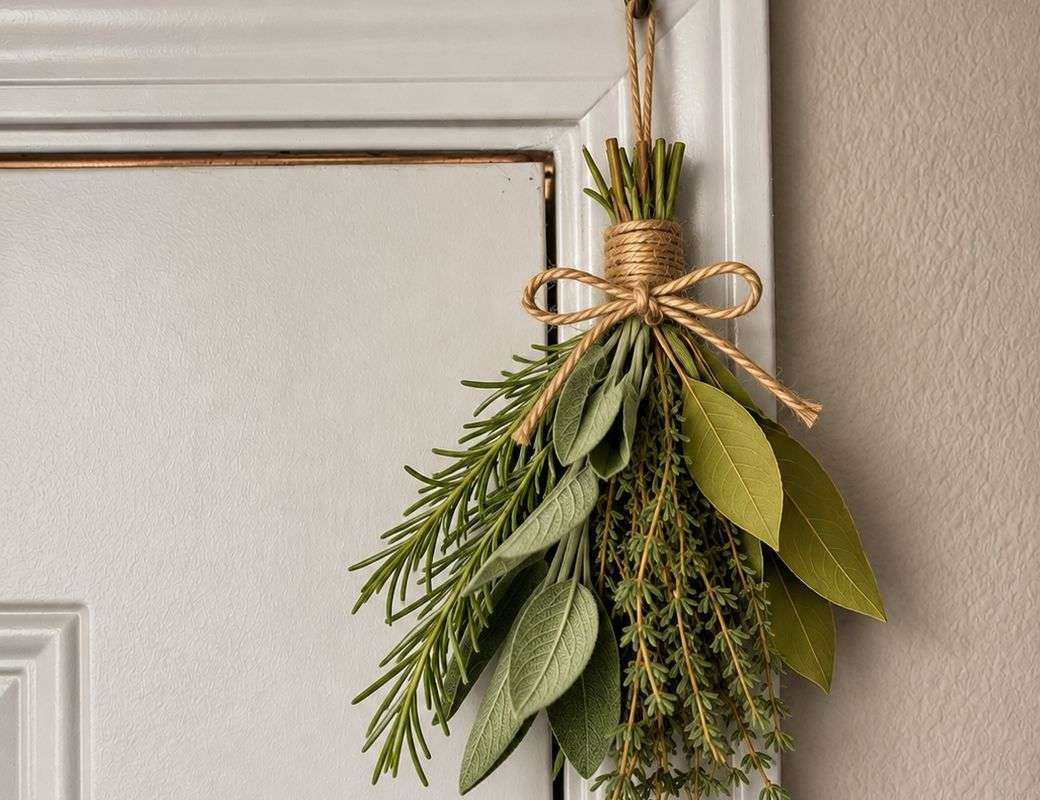
In my previous article, The Autumn Witch's Apothecary, I looked at the history of associations with rosemary, garden sage, thyme, and bay laurel, and based an autumn herb bundle around those four plants. Now we can think about the place of the herb bundle in the home. The combination I have given here is my own modern folk-witchcraft adaptation of the history of plant associations and the tradition of decorating and protecting one's home. It is not presented here as a reconstruction of a medieval spell or charm, but as a representation of four qualities to me in my own practice. Those qualities are:
Remembrance - rosemary to remind us of the people, experiences, and lessons that shape our lives.
Wisdom - garden sage as a symbol of patience, good decisions, and understanding.
Thyme, representing the courage to face changes and uncertainty. Bay laurel symbolizes achievement and continued growth. Together, these plants are reminders of what I want to cultivate in my home.
The ritual encourages me to focus on what I can control, which is what I do within my home. I encourage you to use this time for reflection on the environment you are creating in your home.
Autumn Doorway Blessing
You can perform the Autumn Doorway Blessing any time you feel the need to re-establish your connection to your home. I like doing it in autumn, when many of us are indoors more often, are reflecting on the past year, and are gearing up for the changing weather. I have also used it in other seasons.
What You Need:
A prepared bundle of rosemary, garden sage, thyme, and bay laurel
Natural twine or cotton string to tie your bundle
A place to hang the bundle securely (a hook or other)
A few minutes to reflect
A grimoire or journal (optional)
You will not need candles, incense, smoke, crystals, or any other tools.
Step One
The first thing you can do to prepare for the Doorway Blessing is to clean up the area around your doorway. Take a few minutes to wipe down the doorframe, remove any clutter, and ensure the doorway itself is free of debris. As you tidy up, take a moment to reflect on your home and what it means to you. Is it a place of rest after a long day, a place where you gather with your family, or just a quiet space where you can read, create, or be alone? Think about what you want to encourage inside your home.
Step Two
Hold your prepared herb bundle and think about the symbolism of each herb. Rosemary is the memories of your home. Sage is the wisdom you seek and cultivate inside. Thyme is the courage you need to face whatever life throws at you. Laurel is the strength and growth that have brought you to this point. Take a few deep breaths, think about the shelter your home provides, and feel gratitude for your home.
Step Three
Now, hold the herbs and say the Doorway Blessing. You can do it anywhere near your doorway.
Rosemary for the memories held within these walls,
Sage for the wisdom that guides us,
Thyme for the courage to face what comes,
And laurel for the strength to continue growing.
May this doorway welcome kindness,
May this home be filled with patience,
May those who enter find warmth,
And may those who dwell here know peace.
As autumn settles upon the land
And the days grow shorter still,
I honor the shelter of this home
And the lives gathered within
And the love that makes these walls home.
With gratitude, I bless this threshold.
You may adapt this blessing to fit your own beliefs or your circumstances. There is no set number of times you should recite the blessing, and no set time of day. Use this ritual as a chance to acknowledge your home and the gratitude you feel for it, reflect on your own home, and make a personal commitment to yourself. You may adapt this blessing to fit your own beliefs or your circumstances. There is no set number of times you should recite the blessing, and no set time of day. Use this ritual as a chance to acknowledge your home and the gratitude you feel for it, reflect on your own home, and make a personal commitment to yourself.
Step Four: Hang the Bundle
Hang the bundle in or near your doorway in a spot that won't get in the way when you open or close your door. It should be out of the way of flames or heat; it shouldn't be in a place that's damp or reachable by pets or young children. If you're using fresh herbs, make sure they're not tied too tightly so that they'll dry well.
Now that your bundle is hanging, you can say a final affirmation:
"I am grateful for the home I have created. I welcome peace, kindness, and understanding within these walls."
Your ritual is now complete.
Can You Add the Herb Bundle to an Autumn Wreath or Winter Wreath?
Of course.
If you've got an autumn or winter wreath already hanging on your door, you can certainly add the herb bundle to the design. Use some natural twine to tie the dried herbs in place, without crushing them or letting them get too damp. You could put the herbs near the bottom of your wreath, or hang them as a bundle from the wreath. You can also use the same blessing at your door when you hang your wreath.
In this case, your wreath will serve as both decoration and a ritual object. The basic autumn/winter wreath is a modern tradition, while adding protective herbs is part of your own tradition. There's no need to claim that your herb wreath is some authentic medieval charm.
When Should You Replace the Herbs?
There's no historical basis for replacing the herbs in this modern bundle on any set schedule. You may choose to hang the herbs throughout the autumn, or switch them out as you go into winter. You could take them down when the herbs get old or worn. If the herbs get moldy, too dusty, or are otherwise damaged, you should certainly take them down. You can compost the herbs if appropriate, or just throw them out with the rest of your trash. You don't have to keep the herbs forever as part of this ritual. It can be another opportunity to reflect on the seasons and the life that happens in your home.
The Difference Between Historical Protection and Modern Practice
One of the most important things to do when you study folk traditions is to recognize that things have changed over time. It is a matter of historical record that people have carved things into their houses, hidden shoes and bottles, and hung plants and horseshoes for protection [1, 2, 3]. But we also have a historical record of harvest wreaths, Christmas greenery, and welcome rings in the nineteenth century, as well as the Advent wreath [4, 5, 6]. These are all separate traditions that exist at different times and places, and in different cultural contexts. Though they may share some themes, we shouldn't lump them all together into a single invented 'ancient' tradition.
Modern folk witchcraft is often based on these kinds of practices.
There's nothing wrong with making your own rituals based on old symbols and old practices. It's important to be aware of what is actually historically proven and what is your own modern interpretation. For me, this is an important distinction to keep in mind since I'm a big fan of anthropology. Folklore tells us so much about how people used to view the world. A modern ritual can tell us how that view is changing. Both are worth consideration.
Do Doorway Charms Really Protect a Home?
No science can prove that a wreath or bundle of herbs, a horseshoe, or some symbol carved into your home will keep any supernatural harm from reaching you. But the charm may be culturally, emotionally, religiously, or personally significant. Blessing the doorway is an opportunity to reflect on the values we should have in our homes. It's a chance to think about being welcoming and respectful of boundaries. It's a time to consider how we treat each other and the people who live with us. At the same time, it's very important to consider practical ways to keep your home safe. Installing and checking locks, ensuring your smoke alarms are in working order, and having easily accessible exit points from your home is vital. You want to live in a safe environment. I don't see this as being in opposition to my spiritual views. It's simply a way to put my values into practice.
Conclusion: Welcome In
Year after year, we return to that same doorway. In the fall, we may choose to adorn our doorways with dried leaves, wheat, berries, and warm colors. In the winter, we may choose to decorate with evergreen branches, holly, and ribbons. Occasionally, we hang a small bundle of herbs on our doorways, not necessarily because we think the herbs will ward off harm to our homes, but because they remind us of the values we want to cultivate there. Centuries ago, people carved symbols into their homes, hid objects under their floors, and picked herbs from the local countryside in an attempt to ward off an uncertain world and protect the people and places they loved.
Our homes and our views of the world may have changed, but our desire for safety and protection hasn't. Maybe that's why we choose to adorn our doorways. A wreath can signify gratitude for the harvest. An evergreen branch can symbolize the endurance of life. A horseshoe can express a desire for good luck. A bundle of herbs can remind us of the values we want to cultivate - memory, wisdom, courage, and growth. For centuries, we have warded off things we don't want in our homes. Perhaps one of the most meaningful things we can do is to be equally deliberate about what we do want to welcome.
References and Further Reading
[1] Historic England. “What Are Witches’ Marks?” Historic England, https://historicengland.org.uk/whats-new/features/discovering-witches-marks/what-are-witches-marks/. Accessed 7 Nov. 2026.
[2] Davies, Owen, and Ceri Houlbrook. “Historical Ways to Protect Against Evil Spirits.” English Heritage, https://www.english-heritage.org.uk/visit/inspire-me/historical-ways-to-protect-against-evil-spirits/. Accessed 7 Nov. 2026.
[3] Historic England. “The Difference Between Apotropaic Marks and Carpenters’ Marks.” Historic England, https://historicengland.org.uk/whats-new/features/discovering-witches-marks/types-of-marks/. Accessed 7 Nov. 2026.
[4] Polish Genealogical Society of America. “Polish Legends, Traditions and Holidays.” Polish Genealogical Society of America, https://pgsa.org/education-polish-traditions/. Accessed 7 Nov. 2026.
[5] English Heritage. “A Short History of Christmas Greenery.” English Heritage, https://www.english-heritage.org.uk/learn/histories/christmas-greenery-history/. Accessed 7 Nov. 2026.
[6] Pittsburgh Theological Seminary. “Advent Wreaths: Origins and Uses.” Pittsburgh Theological Seminary, 2017, https://www.pts.edu/UserFiles/File/resources/Publications/Advent%20Devotional%202017/Advent%20Wreath%20Origins%20and%20Uses.pdf. Accessed 7 Nov. 2026.
The Daisy Wheel or Hexafoil. https://en.wikipedia.org/wiki/Apotropaic_magic. Accessed 13 Nov. 2026
Witch Bottles. https://en.wikipedia.org/wiki/Witch_bottle. Accessed 13 Nov. 2026
Concealed Shoes. https://en.wikipedia.org/wiki/Concealed_shoes. Accessed 13 Nov. 2026
Rowan. https://www.woodlandtrust.org.uk/trees-woods-and-wildlife/british-trees/a-z-of-british-trees/rowan/ Accessed 13 Nov. 2026
St. John’s Wort https://tualatinswcd.org/species/st-johns-wort/ Accessed 13 Nov. 2026
Christmas Wreath https://town-n-country-living.com/how-to-deck-the-front-door-for-the-holidays-a-dazzling-christmas-wreath.html Accessed 13 Nov. 2026
Horseshoe. https://www.familyhandyman.com/article/horseshoe-on-barn/ Accessed 13 Nov. 2026
Autumn Bundle by door. Image by Damon Robi. Accessed 6 Nov. 2026
Responses (1)