When Time Blinks
Deja Vu and the Art of Recognizing the Moment That Matters
Article · 4 min read · ·
Deja vu arrives quietly.
Not with thunder or prophecy, but with the soft click of recognition. A sentence half spoken before. A doorway already known. A moment that feels borrowed rather than new. It slips into the room unannounced, looks around as if checking its watch, and leaves you standing there with the uneasy sense that time just cleared its throat.
The modern world treats this politely, like a glitch you don’t mention at dinner. The brain misfired. Memory lag. A trick of perception. Science has a filing cabinet for it, neatly labeled, reassuringly dull. But that explanation feels thin, like calling the ocean “wet” and moving on.
Because deja vu doesn’t feel like an error. It feels like recognition.
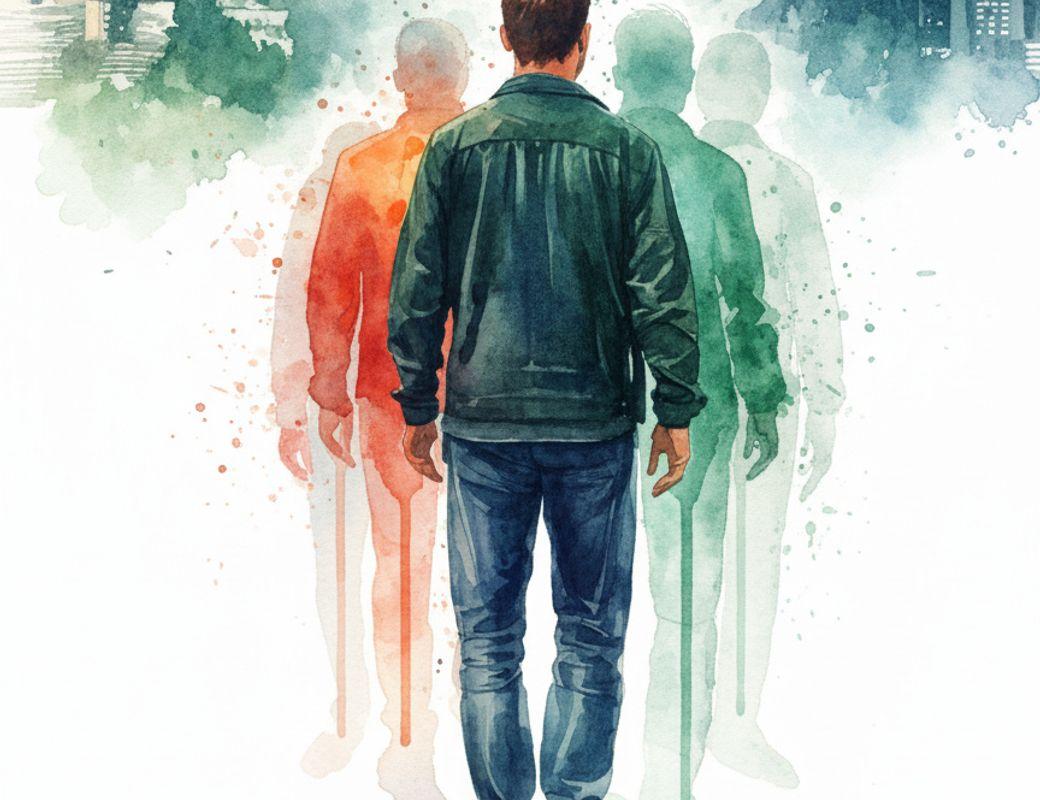
The mind says, this has happened before, but the body says something stranger: you have been here before. Not in memory, but in meaning.
The ancients noticed this too. Long before MRIs and neural maps, they paid attention to the tremor beneath the moment. Plato believed the soul existed before the body, that knowledge was not learned but remembered. To him, deja vu was not confusion but leakage, the soul brushing against truths it knew long before flesh wrapped around it. When something felt familiar without reason, it was the echo of a life before forgetting.
In ancient India, the concept of samskara suggested impressions carried across lifetimes. Deja vu was not a malfunction, but residue. A groove worn into the soul by repetition across incarnations. You had walked this road before, perhaps as someone else, perhaps under a different sky, but the pattern remained.
The Celts spoke less academically and more poetically. They believed in thin places, moments when the veil between worlds grew sheer. Deja vu was a thinning of time itself. Past, present, and future briefly overlapping like misaligned transparencies. Not a mistake, but a convergence.
Even the Egyptians, meticulous record keepers of eternity, understood time as layered rather than linear. To them, certain moments were prewritten. When you stumbled into one, the soul recognized its own handwriting.
Modern psychology, understandably cautious around souls and veils, offers a different story. Deja vu, it says, happens when the brain processes familiarity faster than awareness. A mismatch between memory systems. The moment feels remembered because part of the mind flagged it as known before the rest could catch up.
This explanation is not wrong. But it is incomplete.
Because it explains the mechanism without addressing the meaning. It tells you how the bell rang, but not why it rang at that exact moment.
And deja vu always chooses its moments carefully.
It does not strike during trivialities. It waits for thresholds. Decisions. Encounters. Crossroads disguised as ordinary afternoons. You are talking to someone who will matter. You are standing somewhere that will change you. You are about to say yes or no to something that ripples outward.
That is when it taps you on the shoulder and whispers, pay attention.
Interpreting deja vu, then, is not about panic or prophecy. It is about orientation. The ancients did not treat it as a command, but as a marker. A signpost nailed to the moment saying, this matters more than it looks.
It asks a simple question: Are you aligned?
Not morally. Not perfectly. Aligned with your path, whatever shape that path takes. When deja vu appears, it often means you are standing in a place where choice and trajectory intersect. You have arrived at a point your life was always going to visit, even if the route was improvised.
Some believe it is memory from another life. Some believe it is the mind rehearsing futures before they arrive. Others believe it is consciousness briefly stepping outside the illusion of time and recognizing the pattern it’s been tracing all along.
The truth may be less dramatic and more unsettling.
What if time is not a straight line, but a loop with awareness trapped inside it? What if deja vu is not remembering the past, but brushing against a future already in motion? Not fate in the dramatic sense, but probability hardening into experience.
The feeling fades quickly because it has to. If it lingered, you might start asking dangerous questions. Questions about choice, repetition, and whether free will is a river or a current you swim within.
So deja vu leaves you with just enough unease to notice, and just enough mystery to keep moving.
The ancients did not try to solve it. They listened to it. They marked the moment. They adjusted their posture toward life ever so slightly and carried on.
That may be the wisest interpretation of all.
When deja vu visits, do not chase it. Do not dismiss it. Simply note where you are, who you are with, and what you are about to become. Something in you recognizes the terrain.
Responses (5)


More from the Magazine
Protection Magic Is More Than a Jar of Salt
The folklore of warding, the psychology of safety, and the boundaries that matter in real life

Paws, Hooves, Fins & Furry Energy 🐙💕
How Animals Protect Your Aura & Heal Your Soul.
The Difference Between Incense and Smudge
Understand the distinction between everyday aromatic incense and culturally specific smoke-cleansing