The Skin Remembers:
The Spiritual and Metaphysical History of Tattooing
Article · 4 min read · ·
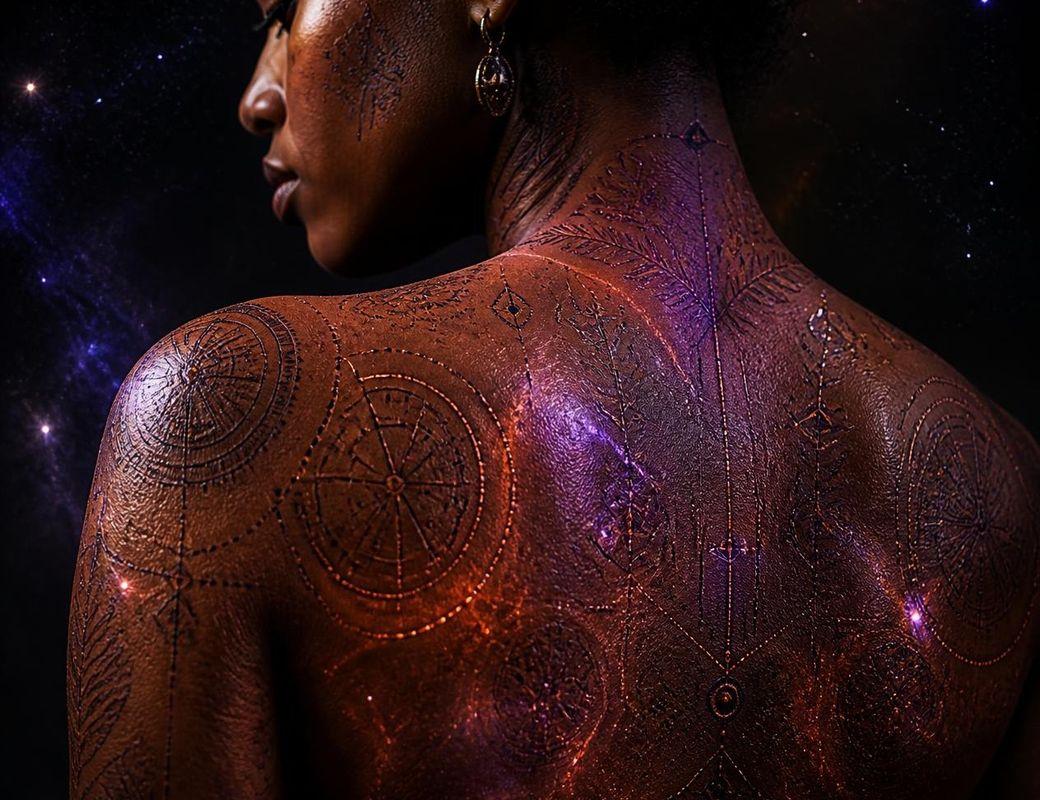
Long before tattooing was a chair in a studio and a buzzing needle, it was a rite. A threshold. A permanent agreement between a person and something larger than themselves.
We’ve flattened tattooing into an aesthetic choice — a flash sheet, a trend, a thing you do on vacation. But strip away the modern packaging and what’s left is one of the oldest spiritual technologies humans have ever practiced: the deliberate, permanent marking of the body as a way of talking to the unseen.
The Oldest Ink We Know
Ötzi the Iceman is the earliest tattooed body ever found — over 5,300 years old, preserved in Alpine ice, carrying more than sixty tattoos across his joints and spine. Archaeologists believe these weren’t decoration. They were placed with intention over sites of pain and wear, functioning as something closer to acupuncture: marks meant to move energy, to heal, to hold the body together at exactly the places it was breaking down.
That’s the thread running underneath everything that follows. Tattooing didn’t begin as art for art’s sake. It began as medicine, as protection, as a way of asking the body to hold something the mind alone couldn’t carry.
Skin as Scripture
Across the ancient world, the body became a place where belief was written down.
In ancient Egypt, tattoos — found on mummified women dating back to roughly 2000 BCE — were tied to fertility, protection, and the divine feminine. Symbols like the lotus and the image of Sekhmet, the lioness goddess of strength, weren’t chosen casually. They were invocations. A woman wearing Sekhmet on her skin wasn’t decorating herself — she was calling something in.
In Polynesia, tatau was never separate from social and spiritual order. Every mark carried genealogy, rank, and story; the process itself was sacred enough that it was governed by ritual, preparation, and community witness. To receive tatau was to be permanently written into the fabric of who you belonged to — living and ancestral both.
The Pazyryk culture of ancient Siberia left behind tattooed mummies covered in elaborate animal and mythological imagery — creatures believed to carry the wearer’s spirit into the next world, or to grant them the qualities of what was inked into their skin. Among Inuit communities, facial tattoos marked a woman’s passage into full adulthood, a visible record that she had crossed a threshold no one could take back.
Southeast Asian sak yant traditions, still practiced today, fuse Buddhist and Hindu cosmology directly into the skin — geometric sacred script believed to offer literal spiritual protection to whoever carries it. Celtic and Germanic tattooing traditions wove the body into nature itself, marking connection to land, animal, and unseen forces long before those practices were pushed underground.
What Gets Lost When We Call It “Just Art”
Somewhere in Western history — largely through the suppression of tattooing by religious authorities during the Middle Ages, and later its rebranding as something reserved for outcasts and sailors — the spiritual thread got severed from the practice. Tattooing survived, but its context didn’t. It became something you got, not something you underwent.
That severing is worth naming, because it’s the same severing that shows up everywhere in modern healing work: the technique survives, but the meaning gets stripped out of it. A ritual becomes a routine. A rite of passage becomes a purchase.
But the body hasn’t forgotten what the mark used to mean. That’s why people still describe getting tattooed as something that feels bigger than the pain or the image — why they cry in the chair, why certain pieces feel less like decisions and more like inevitabilities. The permanence is doing something. It always was.
The Metaphysics of a Permanent Mark
Every tattooing tradition that treated the practice as sacred understood something that modern culture keeps having to relearn: what you put on the body doesn’t stay on the surface. Skin is not a wall between you and the world — it’s a threshold. It’s the place where inside and outside negotiate. Mark it with intention, and you’re not just changing how you look. You’re changing what you’re in conversation with.
This is why lineage-based practitioners across so many unrelated cultures arrived at the same conclusion independently — Egypt, Polynesia, Siberia, the Arctic, Southeast Asia, none borrowing from each other, all landing on the same truth: permanence is a spiritual act. You don’t put something on your body forever unless some part of you already knows it’s meant to stay.
Whether or not you have a single tattoo, that principle holds. What you choose to carry — visibly, permanently, on purpose — is never just aesthetic. It’s a record of what you decided was true enough to keep.
Sabra is a Generational Medicine Woman, Urban Shaman, and Integrative Healing Arts Practitioner. She is the founder and Executive Creative Director of Haus of Healings, and her work bridges ancient wisdom and holistic healing through the Four Bodied Approach™ and Rooted Repatterning™.
Responses (1)
More from the Magazine
A Ritual for Reclaiming Your Personal Power
Create a grounding ritual to reconnect with your values, boundaries, and ability to choose your next
The ADHD Witch's Guide to Practicing Magic When You Forget Everything
Build a practice around your actual brain, not the imaginary organized person you keep trying to be
The Trigger of Embarrassment
Let's tap into the Ego and how we can release the control it desires.