The Sacred Dig
What You Find When You Stop Running From Your Shadows
Article · 4 min read · ·
We spend our lives building atop the unseen.
We construct personas, chase goals, and arrange our lives on what feels like solid ground, only to feel the same cracks reappear in different rooms. A betrayal that feels hauntingly familiar. A flash of anger that seems bigger than the moment deserves. A sinking feeling of “not enough” that seeps into every victory.
For years, I thought these cracks were failures in my construction. I’d try to plaster over them with positivity, hustle, or a new identity. It never held. The tremor would return.
I didn’t understand that beneath my feet wasn’t empty earth. It was a buried city of my own making—a complete, hidden architecture of adaptations built by a younger self to survive a world that felt unsafe. My anger, my neediness, my deepest insecurities weren’t flaws. They were the echoes of exiled guardians living in the ruins below, still dutifully patrolling walls I had long outgrown.
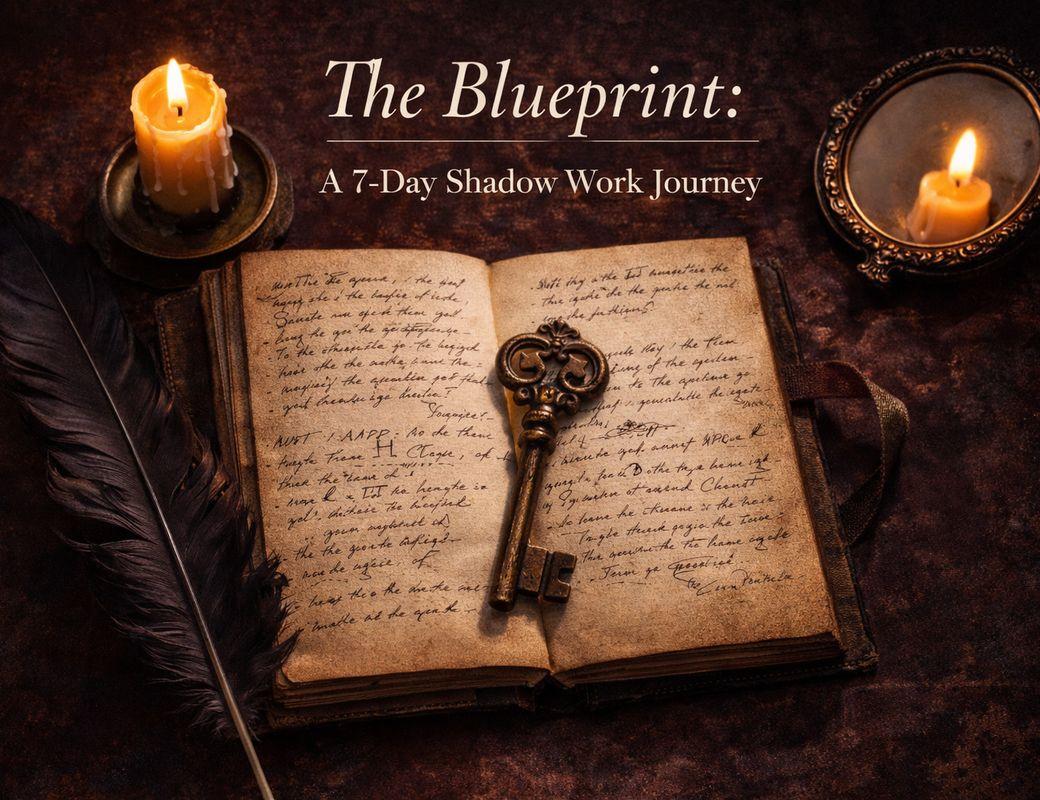
The real work began not when I tried to build higher, but when I finally got quiet, took up a gentle tool, and began the sacred archaeological dig of the self. This is the journey of The Blueprint.
The First Days: Mapping the Echoes
The work doesn’t start with a dramatic confrontation. It starts with noticing the echo. Why does that specific tone of voice make me freeze? Why does a perceived slight send me into a tailspin? Day one is about becoming a cartographer of your own reactions, tracing the emotional tremor back to its epicenter.
Once you locate the site, you begin the careful work of brushing away the dirt to find the original wall. This is where you ask: “When did I first learn this? What survival vow did I make here?” You might find the “Vow of Independence” sworn by a child who learned needing help was dangerous, or the “Pledge of Perfection” made by one who believed love was conditional. You’re not excavating blame. You’re uncovering ingenious, ancient blueprints for safety.
The Middle Passage: Meeting the Exiles
This is the heart of the work. In the quiet of the dig, you finally meet the exiled ones who have been running the old programs. The Vigilant Child who scans for danger. The People-Pleaser who negotiates for worth. The Internal Critic that mistakes brutality for motivation.
Here, you don’t wage war. You pull up a chair. Through structured dialogue—a method that transforms a chaotic inner critic into a character you can actually speak with—you listen. You ask the only question that matters: “What were you trying to protect? What is your true, original purpose?” The answer is always a form of love. The anger was protecting vulnerability. The perfectionism was guarding against abandonment.
This dialogue is an update of sacred contracts. You thank the exile for its loyal service. You acknowledge its fears. And then, you negotiate a promotion: the Protector can become a Wise Guardian. The Critic can become a discerning Editor. This is how you reclaim the dormant power trapped within the pattern.
The Final Ascent: Redrafting the Master Plan
The final phase is conscious reintegration. Having retrieved the core strength—the fierce love from the anger, the keen discernment from the fear—you now redraft the master blueprint. You take the old, limiting vow and consciously rewrite it into an empowering belief that serves who you are now, not who you were then.
The journey culminates in a sacred reunion, a homecoming ceremony for the self. It’s the moment you feel, in your bones, that you have not “fixed” something broken, but have welcomed something vital back home. The cracks in your foundation weren’t signs of weakness. They were signs of life pushing through from below, asking to be integrated.
The Architecture of Wholeness
This seven-day arc—Recognition, Origin, Personification, Dialogue, Reclamation, Integration, Wholeness—is a complete cycle of alchemy. It turns the lead of painful patterns into the gold of self-knowledge. It moves you from being a prisoner of your subconscious blueprints to becoming their compassionate architect.
I structured it this way because shadow work without a container is just rumination. It requires a sequence that first builds safety, then fosters curiosity, and finally facilitates a graceful, lasting reunion. It is the essential inner technology for building a stable, authentic life upon the foundation of nervous system safety.
The buried city isn’t your enemy. It’s your archive. And within it, you don’t find monsters. You find the missing blueprints to your own wholeness.
The key is waiting. The brush is in your hand.
Responses (1)
More from the Magazine
The ADHD Witch's Guide to Practicing Magic When You Forget Everything
Build a practice around your actual brain, not the imaginary organized person you keep trying to be

The Trigger of Embarrassment
Let's tap into the Ego and how we can release the control it desires.
Protection Magic Is More Than a Jar of Salt
The folklore of warding, the psychology of safety, and the boundaries that matter in real life