The Room That Left Us No Choice
What your love for the "one bed" trope says about the intimacy you're afraid to ask for
Article · 7 min read · ·
I need to tell you about the fantasy I didn't know I was having.
For years, I avoided the "one bed" trope. It felt too contrived. Too convenient. Too obviously engineered to force two people together who should probably just talk about their feelings like adults.
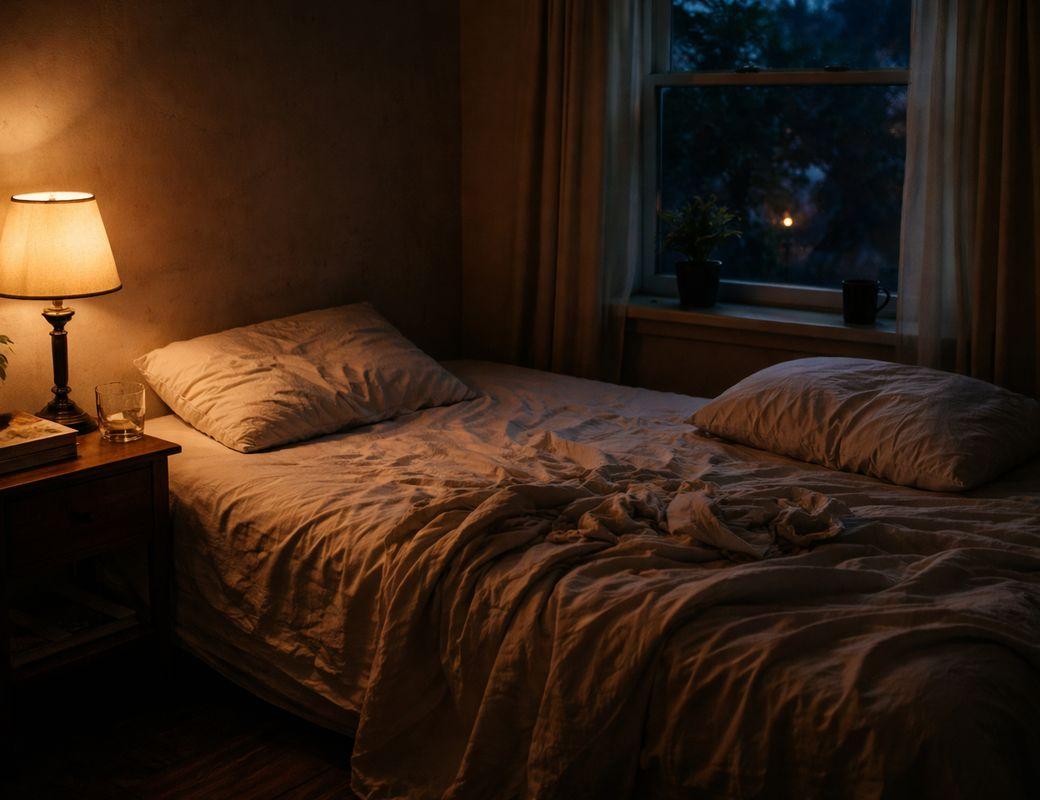
And then, one night, I read a book where the characters had no choice. A storm. A remote inn. A single room. The last bed in the county.
They didn't touch. They didn't confess. They just lay there, inches apart, breathing in the dark, pretending to sleep.
And I realized, somewhere around page two hundred, that my heart was racing. Not because I was worried about the storm. Because I was feeling something I had never admitted to myself.
I wanted to be forced.
Not against my will. Not without consent. But I wanted the universe to arrange things so that I didn't have to be the one to say, "I want to be close to you. I'm terrified. But I want it."
The one bed trope offers a fantasy of intimacy without the risk of asking for it. The circumstances decide. The storm decides. The last available room decides.
We get to be close without admitting how much we need it.
The Traditional Blueprint: When Circumstances Become Confession
The "one bed" or forced proximity trope is a staple of romance across genres. Two characters who would never willingly share space are被迫—by weather, by travel logistics, by a well-meaning friend with a single guest room—into close quarters.
What makes the trope so effective is the container it creates. The characters cannot escape each other. They cannot maintain their usual emotional distance. The proximity itself becomes a pressure cooker, forcing conversations that would otherwise remain unspoken.
But the real engine of the trope is not the proximity. It's the plausible deniability. The characters don't have to admit they want to be close. The situation is to blame. They can lie inches apart, hearts pounding, and tell themselves they have no choice.
This is the fantasy that keeps readers returning. Not the sex. The permission. The relief of not having to be the one to initiate vulnerability.
What This Trope Does to the Reader
For readers with attachment wounds—particularly those who learned that asking for closeness was dangerous or shameful—the one bed trope offers a form of co-regulation without responsibility.
Your nervous system gets to experience the safety of proximity—the slowed heart rate, the softened vigilance, the quiet hum of being near another living being—without the terror of having to request it. The story provides the container. The characters provide the template. And you, the reader, get to feel what it might be like to simply… rest. Near someone. Without having to explain why.
Psychologically, this trope activates the same circuits that make us crave physical closeness when we're scared or lonely. It's not about sex. It's about presence. The knowledge that someone is there, in the dark, breathing the same air. That you are not alone.
For those of us who grew up without that—without the consistent, safe presence of a caregiver who stayed—the one bed trope is not just entertaining. It is reparative. It shows us what we missed. And it offers a safe, fictional space to long for it.
The Shadow Reflection: The One Who Can't Ask
When the one bed trope becomes a shadow mirror, it often reveals one of two hidden dynamics within us.
The Shame-Keeper of Need.
This part of you learned, early on, that wanting closeness was embarrassing. Maybe you were teased for being clingy. Maybe you learned that needing comfort meant weakness. Maybe you internalized the message that the only acceptable intimacy was the kind that arrived unsolicited—because asking would be proof that you weren't enough on your own.
The Shame-Keeper of Need keeps you safe from rejection by ensuring you never have to ask. But it also keeps you separate. It leaves you lying in the dark, inches from someone, pretending to sleep, while your heart screams for contact.
The Hyper-Independent One, Revisited.
This part has built an entire identity around not needing anyone. It tells itself that forced proximity tropes are silly, contrived, beneath its dignity. But beneath the dismissal is a quiet, desperate longing. The Hyper-Independent One is not cold. It is terrified of what might happen if it ever admitted how much it wants to be held.
Both of these parts are not broken. They are protectors. They learned strategies that once kept you safe from the pain of rejection or the shame of need. But those strategies are now keeping you from the very closeness you crave.
And the one bed trope, in its most healing form, offers a blueprint for what could be possible if you let the circumstances—or the story—give you permission to feel what you've been hiding.
The Sanctuary Question
"What if the 'forced proximity' I long for in fiction is actually a wish for someone to see past my walls—without me having to explain why they're there?"
Not "what's wrong with me." Just: What would it feel like to practice asking for closeness, in small ways, without waiting for a storm to force the issue?
The Integration Prompt: The Small Ask
Your task is not to confess your deepest fears to a stranger. It is to practice one small, low-stakes ask for closeness.
1. Name the Longing.
What do you actually want? Not the grand romance. The small thing. A hug that lasts a little too long. A text that says, "Thinking of you." Someone to sit beside you in comfortable silence.
2. Identify the Fear.
What stops you from asking? Rejection? Shame? The belief that you should be able to handle it alone? Name it without judgment.
3. The Small Ask.
Today, ask for one small thing from someone safe.
-
"Can you sit with me for a few minutes?"
-
"I'm having a rough day. Would you mind just listening?"
-
"I'd love a hug, if you're open to it."
4. Receive.
If they say yes, practice receiving. Don't minimize. Don't explain. Don't apologize. Just let yourself have it.
If they say no, practice not catastrophizing. A no to the ask is not a no to you. It's just a no to the ask.
5. The Journal Note.
Write one sentence about how it felt to ask. Not to analyze. Just to witness.
What I Know Now
I still love one bed stories. I still feel the flutter when the characters lie down in the dark, hearts pounding, pretending to be fine. But I don't read them the same way anymore.
I read them as practice runs. Blueprints for the intimacy I'm learning to ask for in real life.
The fantasy was never about the storm or the last available room. It was about permission. The permission to need. The permission to be close. The permission to stop pretending I was fine sleeping alone.
And I am learning, slowly, that I don't need a storm to grant that permission. I can grant it to myself.
One small ask at a time.
This is what the Blueprint is for. Not to teach you how to force intimacy. To help you meet the parts of you that are afraid to ask—the Shame-Keeper, the Hyper-Independent One—and update their job descriptions. To help your nervous system learn that vulnerability is not danger. That asking is not weakness.
And on my YouTube channel, I post free soundscapes for the ones lying in the dark, pretending to sleep. For the ones who have been waiting for a storm to give them permission to need.
No pressure. Just a practice. Just a door.
For the ones who can't ask. For the ones who pretend not to need. For everyone who has ever lain in the dark, inches from someone, and wished the storm would last just a little longer.
You don't need a storm. You just need to start with one small ask. And the first ask is always to yourself.
With you in the sacred proximity,
Star
Responses (1)

More from the Magazine
The ADHD Witch's Guide to Practicing Magic When You Forget Everything
Build a practice around your actual brain, not the imaginary organized person you keep trying to be

The Trigger of Embarrassment
Let's tap into the Ego and how we can release the control it desires.
Protection Magic Is More Than a Jar of Salt
The folklore of warding, the psychology of safety, and the boundaries that matter in real life