The Illusion of Stability
Are we are going through the Collapse of belief systems?
Article · 2 min read · ·
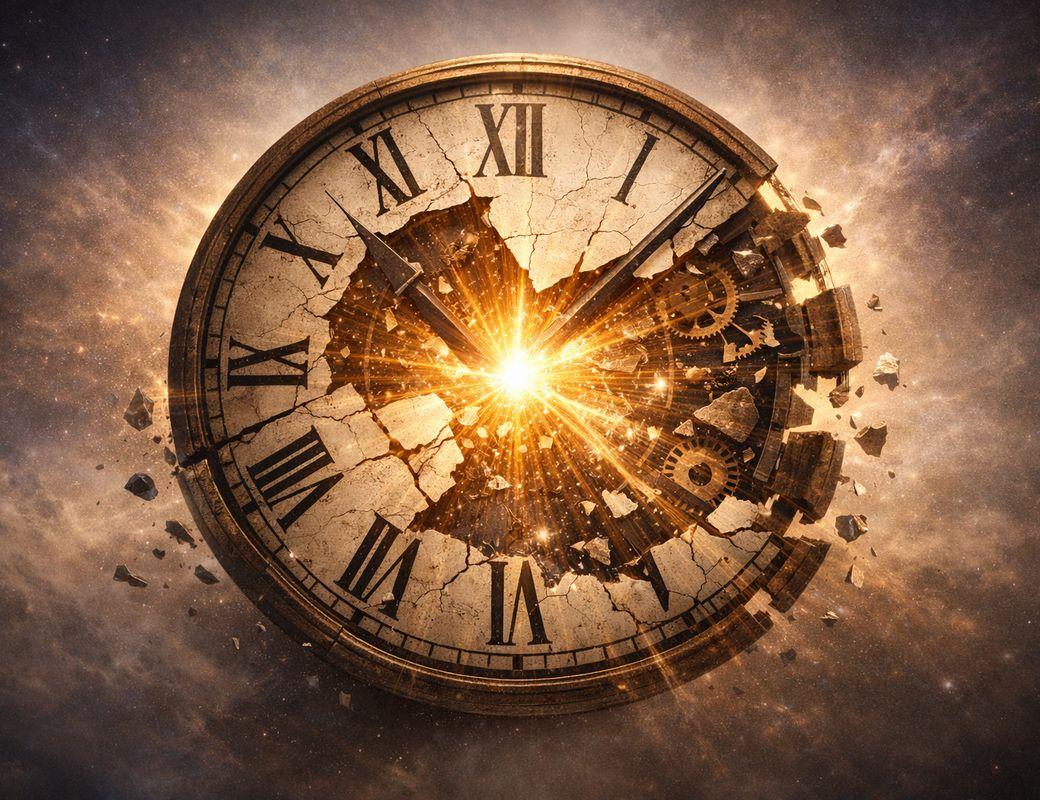
Systems do not collapse in isolation. They collapse because collective belief shifts...
A government, a currency, a social norm: these function because enough people participate in the story. When the narrative fractures, the structure weakens. What we are witnessing today is not only political fragmentation or technological acceleration. It is the destabilization of inherited narratives.
The idea of lifelong careers. The assumption of institutional benevolence. The myth of linear progress.The illusion of a singular, fixed identity.
For centuries, philosophers and physicists (alike) have wrestled with one central mystery: What is consciousness?
Is it a byproduct of neural activity? A fundamental property of reality? or is it a collective field we participate in?
Carl Jung proposed the concept of the collective unconscious: a shared psychic substrate beneath individual awareness. Archetypes, he argued, shape civilizations as much as individuals.
Alan Watts described the human being not as a separate entity in the universe, but as the universe expressing itself through a localized point of awareness.
Modern neuroscience studies cognition through networks and pattern recognition. Quantum physicists debate whether consciousness plays a participatory role in observation. Meanwhile, cultural discourse increasingly centers on self-awareness, trauma integration, identity deconstruction, and psychological healing.
This is not accidental… we can agree on that, right?
When systems destabilize, individuals are forced inward. In other words: External certainty dissolves; internal inquiry intensifies.
Consider the signs of our era:
-
An explosion of interest in therapy and shadow work.
-
Popularization of previously esoteric ideas (non-duality, ego dissolution, archetypes)
-
Questioning of rigid identity constructs.
-
Integration of spirituality with psychology…
Whether described in secular or mystical terms, something is shifting in how humans experience themselves.
The critical distinction is this: expansion of consciousness does not necessarily mean mystical enlightenment. It may mean increased awareness of complexity. Greater tolerance for ambiguity. Recognition of unconscious conditioning.
It may mean that the illusion of simplicity is collapsing.
And perhaps that is the true threshold we inhabit!! Not merely political or technological transition, but epistemological transformation: a shift in how we know what we know.
Therefore, collapse is not purely destructive, it is cognitively catalytic.
-This piece continues the previous article.
Responses
No responses yet — start the conversation.
More from the Magazine
Protection Magic Is More Than a Jar of Salt
The folklore of warding, the psychology of safety, and the boundaries that matter in real life

Paws, Hooves, Fins & Furry Energy 🐙💕
How Animals Protect Your Aura & Heal Your Soul.

The Difference Between Incense and Smudge
Understand the distinction between everyday aromatic incense and culturally specific smoke-cleansing