The Final Frontier
What Happens After You've Built Your Sanctuary
Article · 4 min read · ·
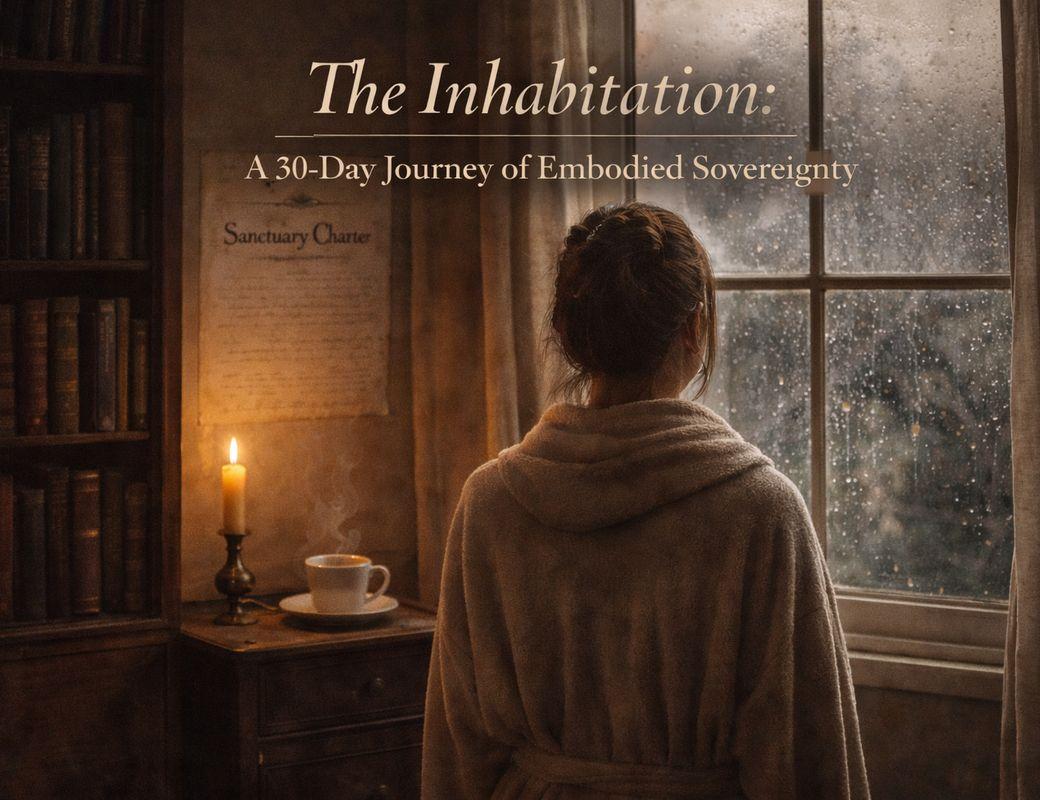
I built my first real sanctuary—a small apartment with a lock only I controlled—after years of dreaming from park benches. The day I got the keys, I sobbed. I spent weeks meticulously arranging every detail, every bookshelf, every candle. It was perfect.
Then, a strange emptiness set in. I’d walk the rooms, touch the walls I’d painted, and feel… like a ghost in my own house. The sanctuary was built, but I had not yet moved in. My body was there, but my psyche—my habits, my reactions, my unconscious vocabulary—was still haunting the old, broken spaces of my past. I knew who I wanted to be, but in moments of stress, I defaulted to the old blueprints of lack and defense.
This is the final, most subtle frontier of transformation: the gap between spiritual knowing and earthly living. It’s the journey from having the architecture to inhabiting it with every fiber of your being. This is the work of The Inhabitation.
The Forgotten Phase: From Construction to Occupation
Most journeys stop at the blueprint or the beautiful, empty building. We think understanding and intention are enough. But a sanctuary is not a museum; it is a living system. It requires you to evict the old tenants (your past self’s habits), lay down new floorboards of daily routine, hang the mirrors that reflect your true self in relationships, and wire the very circuits of your brain for a new kind of joy.
This 30-day immersion is not about learning. It is about rehabilitation. It is the structured, daily, sometimes mundane ritual of teaching your nervous system, your relationships, and your schedule what it feels like to live as the sovereign you have designed.
The Arc of Embodiment: A Month of Sacred Habit
The journey moves through six definitive phases, each a step deeper into embodied truth:
1. The Eviction (Days 1-5): This is the solemn, somatic goodbye. You perform a final walk-through of the "old house" of your past identity, not with anger, but as an archivist. You box up its artifacts—the old stories, the defensive quirks—with respect, making space in your mental and physical schedule for the new. The "addictive hit" is the profound, clean silence of empty space you own.
2. Laying the New Floorboards (Days 6-10): Here, you install the non-negotiable daily systems of your new self. You create your "Cornerstone Routine"—the 20-minute morning ritual that roots you in your sovereignty before the world speaks. You perform a "Vocabulary Renovation," auditing and rewriting the unconscious language of lack in your inner speech. This phase makes your foundation walkable.
3. Hanging the Mirrors (Days 11-15): Now, you test your new walls against the old winds. This phase is about shadow integration in real-time. You script responses for old family dynamics. You use a triggering comment not as a setback, but as immediate feedback, asking: "What boundary needs fortifying here?" The mirror shows you where the old ghost still tries to walk through walls.
4. Wiring for Joy (Days 16-20): A sanctuary must be wired for more than survival. This phase is a deliberate, guilt-free installation of pleasure as a neurological default. You conduct a "Pleasure Audit," engage in "Unproductive Art," and build a personal "Joy Catalog." The "addictive hit" is the discovery that joy is not a reward, but the native climate of your new home.
5. The Open House (Days 21-25): You begin to host the new self in the world with low-stakes experiments. You practice sharing a fragment of your new truth. You learn to receive a compliment without the old software of deflection. This is where you test the social plumbing of your sanctuary.
6. The Sacred Habitation (Days 26-30): The final days are about ritualizing the new normal. You design your personal "Sabbath"—a weekly ceremony of rest in your completeness. You create a "Keystone Ritual," a 2-minute daily touchstone. It culminates in the formal Homecoming Ceremony, where you christen your own life as your true and final home.
The Architecture of Arrival
This 30-day arc is engineered for one purpose: to close the loop. To make the transformation so habitual, so somatic, so integrated that your sanctuary becomes your unconscious reality.
It is for the architect who is tired of visiting their beautiful, empty building and is ready, once and for all, to turn the key, cross the threshold, and live there. It is the meticulous, loving process of moving your soul's belongings out of storage and into the light-filled rooms you built for them.
You have done the hard work of dreaming, drafting, and building. But a sanctuary unused is a monument, not a home.
The final step is not another leap of faith. It is the slow, deep breath of coming home to yourself—and staying there.
The door is open. The light is on.
Welcome home.
Responses (3)
More from the Magazine
The ADHD Witch's Guide to Practicing Magic When You Forget Everything
Build a practice around your actual brain, not the imaginary organized person you keep trying to be

The Trigger of Embarrassment
Let's tap into the Ego and how we can release the control it desires.
Protection Magic Is More Than a Jar of Salt
The folklore of warding, the psychology of safety, and the boundaries that matter in real life