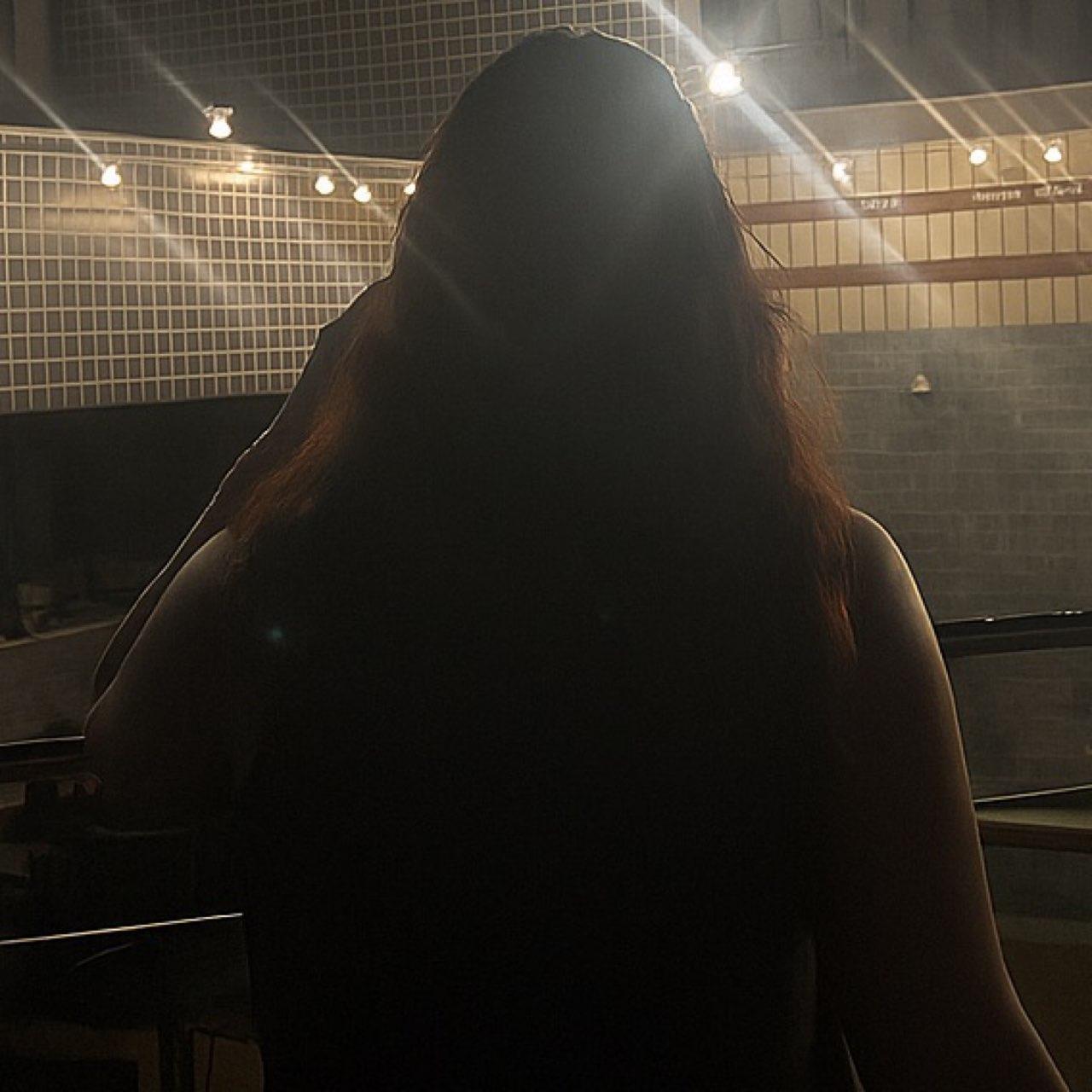
The Enemy in the Mirror
What your favorite villain-to-lover says about the parts of yourself you're afraid to claim
Article · 8 min read · ·

I need to tell you about a book that broke me open.
Not dramatically. Not with tragedy or loss. With a single line spoken by a man who had spent four hundred pages as the villain. He was cruel, calculating, merciless. He had done unforgivable things. And then, in the final act, he looked at the heroine—the one person who had refused to flinch—and said something that made me close the book, set it down, and stare at my ceiling for an hour.
"You saw me. Even when I couldn't see myself."
I cried. Not because it was romantic. Because I realized, in that moment, that I had been reading this story over and over for years—not for the love story, but for the recognition. The fantasy that someone could witness my sharpest, darkest, most shameful edges and stay. Could look at the parts of me I kept hidden and say, "I see you. And I'm not leaving."
I had been projecting onto the villain. The hero was never the point. The villain was the mirror.
And I had been staring into that mirror my whole life, trying to figure out who was looking back.
The Traditional Blueprint: From Foes to Flames
The enemies-to-lovers trope is one of the most magnetic, enduring structures in romantic fiction. Its core promise is simple: two people who begin as adversaries, who have witnessed each other at their absolute worst, eventually surrender to an undeniable connection.
Psychologist Dr. Tony Ortego argues that passion is the bridge that unifies these opposing forces—the same intensity that fuels hatred, redirected, becomes the fuel for love. Jamie, a reader with a PhD in Comparative Literature (who admittedly "made it up just now" when pressed), explains: "The psychological distance between hatred and love is actually shorter than between indifference and love".
The passionate energy it takes to truly loathe someone is just passion, redirected. The "I hate you" exchange becomes something else entirely—not a barrier, but a bridge.
But the real secret, the one that keeps readers returning to this trope again and again, is not the heat of the conflict. It's the promise at the end of it. Studies suggest that the most appealing factor of this dynamic is the implicit guarantee that despite the other person witnessing us at our absolute worst, they still choose to accept us unconditionally. It's no wonder this resonates so deeply with individuals who may be seeking acceptance of their own self-perceived imperfections.
The enemy becomes the lover. The one who saw you break becomes the one who holds you whole.
What This Trope Does to the Reader
Enemies to lovers is the slow-burn shot of adrenaline in romance. It's about friction, tension, and the deep ache of denial. When two characters start on opposite ends of the battlefield, every glance, every insult, every accidental touch is magnified.
It makes us feel alive as readers because it mirrors one of the hardest emotional truths: sometimes attraction doesn't come neatly packaged in safety. Sometimes it starts with conflict. And it forces one to ask—what if the very person who challenges me most is the one who sees me clearest?
At its core, this trope is about risk. Risking pride. Risking ego. Risking the possibility of being wrong about someone—and about yourself. The "enemy" is often the character who sees you at your most unguarded—the flaws, the insecurities, the sharp edges—and refuses to let you hide.
This is why I kept returning to it. Not for the tension. For the permission. The fictional space where being seen at my worst wasn't the end of the story—it was the beginning.
The Shadow Reflection: When the Enemy Is Already Inside
Here is the question I had to ask myself, eventually, after years of reading about villains who were secretly wounded and enemies who were secretly mirrors.
"What if I'm not projecting onto the villain? What if the villain is already inside me? And what if the 'lover' is the part of me that's ready to stop fighting?"
When the enemies-to-lovers trope becomes a shadow mirror, it often points to one of two hidden dynamics within us.
The Self-Rejector.
This part of you has a vivid, detailed internal critic. It knows exactly what's wrong with you—where you fall short, where you've failed, where you're "too much" or "not enough." And it has been waiting, perhaps for decades, for someone external to override its verdict. To look at all the evidence the critic has compiled and say, "Actually, you're wrong about them. I see something you don't."
The Self-Rejector projects its own harsh judgment onto fictional enemies, then lives vicariously through the moment that judgment is overturned. It's not the love it's craving. It's the absolution.
The Exiled Edge.
This part of you is drawn to villains not despite their darkness, but because of it. The morally gray character, the antihero, the one who operates outside the rules—this character isn't a threat. They're a kinship. They represent the parts of yourself you've learned to hide: the ambition you suppress, the anger you swallow, the hunger you've been taught to call selfish.
The Exiled Edge watches the villain burn down the world and feels a secret thrill. Not because it wants to hurt anyone. Because it wants permission to stop being so damn good all the time.
Both of these parts are not broken. They are exhausted. The Self-Rejector is tired of waiting for external validation. The Exiled Edge is tired of performing niceness. And the enemies-to-lovers trope, in its most healing form, offers a blueprint for what integration could look like: not the destruction of the enemy, but the surrender to the parts of ourselves we've been fighting.
The Sanctuary Question
"What if the 'enemy' I've been fascinated with in fiction is actually pointing at a part of myself I've been afraid to claim—my ambition, my anger, my hunger, my sharp edges?"
Not "what's wrong with me." Just: What part of me is ready to stop being the enemy and start being integrated?
The Integration Prompt: The Interview with the Enemy
Your task is not to diagnose your taste in fiction. It is to interview the character who lives in your chest—the one you defend, the one you return to, the one whose arc makes you feel something you can't quite name.
1. Choose Your Enemy.
Not the love interest. The one who challenges them. The morally gray figure, the antagonist with a complicated backstory, the character everyone else in the fandom seems to misunderstand. The one you feel protective of.
2. Sit with the Attraction.
Ask yourself, gently: "What about them do I recognize? What part of their story makes my chest tight? If they were a part of me, what would they be trying to protect?"
3. Write Their Monologue.
Give them a voice. Let them explain themselves—not to a jury, but to you. What do they want? What are they afraid of? What would they say if someone finally asked, "Why are you like this?"
4. The Integration Sentence.
When you've finished writing, read it back. Then write one sentence addressed to that part of yourself—not as a character, but as a part of your own inner ecosystem.
"I see why you're angry. You don't have to fight alone anymore."
"Your ambition isn't selfish. It's survival, repurposed."
"You can put down the armor now. I'm here."
This is not about excusing harmful behavior—in fiction or in life. It is about recognizing that the energy driving the villain is not foreign. It is human. And it is already inside you, waiting to be integrated, not exiled.
What I Know Now
I still love enemies to lovers. I still stay up too late reading about morally gray men and the women who refuse to flinch. But I don't read them the same way anymore.
I read them as instruction manuals. Blueprints for the parts of myself I'm still learning to welcome home.
The villain was never the fantasy. The fantasy was integration. The fantasy was the moment the enemy stopped being the enemy and became something else entirely—not a lover, necessarily. But a collaborator. A part of the team. A piece of the puzzle that finally, after years of being locked out, was given a seat at the table.
This is what the Rendering is for. Not to tell you which tropes are "healthy" or "unhealthy." To help you read with intention—to distinguish between the fictional container and the real need, to study your own attractions as data, to build the inner sanctuary where all your exiled parts can finally come in from the cold.
And on my YouTube channel, I post free soundscapes designed for this kind of reading. Not to distract. To regulate. To help your nervous system stay present while the story stirs what needs to be stirred.
No pressure. Just a practice. Just a door.
For the ones who have been secretly rooting for the villain. For the exiled edges and the exhausted self-rejectors. For everyone who has ever closed a book and thought, "I want someone to see me like that."
The person you're waiting to see you is already here. It's you. And you're ready to stop fighting.
With you in the sacred integration,
Star
Responses
No responses yet — start the conversation.
More from the Magazine
Paws, Hooves, Fins & Furry Energy 🐙💕
How Animals Protect Your Aura & Heal Your Soul.

The Difference Between Incense and Smudge
Understand the distinction between everyday aromatic incense and culturally specific smoke-cleansing
The Reluctant Kitchen Witch
Five-minute rituals, everyday ingredients, and zero recipes, for those who would rather never cook