Symbols are to the mind
what tools are to the hand
Article · 4 min read · ·
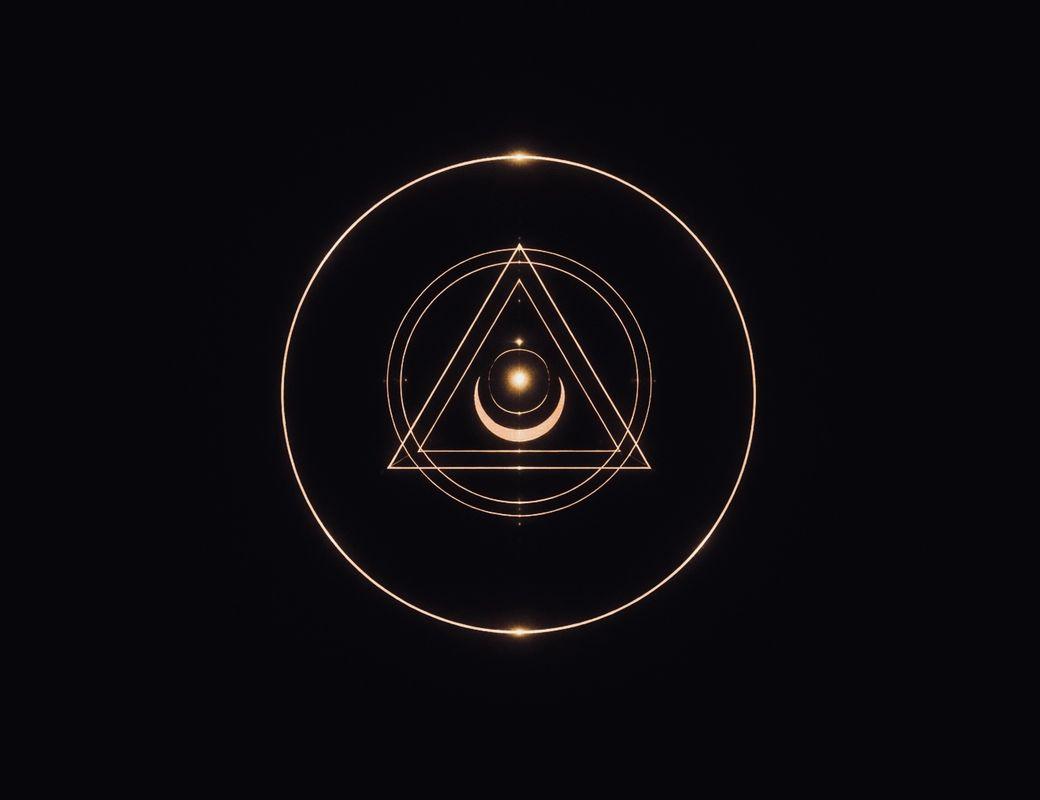
Since the earliest civilizations, humanity has engaged with the world through symbols. Even before writing existed, there were already signs, marks, colors, and shapes used to represent forces of nature, gods, cycles, and important events. The human mind doesn't work solely with concrete facts. It organizes reality through images, metaphors, and associations. The symbol arises precisely at this point: as a bridge between the invisible and the comprehensible.
When someone looks at a circle, for example, they rarely see just a geometric shape. In many cultures, it represents totality, eternity, perfection, or the sun itself. This meaning doesn't arise by chance. It is built over centuries of collective experience, rituals, myths, and observations of the natural world.
The symbolic language of ancient traditions
In ancient Egypt, each deity had specific forms, colors, animals, and objects. These elements were not mere decorations. They were visual codes that communicated spiritual functions. The scepter of power, the solar disk, the lotus, the scarab—everything was part of a symbolic language that taught cosmological and spiritual truths.
In Greece, the same principle appears in myths. Aphrodite is born from the sea, Dionysus is linked to the grapevine, Athena to the olive tree and the owl. Each image carries an idea. The symbol allows complex concepts to be understood immediately, almost instinctively.
In Hermeticism, this becomes even more evident. Texts like the Corpus Hermeticum and the Emerald Tablet present teachings through images and analogies. What is above corresponds to what is below. The sun and moon represent spiritual principles. Gold symbolizes the perfection of consciousness. All of alchemy is built upon a symbolic system.
The symbol as a mental tool
Just as the hand uses tools to act upon the physical world, the mind uses symbols to act upon the inner world. A symbol concentrates meaning. It works as a shortcut to states of consciousness, memories, and emotions.
A national flag, for example, is not just a piece of fabric. It awakens feelings of belonging, historical memory, and collective identity. The same happens with religious, magical, or spiritual symbols. They activate deep layers of the psyche.
Carl Jung observed that the unconscious expresses itself primarily through symbolic images. Dreams, visions, and myths share similar structures because the human mind organizes experience through archetypes. The symbol is not an ornament of thought. It is part of the very structure of the mind.
The symbolic use in magic and spirituality
In spiritual practice, the symbol serves to orient attention and give form to the invisible. A pentagram, a sigil, a mantra, or a planetary seal possesses no power by itself as a physical object. The power arises from the relationship between the symbol, the mind, and the intention.
In Hermetic and Solomonic magic, each planet has its corresponding seals, colors, metals, and incenses. This creates a coherent symbolic field. The mind attunes to that cosmic function through these associations. The symbol organizes perception and directs the will.
In Kabbalah, the same occurs with the sefirot. Each has a corresponding divine name, color, number, angel, and symbol. This system is not arbitrary. It was built as a symbolic map of consciousness and creation.
How symbols shape everyday life
Even outside spiritual contexts, symbols continue to influence behavior. Logos, uniforms, titles, medals, environmental colors, and even social gestures function as symbolic codes. They guide decisions, emotions, and attitudes.
A person who wears certain clothing for work enters into a specific psychological role. An office with soft lighting conveys a sense of welcome. A courthouse with monumental architecture reinforces the idea of authority. All of this is symbolic language applied to practical life.
Practical application: working with symbols consciously
A simple way to apply this principle is to choose a symbol that represents a quality you wish to develop.
☀️ It could be the sun for clarity and vitality.
🌚 The moon for introspection and sensitivity.
🏔️ A mountain for firmness and constancy.
🔥 A flame for will and energy.
Choose a simple symbol. Observe it daily for a few minutes. Reflect on what it represents and how that quality appears or is lacking in your life. Over time, the mind begins to associate that symbol with the corresponding inner state.
Another useful practice is to observe the symbols that are already part of your routine. The objects in your room, the images you consume, the colors that predominate in your environment. All of this influences your mental state silently.
Symbols have accompanied humanity from caves to modern cities. They structure religions, philosophies, magical systems, and even political institutions. The human mind recognizes patterns and meanings even before formulating rational concepts.
When someone learns to perceive the symbolic value of things, they come to better understand their own mind and the world around them. The symbol ceases to be just a drawing or object and becomes a tool for inner guidance.
Caring for the symbols you carry, observe, and repeat every day is a silent way of caring for your own thinking. The mind organizes itself according to the images it feeds on. Those who understand this begin to choose more carefully what they allow into their mental field.
Quem aprende a ler os símbolos começa a compreender a própria mente, porque todo pensamento nasce de uma imagem interior.
Responses
No responses yet — start the conversation.
More from the Magazine
Protection Magic Is More Than a Jar of Salt
The folklore of warding, the psychology of safety, and the boundaries that matter in real life
Paws, Hooves, Fins & Furry Energy 🐙💕
How Animals Protect Your Aura & Heal Your Soul.
The Difference Between Incense and Smudge
Understand the distinction between everyday aromatic incense and culturally specific smoke-cleansing