Meet Hecate
Ancient Goddess of Crossroads and Shadow (Part 1 of 5)
Article · 6 min read · ·
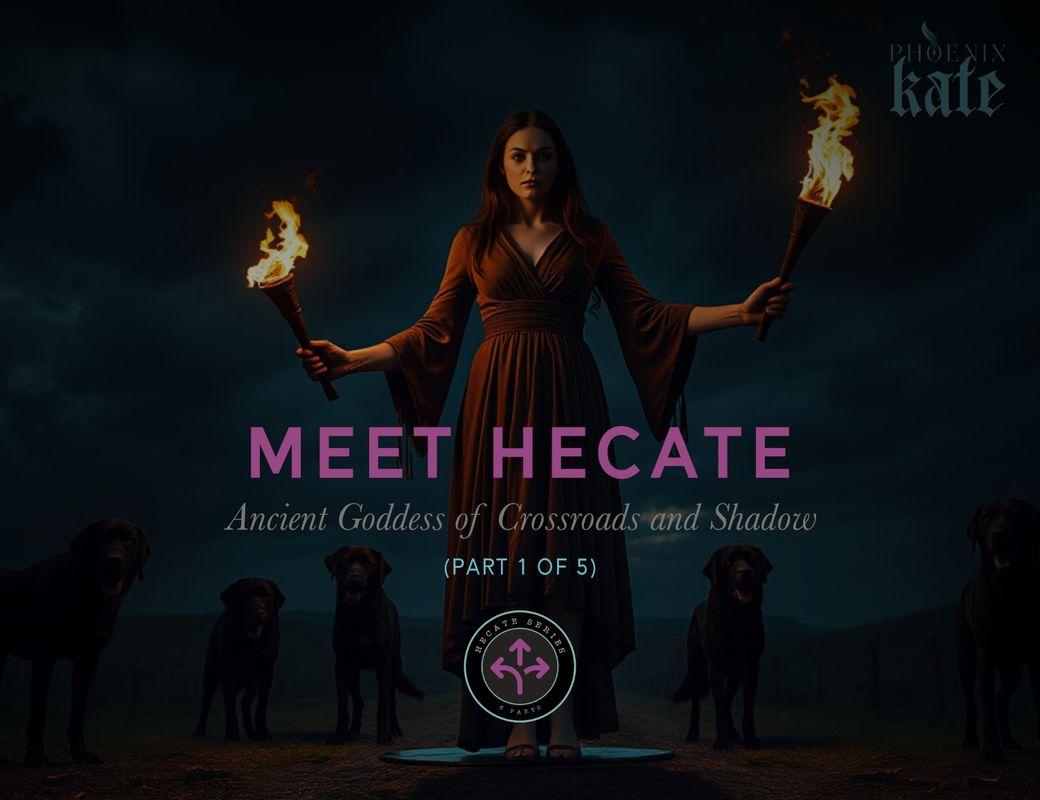
She stands at crossroads holding torches. She guards thresholds between worlds. She keeps the keys to what you’ve locked away, even from yourself.
This is Hecate. And if you’re reading this, she might be calling.
Not with comfort. Not with easy answers. Hecate doesn’t deal in spiritual bypassing or gentle reassurance. She offers something far more valuable: truth, power, and the keys to unlock what you’ve kept hidden in shadow.
The Goddess Who Kept Her Power
In a pantheon where gods routinely overthrew their predecessors and stripped goddesses of their domains, Hecate stands alone. She is the only Titan who retained her full power when Zeus claimed his throne.
The story matters because it’s unusual. Exceptional, even.
When the Olympians rose and the Titans fell, territories were redistributed. Domains were seized. Ancient powers were diminished or absorbed. This was the pattern of divine succession: the old order yielding to the new through force.
But not Hecate.
Zeus, the new king of gods, confirmed her ancient privileges over earth, sea, and sky. He didn’t just allow her to keep her power; he honored it. Some myths say he had no choice. Hecate’s power was too fundamental, too ancient to be taken. She predated the order he was establishing. She governed liminal spaces, thresholds, the places between, territories no ruler could truly claim.
Others say Zeus recognized what would be lost if her power was diminished. Hecate wasn’t just powerful; she was necessary. Someone had to hold the keys to the underworld. Someone had to stand at crossroads. Someone had to witness what happened in the dark.
She kept her torches. She kept her keys. She kept her hounds.
And she kept her sovereignty.
This is why she matters to those of us doing shadow work, reclaiming power, or standing at our own crossroads. Hecate didn’t survive by becoming smaller, quieter, or more palatable. She didn’t negotiate her power away or make herself useful to the new regime by diminishing what she was.
She remained, in full.
Why Hecate? Why Now?
The modern spiritual landscape is full of goddesses. Loving mother figures. Nurturing earth energies. Gentle moon deities offering soft comfort and unconditional acceptance.
Hecate is not that.
She appears when comfort isn’t enough anymore. When you’ve outgrown easy answers and pretty platitudes. When you’re standing at a crossroads in your life and you need truth more than reassurance.
She comes when you’re ready to look at what you’ve been avoiding.
Here’s what makes Hecate relevant right now:
She doesn’t flinch from darkness. In a culture obsessed with toxic positivity and “good vibes only,” Hecate holds space for the full spectrum of human experience. Rage. Grief. The parts of yourself you’ve learned to hide. The power you’ve been taught to diminish. She doesn’t ask you to spiritually bypass your shadow; she hands you a torch and says “look.”
She governs thresholds and transitions. We’re living in an era of constant, destabilizing change. Career crossroads. Relationship endings. Identity evolution. The structures we built our lives on are shifting. Hecate specializes in liminal spaces, those uncomfortable in-between times when you’re no longer who you were but not yet who you’re becoming.
She kept her power in a system designed to take it. If you’re navigating spaces that ask you to be smaller, quieter, more accommodating, if you’re in the process of reclaiming sovereignty over your own life, Hecate is a powerful ally. She models how to remain whole in systems that benefit from your diminishment.
She offers keys, not answers. Hecate doesn’t do your work for you. She won’t rescue you or make hard decisions easier. But she’ll illuminate what you need to see. She’ll unlock what you’ve kept hidden. She’ll stand with you at the crossroads while you choose.
If Hecate Is Calling To You
Not every goddess is for everyone. Not every deity relationship serves every person at every time. But there are signs that Hecate might be extending an invitation.
You might be in Hecate’s territory if:
-
You’re at a major life crossroads and the path forward isn’t clear
-
You’re being called to look at shadow aspects of yourself you’ve avoided
-
You feel drawn to work that involves boundaries, protection, or sovereignty
-
You’re in a liminal space: between jobs, relationships, identities, or life phases
-
You keep encountering her symbols: keys, torches, dogs, crossroads
-
You’re done with spiritual teachings that prioritize comfort over truth
-
You’re reclaiming power in spaces that have asked you to diminish yourself
-
You work with the dead, with ancestors, or with underworld energies
-
You’re drawn to her even though she unsettles you
What it means when Hecate calls:
It doesn’t mean comfort is coming. It means truth is.
It means you’re ready for deeper work than surface-level spirituality can offer. You’re ready to hold the torch steady and look at what’s been hidden in shadow. You’re ready to stand at your crossroads and make the choice that honors your full self, not the diminished version others find more palatable.
When Hecate appears, she’s not offering to make things easier. She’s offering to make you more whole.
The Torches She Carries
Hecate is almost always depicted holding torches; usually two, sometimes one. This isn’t decorative symbolism. The torches are functional.
She illuminates.
In ancient Greece, Hecate’s torches guided Demeter’s search for Persephone through the darkest night. She didn’t bring Persephone back. That wasn’t her role. She provided light so the searching could continue. She witnessed. She illuminated. She revealed what was hidden.
This is what her torches do in shadow work.
They don’t make the darkness go away. They don’t transform your shadow into something more palatable or spiritually acceptable. They show you what’s actually there: the rage you’ve suppressed, the grief you’ve avoided, the power you’ve diminished, the truth you’ve been too afraid to speak.
The light isn’t gentle. It doesn’t soften what it reveals. But it’s honest.
And sometimes honest light is exactly what we need.
Working With Hecate: A Beginning Practice
If you’re feeling called to work with Hecate, start simple. This isn’t about elaborate rituals or perfect altar setups. It’s about showing up with honesty.
Crossroads Meditation: Meeting Hecate
Find a time when you won’t be interrupted. Sit somewhere comfortable. You don’t need candles or incense, though you can use them if it helps you focus.
Close your eyes. Take three deep breaths.
Imagine yourself standing at a crossroads. Four paths stretch before you in the darkness. You can’t see where any of them lead.
You’re alone. It’s night. You’re uncertain.
Then you notice a light approaching. Not bright, more like torchlight. Steady. Unwavering.
Hecate arrives. She doesn’t speak immediately. She holds her torches and waits.
This is your moment to ask. Not for her to make your decision. Not for her to tell you which path to take. But for illumination. “Show me what I need to see.”
Let her torches cast light on what’s been hidden. Maybe it’s a fear you haven’t acknowledged. Maybe it’s a truth you’ve been avoiding. Maybe it’s a part of yourself you’ve kept locked away. She won’t force you to look. But if you’re willing, she’ll show you.
When you’re ready, thank her. Open your eyes.
Write down what you saw. Not what you wish you’d seen. What actually appeared in the torchlight.
Hecate stands at the crossroads with her torches burning. The dogs are quiet for now, watching, waiting. The keys jangle softly at her belt. She doesn’t ask if you’re ready—she knows. The only question is: will you take the first step toward her?
Responses (8)


More from the Magazine

Paws, Hooves, Fins & Furry Energy 🐙💕
How Animals Protect Your Aura & Heal Your Soul.
The Difference Between Incense and Smudge
Understand the distinction between everyday aromatic incense and culturally specific smoke-cleansing
The Reluctant Kitchen Witch
Five-minute rituals, everyday ingredients, and zero recipes, for those who would rather never cook