Hecate’s Keys
Unlocking Your Power (Part 5/5)
Article · 12 min read · ·
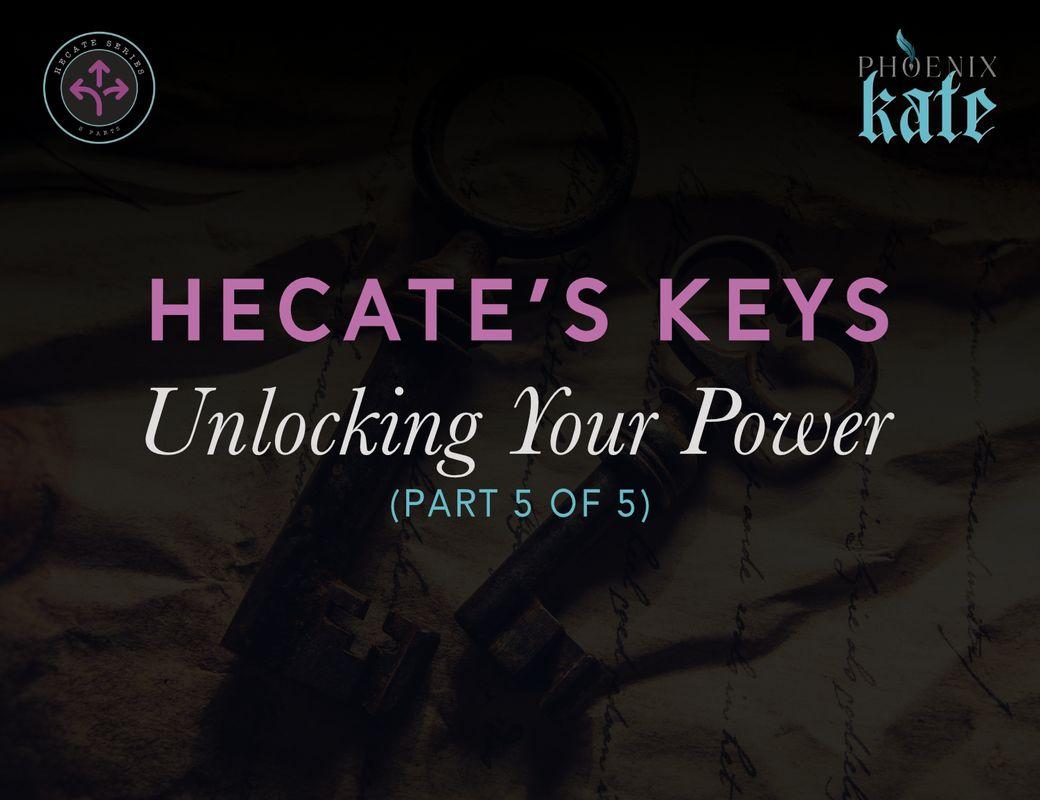
Hecate holds keys.
To the underworld. To the mysteries. To what you’ve locked away.
She’s called Kleidoukhos, the key-bearer. In ancient art, she’s depicted holding keys alongside her torches. Not one key. Multiple keys. Different locks require different keys, and Hecate holds them all.
But here’s what matters most about those keys:
She doesn’t unlock things for you. She hands you the keys and says: You do it. This is yours to open.
This is the final lesson in Hecate’s teaching. After the crossroads work, the torch illumination, and the threshold crossing, this is where you reclaim what you’ve given away.
Where you unlock the power you’ve kept imprisoned. Where you take back your sovereignty.
This is not gentle work. This is the work that changes everything.
What the Keys Represent
In mythology, Hecate’s keys grant access to the underworld, to hidden knowledge, to the mysteries that most humans never see. But in practical shadow work, the keys represent something more immediate:
Access to what you’ve locked away about yourself.
What we lock away:
-
Our power, when it made others uncomfortable. We learned early which parts of ourselves were acceptable and which were “too much.” So we locked away the intensity, the ambition, the fierce parts, and we’ve been living as diminished versions of ourselves ever since.
-
Our truth, when speaking it was dangerous. In families, workplaces, relationships where honesty wasn’t safe, we learned to lock away what we really thought, felt, wanted. We built elaborate systems of self-censorship and called it politeness.
-
Our rage, when expressing it got us punished. Especially for women, rage is socialized out of us young. We locked it away so thoroughly that we can’t even access it when we need it. It sits in our bodies, turned inward, making us sick.
-
Our desires, when acknowledging them felt shameful. Not just sexual desires, though sometimes those. The desire for wealth. For recognition. For solitude. For revenge. For things we’re supposed to pretend we don’t want.
-
Our boundaries, when maintaining them cost too much. We gave away our “no.” We locked away our capacity to protect ourselves because keeping the peace seemed more important than our own wellbeing.
-
Our sovereignty: our right to make decisions about our own lives without needing permission, without excessive explanation, without apologizing for existing.
All of this is behind locked doors.
Hecate holds the keys. But you have to be the one to turn them.
The Goddess Who Kept Her Power
We started this series with Hecate’s most important mythological moment: she’s the only Titan who kept her full power when Zeus took his throne.
This wasn’t luck. This wasn’t Zeus being generous. This was Hecate refusing to be diminished.
When the power structures shifted and domains were being redistributed, Hecate didn’t negotiate herself into a smaller, more acceptable role. She didn’t make herself useful by becoming less. She remained whole.
What this teaches about reclaiming power:
-
Your power doesn’t need permission to exist. You don’t need anyone’s approval to reclaim what you gave away. You don’t need to make yourself palatable to be worthy of your full self.
-
Some power is too fundamental to be taken. Hecate’s power over thresholds, over liminal spaces, over the boundaries between worlds was too essential to the cosmic order to be diminished. Your sovereignty over your own life is too fundamental to give away, even if you’ve been doing it for years.
-
Remaining whole in systems designed to diminish you is an act of power. The world will ask you to be smaller, quieter, more accommodating. Hecate models what it looks like to refuse.
Sovereignty vs. Power-Over
Before we go deeper into unlocking power, let’s distinguish between two kinds of power:
Power-over: Dominance. Control over others. The ability to make others do what you want through force, manipulation, or coercion. This is the kind of power that requires others to be diminished for you to have it.
Sovereignty: Authority over yourself. The right to make decisions about your own life. The capacity to honor your truth, set boundaries, and exist fully without needing permission. This is the kind of power that doesn’t require anyone else to lose theirs.
Hecate’s keys unlock sovereignty, not power-over.
This work isn’t about dominating others or becoming ruthless. It’s about reclaiming authority over your own life. It’s about unlocking the parts of yourself you gave away to survive, to be loved, to be accepted, and choosing to be whole instead of palatable.
What You Locked Away and Why
Most of what we’ve locked away, we locked away for good reasons at the time.
You locked away your power because:
-
It made authority figures uncomfortable
-
Peers called you intimidating, bossy, too much
-
You were punished for being confident, direct, or ambitious
-
You learned that being small was safer than being powerful
You locked away your truth because:
-
Speaking it got you punished, silenced, or dismissed
-
Others’ comfort was prioritized over your honesty
-
The consequences of truth-telling felt too dangerous
-
You learned that lying, even to yourself, was protective
You locked away your rage because:
-
Expressing it made you “difficult” or “hysterical”
-
You were taught that nice people don’t get angry
-
Anger was weaponized against you (“you’re too emotional”)
-
You learned to redirect rage inward where it couldn’t threaten anyone
You locked away your boundaries because:
-
Saying no cost too much (love, security, belonging)
-
Others’ needs were framed as more important than your limits
-
You were taught that self-protection was selfish
-
You learned that keeping the peace required sacrificing yourself
You locked away your desires because:
-
They didn’t fit the script of who you were supposed to be
-
They made you seem selfish, greedy, or inappropriate
-
Acknowledging them meant confronting what you didn’t have
-
You learned that wanting was dangerous
All of this made sense when you did it. You were protecting yourself. Surviving. Making the best choices available at the time.
But you’re not in that situation anymore.
And those locks are still holding.
The Cost of Staying Locked
Here’s what happens when you keep your power, truth, rage, boundaries, and desires locked away:
-
You build a life that doesn’t fit. You make decisions based on who you’re pretending to be, not who you actually are. Then you wonder why nothing feels right.
-
You attract people who benefit from your diminishment. When you hide your power, you attract people who need you to stay small. When you silence your truth, you attract people who prefer your lies. When you lock away your boundaries, you attract people who will violate them.
-
You turn everything inward. The rage you can’t express becomes depression. The truth you can’t speak becomes anxiety. The power you can’t claim becomes illness. What you lock away doesn’t disappear; it eats you from the inside.
-
You live in constant performance. You’re always managing others’ perceptions, editing yourself, calculating what’s safe to show. It’s exhausting. And it’s not actually living.
-
You lose access to your full self. The parts you locked away aren’t separate from you; they are you. When you lock them up, you’re living as a partial human. Functional, maybe. But not whole.
Unlocking Practice: The Key Ritual
If you’re ready to reclaim what you’ve locked away, here’s a ritual for working with Hecate’s keys to unlock your sovereignty.
What you’ll need:
-
An actual key (any key, even one that doesn’t unlock anything anymore)
-
A candle
-
Journal and pen
-
A locked box or container (optional but powerful)
-
Something that represents what you’ve locked away (written words work well)
The ritual:
1. Name what you locked away.
Be specific. Not “my power” in the abstract. What actual power did you lock away?
Write it down:
“I locked away my right to say no without explanation.”
“I locked away my rage at being dismissed.”
“I locked away my desire for recognition and wealth.”
“I locked away my truth about this relationship.”
“I locked away my capacity to be intense without apologizing.”
If you have a lockbox, put this written statement inside and lock it. Otherwise, fold the paper and hold it.
2. Acknowledge why you locked it.
Write down why you locked this away. What was the cost of keeping it visible? What were you protecting yourself from?
“I locked this away because expressing it got me punished.”
“I locked this away because it made people uncomfortable.”
“I locked this away because the alternative was losing everything.”
Don’t skip this step. Acknowledging why you locked something away honors the choice you made to survive.
3. Invoke Hecate.
Light your candle. Hold the key. Say:
“Hecate, key-bearer, I call on you. I’m ready to unlock what I gave away. I ask for your witness as I reclaim my sovereignty.”
4. Declare what unlocking will cost.
Here’s the hard truth: unlocking what you’ve hidden has consequences. People who benefited from your diminishment won’t like your wholeness. Systems that relied on your silence won’t appreciate your truth.
Write down what it will cost to unlock this:
“If I unlock my boundaries, I will lose relationships that required me to have none.”
“If I unlock my truth, I will have to speak what I’ve been avoiding.”
“If I unlock my power, I will make people uncomfortable.”
“If I unlock my rage, I will have to direct it where it belongs.”
5. Decide if you’re willing to pay the cost.
This is the moment where you choose.
You can put the key down. You can keep things locked. You can decide the cost is too high right now, and that’s valid.
Or you can turn the key.
6. Turn the key.
If you’re ready, physically unlock the box (if you’re using one) or symbolically turn the key while holding your written statement.
As you do, say:
“I unlock what I gave away. I reclaim my [power/truth/rage/boundaries/desire]. I claim my sovereignty.”
If you’re using a box, take out the paper and hold it.
7. Integrate what you’ve unlocked.
You can’t just unlock something and leave it there. You have to integrate it back into your life.
Write: “Now that this is unlocked, I will…”
Be specific. What’s one action you’ll take that honors this unlocked part of yourself?
“Now that my boundaries are unlocked, I will say no to the next request that violates them.”
“Now that my truth is unlocked, I will speak it in this specific situation.”
“Now that my power is unlocked, I will stop apologizing for taking up space.”
8. Thank Hecate and close.
Thank Hecate for holding the keys, for witnessing your unlocking, for standing with you as you reclaim your sovereignty.
Keep the key somewhere visible. It’s a reminder that you hold the keys to your own locks now.
After Unlocking
Here’s what no one tells you about reclaiming your power:
It’s uncomfortable at first.
You’ve been living in a smaller form for so long that your full self feels unfamiliar. Like putting on clothes that used to fit but feel too big now, except these are your actual size, and you’ve just been wearing things too small.
What happens after you unlock:
-
People will react. Those who benefited from your diminishment will be uncomfortable with your wholeness. They’ll call you changed, difficult, too much. They’re right; you have changed. You’re no longer performing smallness for their comfort.
-
You’ll doubt yourself. Your conditioning will kick in hard. “Was I wrong to unlock this? Am I being selfish? Should I lock it back up?” This is your psyche trying to return to what’s familiar, even if it wasn’t serving you.
-
You’ll have to practice using what you’ve unlocked. Setting boundaries after years of having none feels awkward. Speaking truth after years of silence feels dangerous. Claiming power after years of diminishment feels arrogant. Do it anyway. It gets easier.
-
You’ll attract different people and opportunities. When you stop hiding your full self, you attract people and situations that match your wholeness, not your performance of smallness.
-
You’ll feel more alive. Even with the discomfort, even with the consequences, there’s something profoundly alive about existing as your full self instead of a carefully edited version.
The Ongoing Work of Sovereignty
Unlocking your power isn’t a one-time event. It’s an ongoing practice.
Continued key work with Hecate:
-
Regularly check what you’re locking away. Shadow work isn’t done once and finished. New situations arise. New fears emerge. New parts of yourself need unlocking. Keep asking: what am I hiding? What am I making small? What needs to be reclaimed?
-
Honor the locks that protected you. Don’t shame yourself for locking things away. Those locks served you when you needed them. Thank them. Then choose whether they still serve you now.
-
Practice using your sovereignty. Every time you set a boundary, speak truth, claim space, honor your desires, you’re practicing sovereignty. It becomes easier with repetition.
-
Support others in unlocking theirs. When you reclaim your own power, you give others permission to reclaim theirs. Not by telling them what to do, but by modeling what’s possible.
-
Stay in relationship with Hecate. She’s not just for crisis moments. She’s an ongoing ally in the work of remaining whole in systems designed to diminish you.
Her final teaching
You were always whole. You locked parts of yourself away, but they didn’t disappear. They didn’t diminish. They were just hidden.
The keys have always been yours. Hecate holds them, but only because you gave them to her for safekeeping. She’s been waiting for you to be ready to take them back.
Your sovereignty is not something you earn. It’s something you reclaim.
And you get to do that. Right now. Today. In whatever small or large way feels true.
You don’t need permission to be whole. You don’t need anyone’s approval to reclaim what you gave away. You don’t need to wait until you’re ready enough, brave enough, healed enough.
You just need to turn the key.
Hecate stands at your crossroads holding torches and keys.
She’s been there all along, waiting for you to see what her light reveals and unlock what you’ve hidden.
The question has always been: are you ready to reclaim your full self?
If you’ve made it this far, through the crossroads, through the illumination, through the threshold, to the unlocking, you already know the answer.
Turn the key.
Responses (2)

More from the Magazine
The ADHD Witch's Guide to Practicing Magic When You Forget Everything
Build a practice around your actual brain, not the imaginary organized person you keep trying to be

The Trigger of Embarrassment
Let's tap into the Ego and how we can release the control it desires.
Protection Magic Is More Than a Jar of Salt
The folklore of warding, the psychology of safety, and the boundaries that matter in real life