Green Before the Cross
Ireland, Identity, and the Pagan Memory Beneath St. Patrick’s Day
Article · 33 min read · ·
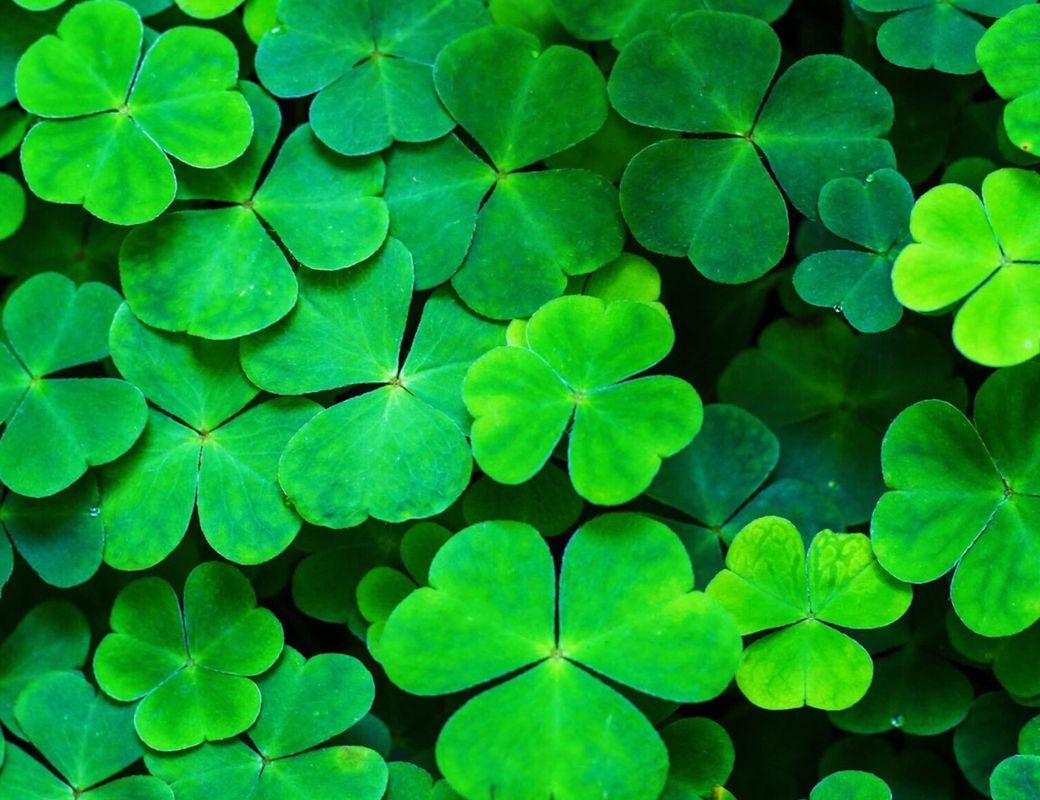
Ireland is not a people easily simplified, and it is not a culture that tolerates being spoken over. It is a land shaped by stone and story, by invasion and survival, by memory carried in the body as much as in books. To be Irish is not merely to inherit a nationality, but to inherit a relationship, with the land, with the dead, with time itself. That relationship has always been layered with reverence, superstition, ritual, and an unbroken awareness that the world is not only what is seen.
St. Patrick’s Day, for all its modern excess and global caricature, is rooted in that relationship. Long before parades and green-dyed rivers, before beer slogans and tourist folklore, March 17 functioned as a communal reaffirmation of Irish identity, an annual remembering of who the Irish were, where they came from, and what had survived them. Christianity may have attached itself to the date, but it did not create its meaning. The day endured because it already mattered.
Ireland’s conversion to Christianity was not a clean rupture. It was not a cultural erasure, nor was it a spiritual surrender. Unlike much of Europe, Ireland was never conquered by Rome, and its religious traditions developed outside imperial control. The old gods were not violently destroyed; they were negotiated with, renamed, softened, and sometimes hidden in plain sight. Sacred landscapes remained sacred. Seasonal rhythms remained intact. Wells still healed. Stones still spoke. The people remembered, even when the language changed.
To understand St. Patrick’s Day solely as a Christian feast honoring Saint Patrick is to misunderstand Ireland itself. Patrick did not introduce holiness to the island; he entered a land already saturated with it. The Irish were not an empty vessel waiting to be filled with doctrine, they were a people whose cosmology was already rich, symbolic, and deeply interwoven with daily life. Christianity succeeded in Ireland precisely because it adapted to this complexity rather than attempting to erase it outright.
Irish identity has always balanced contradiction: fierce pride and deep hospitality, poetic tenderness and brutal realism, laughter alongside mourning. Superstition was never naïveté, it was attunement. A recognition that the world is layered, that ancestors linger, that places remember, and that unseen forces move through the everyday. These beliefs were not extinguished by Christianity; they were carried forward, encoded into saints, stories, and seasonal customs.
This article does not seek to diminish Christianity’s role in Irish history, nor to romanticize paganism as a lost utopia. Instead, it seeks to tell the truth Ireland itself has always known: that St. Patrick’s Day is, at its core, a celebration of Irish continuity. Of land-based memory. Of survival through adaptation. Of a people who learned how to let new gods in without letting the old world die.
Before the cross, there was green.
Before the saint, there was the land.
And beneath every symbol we now associate with March 17 lies a deeper story, older, darker in places, sacred in others, and unmistakably Irish.
Ireland Before Patrick , A Land Already Sacred
Long before Christianity reached Ireland, the island existed within a fully formed spiritual and social ecosystem. This was not a primitive culture awaiting enlightenment, but a deeply structured world shaped by law, ritual, memory, and an intimate relationship with the unseen. Irish society was bound together by kinship, land, and belief, each reinforcing the other in ways that made spirituality inseparable from daily life.
Pre-Christian Ireland did not separate religion from society. There was no word for “religion” as a distinct institution because belief was embedded in everything. Law was sacred. Poetry was sacred. Kingship itself was sacred, contingent on harmony between ruler, people, and land. To violate that balance was not merely political failure but cosmic disorder.
At the center of this world stood the learned classes. The druids served as priests, judges, historians, and philosophers. Alongside them were the fili, poet-seers whose role extended far beyond entertainment. Poetry was a force believed to shape reality. Satire could ruin a king. Praise could ensure prosperity. Words carried weight because language itself was considered magical, capable of blessing or cursing, binding or breaking.
Irish law, known as Brehon Law, further reveals this worldview. These laws were not decrees handed down by a central authority but evolved from custom, land use, and collective memory. Justice aimed at restoration rather than punishment. Honor was quantifiable. Hospitality was mandatory. The social fabric rested on reciprocal obligation, mirroring the reciprocal relationship between humans and the natural world.
The land was not owned in the modern sense. It was inherited, stewarded, and negotiated with. Hills, rivers, trees, and stones were not inert features but living presences. Certain places existed as thresholds, locations where the boundary between worlds thinned. Burial mounds, standing stones, and ancient forts were understood as entrances to the Otherworld, not metaphorically but literally.
Irish mythology preserves this worldview with remarkable clarity. The arrival of the Tuatha Dé Danann, often described as gods but better understood as ancestral beings of power and knowledge, establishes Ireland as a land already claimed by the sacred. When later peoples arrive, including humans, they do not destroy these beings. Instead, the Tuatha Dé Danann retreat beneath the hills and into the earth, becoming the Aos Sí, the fairy folk. This is not a tale of disappearance but of continuity, of sacred presence adapting rather than vanishing.
Seasonal cycles structured Irish life. Festivals such as Samhain, Imbolc, Beltane, and Lughnasadh marked transitions in both agricultural labor and spiritual orientation. Samhain was not simply the end of harvest but a liminal moment when the dead could return and the future could be glimpsed. Imbolc honored fertility and renewal. These were communal rites, binding people to one another and to ancestral time.
This spiritual framework also shaped Irish attitudes toward fate, luck, and superstition. Omens were observed. Dreams were taken seriously. The unseen was not feared as an abstract threat but respected as a constant presence. To ignore it was dangerous. To honor it was wise.
When Christianity arrived, it encountered a people who already believed the world was layered, enchanted, and morally responsive. Saints, angels, and miracles did not feel foreign because Ireland already accepted sacred intermediaries and divine intervention as part of reality. Conversion succeeded not through eradication but through translation.
The Irish did not abandon their spiritual instincts. They redirected them.
To understand this is to understand why St. Patrick’s Day could never belong solely to Christianity. The foundations beneath it were laid long before Patrick set foot on Irish soil. Ireland was already holy. The Church simply learned how to speak its language.
Patrick the Man and Patrick the Myth
The figure known as Saint Patrick exists in two distinct forms, the historical man and the mythic symbol. Untangling them is essential, not to diminish his role in Irish history, but to understand how Ireland reshaped him according to its own spiritual grammar. Patrick did not conquer Ireland. Ireland absorbed Patrick.
The historical Patrick was not Irish by birth. He was a Romano-British Christian, born in the late fourth century in Britain, then part of the fading Roman world. As a teenager he was captured by Irish raiders and enslaved, forced to work as a shepherd in the west of Ireland. This period of captivity is not incidental. It formed the spiritual core of his later writings, particularly the Confessio, where he describes isolation, hardship, and an awakening religious devotion shaped by the Irish landscape itself. He prayed constantly among hills, storms, and silence. The land marked him before the Church ever did.
Patrick eventually escaped and returned to Britain, later entering clerical life. Years afterward, driven by visions and a sense of divine calling, he returned to Ireland as a missionary. This return is often framed as an act of spiritual heroism, but it is also an act of cultural familiarity. Patrick did not arrive as a stranger to Irish life. He understood the rhythms of pastoral labor, the authority of chieftains, and the power structures that governed society.
Christianity in Patrick’s time did not spread through mass conversion or public spectacle. It moved through negotiation. Patrick targeted kings and local rulers because conversion flowed downward through kinship systems. If a king accepted a new god, his people followed, not always out of belief but out of loyalty and necessity. This method aligned easily with Irish social structure, which was already hierarchical and oath bound.
Patrick’s writings reveal a man deeply aware of danger and resistance. He faced hostility from druids and rival religious authorities, not because he threatened belief itself, but because he threatened influence. The druids were not merely priests. They were legal authorities, advisors, keepers of genealogy, and mediators between worlds. Christianity challenged their social power more than their cosmology.
This is where the mythic Patrick begins to form.
Later tradition transforms Patrick into a symbolic conqueror of paganism. He drives snakes from Ireland. He defeats druids in magical contests. He illuminates darkness with Christian truth. These stories follow a familiar pattern found throughout medieval hagiography. Saints across Europe are depicted as dragon slayers, serpent banishers, and miracle workers because these narratives encode spiritual replacement rather than historical reality.
Ireland had no snakes. The serpent in Christian symbolism represented earth based wisdom, cyclical renewal, and older religious authority. Patrick banishing snakes is not a memory of an event. It is a mythic shorthand for religious transition, one that casts older belief as something dangerous yet powerful enough to require a heroic figure to overcome it.
Yet even this conquest narrative is softened in the Irish context. Patrick does not destroy sacred places. He repurposes them. Wells remain wells. Hills remain holy. Fires continue to burn, now dedicated to Christian feast days. This is not annihilation. It is translation.
Patrick himself becomes something more than a missionary. He becomes a cultural vessel. Over centuries, Irish memory reshapes him into a figure that mirrors older roles once filled by gods and sacred kings. He becomes a protector of the land. A guardian against chaos. A mediator between worlds. These are not exclusively Christian functions. They are ancient ones.
Folklore preserves this blending clearly. Patrick curses landscapes and blesses them. He bargains with spirits. He promises Ireland protection from invasion and apocalypse. These stories do not reflect Roman Christianity. They reflect Irish expectations of what a sacred figure should do.
Even Patrick’s feast day participates in this pattern. March sits at the edge of seasonal awakening. The land stirs. Light returns. Agricultural preparation begins. A celebration placed here could never remain purely theological. It becomes embodied. It becomes communal. It becomes Irish.
Patrick the man introduced Christianity to Ireland, but Patrick the myth belongs to Ireland itself. He is not simply remembered. He is repurposed. He stands not above the old world, but within it, reshaped by a culture that never surrendered its spiritual instincts.
Understanding Patrick in this way reveals the deeper truth beneath St. Patrick’s Day. The celebration does not honor a victory of one faith over another. It honors Ireland’s ability to survive change without losing itself. Christianity arrived, but Ireland remained.
Green, Land, and Identity , The Color That Could Not Be Converted
Green did not become Irish through symbolism. It became Irish through proximity. It is the color that dominates the eye and the memory, the unavoidable hue of hills, fields, hedgerows, and rain-fed valleys. Long before green was claimed by nationalism or stitched into flags, it was the visual language of the land itself. In Ireland, color was never decorative. It was relational.
In pre-Christian Ireland, land was not an object to be owned but a presence to be entered into relationship with. Kingship depended upon this bond. A rightful king did not rule by conquest alone but by harmony with the territory he governed. If crops failed, if cattle sickened, if storms ruined harvests, these were signs that the bond between ruler and land had been broken. Green, as the visible expression of fertility and continuity, became inseparable from legitimacy and belonging.
Irish myth preserves this connection with remarkable consistency. The land often appears personified as a woman who grants sovereignty through ritual union. These figures are not romantic abstractions. They are embodiments of territory itself, reflecting the belief that land possesses agency, memory, and expectation. To honor the land was to ensure survival. To violate it was to invite catastrophe.
Green also carried liminal meaning. It marked spaces where the boundary between worlds grew thin. Fairy mounds, ancient forts, and overgrown hills were often described as intensely green, unnaturally vivid, signaling the presence of the Aos Sí. To wear green in the wrong place or at the wrong time could invite misfortune. To disrespect green spaces was to disrespect the unseen inhabitants who dwelled there. This was not superstition in the trivial sense. It was cultural literacy.
Christianity did not introduce green as a symbol. In fact, early Christian iconography associated holiness more often with white, gold, or blue. Green was unstable, ambiguous, too closely tied to earth energy and seasonal flux. It belonged to growth and decay alike. It resisted moral simplification.
Yet Christianity in Ireland did not attempt to erase this symbolism. It could not. Green remained embedded in daily experience. Fields did not change color because doctrine shifted. Hills did not become neutral terrain. The Church adapted by allowing green to remain what it already was, even as it reinterpreted its meaning within a Christian framework.
Over time, green accumulated additional layers. It became associated with Irish resistance and identity, particularly during periods of English rule when Irish culture itself was suppressed. To wear green became an act of defiance, a quiet declaration of continuity. Songs and poems reinforced this association, binding color to memory, loss, and endurance.
What is often forgotten is that this political symbolism only succeeded because it rested on something older. Green could stand for Ireland because Ireland had always been green, not in abstraction but in lived experience. The land trained the eye. The eye trained the symbol.
On St. Patrick’s Day, the insistence on green functions as more than festive uniform. It is ritual participation, whether consciously understood or not. To wear green is to align oneself with the land, to signal belonging, to affirm continuity across centuries of change. Christianity may frame the celebration, but green grounds it.
This is why the color could never be fully Christianized. It does not point upward toward heaven. It points outward and downward, toward soil, growth, decay, and return. It belongs to cycles rather than commandments. It resists finality.
In this way, green reveals the deeper truth of the celebration itself. St. Patrick’s Day endures not because it commemorates a saint, but because it reactivates a relationship between people and place. The color does what doctrine cannot. It remembers.
The Shamrock and the Sacred Pattern Beneath It
The shamrock survives not because it explains Christianity, but because it already belonged to Ireland. Long before it was recruited into Christian teaching, the small three-leafed plant carried symbolic weight rooted in how the Irish understood the structure of reality itself. It was not remarkable for its rarity or beauty. It was remarkable for its familiarity. It grew everywhere. It was underfoot. It belonged to the land and therefore to the people.
Pre-Christian Irish culture was organized through patterns rather than proclamations. Knowledge was preserved orally, encoded in repetition, rhythm, and number. Among these, the triad held special power. The world was understood through threes not because they were convenient, but because they reflected balance in motion. Stability required tension. Meaning required relationship.
This triadic worldview appears consistently across Irish mythology and law. Existence was structured through land, sea, and sky. Time unfolded through past, present, and future. Life moved through birth, death, and renewal. Even legal and poetic forms relied on triadic phrasing, a mnemonic device that reinforced cosmic order through language. To speak in threes was to align speech with truth.
The shamrock, with its three united leaves sharing a single stem, mirrored this worldview perfectly. It was not a symbol invented to teach belief. It was a natural expression of belief already lived. Its power lay in its ordinariness. Anyone could see it. Anyone could hold it. It was theology made tactile.
Later Christian tradition claims that Saint Patrick used the shamrock to explain the Trinity to the Irish. Whether or not this moment occurred historically is less important than why the story endured. The narrative works because it acknowledges an underlying truth. Christianity did not introduce the concept of unified multiplicity to Ireland. It translated itself into a symbolic language the Irish already trusted.
This is not unique to Ireland, but it is unusually transparent there. In many cultures, conversion narratives erase what came before. In Ireland, the old structure remains visible beneath the new interpretation. The Trinity did not overwrite the triad. It occupied it.
Folklore preserves this layered meaning. The shamrock was carried as a protective charm, believed to ward off misfortune and ensure safe passage. It was associated with luck not as randomness, but as alignment. To possess the shamrock was to walk in step with unseen forces. Finding a four-leaf clover intensified this belief not because four was superior to three, but because it was rare, a disruption of the expected pattern that signaled Otherworld influence.
In Irish tradition, luck was never arbitrary. It was not chance divorced from meaning, but the visible result of harmony between people, land, and the unseen. The shamrock was considered lucky because it indicated that harmony was present. Agriculturally, clover was a gift to the land. It replenished soil, sustained grazing animals, and ensured the health of cattle upon which survival depended. A field thick with clover promised nourishment, continuity, and resilience through winter. To encounter it was to witness land functioning as it should.
Folklorically, the shamrock also functioned as a form of spiritual recognition. Fairy lore consistently places the Aos Sí in landscapes of abundance and vitality. Clover-covered ground was believed to be watched, protected, and inhabited. Carrying shamrock was thought to offer a degree of safety, not because it banished the Otherworld, but because it marked the bearer as someone who noticed and respected it. Luck emerged not from dominance, but from awareness.
The plant’s low growth further deepened its symbolism. Clover thrives close to the earth, resilient beneath footsteps, returning again and again after being cut or trampled. This persistence mirrored Irish cultural values forged through hardship, invasion, and endurance. Luck, in this context, was not sudden fortune. It was survival. Continuation. The ability to remain rooted and return.
Even the act of finding a shamrock carried ethical meaning. One had to look down. To slow. To attend to what was small and easily overlooked. This posture aligned with older Irish spiritual sensibilities, where arrogance invited misfortune and attentiveness invited favor. The shamrock rewarded those who moved through the world carefully.
Christianity attempted to frame the shamrock as instructional, a visual aid for theological clarity. Yet this framing underestimates Irish intelligence and overestimates ecclesiastical authority. The Irish did not adopt the shamrock because it made Christianity comprehensible. They accepted Christianity where it aligned with a symbolic universe that already made sense.
What the shamrock ultimately represents is continuity without surrender. A living symbol that carried meaning across religious transformation without losing its core identity. It demonstrates how Ireland did not abandon its spiritual architecture. It allowed new meaning to rest upon old foundations.
On St. Patrick’s Day, the shamrock appears everywhere, pinned, printed, stylized, and commercialized. Yet beneath this surface repetition remains an older truth. Each leaf still speaks to balance. Each stem still binds multiplicity into unity. Each appearance quietly reenacts a worldview older than the Church that claimed it.
The shamrock did not become sacred because of Christianity. Christianity endured in Ireland because it learned how to speak through the shamrock.
Leprechauns and Their Kin , Guardians, Gold, and the Old Rules
Irish folklore does not present the unseen world as comforting. It presents it as exacting. The beings who inhabit it are not moral in a human sense, nor are they concerned with fairness. They operate according to older rules rooted in land, labor, and consequence. Among these beings, none have been more misunderstood or softened by modern imagination than the leprechaun.
The leprechaun did not begin as a mascot. He emerged from a complex network of fairy lore tied to the Aos Sí, descendants of the older divine inhabitants of Ireland who retreated into the earth when the human world claimed the surface. These beings were not diminished by retreat. They became concentrated. Their power narrowed and sharpened. What remained was not benevolence, but precision.
Early descriptions present leprechauns as solitary figures, rarely social, almost never communal. They were craftsmen above all else, particularly cobblers, a trade that carried symbolic weight. Shoemaking was associated with thresholds, with travel, and with the boundary between movement and stillness. The leprechaun repairs what allows others to walk the land, yet he himself remains outside ordinary society. This isolation is not incidental. It signals danger.
Unlike later green-clad depictions, older leprechauns were often described wearing red. Red in Irish folklore is a color of blood, power, and warning. It marks beings connected to violence, sovereignty, and ancient authority. From this lineage emerge darker fairy figures such as the red caps, spirits known for malevolence and attachment to places of death and conflict. While red caps and leprechauns are not identical, their symbolic overlap reveals a shared ancestry. Both are bound to land. Both guard what they claim. Both punish intrusion.
The leprechaun’s gold must be understood in this context. It is not wealth meant for circulation. It is hoarded because it is not currency. It represents stored power, accumulated through time, labor, and secrecy. In Irish belief, treasure hidden in the earth often signifies displaced sovereignty rather than mere wealth. Gold buried and guarded reflects authority that no longer rules openly but still exists.
The pot of gold at the end of the rainbow is not a reward. Rainbows themselves are liminal symbols, appearing briefly and bridging sky and earth without belonging fully to either. To chase one is already to misunderstand its nature. Likewise, to seek a leprechaun’s gold is to approach the Otherworld with human assumptions. Folklore consistently warns that those who attempt to seize fairy treasure rarely keep it. Coins turn to leaves. Time slips. Memory fractures. The trick is not the leprechaun’s deception. The trick is the human belief that the rules of the visible world apply.
Even capturing a leprechaun offers no certainty. Stories describe how, if caught, a leprechaun may grant wishes or reveal the location of his gold, but only while under constant vigilance. A moment’s distraction allows escape. This imbalance reflects a deeper truth. The Otherworld does not labor to dominate. It waits for human error.
These tales served practical purposes. They taught restraint. They reminded people that not all that is desirable should be pursued. Curiosity without respect invites loss. Greed invites humiliation. Survival depends not only on cleverness but on knowing when to withdraw.
Christian reinterpretation softened these beings, recasting them as mischievous rather than dangerous, comical rather than consequential. This transformation allowed fairy lore to survive under a moralized lens. Yet older traditions persisted in rural practice. Trees were left standing. Mounds were avoided. Offerings were made quietly. These actions were not trivial superstitions but survival strategies reinforced across generations.
The leprechaun, then, is not a symbol of luck freely given. He is a guardian of hidden power. His gold is not meant to be taken because it belongs to an older order that remembers who once ruled the land and how that rule was lost. To include leprechauns in St. Patrick’s Day celebration without acknowledging this lineage is to misunderstand Irish tradition. The sacred is not always safe. Desire without respect invites consequence.
This is not pessimism. It is realism shaped by centuries of experience. A people who endured invasion, famine, and displacement did not imagine their spirits as harmless. They imagined them as enduring, precise, and exacting, reflecting a world where the unseen always watches.
Feast, Famine, and Faith , Food, Ritual, and Exception on St. Patrick’s Day
If the Otherworld demanded respect, the human world demanded sustenance. St. Patrick’s Day has always been as much about food as faith, and the two are inseparable. The day was anchored in the rhythms of survival, fertility, and communal gathering. In pre-modern Ireland, the feast was both spiritual and practical. It reflected the land, the seasons, and centuries of cultural memory that Christianity could not erase.
Corned beef, cabbage, and the all-important potato, now familiar on tables around the world, have their origins in necessity rather than modern celebration. The preservation of meat through salting, combined with the seasonal abundance of cabbage, created a meal that could sustain households through late winter scarcity. Potatoes, introduced to Ireland in the late sixteenth century, became essential because they were calorie-dense, resilient in poor soils, and capable of feeding large families. In rural Ireland, this dish was not indulgence, it was survival translated into ritual. To eat it on March 17 was to affirm continuity with ancestors who had relied on the land’s generosity for centuries.
The Church itself recognized the power of these traditions, and in doing so, made concessions that reveal the depth of Irish attachment to the day. Canonical law required fasting and abstinence on Wednesdays and Fridays, and Lent prohibited meat, yet local bishops repeatedly granted dispensations for St. Patrick’s Day. The Irish were permitted to break their fast precisely because the day was too significant to ignore. Eating meat, cabbage, and potato on this feast was not a challenge to faith, it was a recognition that faith, culture, and survival were inseparable.
Ritual exceptions extended beyond food. Wells dedicated to saints were often aligned with older sacred sites. Patrick himself was credited with “Christianizing” wells that had once been devoted to pre-Christian goddesses, yet the practice of visiting, offering, and blessing water persisted in essentially unchanged form. Offerings might include coins, threads, or small trinkets, acts that reflect both continuity with older rituals and adaptation under Christian framing. The line between devotion to saints and devotion to the land itself remained porous.
Feasting was also a communal assertion of identity. Sharing food bound families, clans, and entire villages together. Seasonal food reinforced memory of the land’s cycles: the salted meat preserved winter labor, cabbage and potatoes celebrated spring’s early green, and ale or whiskey acknowledged the gifts of barley and grain. Every bite was an enactment of survival, reverence, and cultural persistence.
Even the timing of the meal reflected layered meaning. Mid-March coincided with the earliest signs of renewal in Ireland: lengthening days, stirring soil, returning livestock. To eat together at this time was to recognize that human survival and divine favor were entwined with the land’s rhythms. Food, faith, and folklore were inseparable in practice, a triad as fundamental as the shamrock itself.
The persistence of these practices demonstrates the Irish capacity to integrate new religious frameworks without erasing older forms. Christianity brought saints, prayers, and feast days, but it did not eliminate the importance of the land, the necessity of nourishment, or the ritual of marking time through seasonal abundance. To celebrate St. Patrick’s Day is therefore to affirm survival on multiple levels: spiritual, cultural, and corporeal.
In this way, the feast becomes more than a meal. It is an act of memory, a reenactment of endurance, a reclamation of the sacred rhythms that shaped Ireland long before Patrick, long before the Church, and long before the world learned to wear green.
Sacred Wells, Mary, and the Transformation of the Goddess
In Ireland, the sacred never disappeared; it only changed shape. Long before Christianity arrived, the land was dotted with wells, springs, and pools considered portals to the divine. These waters were not decorative; they were essential, imbued with life, healing, and memory. People came to them not simply for water, but for contact with forces older than kings or saints, forces that mediated health, fertility, and fortune.
Pre-Christian sacred wells were often associated with goddesses of sovereignty and fertility. Women were the intermediaries, performing rituals that honored the cycles of life and land. Offerings might include coins, ribbons, or flowers; the goal was alignment, not transaction. The water itself was active, capable of blessing or punishing, reminding all who approached that the world was alive and that respect carried consequence.
When Christianity arrived, these sites became instruments of conversion. Patrick and later missionaries did not destroy the wells; they reinterpreted them. A well once dedicated to Brigid or Boann might be consecrated to Mary. The rituals, the offerings, the pilgrimage, everything remained, only reframed within the Christian story. In some cases, the transition was subtle: a ribbon tied to a saint replaced a thread to the goddess, yet the act of devotion, the alignment with sacred power, persisted unchanged.
This transformation was strategic. Early missionaries recognized that direct erasure would provoke resistance. Ireland’s spiritual landscape was relational, layered, and interwoven with local governance. To succeed, Christianity had to occupy the same spaces already understood as sacred. By placing saints atop pre-existing power sites, the Church created continuity, not rupture. The faithful could honor new figures while maintaining traditional rituals, making Christian observance a vessel for older practices rather than their replacement.
Many of these wells remained sites of communal and individual pilgrimage well into the modern era. People traveled miles to seek healing, insight, or protection, leaving offerings that echoed centuries of practice. Some wells were believed to cure blindness, others to ease childbirth, others still to secure success in agriculture or livestock. The persistence of these beliefs demonstrates the resilience of Irish folk cosmology: the sacred was negotiable, adaptable, and enduring.
Even the rituals themselves retained older symbolic structures. Pilgrims often circled the wells in a prescribed number of laps, a pattern recalling pre-Christian ritual circuits around hills, forts, and groves. Prayers were recited, yet gestures and timing often mirrored ancestral practice. Water was blessed, yet its power was understood as inherent, not conferred. These subtle continuities illustrate how faith was layered: Irish Christianity did not erase, it re-contextualized.
Mary, as the Christian figure associated with wells, inherited not only reverence but also the moral and relational dynamics of earlier goddesses. She became protector, intercessor, and mediator, roles the Irish already expected of female divine figures. In some regions, wells dedicated to Mary retained their “fairy” associations, where spirits were said to linger and observe. The line between saint and older deity blurred. Devotion became negotiation, practice became survival, and sacred geography became a continuous dialogue between the old world and the new.
This pattern of adaptation illuminates a broader truth about St. Patrick’s Day and Irish tradition in general: conversion was never simple submission. It was translation, preservation, and strategic incorporation. Sacred wells embody this principle more concretely than almost any other artifact: the water runs, the offerings remain, and the ritual persists, testifying to the endurance of Ireland’s spiritual imagination.
The sacred, therefore, was never annihilated; it was translated, woven into new stories while keeping its older logic intact. To approach a well in Ireland is to touch the continuum of centuries: pagan, Christian, and communal. This continuity shapes the modern celebration of St. Patrick’s Day, rooting it in a landscape where devotion, survival, and identity intersect seamlessly.
Serpents, Sovereignty, and the Myth of Banishment
One of the most enduring images associated with St. Patrick’s Day is the banishment of snakes from Ireland. It is a story repeated so often that it is mistaken for literal history, yet its true power lies in symbolism rather than zoology. Ireland, both before and after the arrival of Christianity, had no native snakes. The persistence of this legend reveals not a biological event, but a mythic one, a narrative encoding cultural transition, spiritual conflict, and the reordering of sacred authority.
In pre-Christian Ireland, serpents were not monsters to be destroyed. Across Celtic and wider Indo-European traditions, the serpent symbolized earth wisdom, renewal, cyclical time, and chthonic power. Serpents were creatures of the soil and stone, guardians of thresholds, and embodiments of knowledge that moved beneath the surface of the world. They were associated with sovereignty, healing, and the unseen forces that governed land and fate. To rule the land was to be in right relationship with these powers, not to eradicate them.
When the legend claims that Saint Patrick drove the snakes into the sea, it is not describing pest control. It is describing a spiritual and political reconfiguration. The “snakes” represent the old religious systems, the druids, the land-based cosmologies, and the serpentine wisdom traditions that predated Christian theology. Casting them into the ocean symbolizes displacement, not extinction. The power was moved, suppressed, rebranded, but never fully destroyed.
This narrative mirrors similar mythic patterns across Christianized Europe. In many regions, saints defeat dragons, serpents, or monstrous beasts that once guarded sacred sites. These stories follow a consistent structure: the saint confronts an ancient force tied to the land, subdues it, and claims the space for the new religion. What is framed as triumph is more accurately translation. The monster becomes a metaphor. The land remains sacred, but its meaning is rewritten.
In Ireland, this rewriting was particularly delicate. The island’s spiritual identity was deeply entangled with landscape. Hills, rivers, wells, and stones were not symbolic abstractions; they were active participants in religious life. Serpent symbolism, though less overt in surviving Irish art than in Mediterranean cultures, persisted through spiral motifs, knotwork, and cyclical patterns carved into stone. These designs echo the same worldview: time is not linear, power moves in cycles, and wisdom coils rather than marches forward.
The Christian rejection of serpents also carried theological weight. Within Biblical tradition, the serpent is associated with temptation, chaos, and forbidden knowledge. Applying this framework to Ireland allowed missionaries to recast indigenous spiritual authority as dangerous or corrupt without directly confronting the people’s lived experiences. The story of Patrick and the snakes becomes a moral allegory, transforming ancestral wisdom into something that must be overcome for salvation to take root.
Yet Irish folklore never fully accepted this erasure. Serpentine symbolism continued to surface in fairy lore, boundary myths, and tales of hidden knowledge guarded by otherworldly beings. The wisdom did not vanish; it went underground. It became encoded in stories of enchanted creatures, cursed places, and forbidden knowledge. What Christianity named as evil, folklore reframed as dangerous but powerful, something to be respected rather than annihilated.
The endurance of the snake-banishment legend also reflects Irish ambivalence toward conversion itself. It allows for reverence toward Patrick as a cultural hero while quietly acknowledging that something ancient was lost, displaced, or driven away. The story carries both pride and grief. It celebrates survival through adaptation, not through purity or domination.
Within the context of St. Patrick’s Day, this myth reveals the deeper truth at the heart of the celebration. The day does not mark the conquest of Ireland’s soul; it marks its negotiation. Christianity did not arrive to a blank slate. It entered a land already alive with meaning, symbolism, and spiritual complexity. The snakes were never gone. They were woven into new stories, hidden beneath new names, and carried forward through folklore, ritual, and cultural memory.
To understand this legend properly is to understand Ireland itself: a land where old gods do not die, they change masks. Where stories are not erased, only reinterpreted. Where even the act of banishment becomes a testament to endurance rather than defeat.
St. Patrick’s Day as Communal Memory and Survival
St. Patrick’s Day is more than a calendar mark; it is a living archive of Irish endurance. Across centuries, the day has functioned as a sanctioned moment when identity, memory, and tradition could emerge safely from the shadows of oppression, famine, and cultural suppression. It is a day when the past and present converse, and when the rituals of survival become visible in communal celebration.
In the rural parishes of Ireland, long before green ribbons adorned clothing or public parades were staged, March 17 was recognized as a day of gathering. People came together not only to honor Patrick but to honor each other. Families traveled miles to attend Mass, to visit sacred wells, and to perform acts of devotion, but these journeys were also opportunities for the subtle reinforcement of older knowledge. Tales of fairies, mounds, and the unseen world were told alongside prayers, ensuring that the collective memory of Ireland’s spiritual landscape persisted despite centuries of external pressure.
This day also operated as a temporal permission, a socially recognized breach in ordinary rules. Lent’s restrictions were relaxed, meat could be eaten, ale could be consumed, and the usual strictures of rural labor were suspended. This sanctioned indulgence was not indulgence for its own sake; it was a survival mechanism encoded in ritual form. By granting temporary reprieve, the community affirmed continuity, resilience, and the possibility of renewal. The physical act of eating, drinking, and gathering reinforced bonds that political or religious powers could not fully sever.
Historically, this practice had profound significance during periods of colonization. Under English rule, public assertion of Irishness was often punished. St. Patrick’s Day provided a sanctioned outlet, a socially tolerated expression of cultural identity. By gathering, speaking Gaelic, telling local myths, and honoring the old sacred landscape through communal ritual, the Irish could maintain a sense of autonomy and cohesion even under oppressive conditions. Every shared meal, every story of fairies or saints, every ritual at a well became a subtle act of preservation.
The holiday also functioned as a transgenerational classroom, transmitting values, beliefs, and social memory. Children learned to respect sacred mounds, to honor the rhythm of land and season, and to negotiate the unseen world through observation and caution. Tales of misfortune for those who offended fairies or ignored ancestral rules were not merely entertainment; they were embedded moral instruction, a guide for surviving both the visible and invisible challenges of the Irish landscape.
Even diaspora communities have carried this lesson forward. St. Patrick’s Day became, and remains, a global assertion of Irish identity, a moment to proclaim continuity across oceans and generations. The practices, once embedded in liminal spaces, wells, hills, and kitchens, are now expressed in parades, music, and storytelling. Yet at the root, they are the same: acts of memory, survival, and cultural endurance, transformed into forms that can exist in new contexts without losing their significance.
St. Patrick’s Day, therefore, is not merely a saint’s feast. It is Ireland asserting itself across time. It preserves pre-Christian wisdom, Christian adaptation, and communal memory within a single day of ritual, storytelling, and gathering. In celebrating, the Irish reaffirm what has endured: the land, the unseen world, and their own unbroken identity. It is a day that reminds them, and the world, that survival is not merely biological, it is spiritual, cultural, and communal.
go n-éirí an t-ádh leat 💚☘️
Responses (3)

More from the Magazine
The ADHD Witch's Guide to Practicing Magic When You Forget Everything
Build a practice around your actual brain, not the imaginary organized person you keep trying to be

The Trigger of Embarrassment
Let's tap into the Ego and how we can release the control it desires.
Protection Magic Is More Than a Jar of Salt
The folklore of warding, the psychology of safety, and the boundaries that matter in real life