Feeling Grief
A raw piece of both me and Irish Traditions
Article · 8 min read · ·
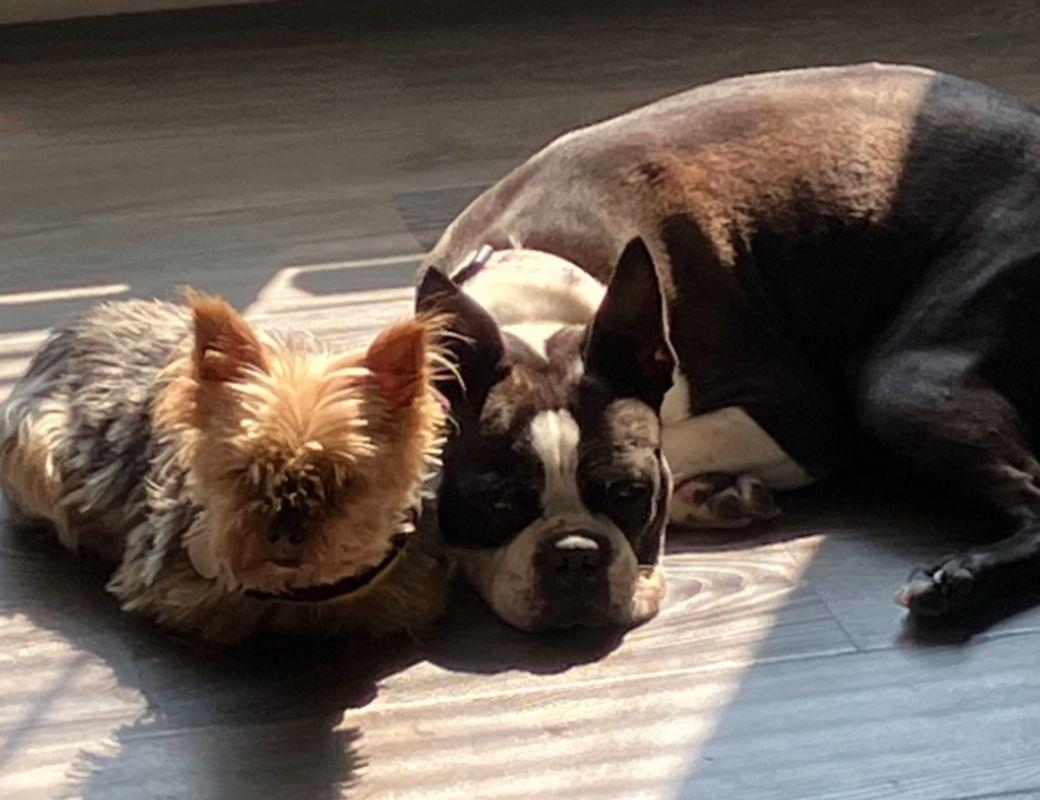
My boys.
When you ask someone what grief feels like, you’ll get a whole lot of different answers.
Some say it doesn’t last long, while others say that it never truly goes away.
I have had an absolutely hectic 2026. I had a traumatic incident, that I would never have expected to occur. Then I had to put down both of my dogs within two months of each other.
Now I always knew it was coming, the grief of losing my dogs. They both had health problems and their issues. But no one ever prepares you for when your heart feels like it’s about to stop, and then you need to go on.
So what do you do when you feel like your world is about to end? Whether it’s a person or a creature or a plant, the grief isn’t standardized. We will all feel a different amount. That’s just in our blood.
And the more I’ve sat with that feeling, the more I’ve realized something.
We don’t really know how to grieve anymore.
Or at least, not the way people used to.
In Irish history, grief wasn’t something quiet. It wasn’t something you handled behind closed doors, or rushed through in a few days so you could get back to work and act like everything was fine.
It was shared.
When someone died, they didn’t disappear right away. Their body stayed in the home. Family, friends, neighbours; people would come and go, sitting with them, talking, remembering. There was food, there was tea, sometimes there was laughter that felt out of place until you realized that it wasn’t.
It was part of it.
The wake wasn’t about pretending everything was okay. It was about refusing to let that person, or that loss, become distant too quickly.
And I think about how badly I wanted that.
Not in a literal sense, but in the feeling of it. The idea that grief doesn’t have to be quiet. That it doesn’t have to be done alone. That you’re allowed to say their names over and over again without feeling like you’re supposed to be “moving on.”
Because that’s what it feels like now, doesn’t it?
Like there’s a timeline.
A point where you’re expected to stop bringing it up. To stop crying. To stop feeling it so loudly.
But historically, Irish grieving didn’t really follow that kind of structure.
There was something called caoineadh, or keening. It was a kind of vocal lament, often led by women. Not polished, not rehearsed, it was just raw sound. Crying that turned into something almost like singing, or maybe the other way around.
It wasn’t meant to be pretty.
It was meant to be real.
And we don’t really have space for that anymore.
We cry quietly. We step away. We apologize for it. We come back composed, like nothing happened.
But when I lost them, there were moments where I didn’t want to be composed.
I didn’t want to be quiet about it.
I wanted to feel it fully, in a way that didn’t need to be softened for anyone else’s comfort.
Because losing something you love, whether it’s a person or a pet, isn’t a quiet thing.
It changes the way your space feels. The way your routine works. The way your brain expects certain sounds that just… don’t happen anymore.
And sometimes, even now, I still expect them.
I still catch myself listening for paws on the floor. Or the shift of weight on my bed. After grabbing a drink and heading back to sleep, I still check to make sure I don’t lay down on one of my dogs… even though that isn’t something I need to worry about anymore.
They’re just little things that used to be so normal that I never thought twice about them.
There’s something in Irish tradition that leaves room for that feeling.
This idea that the line between life and death isn’t completely solid. That there are moments where it feels thinner. Where something lingers, not in a dramatic way, not like a story, but just in small, quiet ways.
A presence.
There are stories about spirits, about signs, about the Banshee who mourns before death comes. Not as something evil, but as something that grieves alongside the living.
And I don’t know exactly what I believe.
But I do know that love doesn’t feel like it just stops.
Not really.
What we have now is different. We’ve made death cleaner. More efficient. Something handled by professionals, something scheduled, something contained.
And maybe that makes it easier in some ways.
But I think it also makes it lonelier.
Because grief doesn’t really fit into a schedule.
It doesn’t resolve neatly. It doesn’t wrap itself up and disappear just because enough time has passed.
And Irish traditions didn’t try to make it do that.
They made space for it.
For the contradictions. For the laughter in the middle of tears. For the stories that keep someone present long after they’re gone. For the kind of grief that doesn’t behave the way people expect it to.
And maybe part of all of this is learning that there isn’t one “right” way to grieve.
But there are ways to let it exist, instead of trying to shut it down.
In Irish tradition, grief was shared. People sat together, told stories, stayed close to the person they lost for as long as possible. And while we don’t always have that structure anymore, I think there are pieces of it we can still carry forward.
Sometimes that looks like saying their name out loud. Not just once, not just when it feels appropriate, but whenever it comes to mind. Letting them stay part of your language, instead of something you avoid because it hurts.
Sometimes it looks like telling stories. The small ones, especially. The weird habits, the little routines, the things that didn’t seem important until they were gone. Keeping those memories active, instead of letting them fade into something distant and untouchable.
Sometimes it looks like letting yourself feel it without editing it. Crying when it hits, even if it’s inconvenient. Not apologizing for it. Not stepping away to make it easier for other people.
And sometimes, honestly, it looks like creating your own version of a wake.
Not in the traditional sense, but in the idea of it. Sitting with people who understand. Sharing memories. Letting grief and laughter exist in the same space, without feeling like one cancels out the other.
For me, it’s been in the small moments.
Still expecting to hear them. Still talking about them. Still noticing the spaces they used to fill.
And instead of pushing that away, I’m trying to let it stay. Because maybe grief isn’t something that needs to be resolved.
Maybe it’s something that just needs somewhere to go.
I’m writing this article as a way of grieving.
I’ll light a candle, set their collars beside it. Just something small, something intentional, to make sure I remember them properly. And I do it as a way that I feel I remember them properly. Because sometimes grief needs a place to go.
And it doesn’t have to be immediate.
You don’t have to feel everything all at once, or right away, or in the way people expect you to. It can come later. It can come in pieces. It can show up quietly, or all at once, or not at all for a while.
That doesn’t make it any less real.
And you don’t need to prove that you’re grieving.
You don’t need to perform it. You don’t need to follow a certain timeline, or take part in specific rituals, or make it visible for other people to understand it.
Grief can be loud, or it can be silent.
It can look like tears, or it can look like routine. Like lighting a candle. Like writing something down. Like holding onto something small because it mattered to them, and it matters to you.
There isn’t a right way to do it.
There’s just… your way.
And maybe that’s what I’m still learning.
Grief isn’t something you fix.
It’s something you carry.
And maybe carrying it means letting it exist in the open sometimes. Saying their names. Remembering the weird little things they used to do. Laughing about it, even when it still hurts.
Because if grief is love with nowhere to go, then maybe the answer isn’t to get rid of it.
Maybe it’s to let it stay.
In the quiet moments. In the habits your body hasn’t unlearned yet. In the way you still listen for them, even when you know they’re not there.
And in that way, somehow, they still are.
So to my sweet sweet boys;
I knew that I wouldn’t get to spend the rest of my life with you, but I’m so glad we got to spend the rest of yours.
May the roads rise up to meet you,
May your paws always stay on track,
May you run and run around the fields,
And feel the sun upon your back.
May your heart be full with memories,
May your days be filled with joy.
May you always remember time you spent with me,
And always be surrounded with toys.
So thank you Universe for the time we spent,
As a whole family, and just us three.
For now you’re up in heaven,
And you’re again healthy and free.


Responses (2)


More from the Magazine
Paws, Hooves, Fins & Furry Energy 🐙💕
How Animals Protect Your Aura & Heal Your Soul.
The Difference Between Incense and Smudge
Understand the distinction between everyday aromatic incense and culturally specific smoke-cleansing
The Reluctant Kitchen Witch
Five-minute rituals, everyday ingredients, and zero recipes, for those who would rather never cook