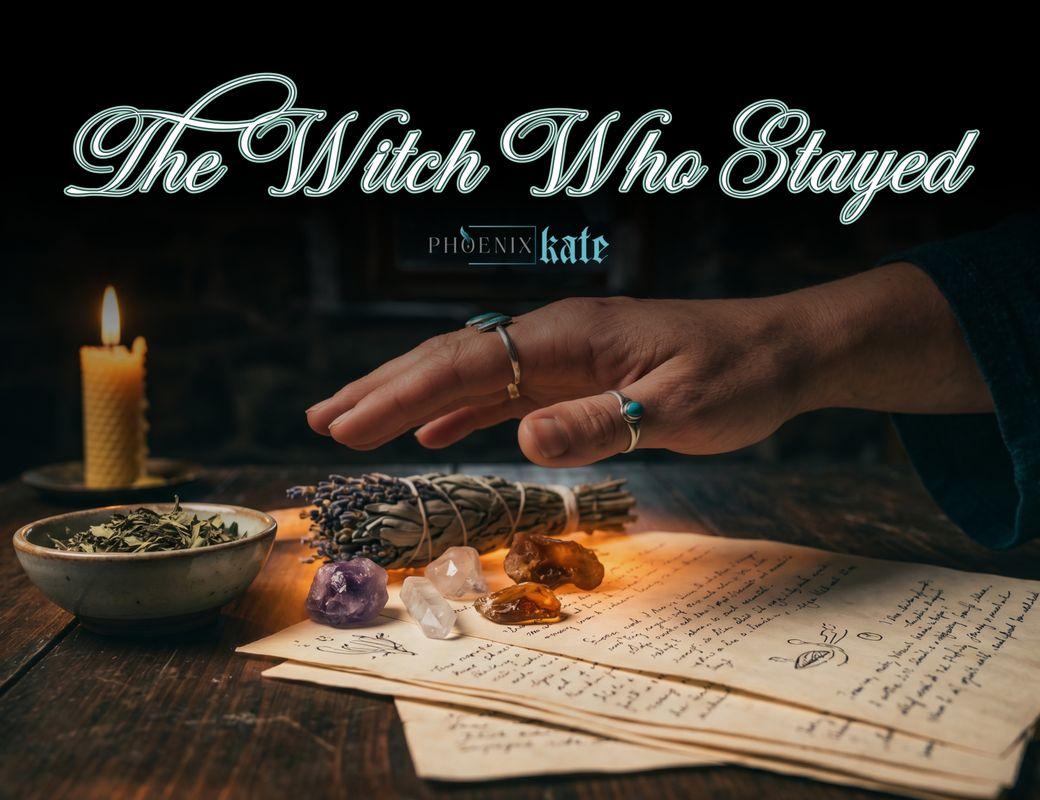
The Witch Who Stayed
Circe, the shadow of capability, and what it costs to be the one who handles everything
Article · 7 min read · ·
A note before we begin: This piece moves through themes of isolation, emotional armor, the long-term cost of self-sufficiency, and the shadow side of capability. It is written for those who are ready to look honestly — not to destabilize, but to illuminate. If you are navigating acute crisis or early trauma, please read this alongside a trusted therapist or support person, or save it for when you have steadier ground. There is no rush. Circe has been on her island a very long time. She will wait.
There is a version of Circe that gets told a lot.
The dangerous witch. The one who turns men into pigs. The cautionary tale about a woman with too much power and not enough restraint. She lives on her island alone, and the alone part is meant to sound like punishment.
That version is missing the whole point.
Circe did not end up on Aeaea because she failed. She ended up there because she was powerful enough that everyone either wanted to use her or feared what she could do, and eventually she made a choice, or something that looked like a choice, to stop trying to exist in spaces that couldn’t hold her.
The shadow of Circe is not cruelty. It is the moment capability becomes a wall. It is the particular exhaustion of being so competent that no one ever thinks to ask if you need anything. It is the island you built for safety that has started, quietly, to feel like a sentence.
The Transformation Instinct
Circe’s gift was transformation. She could change the nature of things. Herbs, animals, men, she understood what something was made of and how to alter it at the root.
Here is the shadow version of that gift: the compulsion to change things instead of feeling them.
When something is painful, the transformation instinct kicks in. Fix it. Reframe it. Find the lesson. Make it useful. Turn it into something you can manage. This is useful sometimes. It is a survival skill that served you somewhere, probably somewhere early, probably somewhere you didn’t have many options.
But a survival skill that runs unchecked becomes a way of never actually sitting with anything. You become very good at changing the shape of your pain without ever looking directly at it. And then one day you realize you have been transforming things for so long that you can’t remember the last time you let something just be hard.
That is Circe’s shadow. Not the pigs. The alchemy you learned to do on yourself before anyone else could touch you.
The Island
Circe’s island gets described in the myth as beautiful. Aeaea is lush and wild, full of the herbs she tends, full of animals she has made. She is completely self-sufficient. She wants for nothing.
She is also completely alone for most of the myth. Not by tragedy. By design.
There is a specific kind of person who does this. Who builds a life so contained, so sufficient, so skillfully managed that no one has to be let in. Who calls it peace. Who sometimes even feels it as peace, for a while.
The question Circe asks is whether the island is a sanctuary or a prison that learned your aesthetic.
You know the difference in your body. Sanctuary feels like rest, you are here because you chose it, and you could leave if you wanted to. The other kind feels like relief every time someone goes away: you are here because the alternative was trying to exist in spaces that kept proving they couldn’t hold you.
Both can look identical from the outside. A quiet life. A well-tended space. A person who seems to have it all figured out.
The difference is whether you made the island or whether the island made you.
Competence as Armor
This is the one nobody talks about.
Circe was extraordinarily capable. She knew botany, chemistry, ritual, magic. She could handle anything that arrived on her shore. And the myth makes it clear that this competence was earned through experience, through exile, through a long time of being on her own.
What the myth doesn’t say directly but implies everywhere: no one ever asked Circe if she needed help. Because she didn’t look like someone who needed help. Because she was too good at handling things for that question to occur to anyone.
This is the armor competence builds. You get so good at managing that you become invisible as a person who might be struggling. You stop being asked. Eventually you stop expecting to be asked. Eventually you stop knowing how to answer if someone did ask, because you’ve been answering “I’m fine, I have it handled” for so long that you don’t have another response ready.
The shadow question here is honest and uncomfortable: where are you using your capability to make sure no one ever has to see you need something?
Not because you don’t need things. Because needing things, in your history, has not always been safe.
What Circe Learned
The myth does not leave Circe on the island forever. Odysseus arrives. Then his son Telemachus. Then Penelope. And in Madeline Miller’s version, which is deeply rooted in the original sources, Circe makes a choice that costs her something significant. She chooses to become mortal. To trade immortality for a life that can be touched, that can end, that requires her to actually be in it rather than above it.
That is the reclamation the myth is pointing toward. The island made sense. The solitude made sense. The walls made sense given what she’d survived.
But there is a point where the protection outlives the threat. Where the armor is so well-fitted you forget it’s armor. Where you are so good at being the one who handles things that you have lost track of the person underneath the handling.
Circe’s reclamation was not becoming soft. It was becoming permeable again. Letting things in that could hurt her. Choosing a life with stakes.
That is what the island could never give her. Safety, yes. Competence, yes. Control, yes. But not stakes. Not the particular aliveness that comes from being genuinely in something rather than managing it from a safe distance.
The Shadow Questions
These prompts are honest and direct. Take them at your own pace: there is no requirement to move through all five in one sitting, or even in one month. If something surfaces that feels too large to hold alone, that is useful information. Some material belongs in a journal. Some belongs with a therapist. Both are legitimate, and knowing the difference is part of the work.
- Where in your life are you transforming things by changing, fixing, or managing, when what you actually need to do is let them be? You don’t have to fix this today. You just have to name it.
- Who or what have you been keeping at a distance because your gifts make them uncomfortable? How much of that distance have you started to call safety?
- Is there somewhere you are using capability as a shield and staying so competent, so useful, or so self-sufficient that no one ever has to see you need something? If what comes up here feels connected to early experiences of not being safe to need things, that territory is often worth exploring with a professional. Naming it here is enough for now.
- What would it mean to use your power in service of yourself, not just in service of others or in defense against them?
Circe chose her island in the end. Is your solitude a chosen sanctuary or a cage you’ve decorated so well you stopped noticing the bars?
When you are ready to answer that honestly, that is enough to start.
The Reclamation
Circe’s power was never the problem.
It was what she did when she was frightened of it. The shrinking. The isolation. The transformation instinct turned inward. The island built not from strength but from the accumulated weight of being too much for too many rooms.
The reclamation is not becoming less. It is learning to direct the power honestly toward what you actually want, toward what you actually need, toward the life you’d choose if you believed you were allowed to choose it.
You are allowed to choose it.
When you are ready you are allowed to put some of it down.
The Circe Inventory is a free companion printable to this article and includes five shadow questions with writing space and a power reclamation exercise. Download it here.
If you are currently experiencing a mental health crisis or need immediate support, please reach out to a crisis line or mental health professional inoyad it here.
Comments