The Trees That Connected Worlds
Why did nearly all cultures think the same thing?
Article · 3 min read · ·
Certain things keep appearing in ancient stories: dragons, floods, supernatural beings... But there's one I find even more intriguing—trees.
Because we're not talking about just one or two cultures finding them important. We're talking about peoples separated by thousands of kilometers, who never knew each other, yet somehow ended up imagining something remarkably similar: that trees were a kind of bridge between different worlds.
Think about this for a moment. If you had to choose something from nature to represent the connection between heaven and earth, what would you pick? Maybe a tree?
Because it literally seems to be doing just that. Its roots disappear underground, into a place we can't see. Its trunk stays here. And its branches reach up toward the sky.
It's as if it were living in multiple places at once. Perhaps that's why so many civilizations ended up seeing them as something more than simple plants.
The ancient Maya, for example, believed there was a massive cosmic tree that united the underworld, the earth, and the heavens.
They depicted it as a ceiba, an impressive tree that can grow taller than many buildings and tower above the entire jungle.
If you've ever seen a massive ceiba, you'll understand why it seemed special to them. It looks too big to be an ordinary tree. And here's the curious part: on the other side of the ocean, the Norse peoples had a very similar idea.
They spoke of Yggdrasil, a gigantic tree that held up the entire universe and connected nine different worlds. They didn't know the Maya, didn't share a language, religion, or culture. Yet they arrived at a strikingly similar image.
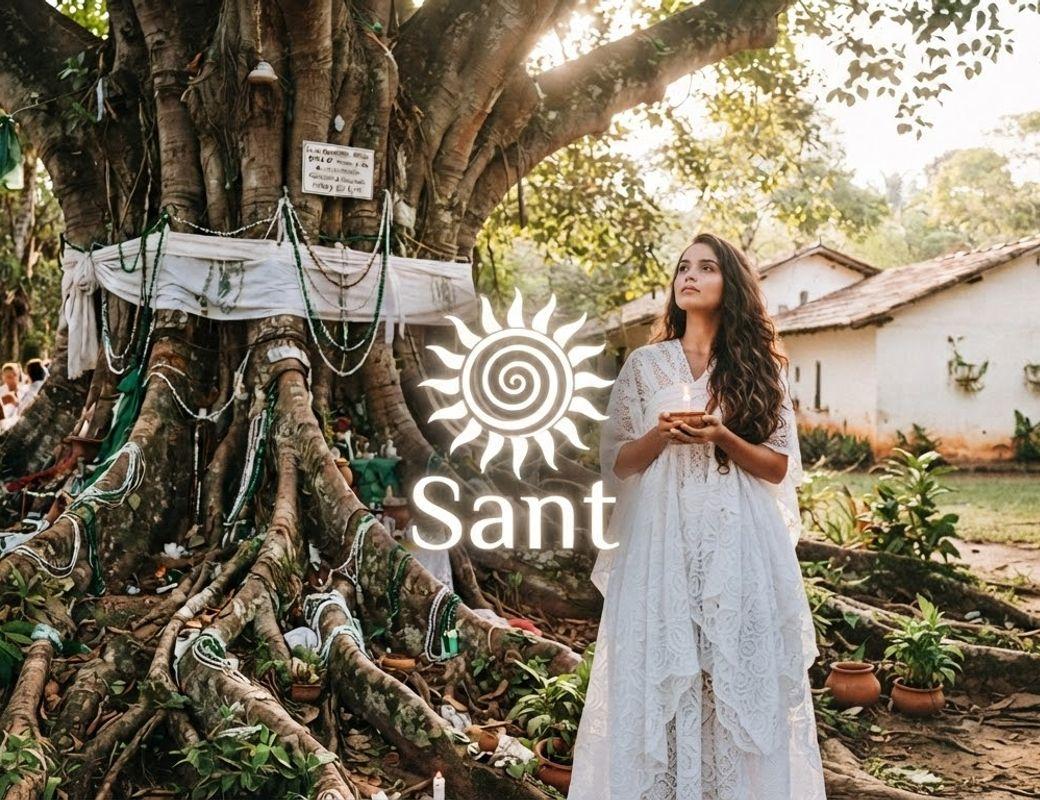
And they weren't the only ones. The Celts held certain oaks sacred. In India, the bodhi tree became a symbol of spiritual enlightenment.
In Siberia, many shamanic peoples believed the soul could travel between worlds through a sacred tree. In Japan, there are still trees venerated as dwellings for spirits.
You start to see the pattern, don't you?
It seems that for thousands of years, humans looked at trees and saw something more.
But there's one part of this story I especially love. For a long time, we thought the whole idea of trees connecting things was simply a metaphor.
Until science started discovering something unexpected. It turns out that forests have a kind of underground network formed by fungi and roots, through which trees exchange nutrients, send chemical signals, and even help other trees when they're sick or weakened. A forest isn't a group of individual trees competing with each other—it's more like a connected community.
For centuries we imagined trees that united invisible worlds, and now we discover that invisible connections really do exist beneath our feet.
They're not magical, but they're remarkable nonetheless.
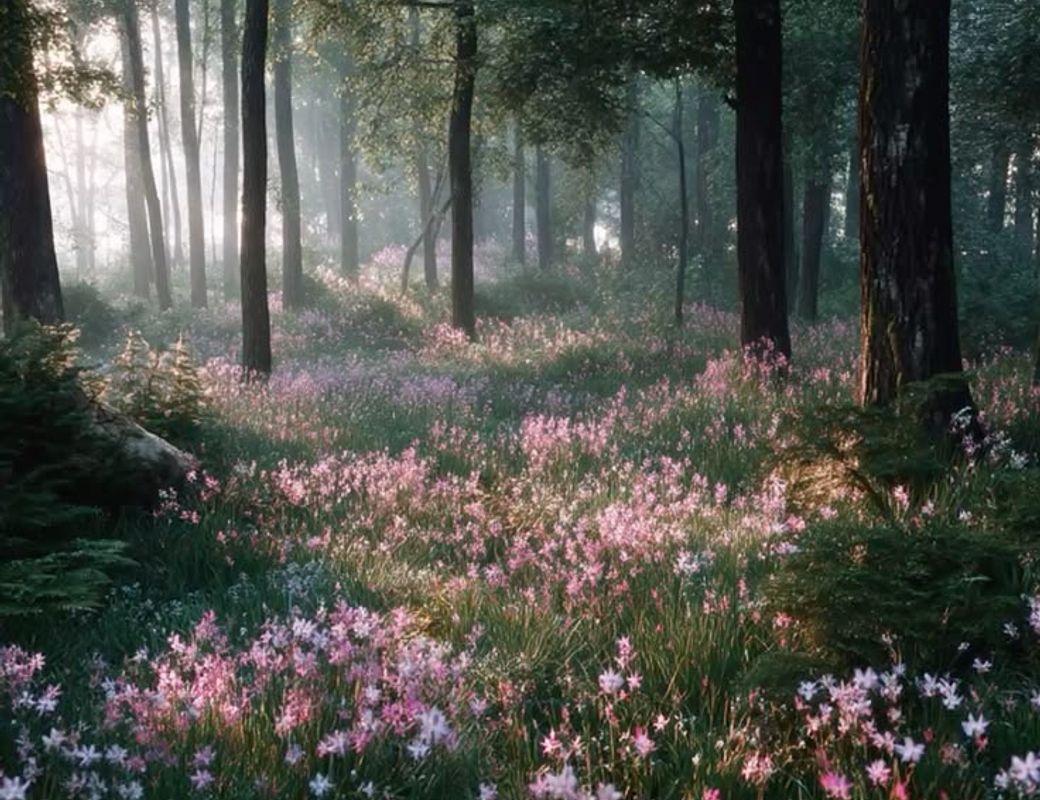
Maybe that's why we still feel something special when we enter a forest. It doesn't matter whether you're spiritual, religious, or completely skeptical. There's something about those places that changes how you feel, and for a few minutes you get the feeling of entering a different space.
As if the everyday world were a bit further away.
Maybe our ancestors didn't think trees connected worlds because they were superstitious. Maybe it was because they were observing something we feel too, even though we explain it differently.
That there are living beings capable of reminding us that not everything revolves around us.
And when you look at them that way, you perfectly understand why so many cultures ended up seeing in them a doorway between the visible and the invisible.