Two Peak Nights of the Perseids: Aug 11 & 12 🌌
Nature puts on this show only once a year! 🌠✨
Article · 4 min read · ·
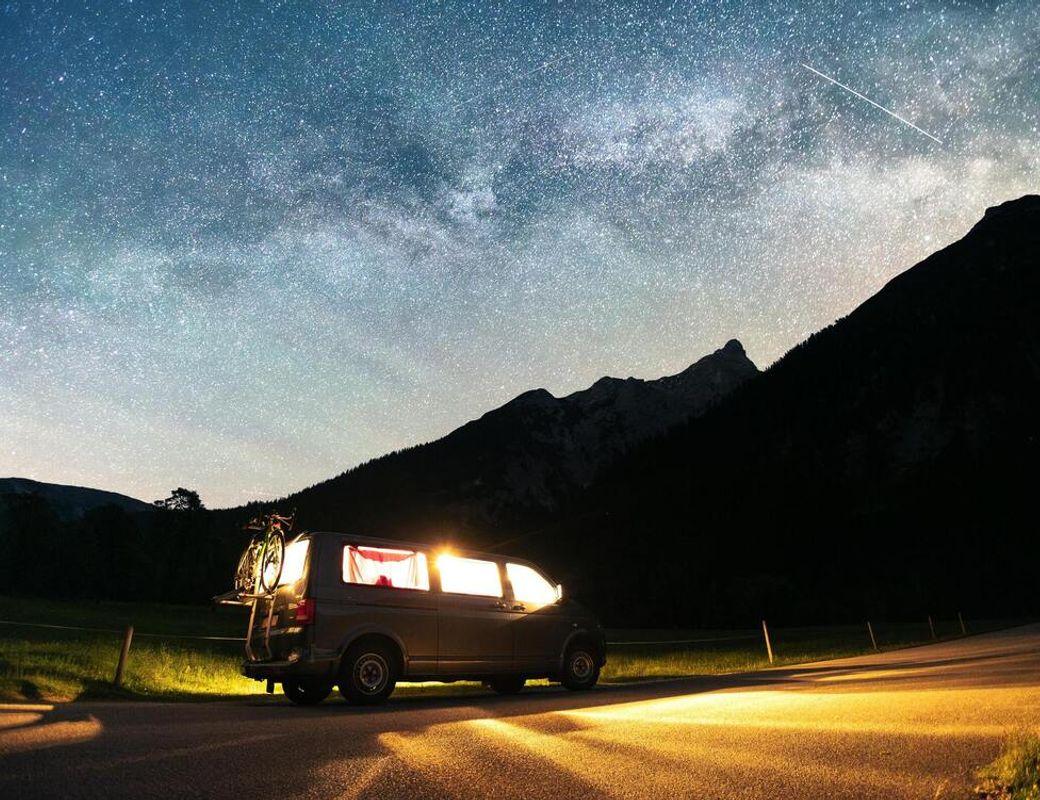
If you love watching shooting stars, August is your month. From late July until almost August 23, the sky is rich with meteor activity, and nearly every night can surprise you with a beautiful display.
The main highlight of the season is, of course, the Perseids — one of the most spectacular events, painting the night sky with dozens of meteors every hour.
But that’s not all! August hides a few more meteor showers that deserve your attention — let me guide you through them one by one.
What Are the Perseids?
The Perseids are nature’s summer fireworks, requiring no tickets and no stage. Every year in July and August, the night sky turns into a show of fiery streaks, as if someone is scattering sparks straight from the constellation Perseus.
People have admired this spectacle since ancient times. Chinese chronicles and records from Korea and Japan in the 8th–9th centuries all tell stories of these mysterious “falling stars.” In Italy, the shower was poetically named “The Tears of Saint Lawrence”, as its peak usually falls on his feast day, August 10. So get your wishes ready — on August nights, the sky is generous with miracles!
Today we know that the Perseids are made up of dust and tiny fragments left behind by the giant comet Swift–Tuttle. Discovered in 1862, this comet has a massive 26-kilometer-wide nucleus and completes its orbit every 135 years. It last passed near Earth in 1992, and in 2126 it will return, coming as close as 23 million kilometers — leaving behind fresh “supplies” for future meteor showers.
NASA astronomers note that since 2008, the comet’s tail has been delivering more meteors to our skies, making each observation potentially brighter than the last. Interestingly, the first to publicly draw attention to the Perseids was Belgian astronomer Adolphe Quetelet in 1835 — though ancient civilizations had known about this celestial wonder long before science gave it a name.
When can you catch this dazzling meteor show?
The Perseids start sprinkling the sky in late July, but they truly light up and reach their full glory by mid-August.
In 2025, the Perseids will peak on the nights of August 11–12 and August 12–13, when the sky will come alive with dozens of meteors. In ideal years, the shower can produce up to 150 meteors per hour, but this time the waning gibbous Moon, shining at 81–89% brightness, will wash out many of the fainter ones. Instead of hundreds, expect to see just a few dozen meteors per hour.
Still, what a sight! Imagine — each of these “shooting stars” races through space at around 210,000 kilometers per hour. When they collide with our atmosphere about 70 kilometers above Earth, they flare up like matches, igniting the night sky.
The largest meteors burn a little longer — a couple of seconds — leaving glowing trails that slowly fade into the darkness. That’s just enough time to whisper your most heartfelt wish. Something simple like “Love,” “Luck,” “Health” — or whatever dream you want to send into the stars.
Where Is the Best Place to Watch the Perseids?
Seasoned meteor watchers know: the most magical skies are far from city lights. Drive away from noisy streets and light pollution, spread out a blanket, pour yourself some tea, and make a wish — every fiery streak across the sky seems made to carry it.
You won’t need a telescope or binoculars — the Perseids generously put on their show for anyone willing to look up. Only clouds or the bright light of the Moon might interfere.
The constellation Perseus lies in the northern sky. To find it more easily, first look for Cassiopeia, which forms a “W” shape. Just to the left and slightly below it, you’ll spot Perseus — the place from which these “falling stars” seem to emerge.
The Best Time to Watch
The shower’s activity gradually increases after midnight, when the Moon typically dips below the horizon and the stars shine their brightest, reaching peak visibility between 2:00 and 4:30 a.m.
But That’s Not All!
August skies have more surprises than just the Perseids.
The Capricornids are rare but stunning visitors. They produce only about five meteors per hour, yet they often deliver bright fireballs that flare dramatically. Telling them apart is easy: the Perseids streak white and cool, while the Capricornids leave warm orange and yellow trails, like sparks from a summer bonfire. This shower is visible equally well in both hemispheres.
The Delta Aquariids are another active shower lighting up the sky around the same time. They’re best viewed from southern latitudes, where meteors appear more frequently and shine more brightly. If you happen to be in the southern tropics, this show is one you shouldn’t miss.
🌌 August is the month when the stars feel closer than ever. Just lie under the open sky, forget the rush of daily life, and watch as the universe scatters fiery sparks — and countless chances to make your wishes come true — right above you.
Responses (10)