The Lyrid Meteor Shower
When to See the Brightest Shooting Stars of April 2026
Article · 3 min read · ·
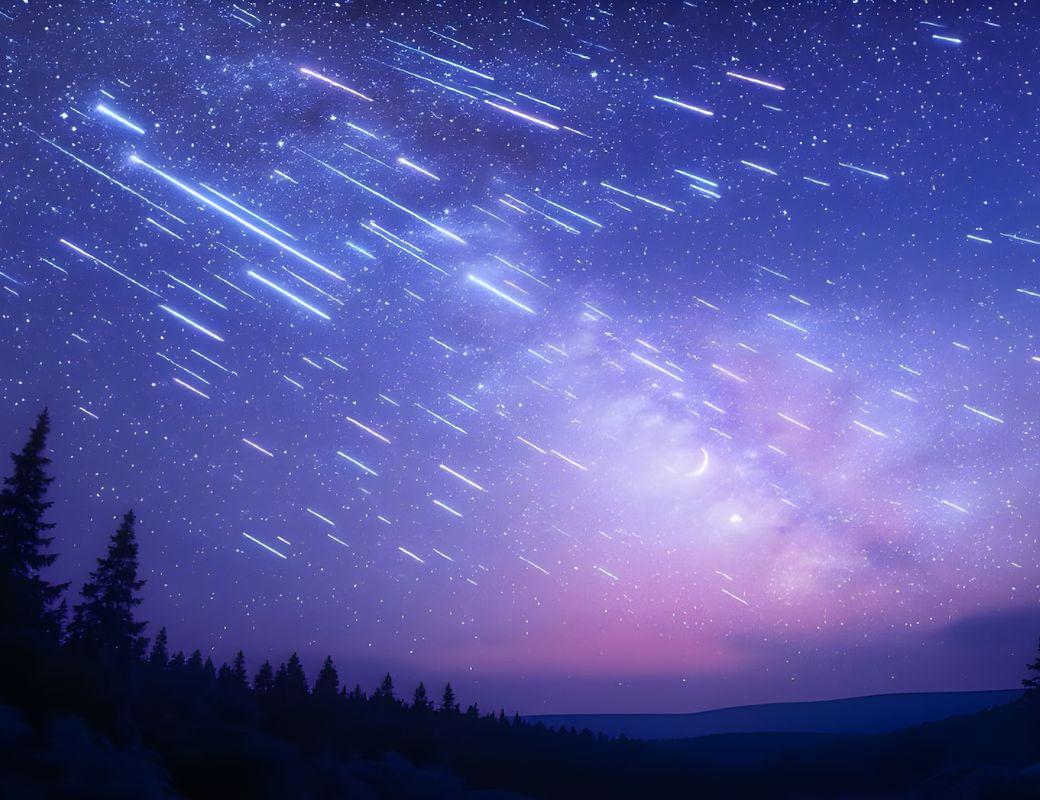
After the quiet stillness of winter, the night sky comes alive again. April brings one of the most famous and beautiful meteor showers of spring - the Lyrids. Every year, this shower fills the sky with brief flashes of light that seem to remind us that even the darkest night can hold a little magic.
In 2026, the Lyrids will reach their peak on April 22. It is a wonderful opportunity to spend an evening under the open sky, slow down, and allow yourself to reconnect with the Universe.
The Lyrids are active every year from April 14 to April 30, but the peak night is when you can see the highest number of meteors. Under ideal conditions, observers may see up to 18 meteors per hour. They are often bright, fast, and leave beautiful glowing trails behind them.
The Lyrids can be seen in both hemispheres, but they are best visible in the Northern Hemisphere. If you are in the Northern Hemisphere, the best time to begin watching is after 10:30 PM local time. In the Southern Hemisphere, the ideal time is around 1:00 to 2:00 AM. By then, the radiant of the shower will be high enough above the horizon, increasing your chances of seeing more meteors.
The radiant of the Lyrids is located in the constellation of Lyra, near the bright star Vega. Vega is one of the most visible stars in the spring sky, making it fairly easy to find. However, it is important to remember that meteors can appear anywhere in the sky. You do not need to look directly at Lyra - sometimes the brightest meteors appear far away from the radiant.
The Lyrids are one of the oldest meteor showers known to humanity. People have been observing them for around 2,700 years. The oldest known record comes from Chinese astronomers in 687 BC. They described the meteors as falling so heavily that it looked like rain.
The Lyrids are created by debris left behind by Comet C/1861 G1 Thatcher. When Earth passes through the trail of dust and tiny particles left by the comet, those particles burn up in the atmosphere, creating the bright streaks we see as “shooting stars.”
To enjoy the Lyrids at their best, it helps to prepare in advance. Try to find a location away from city lights: a park, open field, forest clearing, or countryside area. The darker the sky, the more meteors you are likely to see.
Give your eyes about 20 minutes to adjust to the darkness. Try not to look at your phone or bright screens, as they can make it harder for your eyes to adapt. It is also a good idea to bring warm clothes, a blanket, a thermos of tea, or a camping chair to make the experience more comfortable.
Watching a meteor shower can become a special ritual. You can spend the evening alone with your thoughts or invite loved ones for a small nighttime picnic. Some people like to make a wish for every meteor they see, while others simply enjoy the silence and beauty of the night sky.
The Lyrids remind us how much wonder still exists around us. Sometimes, all it takes is looking up at the sky to feel inspired, amazed, and grateful for the moment.
On the night of April 21–22, do not forget to step outside, look up at the stars, and allow yourself to believe in a little bit of magic.
Responses
No responses yet — start the conversation.