THE HISTORY OF CANDLES 🕯️
Candles: Their History
Article · 4 min read · ·
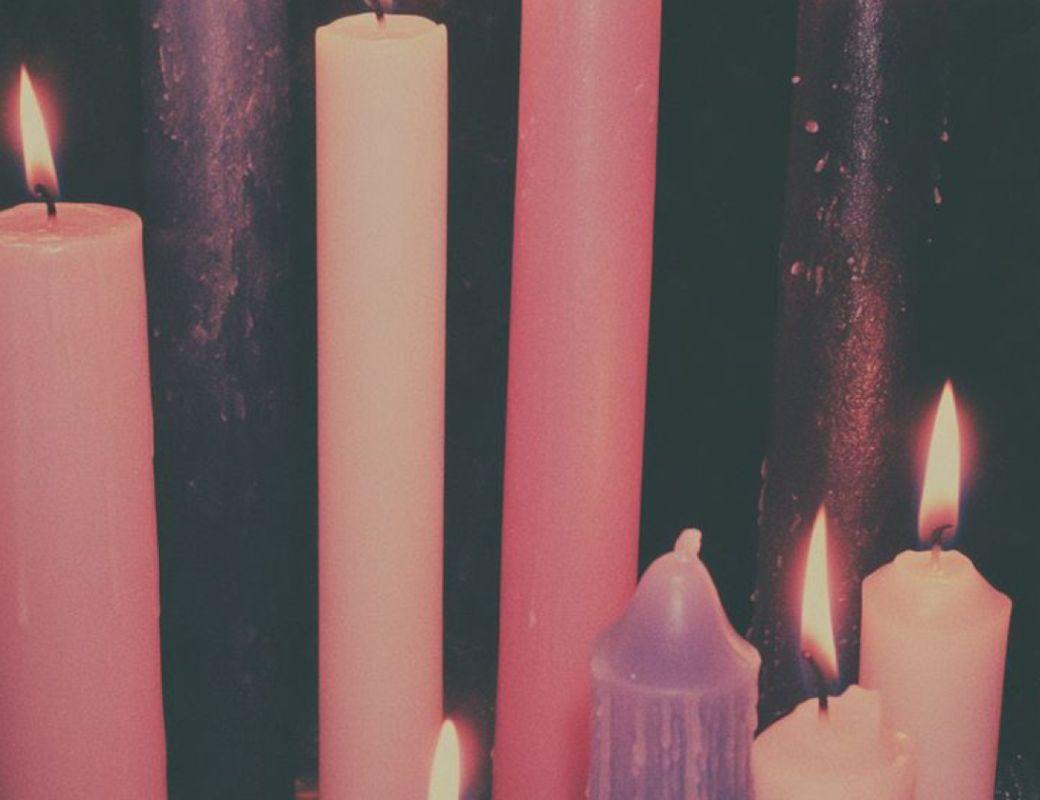
What is a candle?
A candle is essentially a container holding some type of fatty substance (which can be anything from wax, fatty gel, stearin, tallow, and paraffin to even a very particular type of whale fat) with a wick at its center that can be lit to provide light. Something so simple yet so significant to cultural history has a long and fascinating story. Let's take a brief look at its major milestones.
History of Candles
Humanity has used candles for both illumination and ritual purposes since ancient times, and therefore tracing their exact origin is impossible, as it's lost in the mists of time. But first, let's note that according to historical studies, candles are essentially a refined and stylized version of another, somewhat more rustic and primitive lighting method: torches.
Indeed, torches appeared first—generally consisting of some material (bark, for example) soaked in animal fat—and these were gradually perfected until they gave rise to candles.
Who were the first to conceive, manufacture, and use candles?
Again: their exact origin cannot be traced, and moreover, the boundary between a primitive torch and a refined candle isn't entirely clear. However, most historians agree that the first candles were developed by the ancient Egyptians, who used the rushes that grew along the banks of the Nile as wicks and soaked them in melted tallow, which they generally obtained from sheep. In this way, they helped travelers in the darkness and provided light to both homes and the numerous places of worship for their many gods and goddesses. The Greeks and Romans, for their part, greatly valued candles, which they improved by making them with an animal tallow that was nearly colorless and tasteless. In fact, there are quite a few accounts from the early Christian era describing how Roman legionaries, driven by hunger, devoured without hesitation the candle rations meant to light the nights of the empire's expansion. Centuries later, it's said that lighthouse keepers in the British Isles, when isolated for long periods, resorted to the same dietary practice.
On another note, and returning to the ancient Romans, all evidence suggests they were the first to make candles with wicks. However, these candles burned poorly and, as a result, produced copious, unhealthy smoke as well as an unpleasant odor. In the Middle Ages, a sort of milestone occurs in candle history: beeswax is incorporated into their manufacturing formula, and this allows for candles without the unpleasant odors or unhealthy smoke produced by animal fat. Still, it's worth emphasizing that these new candles were expensive and, generally, common people didn't have access to them, though they were typically used in castles (especially at feasts and banquets) and in monasteries.
In the 18th century, when whaling was booming, candles began to be made with spermaceti, a whitish wax or oil—also known as "sperm whale oil"—extracted from the fat in the head region of the sperm whale. This ingredient offered three major advantages: it didn't have an unpleasant smell but quite the opposite; it didn't soften or deform in summer heat; and it was relatively affordable. In the 19th century, a chemical compound called stearin was developed and also applied to candles. Stearin is an animal fat derivative used as raw material for candles and soaps and, regarding the former, allows them to be manufactured with a harder consistency, longer burning time, and no unpleasant odor.
It was also in the mid-19th century that another fundamental change occurred: during the petroleum refining process, paraffin was discovered—a bluish-white wax that burns cleanly for an extended time, releases no odors, and leaves virtually no residue. Sometimes alone and sometimes combined with stearin, paraffin became the raw material par excellence for candle manufacturing.
Toward the end of the 19th century, the history of candles—or, to put it more precisely, illumination based on them—underwent a substantial change: the electric light bulb was created, and this marvelous and practical invention began to replace candles for practical illumination.
It was then that candles found refuge and gained strength in the other realm where they had always had their place: ritual, ceremony-related purposes, that dimension in which (as we'll explain in the following sections) a candle is not just a candle but an instrument for accessing higher planes. Today, it seems we've rediscovered candles, and to the never-extinguished popular devotional practices we mentioned above, other uses have been added. The New Age movement, a true melting pot of diverse spiritualities, teaches us about multiple possible uses. Among them, feng shui's use of candles stands out and will be the subject of one of our chapters, as will their use for meditative visualizations on chakra energy.
Early 21st-century minimalist décor also embraces the use of candles in multiple colors, shapes, and sizes, whether to create ambiance for intimate moments or to add a special touch to events such as weddings and various celebrations.
In short, we can say that in this newly begun third millennium, we have the privilege of experiencing a renewed appreciation for candles. Let's take advantage of it by learning about all the possibilities these simple yet magical elements offer us.
Responses
No responses yet — start the conversation.