𝓢𝓸𝓵𝓼𝓽𝓲𝓬𝓮 𝓧 𝓔𝓺𝓾𝓲𝓷𝓸𝓍 🌞🌎🌑
𝚃𝚑𝚎 𝚍𝚊𝚗𝚌𝚎 𝚝𝚑𝚊𝚝 𝚛𝚎𝚐𝚞𝚕𝚊𝚝𝚎𝚜 𝚝𝚒𝚖𝚎
Article · 3 min read · ·
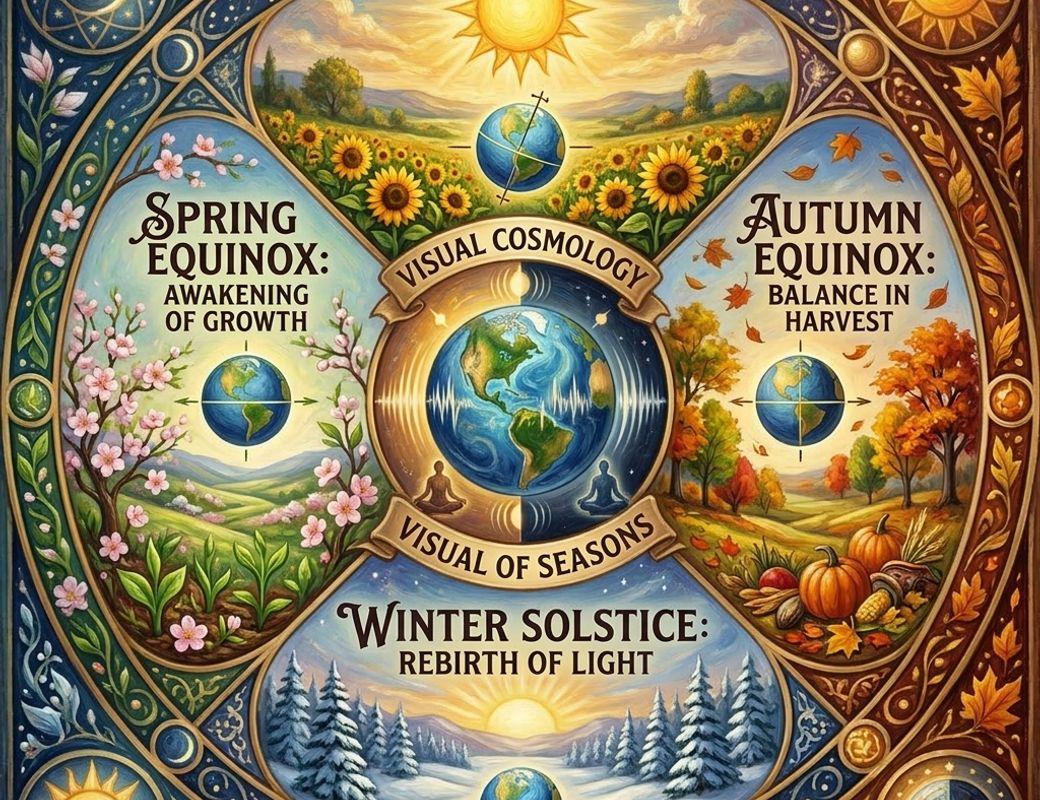
There is a curious moment in the silent dance between Earth and the Sun when time seems to reveal its secrets. On certain days of the year, light expands to its fullest extent; on others, it finds a perfect balance with darkness.
These moments are known as the Solstice and Equinox—two astronomical phenomena that, beyond marking the beginning of each season, reveal how Earth's movement shapes the rhythm of life on our planet.
At first glance, the difference between them might seem merely technical. But when we look closer, we realize these moments tell a larger story: a story of balance, of light's abundance, and of the gradual return to introspection.
It all begins with a fundamental detail about our planet: Earth doesn't spin perfectly "upright" around the Sun. Its axis is slightly tilted. This tilt means that throughout the year, different regions of the planet receive varying amounts of sunlight.
It's precisely this small angle in Earth's axis that creates the seasons—and also the phenomena of solstice and equinox.
The solstice occurs when the Sun reaches its maximum tilt relative to the Equator. In other words, it's the moment when one hemisphere receives far more light than the other.
This is why solstices mark the extremes of light.
During the summer solstice, days become longer and brighter. The Sun seems to linger in the sky, extending the presence of light. During the winter solstice, the opposite happens: nights grow longer, and daylight becomes fleeting.
These events occur twice a year. Around June 21st, the solstice marks the beginning of winter in the Southern Hemisphere and summer in the Northern Hemisphere. Near December 21st, the situation reverses: the southern hemisphere receives more sunlight, beginning summer, while the northern hemisphere enters winter.
If the solstice represents the extremes of light and darkness, the equinox represents exactly the opposite.
During the equinox, the Sun positions itself directly above the Equator. At this moment, both hemispheres receive nearly equal amounts of sunlight.
The result is a rare and symbolic phenomenon: day and night become almost equal in length.
This balance occurs twice a year—in March and September—and marks the beginning of spring and autumn.
Around March 20th, the equinox ushers in autumn in the southern hemisphere and spring in the northern hemisphere. Near September 22nd, the seasons reverse again.
Astronomically, this moment is extremely precise: the equinox happens at a specific instant when the Sun crosses exactly through the plane of the celestial equator.
But symbolically, it represents something even deeper: the balance between two fundamental forces of nature—light and darkness.
While the solstice reveals the extremes of the solar cycle, the equinox shows the point of equilibrium between them.
One represents the peak; the other represents harmony. This alternation creates the grand rhythm of the seasons.
Solstices usher in summer and winter, seasons marked by contrasts in light and temperature. Equinoxes begin spring and autumn, transitional periods when nature changes direction.
It's as if the planet breathes in four movements throughout the year: expansion, maturity, withdrawal, and rebirth.
If Earth weren't tilted on its axis, none of this would exist. The Sun would remain perpetually aligned with the Equator, and the amount of light received by each region would be virtually constant. There would be no seasons, no solstices, no equinoxes.
But the planet's tilt creates this delicate cycle that organizes life on Earth.
Plants bloom or go dormant as light changes. Animals adapt their behaviors. And humans, even without realizing it, are also profoundly influenced by this cosmic rhythm.
Thus, solstices and equinoxes are not merely astronomical events marked on a calendar.
They are the invisible milestones of the grand dance between Earth and the Sun—a dance that silently regulates time, the seasons, and the very flow of life on our planet.
Light on your path ☀︎︎
𝒫ℴ𝓇
𝒮𝒶𝓃𝓉 𖦹
Responses (2)