Humanity Takes Flight to the Moon Again
NASA’s Artemis II — April 1, 2026 · First crewed Moon mission in 50 years
Article · 3 min read · ·
NASA is preparing for something that hasn’t happened in over half a century: a crewed journey toward the Moon. If all goes as planned, Artemis II is set to launch on April 1, 2026 — marking the first human return to lunar space since 1972.
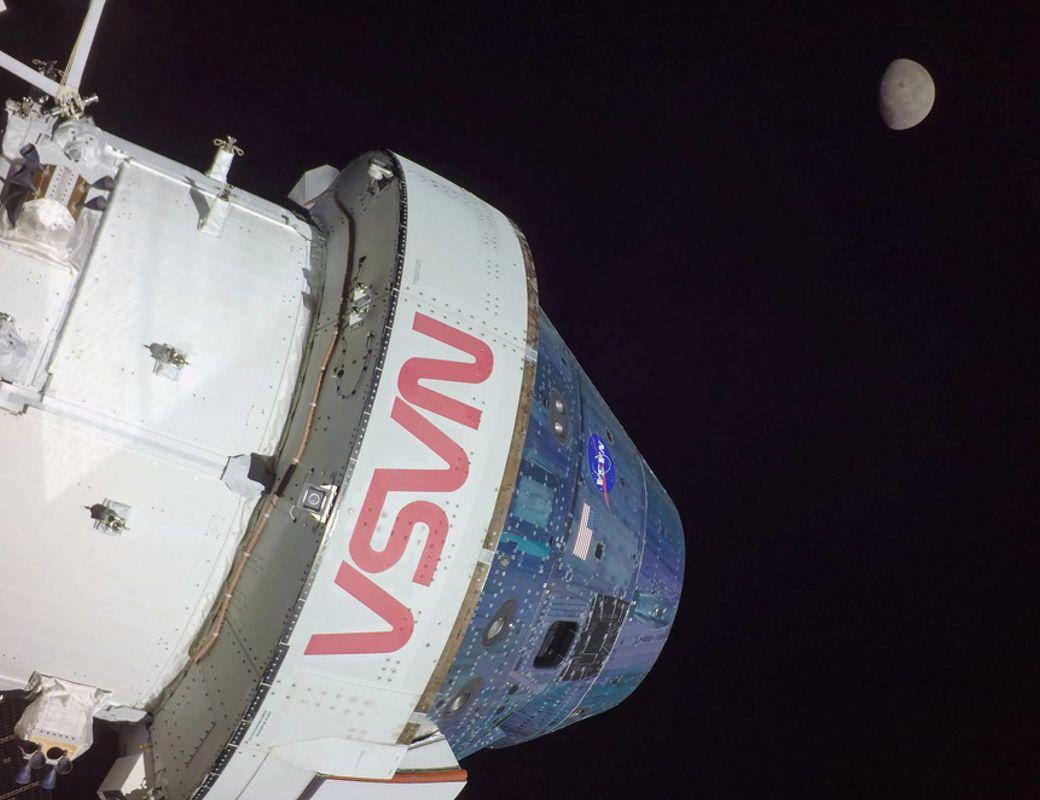
Credit: NASA
About eight minutes after liftoff, the Orion spacecraft and its crew will reach space. Four astronauts will then begin a 10-day journey, orbiting the Moon before returning to Earth. No landing this time — Artemis II is about testing, observing, and ensuring that the systems designed to sustain human life in deep space actually work when it matters.
And this time, it’s not something happening far away — it’s something you can actually witness.
Watch the launch live
Official broadcast
If everything goes as planned — live views from space
There’s also something quietly symbolic onboard.
Like many missions before it, Artemis II carries a zero-gravity indicator — a small object that floats once the spacecraft reaches space. This time, it’s called “Rise.”

Credit: NASA
Designed by Lucas Yeh from California and selected from over 2,600 submissions across more than 50 countries, it’s inspired by the iconic Earthrise image from Apollo 8. A small object, but a powerful reminder: perspective changes once you leave the ground.
What’s next
If Artemis II succeeds, it paves the way for the next missions in NASA’s Artemis program. NASA is preparing to send astronauts back to the lunar surface, including exploration of the Moon’s South Pole — a region of scientific interest and potential resources. These missions are also designed to help develop the technologies and experience needed for future human exploration of Mars.
Why does the Moon keep calling us?
It’s worth pausing on this.
From a scientific perspective, the Moon is a logical next step — close enough to reach, challenging enough to test us, and stable enough to learn from.
But that’s only part of the story.
Of course, this return is not received in one simple way. For some, it is a hopeful and historic step. For others, it brings skepticism, doubt, or concern about where human energy should go. In that sense, the mission is not only about the Moon. It also reflects a broader conversation about values: exploration, responsibility, science, beauty, risk, and the needs of life on Earth.
The Moon has always been more than an object. It’s a constant in human life — visible, cyclical, quietly influencing rhythms we don’t always fully understand. Long before rockets, it guided tides, calendars, rituals, and inner states. Even now, people track it, plan around it, and feel connected to it in ways that are hard to fully explain.
Maybe that’s why this return feels different.
We’re not just going back to a place. We’re reconnecting with something that has always been present — above us, around us, and, in many ways, within us. The same Moon that ancient cultures watched is the one we’re now orbiting again with modern technology.
What do you feel when you think about humanity returning to the Moon?
Is it progress, a sense of wonder, something deeper — or something else entirely?
Feel free to share your thoughts — it would be really interesting to hear how you see it.
Responses (15)


Show more