How Stars Are Born: From Cosmic Dust to the Lights That Shape Galaxies
A gentle guide to how the Universe transforms darkness into light
Article · 3 min read · ·
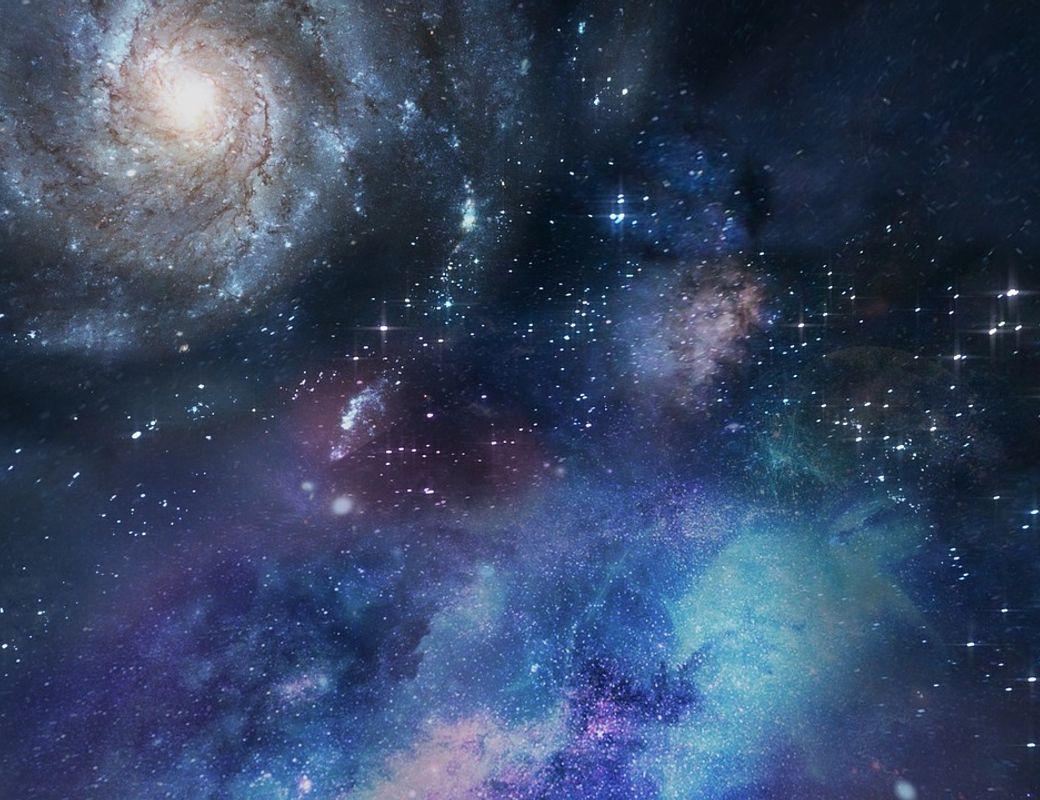
When we look at the night sky, it feels as if the stars have always been there - distant, calm, eternal. But each of these tiny sparks has its own story of creation. And that story begins with darkness, cold, and interstellar dust.
The Universe is like an enormous garden: some flowers are just beginning to sprout, others are in full bloom, and some are finishing their journey, enriching the soil for new generations. Stars move through this same endless cycle of creation - with no true beginning or end, only countless moments of birth.
The Cradle of Light: Nebulae and Molecular Clouds
Stars are not born in empty space. Their journey begins inside giant molecular clouds - cold, dense regions filled with gas and dust. Astronomers call them “stellar nurseries.” These are like the hidden rooms of the galaxy where future worlds curl up quietly, waiting for their moment.
Some of these nebulae are visible even through small telescopes - the Orion Nebula, the Eagle Nebula, the Pelican Nebula. They are places where light is being born right now, glowing with pink, blue, and golden colors.
Gravity - the Midwife of the Universe
Inside these clouds, particles slowly drift toward each other under the pull of gravity. It works silently but insistently, gathering atoms, compressing them, forming denser and denser regions.
This is how a protostar forms - the embryo of a future star. It does not shine fully yet, but pressure and heat begin to rise inside it like an oven ready to ignite. It is the moment of cosmic stillness before the first great breath.
Igniting the Stellar Heart
When the temperature and density inside the protostar grow high enough, nuclear fusion begins. Hydrogen transforms into helium, releasing energy.
This is the moment when a star lights its own heart.
Now the star enters the Main Sequence, where it can live for billions of years, just like our Sun - stable, radiant, and full of warmth.
Three Possible Futures: A Star’s Path Depends on Its Mass
Not all stars live the same life. Their destinies depend on how much “fuel” they received at birth.
1. Small Stars - the Long-Lived Ones
Red dwarfs shine faintly but for an incredibly long time - trillions of years. They are like quiet sages, living slowly and steadily.
2. Medium Stars - the Path of Our Sun
These stars eventually expand into red giants, then shed their outer layers, creating beautiful planetary nebulae. What remains at the center is a hot, dense white dwarf.
3. Massive Stars - Dramatic Creators of Elements
They burn bright and fast. Their finale is a supernova explosion.
In these explosions, heavy elements are forged: iron, gold, calcium - everything that forms planets, oceans, rocks, and even our bodies.
The Star Dust We Are Made Of
After stars die, their dust returns to space, enriching the next generations of stars. This very dust later becomes planets, oceans, mountains - and eventually, living beings.
We are literally made of elements that once lived inside stars.
We are children of ancient light.
Why Learn About How Stars Are Born?
Because it is a story about us.
Stars remind us that nothing truly disappears. Every ending is the beginning of a new cycle.
Darkness is not emptiness - it is the place where the future is formed.
And light appears when something survives, gathers itself, and finally ignites its own heart.
So the next time you look at the night sky, remember: every star was once dust.
And every dust particle, one day, can become light.