𝓔𝓺𝓾𝓲𝓷𝓸𝔁: 𝓣𝓱𝓮 𝓐𝓵𝓲𝓰𝓷𝓶𝓮𝓷𝓽 🌞🌎
𝙰𝚕𝚒𝚐𝚗𝚖𝚎𝚗𝚝 𝚋𝚎𝚝𝚠𝚎𝚎𝚗 𝙴𝚊𝚛𝚝𝚑 𝚊𝚗𝚍 𝚂𝚞𝚗
Article · 3 min read · ·
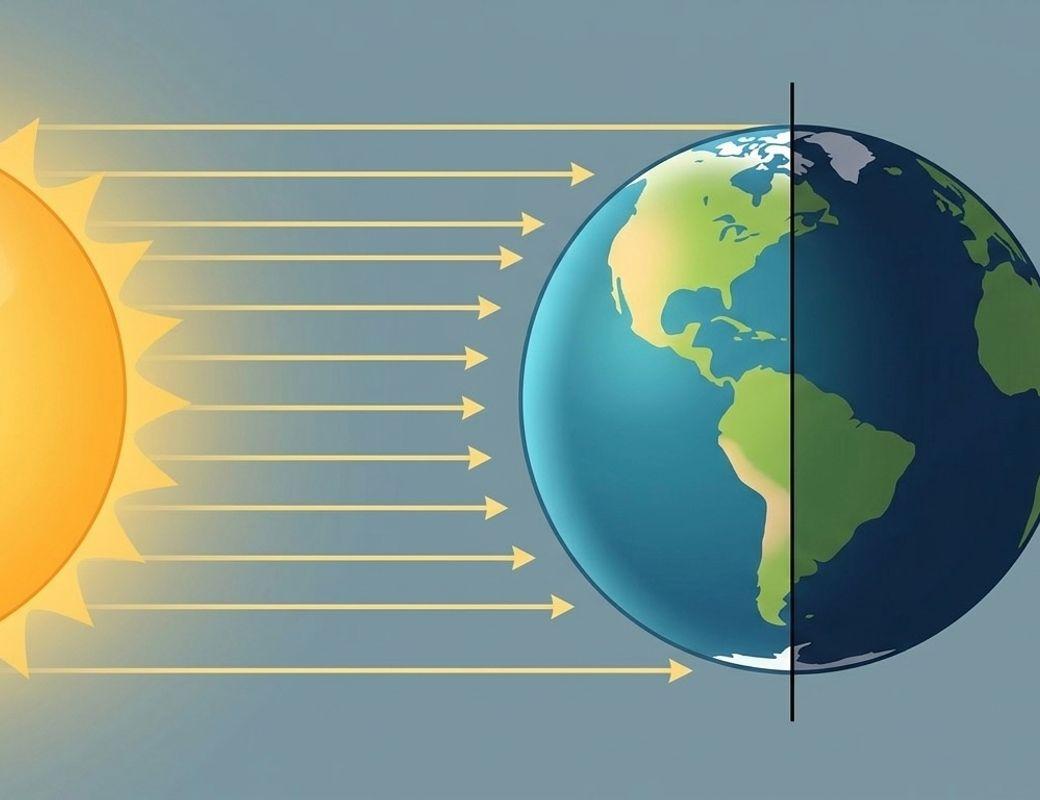
Twice a year, something silent and perfectly aligned occurs between Earth and the Sun. There's no noise, no spectacle visible to the eye, but a rare balance settles in the sky: day and night become nearly equal in length. This phenomenon is called the Equinox, an astronomical moment that has fascinated scientists, farmers, ancient peoples, and spiritual seekers for millennia.
The word equinox comes from the Latin aequinoctium, formed by aequus (equal) and nox (night). The name describes exactly what happens: light and darkness balance each other. At this instant, the Sun positions itself directly over Earth's equatorial line, illuminating both hemispheres almost symmetrically. As a result, both the Northern and Southern Hemispheres receive virtually the same amount of sunlight throughout the day.
This alignment occurs because Earth rotates around the Sun on a tilted axis. For most of the year, one hemisphere receives more light than the other. But during the equinoxes, this tilt favors neither side. It's as if the planet, for a brief moment, breathes in perfect balance.
The equinoxes happen twice a year. The first occurs around March 20 or 21 and marks the beginning of autumn in the Southern Hemisphere and spring in the Northern Hemisphere. The second happens between September 22 and 23, ushering in spring in the South and autumn in the North. Although many people imagine the phenomenon lasts all day, in reality it happens at a specific instant in Earth's orbit—a precise point when the Sun crosses the celestial equator.
This moment also helps us understand the difference between equinoxes and solstices. While the equinox symbolizes balance between light and darkness, solstices represent the extremes of this cycle. This is when the longest days or longest nights of the year occur, marking the peak of summer or winter.
Long before modern astronomy explained this phenomenon with precision, ancient civilizations were already carefully observing these celestial movements. Agricultural peoples depended on these changes to understand the rhythm of the seasons and organize planting and harvesting. Ancient monuments were built with solar alignments that reveal the profound respect these cultures had for cosmic balance.
But the equinox has never been merely a scientific event. In many spiritual traditions, it symbolizes a portal of harmonization. The balance between day and night becomes a metaphor for inner balance: reason and emotion, action and rest, light and shadow. It's a reminder that nature lives in cycles and that human beings are also part of this same movement.
When the equinox arrives, something subtle happens in Earth's rhythm. Nature seems to reorganize its breathing. The seasons change, winds shift direction, light transforms, and new cycles begin to take shape. In the Southern Hemisphere, the March equinox brings the invitation of autumn—a time of gathering inward and maturity. The September equinox announces spring, a period of renewal, blossoming, and expansion of life.
Perhaps this is why the equinox continues to awaken fascination. In a universe in constant motion, there are rare moments of perfect symmetry. Instants when light and shadow share the same space with equality.
And in these moments, the sky seems to remind us of something essential: balance is not permanence—it is passage. A delicate point between two cycles, where everything adjusts before continuing on its way again.
Light on your paths ☀︎︎
ℬ𝓎
𝒮𝒶𝓃𝓉 𖦹
Responses (1)