Earth’s New Cosmic Companion
The Mysterious Journey of 2025 PN7 — A Second Moon in All but Name
Article · 4 min read · ·
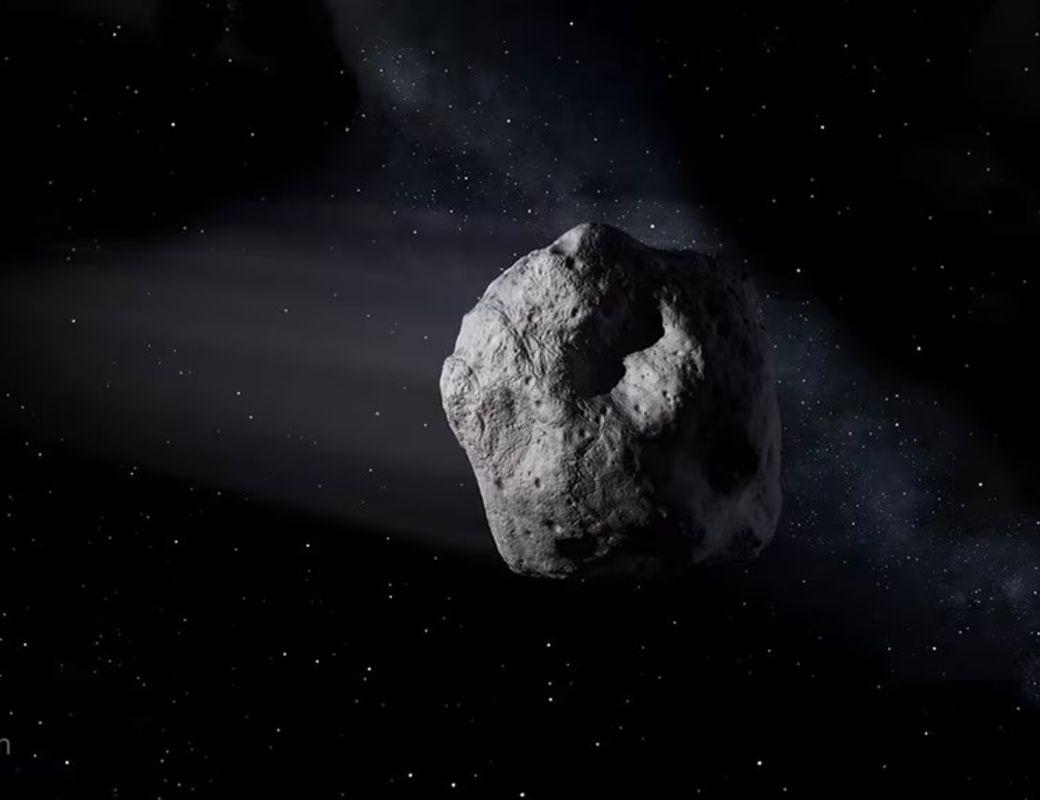
The night sky has gained a quiet new traveler. Orbiting in delicate rhythm with our planet is a small asteroid known as 2025 PN7, a dim and ancient wanderer that now shares our path around the Sun. It is not a true moon, yet it follows so closely that it might be called one in spirit — a second, fleeting companion on Earth’s long journey through the cosmos.
A discovery quietly hidden
In August 2025, astronomers at the Pan-STARRS survey telescope in Hawaii detected a faint object moving near Earth’s orbit. Its glimmer was barely perceptible, a subtle trace of light against the infinite dark. When they retraced earlier sky images, they realized this small body had likely been traveling alongside us for nearly sixty years, unseen until technology finally caught up to its secret.
Only about nineteen meters across, 2025 PN7 is far too small to see with the naked eye. Its faintness — with an absolute magnitude near 26.4 — explains why generations of stargazers never knew it was there, silently mirroring Earth’s path like a shadow that never touches the ground.
The dance of a quasi-moon
Though it appears to orbit Earth, 2025 PN7 does not belong to us in the same way the Moon does. Instead, it follows its own solar orbit, nearly identical to Earth’s, caught in a delicate 1:1 orbital resonance. Its path is slightly elliptical, slightly tilted, and yet aligned enough that it moves in near-lockstep with our planet.
Sometimes it lags behind us; sometimes it drifts ahead. From our viewpoint, that shifting motion makes it appear to circle Earth, as if tethered by an invisible thread. In truth, both Earth and 2025 PN7 are circling the Sun together — two travelers moving in harmony through the vastness of space. It is a fragile dance, one guided not by gravity’s embrace but by balance and timing.
Origins and destiny
Where this small companion came from remains uncertain. Some astronomers suspect it may be a fragment ejected from the Moon long ago, flung into space by an ancient impact and drawn into a solar path that happens to mirror our own. Others believe it belongs to a population of slow, Earth-like asteroids called Arjunas, which share similar orbits with our planet and occasionally become temporary companions.
Whatever its birth, simulations suggest 2025 PN7 will remain in this quasi-satellite state for about six more decades. After that, gravitational nudges from Earth, the Moon, and other planets will slowly alter its trajectory. Sometime late in the 2080s, it will drift away, breaking formation and returning to the quiet anonymity of the solar system.
Why it matters
The discovery of 2025 PN7 offers more than just celestial novelty. It provides scientists a natural laboratory to study how small objects behave when locked in near-Earth resonance. Its nearness could make it an ideal target for future spacecraft, allowing us to test propulsion systems or sample an untouched piece of ancient material without leaving Earth’s orbital neighborhood.
And on a more human note, discoveries like this awaken a sense of wonder. They remind us that our planet does not sail alone. Hidden companions may linger nearby, unnoticed, their faint reflections reminding us of how much remains unseen in the cosmic sea that surrounds us.
A reflection in the void
Imagine driving a long, endless road beneath the stars. For miles, another car matches your speed — sometimes in view, sometimes just beyond the curve, yet always there. That is Earth and 2025 PN7, two travelers sharing the same path for a time. One day, our small companion will veer away, its orbit shifting ever so slightly until the bond is broken and it fades once more into the deep silence of space.
Still, its discovery invites reflection. How many others are out there, just beyond the limits of our sight — ancient fragments, silent watchers, or perhaps other quasi-moons trailing beside distant worlds? Each new find reminds us how incomplete our cosmic map truly is.
Every asteroid, every faint glimmer in the dark, holds a story billions of years in the making. Through them we learn not only about the universe but about our own fragile place within it. So when you look up at the Moon tonight, remember — somewhere beyond that silvery glow, another small traveler keeps us company, sharing our orbit, whispering across the stars of how vast, mysterious, and beautifully connected our universe truly is.
Responses
No responses yet — start the conversation.