𝓐𝓾𝓽𝓾𝓶𝓷 𝓔𝓺𝓾𝓲𝓷𝓸𝔁 𝓜𝓪𝓻𝓬𝓱 20 🍁
𝚌𝚘𝚜𝚖𝚒𝚌 𝚍𝚊𝚗𝚌𝚎 𝚠𝚒𝚝𝚑 𝚝𝚑𝚎 𝚜𝚞𝚗
Article · 4 min read · ·
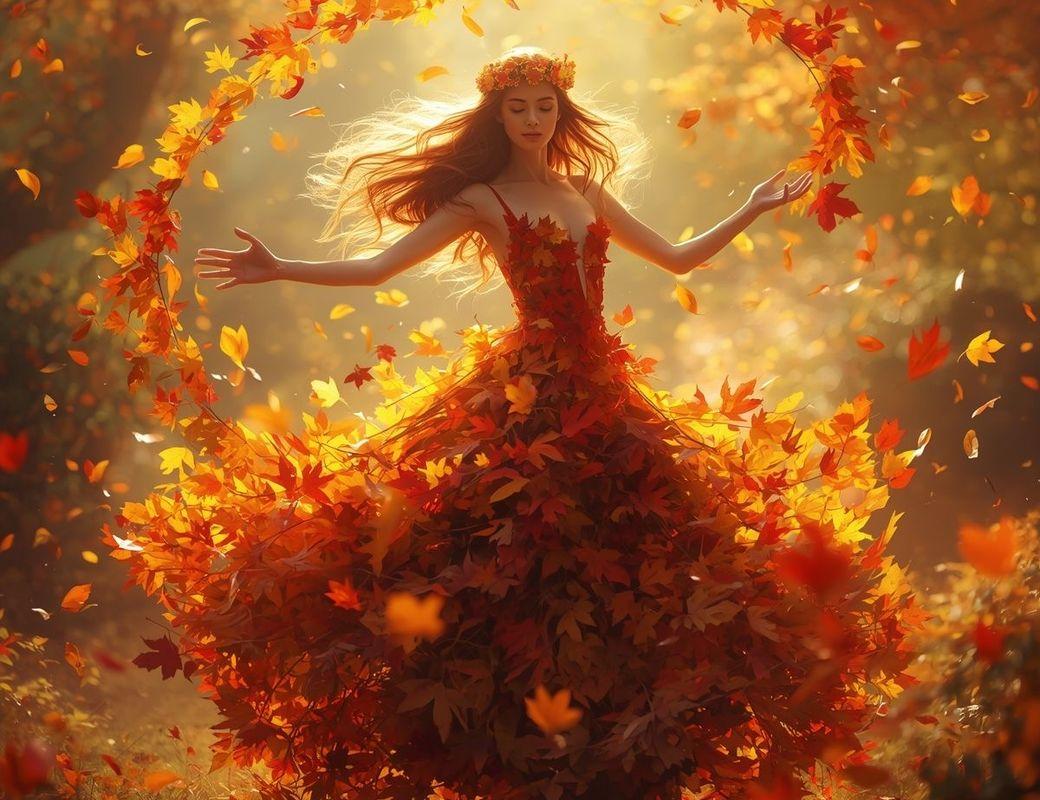
On March 20, 2026, at 11:45 AM (Brasília time), Earth passes through one of the most symbolic moments of its cosmic dance with the Sun. This is when the March Equinox occurs—the instant when the Sun crosses the celestial equator and light is distributed evenly between both hemispheres. During this brief point in Earth's orbit, day and night have virtually the same duration, creating a rare moment of symmetry between light and darkness.
In the Southern Hemisphere, this phenomenon marks the beginning of autumn—a season associated with maturity, harvest, and nature's gradual retreat. In the Northern Hemisphere, the same event inaugurates spring, a time of blossoming and life's expansion. This duality reveals one of the cosmos's great teachings: while one part of the planet withdraws, another awakens.
🍁 Autumn (Begins in March) - Southern Hemisphere
Starting around March 20-21, the Southern Hemisphere leaves summer and enters autumn.
-
Countries: Brazil, Argentina, Chile, Uruguay, Paraguay, parts of Bolivia, South Africa, Australia, and New Zealand.
-
What to expect: Milder weather, shorter days, and the beginning of falling leaves (especially in temperate climate areas like southern Brazil, Argentina, and Chile).
*
🌸 Spring (Begins in March) - Northern Hemisphere
Starting around March 20-21, the Northern Hemisphere leaves winter and enters spring.
-
Countries: Portugal, Spain, United States, France, Italy, United Kingdom, Japan, China, Canada, and most of Asia and Europe.
-
What to expect: Longer days, rising temperatures, blossoming (such as cherry blossoms in Japan), and greener parks.
*
Summary of the change:
- March 20/21: Autumn Equinox (South) / Spring Equinox (North).
But in astrology, this moment carries an even deeper significance.
It is precisely at this point that the Sun enters the zero degree of Aries, the first sign of the zodiac. This instant inaugurates what is called the Astrological New Year, considered by astrologers as the true beginning of the annual energetic cycle.
Unlike the civil calendar, established historically by political and cultural decisions—such as the system inherited from Julius Caesar's reforms—astrology follows the movements of the sky directly. Astrological time begins when the Sun returns to the starting point of the zodiacal wheel, initiating a new journey through the twelve signs.
This return is not merely symbolic. For astrology, the exact instant when the Sun enters Aries creates a specific celestial map, known as the chart of the astrological year. This planetary configuration functions as a kind of "energetic imprint" of the cycle that begins, revealing collective trends that may influence the following months, until the Sun once again completes its journey through the signs.
This is why many astrologers view the equinox as a true energetic reset. After the introspective period of Pisces, associated with the closing of cycles, Aries's force emerges bringing impulse, courage, and initiative. It is the archetype of birth, the initial spark, the energy that breaks through inertia and invites action.
This transition also explains why so many spiritual traditions consider the equinox a portal of renewal. All of nature seems to reorganize its rhythm. Temperatures shift, sunlight transforms, and the planet enters a new phase of the annual cycle. In the Southern Hemisphere's autumn, the energy invites conscious introspection: observing what has matured, understanding what needs to be released, and preparing the ground for life's next movements.
Meanwhile, on the astrological plane, Aries inaugurates a cycle of initiative. It is the energy that encourages new projects, changes in direction, and decisions that have been waiting for courage to be born. As the first sign of the zodiac, it symbolizes life's primordial impulse—the moment when something decides to exist.
From this point on, the Sun begins its journey once again through the twelve zodiacal archetypes: Aries opens the way, followed by Taurus, Gemini, and so on, until the cycle completes in Pisces the following year. Each passage represents a stage of human experience, forming a continuous spiral of learning, growth, and transformation.
This is why the equinox of March 20, 2026, is not just a change of season. It represents an instant of alignment between Earth's movement, the Sun's rhythm, and astrology's ancestral symbolism.
It is the moment when the sky seems to whisper that a new chapter begins.
While nature prepares to enter autumn in the Southern Hemisphere, a silent force of renewal ignites in the symbolic field of the zodiac.
And at this point of perfect balance between light and shadow, a subtle invitation emerges: to begin again, with more awareness, more courage, and more presence on one's own path.
Light on your path ☀︎︎
𝒫ℴ𝓇
𝒮𝒶𝓃𝓉 𖦹
Responses (1)