Your New Tarot Deck
But what do I do now?😵💫
Article · 5 min read · ·
So, you’ve bought your first tarot deck. Maybe you felt drawn to the artwork, maybe it came highly recommended, or maybe it simply found its way into your hands at the right moment. Whatever the reason, that feeling of opening a new deck is exciting and, for many beginners, slightly overwhelming. Once the cards are unwrapped and shuffled through for the first time, the question naturally follows: what do I do now?
The good news is there’s no rush. Tarot is a relationship, not a race. The early days with a deck are about familiarity, curiosity, and trust. You’re not expected to know everything straight away, and you certainly don’t need to start with big, life-altering questions. In fact, the quieter beginnings are often the most important.
Spend time with the imagery
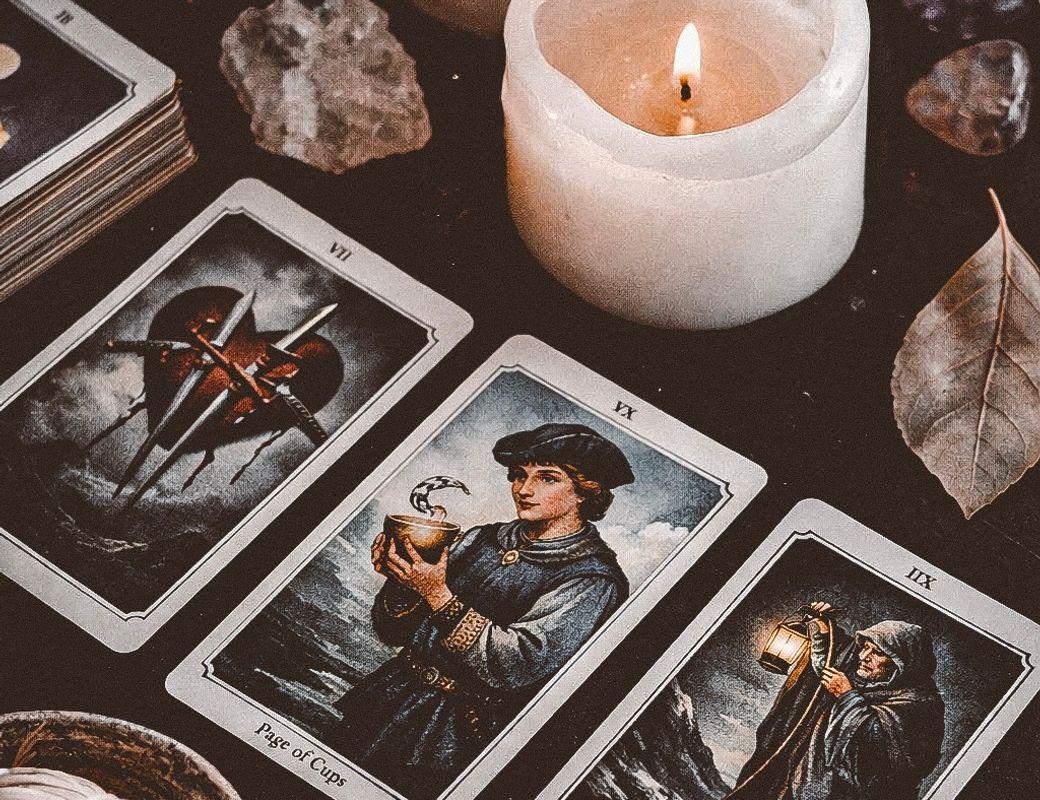
Before you ask the cards anything at all, spend time simply looking at them. Sit somewhere comfortable and slowly move through the deck, card by card. Notice the colours, symbols, facial expressions, and moods. Which cards draw you in? Which ones make you pause or feel unsure?
There’s no right or wrong way to read tarot. The cards are meant to work with your intuition, and the imagery is there to guide and inspire you, not to limit you.
That said, it helps to have a few simple foundations to lean on as you’re learning. The suits give you a framework—a starting point you can return to whenever you feel unsure:
-
Cups speak to emotions, feelings, and relationships 🏆
-
Wands relate to action, energy, and the paths we choose 🪄
-
Swords reflect thoughts, communication, fears, and the shadow self 🗡️
-
Pentacles ground us in money, work, security, and ego 🪙
Think of these meanings as gentle signposts rather than strict rules. As you spend more time with your deck, your own understanding will naturally grow and deepen. The question you ask will also have an impact (a whole article on that is to follow 🥳)
At this stage, resist the urge to reach for the guidebook immediately. Let your own impressions come first then maybe compare. Tarot speaks in images and intuition as much as in definitions. You might find that certain cards already spark thoughts or emotions, and that’s a powerful foundation to build on.
There’s no need to “understand” every card yet. Think of this as being introduced to a new language by sound and rhythm, not grammar rules.
Practise shuffling your decK
Shuffling may seem like a small thing, but it’s one of the simplest ways to connect with your deck. As you shuffle, you’re physically handling the cards, getting used to their size, texture, and energy. Over time, this becomes a grounding ritual one that helps you shift into a more intuitive headspace.✨
Try different shuffling methods until you find what feels natural. Some people overhand shuffle, others prefer to cut the deck into piles. There’s no right or wrong approach. What matters is consistency and comfort.
You can shuffle while thinking about your day, your mood, or nothing at all. This isn’t about forcing intention—it’s about familiarity.
Start with simple questions 💭
When you’re ready to begin reading, keep things light. Simple, open-ended questions are ideal in the beginning. Asking something like “What should I know about my week ahead?” “What do I need to know right now” gives the cards space to offer insight without overwhelming you. At this stage avoid blunt Yes/No untill you have practised. (I always advise against yes or no as there is so much more tarot will be telling you) Then pull 1-3 cards max at the start. remember to keep it simple at first
These kinds of questions are practical and easy to reflect on. They allow you to see how the cards show up in real life, which builds confidence in your interpretations.
Try to avoid deep, emotionally charged, or complex questions until you feel more familiar with your deck. Tarot deepens with practice, and clarity grows over time. There’s no need to dive into the heavy stuff straight away.
A daily one-card practic
One of the best ways to learn tarot is through gentle daily practice. Each morning, or at the start of your day, shuffle your deck and draw one card. Place it face down and leave it there until the day is done.
Go about your day as normal. In the evening, turn the card over and spend some time journaling. Ask yourself: What did this card mean in the context of my everyday life? How did it show up in my mood, interactions, or experiences?
This practice is powerful because it shifts tarot out of abstraction and into reality. You’re not memorising meanings, you’re living them. The free coffee that came with the ave of pentacles, the old friend you bumped into with the 6 of cups, or the disappointment you felt with the 5 of cups. Over time, you’ll notice patterns and personal associations forming. A card that once felt confusing may suddenly make perfect sense when reflected through real experience. This technique also removes fear from cards like the tower and 10 of swords ⚔️ . This helps put things into perspective without the drama.
Journaling with your deck
Journaling doesn’t need to be complicated. A few sentences are enough. Write what you noticed, how the card reflected your day, and how it made you feel. Some days the connection will be obvious; other days it may be subtle. Both are valuable. If your co dies- journal that your confused and just wrote about your day. You can always reflect at the end of the week to put the pieces together.
Your journal becomes a personal tarot reference far more meaningful than any guidebook. It records how you understand the cards, and that understanding will continue to evolve.
Trust the slow build
Getting to know a tarot deck is about patience and presence. There’s no deadline, no final test, and no “right” way to do it. The more time you spend with your 🎴 looking, shuffling, asking simple questions, and reflecting,the more natural it becomes.
Let your deck unfold at its own pace. Tarot meets you where you are, and with consistency and curiosity, it becomes not just a tool for readings, but a quiet companion in everyday
Here’s to choosing your growth, your peace and your power and I’ve got you when ever you are ready
T ✨🤍
Socials Tanya_Regan_Tarot
Responses (8)