The Tree of Becoming
A Seven-Card Tarot Spread for Spring Growth and Gentle Renewal
Article · 5 min read · ·
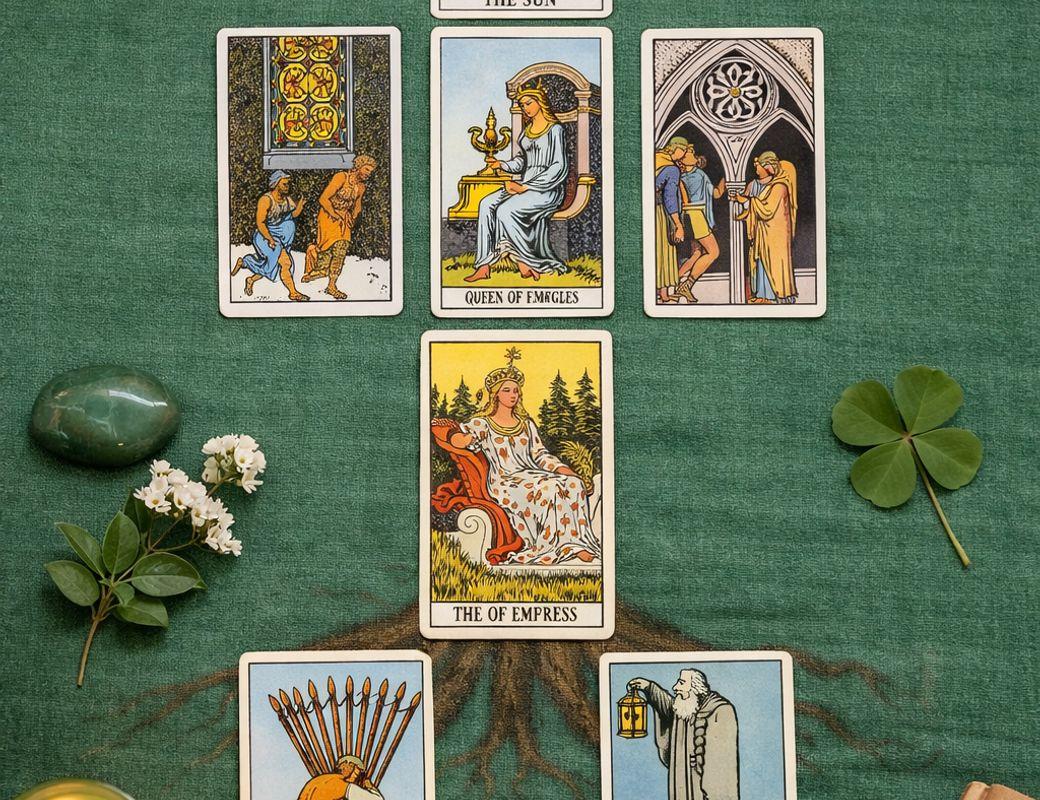
Spring does not announce itself loudly. It arrives in quiet ways, through longer light at the edges of the day, warmth beginning to move beneath the soil, and the subtle feeling that something inside you is stretching after a long rest. The Tree of Becoming tarot spread was created to honor that kind of growth. Not dramatic, overnight change, but the slow, living transformation that happens when we allow ourselves to listen.
This is not a spread about productivity or pressure. It is a spread about curiosity. About presence. About noticing what is already stirring rather than demanding answers before they are ready to emerge. If at any point you feel yourself trying to “do it right,” pause and breathe. Tarot is a conversation, not a performance.
Preparing the Space
Before you touch the cards, give yourself permission to arrive fully.
Lay down a green cloth, not because it is required, but because color speaks to the body before it speaks to the mind. Green carries the language of renewal, balance, and natural growth. Place a piece of green aventurine or moss agate nearby, something cool and grounding, something that feels steady in your hands. If you have fresh greenery, a four-leaf clover, dried herbs, ivy, or even a houseplant, invite it into the space. Living things hold memory. They remind us that growth does not need to be forced.
Light a candle in a soft spring color and, if you wish, burn a gentle incense, something floral, herbal, or lightly woody. Keep it subtle. This ritual is not about intensity; it is about openness. Have a journal nearby, not as an obligation, but as a place to catch what you may want to remember later.
As you shuffle your deck, imagine standing before a tree that feels familiar to you. Notice its roots, its trunk, its branches reaching upward. There is no urgency here. When you feel ready, begin.
Laying Out the Tree
This spread uses seven cards arranged slowly into the shape of a tree, because the way the cards are placed mirrors the way growth actually happens.
You begin at the bottom, with the roots, because everything starts there, in what is unseen, felt more than understood. From there, you move upward, placing each card with intention and allowing the tree to take form as you go. The roots anchor the spread, the trunk stabilizes it, the branches show movement, and the final card rests at the top, where growth meets light.
Take your time with each placement. Let the shape settle. The act of laying out the spread is part of the ritual itself.
The Roots , What Lies Beneath
The first two cards form the roots of the tree. They sit at the base of the spread because they represent what lives below the surface, the quiet influences shaping everything else.
The first root card reveals what is ready to be released. This is not about failure or regret. It is simply something that has completed its purpose. You may see a card that speaks to exhaustion, outdated beliefs, or emotional patterns that no longer nourish you. Read this card with honesty and compassion. Compost is not waste; it is fuel for what comes next.
The second root card shows what you gained from the season you are leaving behind. Even the most difficult periods leave something valuable in their wake. This card often reflects strength, insight, or resilience you may not fully recognize yet. These two root cards should always be read together. One shows what is being laid to rest; the other shows what now quietly supports you.
The Trunk , The Heart of the Season
The third card becomes the trunk of the tree, the steady center around which everything else grows. This card represents the core theme of your spring.
Rather than asking what you should do, this card asks who you are becoming. It draws nourishment from the roots below and supports the growth unfolding above. This is the stabilizing energy of the season, the lesson that wants to be lived rather than mastered.
The Branches , Growth in Motion
The next three cards form the branches, reaching outward and upward. This is where growth begins to show itself.
The first branch highlights a challenge, not as a warning, but as an area where awareness will matter. Growth often stretches us before it strengthens us. This card helps you recognize where patience and presence will be needed.
The second branch offers guidance on how to care for yourself as things unfold. This is not about discipline or effort, but about support. It shows what kind of nourishment, emotional, practical, or spiritual, will help you stay grounded and engaged with the process.
The third branch reveals what is already beginning to grow, even if it still feels tender or uncertain. Often this energy is subtle, easy to overlook, and deeply important. This card is a reminder that something is already alive and moving within you.
The Canopy , The Bloom
The final card rests at the top of the spread, where the tree opens to the sky. This is the bloom, not a fixed promise, but a possibility shaped by everything below it.
What appears here is influenced by what you release, what you carry forward, and how you tend yourself along the way. This card invites hope without pressure and vision without forcing outcomes.
Reading the Tree as a Whole
When you have spent time with each card, step back and take in the spread as a single living system. Notice repeating symbols, patterns, or emotions. Pay attention to how the roots echo the bloom, and how the trunk supports the movement in the branches.
Often, the deepest insight does not come from any one card, but from how they speak to each other.
Reflection Without Pressure
Write only what feels alive. A sentence. A symbol. A question. This is not homework. It is a record of a moment in time. Return to it later in the season and notice what has shifted, what has grown, what has surprised you.
Tarot readings continue to unfold long after the cards are put away.
Closing the Ritual
When you are ready, thank the cards and gently extinguish the candle. Nothing needs to be solved. Nothing needs to be forced. You have listened, and that is enough.
This ritual is meant to be exploratory, reflective, and enjoyable. Let it feel good. Let it feel human. Spring is not about perfection. It is about becoming, one quiet, living moment at a time.