The Tarot Cards Everyone is Afraid Of
Why Death, The Tower, and The Devil got such terrible PR
Article · 12 min read · ·
Have you ever heard the sound a room makes when someone pulls Death in a tarot reading? It's not a gasp, exactly. It's more like the air gets thinner. Shoulders come up, and someone laughs a little too fast and says "that's not literal, right?" while already reaching for their phone to text a friend about it.
Meanwhile, pull The Star and everyone exhales like they just watched someone survive a car crash. Pull The Sun and you'd think the querent won the lottery. There is a hierarchy of desirability in the tarot deck, and it has almost nothing to do with what the cards are actually trying to tell you.
I've been reading tarot and working with these archetypes for years now, alongside decades of hands-on work with the parts of nature that don't perform for an audience including dying animals, difficult births, and the unglamorous machinery of survival. And I can tell you with 100% certainty that the cards everyone fears are, without exception, doing the most honest work in the deck. Death, The Tower, and The Devil are not punishment cards, nor are they curses. They are the tarot's three most committed truth-tellers, and they got their terrible reputations by saying things people didn't want to hear, at a time when saying things bluntly could get you burned, exiled, or worse, the same way most truth-tellers do.
Let's take them one at a time and look at what actually happened to their reputations, and what they're actually asking of you.
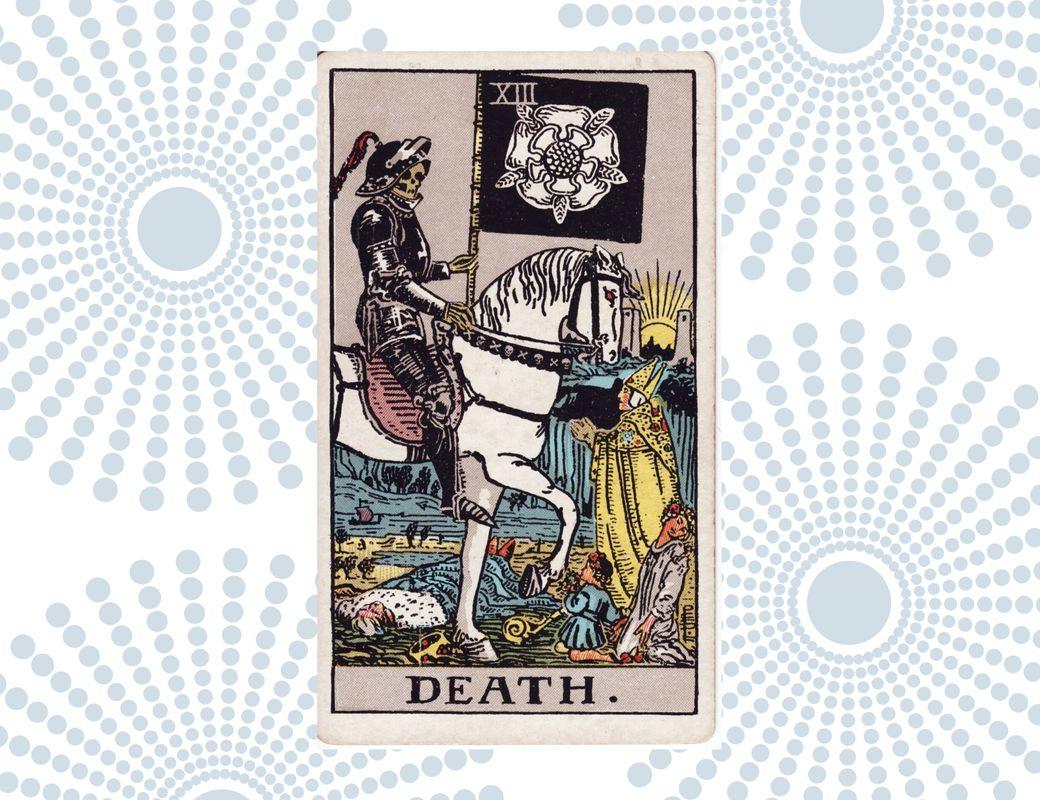
Death: The Card That Isn't About Dying
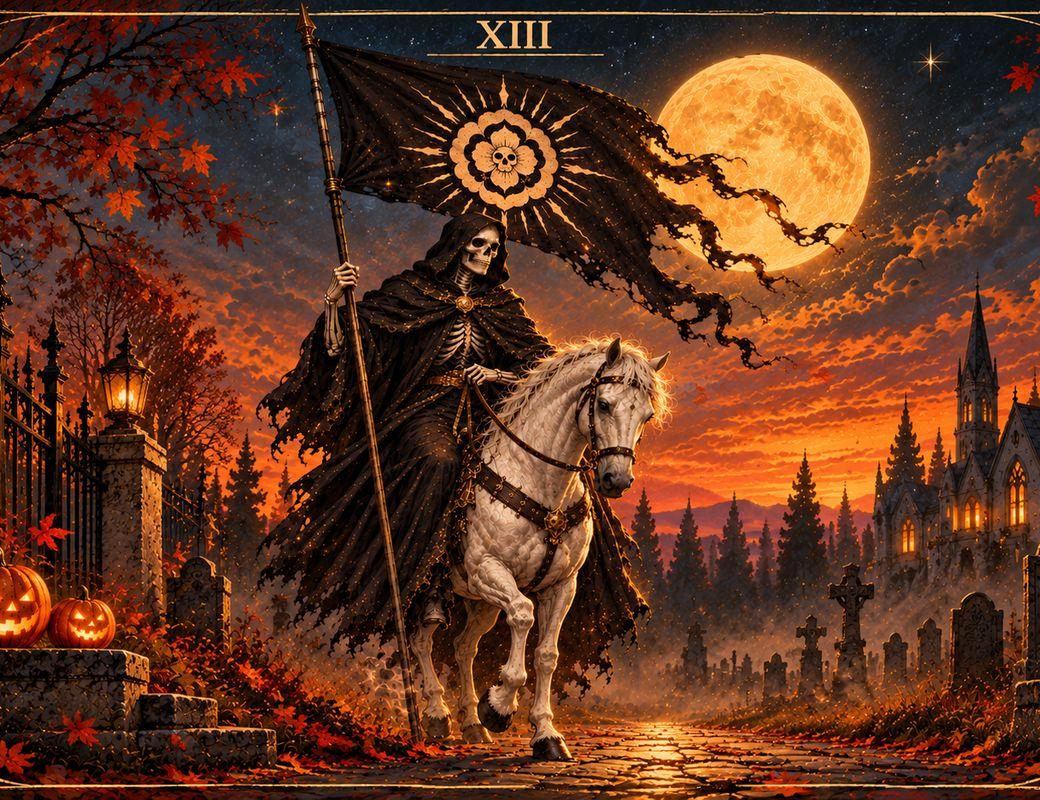
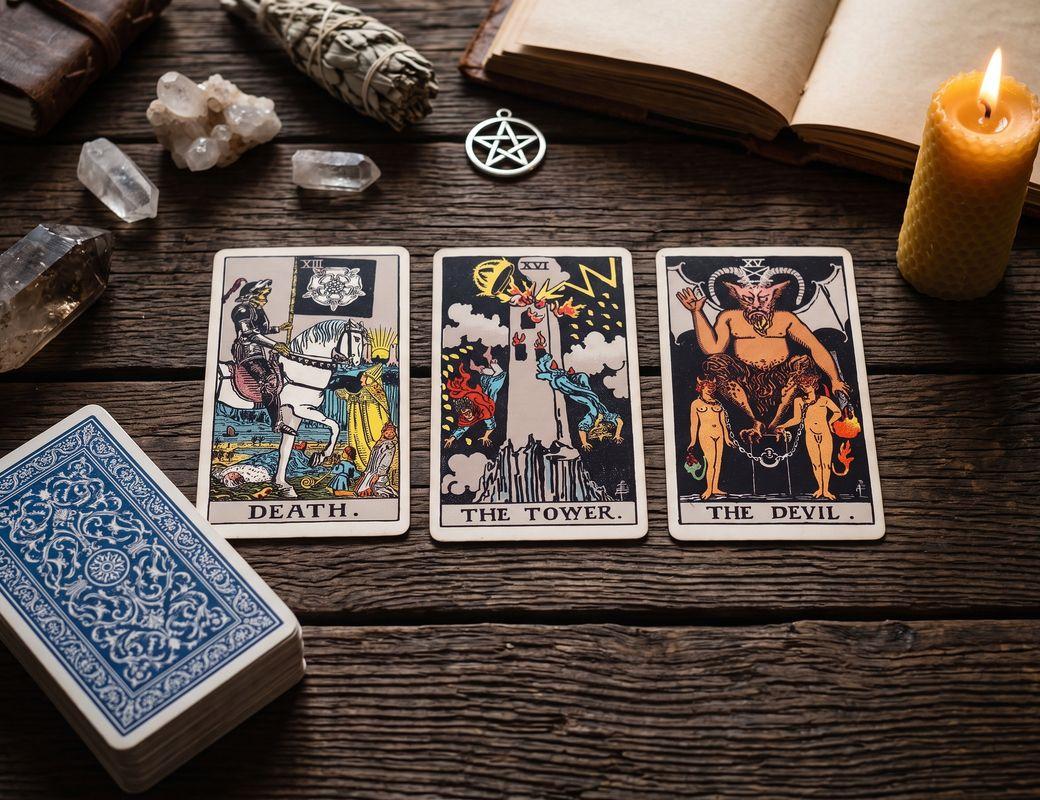
This is the one that makes people flinch hardest. Death, card thirteen of the Major Arcana, has been terrifying querents since at least the fifteenth century, when the earliest surviving tarot decks were painted for wealthy Italian families. The first thing worth knowing is that even then, in decks like the Visconti-Sforza, the figure wasn't always drawn as a skeletal reaper mowing down peasants. Sometimes Death was closer to a knight, or sometimes the imagery leaned more toward transformation than annihilation. The grim, scythe-wielding version that dominates modern imagination owes as much to the printing press and centuries of plague, war, and mass death as it does to any original occult meaning.
This tells you something important. The fear didn't start inside the card. It got projected onto the card by people living through genuinely terrifying times, and it sealed itself there.
What does Death actually mean when it shows up in a spread? It means something in your life has reached its natural endpoint, not your actual life, but a chapter of it. Maybe that’s a relationship that has quietly finished its purpose, a job you've outgrown but haven't admitted it yet, or even an identity you built at twenty-two that no longer fits the person you are now. Death arrives when you're standing at the edge of an ending you've probably already sensed coming, the same one you've been avoiding by staying busy, staying distracted, and staying anywhere but present with the truth.
The card is honest in a way that almost nothing else in modern life is honest. We live inside a culture that treats endings as failures. We ghost instead of closing things cleanly. We keep half-dead careers on life support because quitting feels like admitting defeat. We stay in relationships past their expiration date because starting over is terrifying and because somewhere we absorbed the lie that a long thing is automatically a good thing.
Death doesn't care about any of that. Death looks you in the eye and says, “this is over.”It doesn’t say this as a threat, but as a fact, and there is mercy hiding inside that direct statement because the alternative to acknowledging an ending is dragging a corpse around with you, pretending it's still breathing.
I think about this constantly in my rehabilitation work. Part of caring for injured wild animals is knowing, with total clarity, when an intervention is helping and when it's just prolonging suffering out of your own discomfort with loss. The animals that do best are the ones where someone made an honest, timely call, not the ones kept technically alive past the point where life served them. Death, as a tarot card, is asking you to make that same honest call somewhere in your own life. What are you keeping on life support because ending it feels unbearable?
The card that follows Death in the Major Arcana is Temperance, which urges us to be patient, integrating, and showcases a figure calmly pouring water between two cups. That sequencing is not an accident. Death clears space and Temperance is what grows in the space that's been cleared. You can not get to the second without going through the first, and no amount of positive thinking is going to let you skip the line.
So no, Death almost never means you or someone you love is about to die. It means you're standing at a threshold, and the fastest way through it is to stop pretending it isn't there.
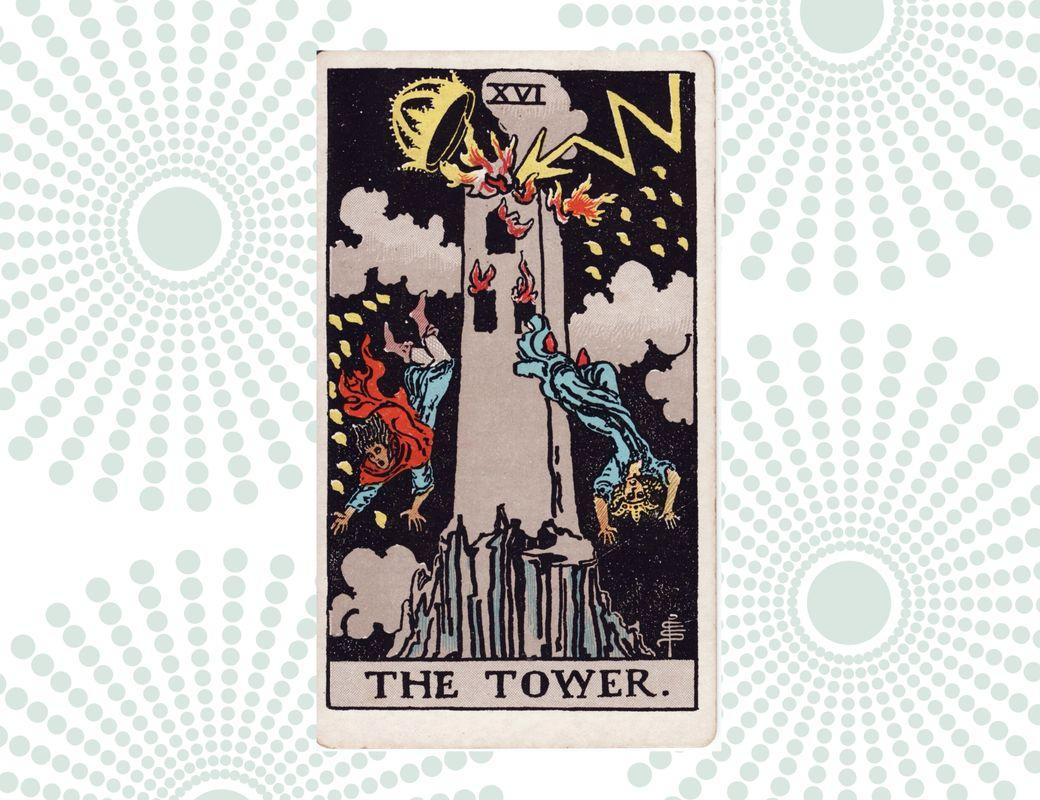
The Tower: The Card That Ruins Your Denial
If Death is feared for its finality, The Tower is feared for its violence. Visuals include lightning splitting a stone structure, two figures falling headfirst out of the wreckage and their crowns tumbling through the air. Even people who've never picked up a tarot deck recognize The Tower as bad news, and see the card as the equivalent of a siren.
I'm not going to pretend The Tower is gentle, because it isn't. It's the card of sudden, structural collapse, symbolizing the affair that surfaces after years of quiet suspicion, the diagnosis that rearranges everything, the business that implodes overnight, or the moment a belief system you built your whole identity around turns out to be built on sand. The Tower does not knock first, nor does it schedule an appointment. It arrives the way real crises arrive, which is all at once and with no regard for whether you feel ready.
Almost nobody tells you that the Tower only destroys what was already unstable.
Look at the image again. That structure wasn't sound. It was built on a foundation that couldn't hold, and it was standing tall right up until the moment it couldn't stand anymore. The lightning didn't create the weakness. It revealed it. The crowns falling from the figures' heads are symbolic of false authority, ego, and control systems that were never as solid as they appeared to be. The Tower is what happens when a structure built on denial finally meets a force it can not outlast.
This is the card people resist hardest because it brings truth at a volume you can no longer negotiate with. You can talk yourself out of Death's quiet ending. You can rationalize away a Devil card's warning. The Tower does not give you that option. It happens to you, fast, and in its wreckage you're left standing in the rubble of something you now have to see clearly, whether or not you were ready to.
I've watched this exact pattern play out in wildlife rescue more times than I can count. An animal that's been compensating for an injury for weeks, holding itself together through sheer stubbornness, finally collapses. It looks sudden, catastrophic even, but the truth is the collapse was happening the entire time, slow and invisible, until what we're seeing is the moment the compensating finally ran out of runway. The Tower moment is rarely actually sudden. It's the visible conclusion of an invisible unraveling that's been underway for a long time.
What The Tower offers, underneath all that rubble, is a foundation you get to rebuild honestly this time on the ground that's actually there. That is, if you can stand to look at it this way, a mercy delivered with terrible timing and zero bedside manner.
The card people should fear more than The Tower is the one that never comes. It’s the collapse that keeps getting postponed, or the reckoning you manage to dodge for another year, or another decade, building higher and higher on a foundation you already know isn't sound. The Tower is loud, but it's also fast. What it interrupts is usually far more dangerous than what it destroys.
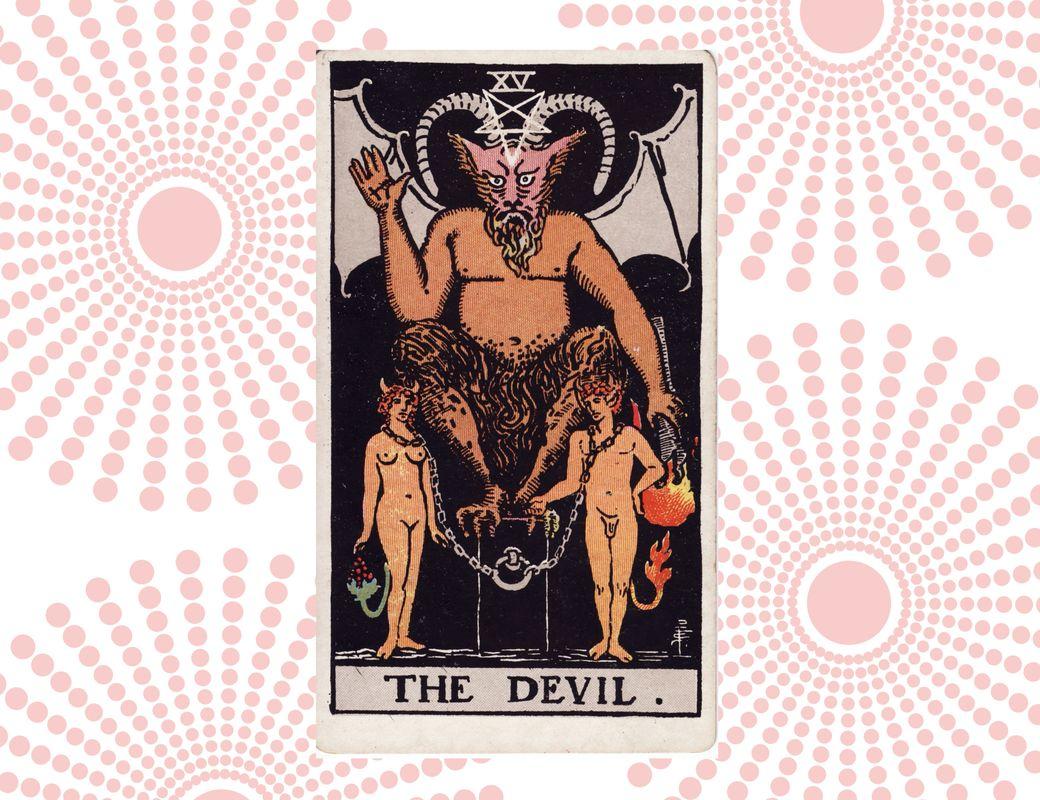
The Devil: The Card That Names What You've Already Named Normal
Of the three, The Devil might be the most misread, because people assume it's a morality card. They associate it with sin, temptation, and evil knocking at the door. Many close the deck, say a prayer, and move on. That reading misses almost everything The Devil is actually built to show you.
Look at the classic imagery. It features two figures chained to a pedestal beneath a horned, goat-like creature. If you look closer, the way the tradition actually asks you to, you’ll see that chains around their necks are loose. They’re actually loose enough to slip off if either figure simply lifted it over their head. Nobody is holding them there. There is no jailer forcing compliance, and no external villain orchestrating their bondage. They are choosing to stay.
That's the whole card. The Devil is not about temptation from outside. It's about the shapes of our own making that we've grown so used to wearing, we've stopped experiencing them as chains at all. Addiction is one example, yes, but another example might be the relationship you know isn't serving you but stay in because leaving feels harder than staying. Maybe it’s the job that's slowly hollowing you out, the self-talk so relentlessly cruel you've mistaken it for realism, or the numbing habit, the doomscrolling, and the way you've quietly negotiated your own standards down so many times you no longer notice the compromise.
None of these things arrived through force. They arrived gradually, through repetition, and through the comfort of the familiar even when the familiar is actively harming you. The Devil doesn't ask "what evil is being done to you?" It asks something much harder to sit with, asking you "what bondage have you built a comfortable routine around, and are you willing to admit it's a choice?"
This is exactly the kind of question shadow work exists to ask, and it's exactly the kind of question most spiritual spaces are too polite to ask directly. There's a whole industry built around love-and-light bypassing, and the instinct to skip straight to gratitude and manifestation without ever looking honestly at the chains. The Devil refuses that shortcut and insists on naming the thing before it will let you loosen it.
I think this is why the card earned its reputation because it's confrontational in a way that most of us have been trained to avoid, especially about ourselves. It is far easier to blame an outside villain for our suffering than to admit the chain has been loose the whole time and we simply haven't lifted it off. That admission is uncomfortable in a way that has nothing to do with sin and everything to do with accountability.
The good news, if you want to call it that, is built right into the imagery. Loose chains mean the exit was always available. The Devil is not a life sentence, but a mirror, held up at exactly the angle you've been avoiding, with the intention of showing you the shape of something you have far more power over than you've let yourself believe.
The Real Reason These Three Get Terrible Reactions
Death asks you to stop denying an ending. The Tower forces you to stop denying a collapse. The Devil asks you to stop denying a choice you've been making on autopilot. Not a single one of these cards is asking you to suffer. They are asking you to stop lying to yourself, and stopping that habit is one of the hardest things a human being can do.
We built an entire culture around the avoidance of these three confrontations. We medicate discomfort instead of naming it, and we chase good vibes as a personality trait. We treat endings as failures, collapses as catastrophes, and self-honesty as something to be gently deferred, always if possible, to some more convenient future date. Against that backdrop, of course the cards that demand immediate honesty are going to look terrifying. They're doing the one thing our culture has spent generations teaching us to avoid.
Compare that to a card like The Sun, which everyone loves pulling. The Sun is wonderful, genuinely, but it asks almost nothing of you. It's an affirmation. Death, The Tower, and The Devil are interventions, and interventions, by their nature, are never going to feel as good in the moment as affirmations do, even when they're doing far more to actually move your life forward.
There's also something worth naming about who decided these cards were "bad" in the first place. Tarot's early reputation as a fortune-telling tool got tangled up with centuries of religious anxiety about anything resembling divination, and the cards that already carried unsettling imagery like skeletons, collapsing towers, or horned figures, got absorbed into that anxiety the fastest. The fear wasn't really about the cards. It was about a broader discomfort with confronting mortality, instability, and personal accountability head-on, without a priest or an institution mediating the experience for you. Tarot, at its most honest, cuts out that middleman. It hands the confrontation directly to you. That was radical then, and in a lot of ways, it still is now.
What To Do When You Pull One of These
If you sit with cards long enough, you stop wanting the deck to only hand you comfortable answers. A deck that only ever gave you Suns and Stars would be useless as a tool, because it would just be flattering you, the same way a friend who only ever tells you what you want to hear is useless in a crisis.
So when Death, The Tower, or The Devil shows up in your spread, the work isn't to panic and it isn't to bypass it with a quick reshuffle until you get something friendlier. The work is to ask the specific, unglamorous question each card is putting in front of you.
With Death, what has already ended that I haven't let myself grieve yet?
With The Tower, what structure in my life have I been quietly holding together with denial, and what would it cost me to let it fall on my own terms instead of waiting for it to fall on its own?
With The Devil, what chain around my neck is loose enough to lift off right now, today, if I was finally willing to admit I'm the one who's been holding it in place?
These questions were never going to be comfortable, but comfort was never the tarot's job. Honesty was, and these three cards, terrifying reputation and all, are simply the ones brave enough to keep telling you the truth long after everyone else in your life has gone quiet.
Responses
No responses yet — start the conversation.