The Star
The Shadow of the Unreceived Light
Article · 10 min read · ·
After the Tower, there is always, eventually, quiet.
Not peace, not yet. Not answers, not direction. Just… the absence of collapse. The dust settling. The realization that you are still breathing, still standing, still here.
I spent the weeks after my Tower strike waiting for the other shoe to drop. I had learned, from a lifetime of survival, that catastrophe travels in pairs. That the universe, having demonstrated its capacity for demolition, would surely return to finish the job.
I waited. I braced. I refused to unpack the emergency kit.
And then, one night, I looked up.
I don't remember why. I was walking home from somewhere, exhausted from the labor of waiting for disaster, and I simply… looked up. At the sky. At the vast, indifferent, utterly peaceful field of stars.
And one of them, faint and steady, seemed to pulse in recognition.
Not a message. Not a sign. Just a silent, wordless presence. A witness. A reminder that there were still lights in the darkness, even if I could not yet feel their warmth.
I didn't weep. I didn't pray. I didn't make a wish or set an intention or perform any of the gestures I associated with hope.
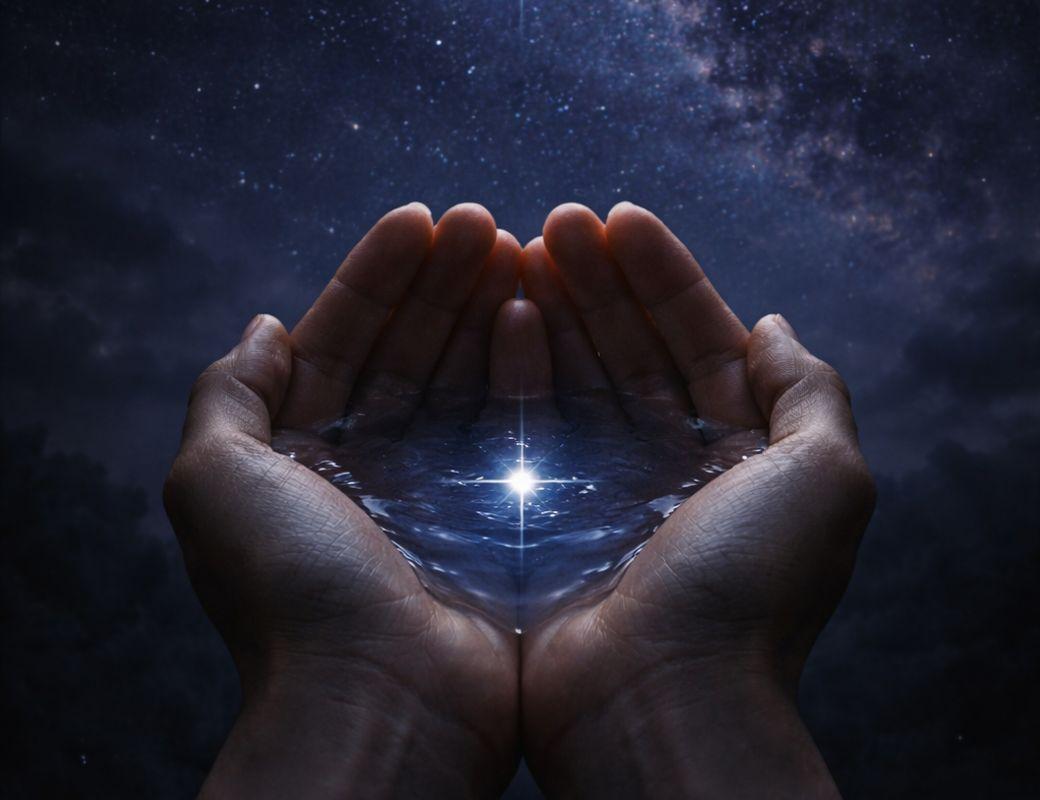
I just received it. The first faint light, landing in my empty, open hands.
The Traditional Blueprint: The Waters of Rebirth
The Star is Card XVII—the number of hope, of renewal, of the slow, gentle return of life after catastrophe . She follows the Tower not as its antidote but as its fulfillment. The lightning strikes. The false self crumbles. And then, in the silence, the Star appears.
In the Rider-Waite-Smith deck, a naked woman kneels at the edge of a small pool, one foot in the water, one on land . She holds two vessels: one pours water back into the pool, recycling the life force; the other pours water onto the earth, nourishing the ground for future growth . Above her, eight seven-pointed stars radiate in a celestial crown, one central star burning larger and brighter than the rest .
She is not asking for anything. She is not striving, not manifesting, not even praying. She is simply pouring. Giving back to the earth, to the waters, to the source itself. This is not the desperation of the supplicant; it is the ease of the caretaker .
The Star is associated with Aquarius, the water-bearer, the one who carries the living water not for her own consumption but for the nourishment of all . In the Hebrew alphabet, this card is linked to the letter Peh, meaning "mouth"—the vessel through which the ineffable becomes spoken, the inner becomes outer, the silent knowing becomes shared truth .
Meditations on the Tarot describes this card as the domain of "the celestial psychopomp"—not the guide who leads you through death, but the one who leads you back into life . She is the memory of light in the darkness, the promise that the Tower's collapse was not an ending but a clearing. She does not rebuild what was destroyed. She irrigates the ground where something new will grow.
The Star does not answer your questions. She reminds you that you are still alive to ask them.
The Shadow Reflection: The Hope-Fearer and The Hope-Performer
When The Star appears in your shadow, it reveals your relationship with the one thing the Tower cannot destroy but you have spent your life trying to: hope itself.
Your "Star Shadow" manifests in two postures, both rooted in the same exhaustion:
1. The Hope-Fearer.
This shadow has been burned too many times. It learned, through repeated catastrophe, that hope is not a comfort—it is a liability. To hope is to risk disappointment. To believe in the light is to make the next darkness more devastating.
The Hope-Fearer does not look at stars. It keeps its gaze fixed on the ground, scanning for the next crack, the next collapse, the next shoe about to drop. It has mistaken vigilance for wisdom and cynicism for protection. It is not that it has stopped wanting; it has simply stopped allowing itself to want.
2. The Hope-Performer.
This shadow has learned the aesthetic of hope without its substance. It posts sunrise photos with captions about new beginnings. It speaks of "trusting the timing" and "the universe's plan." It performs optimism like a costume, hoping that if it looks hopeful enough, it will eventually feel it.
But beneath the performance, the Hope-Performer is terrified. It believes that if it stops performing hope, it will be swallowed by the despair it has been carefully, desperately outrunning. Its hope is not a well; it is a diversion.
Both shadows are terrified of the same thing: the vulnerability of open-handed reception.
The Hope-Fearer believes that if it opens its hands, it will be hurt again. The Hope-Performer believes that if it admits its hands are empty, it will be exposed as a fraud. Neither has experienced what The Star knows: hope is not something you manufacture. It is something you receive.
What I Learned in the Silence After the Strike
I spent years mistaking hope for optimism.
Optimism is a cognitive act—the deliberate selection of positive interpretation, the conscious decision to believe things will work out. Optimism has its place. It can be a lifeline, a discipline, a refusal to surrender to despair.
But hope is not optimism.
Hope is the recognition that the light exists, regardless of whether you can see it warming your skin.
The Star does not promise that your life will be easy, that your wounds will heal cleanly, that you will never be struck by lightning again. She does not offer a five-year plan or a step-by-step blueprint for rebuilding. She does not even offer water; she simply pours it, whether anyone is there to drink or not.
Her hope is not contingent on your reception.
This is what the Hope-Fearer cannot accept: that hope might exist independently of your capacity to feel it. That the stars continue burning even when you refuse to look up. That the water keeps flowing even when you have forgotten how to cup your hands.
And this is what the Hope-Performer cannot accept: that hope does not require performance. You do not need to post the sunrise, speak the affirmation, declare your trust in the universe. You just need to stand in the darkness, look up, and receive.
I received my first star without trying. It landed in my empty, exhausted, un-performative hands. And it did not demand that I believe in it. It did not demand that I have faith that more stars would follow. It did not demand that I stop fearing the next Tower.
It just stayed. Faint. Steady. Present.
And that was enough.
The Sanctuary Question:
"Where in my life have I stopped allowing myself to hope—not because I don't want it, but because I'm afraid of what happens if I let myself want and it doesn't arrive?"
And the question beneath it, the one the Star waits in patient silence for you to ask:
"What would it mean to receive hope as a gift, not a guarantee—to let the light land in my hands without demanding it stay?"
The Integration Prompt: The "Open Hands" Ritual
Your task is not to manufacture hope. It is to create the conditions for reception.
1. Find Your Star.
Not a metaphor—an actual star. Tonight, go outside. Find the darkest sky you can access. Look up. Locate one star, not the brightest, not the most famous. Just one steady point of light.
2. Empty Your Hands.
Stand or sit with your palms open, facing the sky. This is not a prayer. It is not a request. It is simply reception posture.
3. Receive.
Do not ask for anything. Do not visualize, manifest, or intend. Just let your hands be empty and open, and let the starlight—which has traveled thousands of years to reach you—land in your palms.
4. The Single Sentence.
If words come, let them be few. Not a petition. Not a declaration. Just:
"I am still here to receive."
"The light does not require my belief to exist."
"This is enough. This is enough. This is enough."
The Hope That Survives the Tower
We have been taught to fear The Star because we have been taught that hope is a contract.
If you hope, you expect. If you expect, you can be disappointed. If you are disappointed, the disappointment is evidence that hope was foolish, naive, a betrayal of your own survival instincts.
But The Star does not make contracts. She makes offerings.
The water pours whether you drink or not. The stars burn whether you look up or not. The light continues, independent of your capacity to receive it. This is not cruelty; it is constancy. The universe does not stop being generative just because you have forgotten how to receive.
This is what The Cornerstone taught me: that hope is not a cognitive override of a dysregulated nervous system, but the quiet recognition that my body is still here, still breathing, still capable of receiving sensation—including the sensation of light on skin.
This is what The Blueprint gave me: not the eradication of my hope-fearing parts, but the capacity to sit with them in the darkness and say, "I understand why you stopped looking up. But the stars are still there."
This is what The Rendering showed me: that the future is not a destination I arrive at through sufficient effort and optimization. It is a reception. A gift. A star that has been traveling toward me since before I was born, waiting for me to open my hands.
And this is what The Inhabitation taught me: that living in your sanctuary means accepting that you will not always feel hopeful—but that hope does not require your constant feeling. It requires your occasional, honest, open-handed reception.
If you have forgotten how to receive—
If the Tower has fallen and you are standing in the rubble, afraid to look up because you don't want to see an empty sky—
I need you to hear this:
The stars are still there. They have always been there. They do not require your belief to continue burning.
You do not need to perform hope. You do not need to manifest faith. You do not need to declare trust in the universe or visualize abundance or affirm your worthiness to receive.
You just need to look up. Once. And let whatever light is already there land in your open, empty, exhausted hands.
That is not a contract. That is not a guarantee. That is not the beginning of a journey or the end of your suffering or the answer to any of your desperate, unspoken questions.
It is just light. Traveling across unimaginable distance, through unimaginable darkness, to reach you.
And you are still here to receive it.
For the ones who have stopped looking up. For the ones who are afraid of their own hope. For the ones who have been performing optimism so long they've forgotten what genuine reception feels like.
The Star does not ask you to believe. She does not ask you to trust. She does not ask you to declare your worthiness or manifest your desires or set intentions for the life you want to receive.
She just keeps pouring.
And when you are ready—when the rubble has settled, when your hands unclench from their protective fists, when the exhaustion of vigilance finally outweighs the fear of vulnerability—
The water will still be there. The light will still be there. You.
You will still be here. And that is enough. That has always been enough.
With you in the sacred reception,
Star