The Hermit's Lantern
The Shadow of Solitude, and the Wisdom We Hide From Ourselves
Article · 8 min read · ·
After Strength—after you've placed your hand on the lion's jaw and felt its breath slow to match yours—something shifts.
The work is not over. It is ripening.
And ripening, I have learned, happens only in the dark.
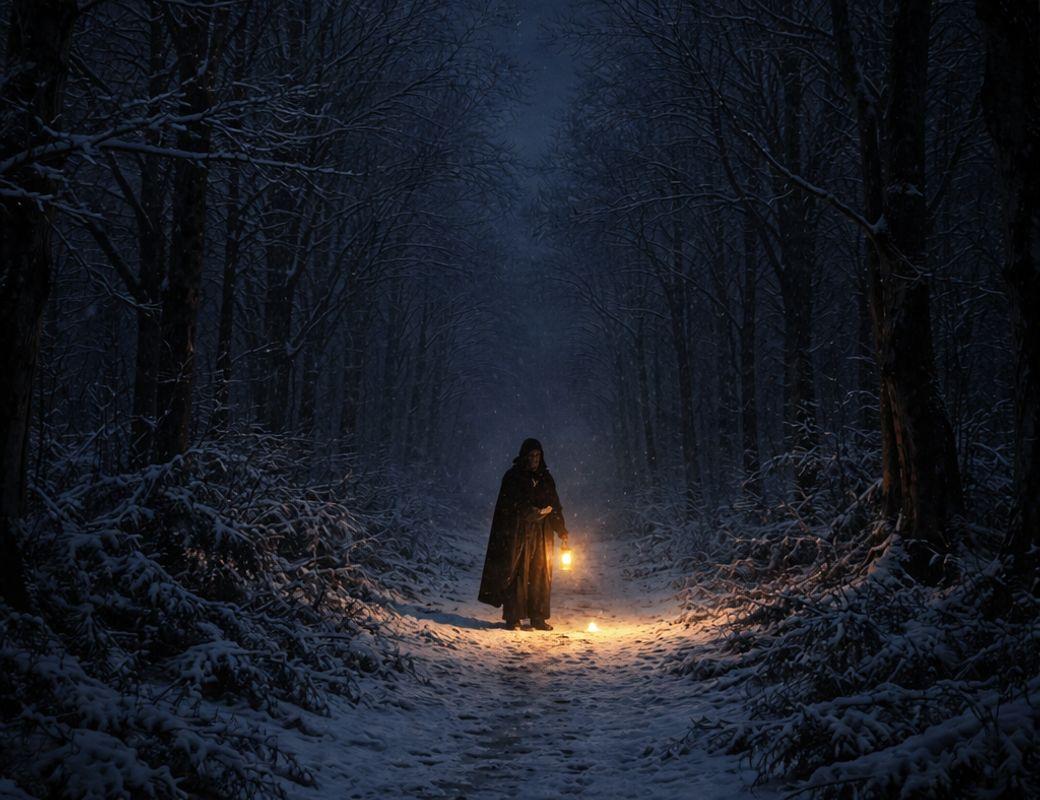
I used to fear The Hermit more than any other card. Not because he seemed frightening—he never does. An old man with a quiet lantern, walking slowly through the snow. What is there to fear in that?
Everything. Because I knew, every time he appeared, what he was asking of me.
Go inward. Sit alone. Turn off the noise. Stop asking everyone else what you should do, and listen to the voice you've been drowning out for years.
I didn't want to. Solitude felt like punishment. The quiet felt like the foster home on a Sunday afternoon—empty, echoing, full of the absence of people who should have been there. I had spent my whole life escaping into others, into work, into fantasy. Being alone meant being with the one person I trusted least.
Myself.
So I stayed busy. I stayed surrounded. I stayed loud.
And The Hermit stayed on the mountain, waiting, lantern lit, patient as snowmelt.
The Traditional Blueprint: The Completion of the Inner Cycle
The Hermit is card number nine .
In numerology, nine is the energy of completion before transformation. It is the harvest after the long growing season. The integration of everything learned in the first eight cards of the Fool's Journey. Not an ending, but a distillation .
The Hermit stands on the peak, staff in one hand, lantern in the other. He has climbed the mountain. He has weathered the storms. He does not need to prove anything anymore. His task now is to turn inward, to reflect, to integrate. The lantern does not blaze like the Sun's fire; it glows, steady and contained, casting just enough light to see the next step .
Rachel Pollack, one of the great teachers of tarot as inner work, wrote: "As an emblem of personal development, rather than a guide, the Hermit signifies the idea that only by withdrawing from the outer world can we awaken our inner self" .
Not withdrawing from humanity. Withdrawing from distraction. There is a profound difference .
The Hermit's solitude is not exile. It is sacred study.
The Shadow Reflection: The Hermit Trapped in the Cave
When The Hermit appears in your shadow, it reveals your fractured relationship with yourself—specifically, with the version of you that exists when no one else is watching.
Your "Hermit Shadow" manifests in two directions, both pointing inward:
1. The Avoider.
This shadow will do anything to avoid being alone with its own thoughts. It keeps the phone in hand, the podcast queued, the calendar full. It equates stillness with emptiness and solitude with abandonment. It says, "I'll reflect later. Right now I just need to stay busy."
But later never comes.
The Avoider is terrified of what it might hear in the quiet—not because the quiet is hostile, but because the quiet is honest. And honesty, after years of running, feels like an indictment .
2. The Hermit-Elect.
This shadow has the opposite problem. It has retreated so deeply into solitude that it has forgotten how to return. It mistakes isolation for enlightenment, disconnection for peace.
This shadow says, "I don't need anyone. I have my inner world. People are exhausting, relationships are draining, I'm better off alone."
But this isn't the Hermit's lantern-lit introspection. This is the cave without a door. This is solitude as a fortress, not a sanctuary. The Hermit-Elect has withdrawn not to integrate, but to hide—from vulnerability, from disappointment, from the terrifying risk of being truly seen .
Both shadows are rooted in the same wound: a belief that being fully with yourself means being consumed by your own darkness .
The Avoider runs from the cave. The Hermit-Elect never leaves it.
But the lantern was never meant to stay on the mountain.
What I Found When I Finally Sat in the Dark
I didn't choose The Hermit. He chose me.
It was after a relationship ended—one I had poured myself into like water into a cracked vessel, hoping this time the fissures would seal. They didn't. And I was left, suddenly, in an apartment that felt too quiet, with hours that stretched too long, with only my own breath for company.
I fought it for weeks. I downloaded dating apps. I said yes to every invitation. I filled the silence with podcasts and playlists and the low hum of television shows I wasn't watching.
And then, one night, I just… stopped.
I turned everything off. Sat on my floor. And waited.
It wasn't dramatic. No floods of tears, no sudden epiphanies. Just the slow, strange sensation of settling—like dust after a long disturbance, finding its way back to the floor.
I realized something that night. The voice I had been running from wasn't a critic. It wasn't a monster. It was just… tired. It had been trying to tell me, for years, that I was running on empty, that I was asking others to fill a well I had never learned to fill myself.
The Hermit's lantern doesn't reveal monsters. It reveals what we've been too loud to hear.
The Sanctuary Question:
"What have I been avoiding by keeping myself busy, surrounded, or distracted? And what might I hear if I sat in the quiet long enough to let it speak?"
The Integration Prompt: The "One Candle" Ritual
Your task is not to retreat from the world for a month. It is to sit with yourself for eleven minutes.
-
Choose Your Time. Not when you're already exhausted or dysregulated. A Sunday morning. A Tuesday evening. A moment when you are neutral—not fleeing toward something, not hiding from anything.
-
Create Your Container. Light a single candle. Turn off all other screens and sounds. Sit where you can see the flame. This is your lantern.
-
The Eleven-Minute Pledge. Commit to staying in your seat for eleven minutes. No phone. No book. No agenda. You are not here to "figure anything out." You are here to practice being with yourself.
-
Notice, Don't Fix. When thoughts arise—and they will—simply note them. "Ah, there's the anxiety about tomorrow." "There's the memory of that conversation." No analysis. No problem-solving. Just witnessing.
-
One Question, If You Wish. After the stillness has settled, you may ask yourself softly: "What have I been needing to hear, that I haven't been quiet enough to listen for?"
Write nothing. Analyze nothing. Let the question hover in the candlelight.
Then, when the eleven minutes are complete, blow out the flame.
You have not "fixed" anything. You have done something far more radical: you have proven to yourself that you can sit in your own presence, and survive.
The Lantern Was Never Meant to Stay on the Mountain
This is the paradox of The Hermit.
We must withdraw to find our own light. But we must return to let it shine .
The Hermit's journey is not complete until he descends the mountain. The wisdom gathered in solitude is not meant to be hoarded; it is meant to be lived. In community. In relationship. In the messy, beautiful, chaotic world of other people who are also carrying their own small lanterns, trying to find their way .
Your solitude is sacred. But it is not your destination.
It is your source.
I spent so long afraid of The Hermit because I thought he was asking me to live in the cave forever. He wasn't. He was asking me to visit the cave often enough that I no longer feared the dark—so that when I walked back into the world, I walked not as a person desperate for anyone else's light, but as someone who carries their own.
That is the work of The Blueprint.
Not just identifying your shadows. Not just dialoguing with your exiled parts. But learning, systematically, compassionately, to become your own inner guide—the steady voice that doesn't panic when the path is unclear, the lantern that doesn't flicker when the wind picks up.
I didn't learn this in a weekend. I learned it over months of structured, solitary practice—guided journaling protocols, somatic check-ins, the slow rewiring of a nervous system that had only ever known how to brace or flee.
The Blueprint was the map I didn't have when I first sat on that cold apartment floor, staring at a candle, terrified of my own quiet.
It is the map I wish someone had handed me, years earlier, when I was still running from the cave.
If your own quiet feels less like sanctuary and more like sentence—
I see you. I was you.
The Hermit's lantern is not a test of endurance. It is an invitation. And you don't have to navigate the dark alone, or without a map.
The tools I used to transform my solitude from exile into sacred study are gathered in one place—not as a prescription, but as a lantern passed from one seeker to another.
For the parts of you that are ready to stop running. For the quiet that's been waiting, patiently, for you to arrive.
With you in the sacred stillness,
Star