The Elements in Tarot
The key to a deeper understanding of Tarot spreads
Article · 4 min read · ·
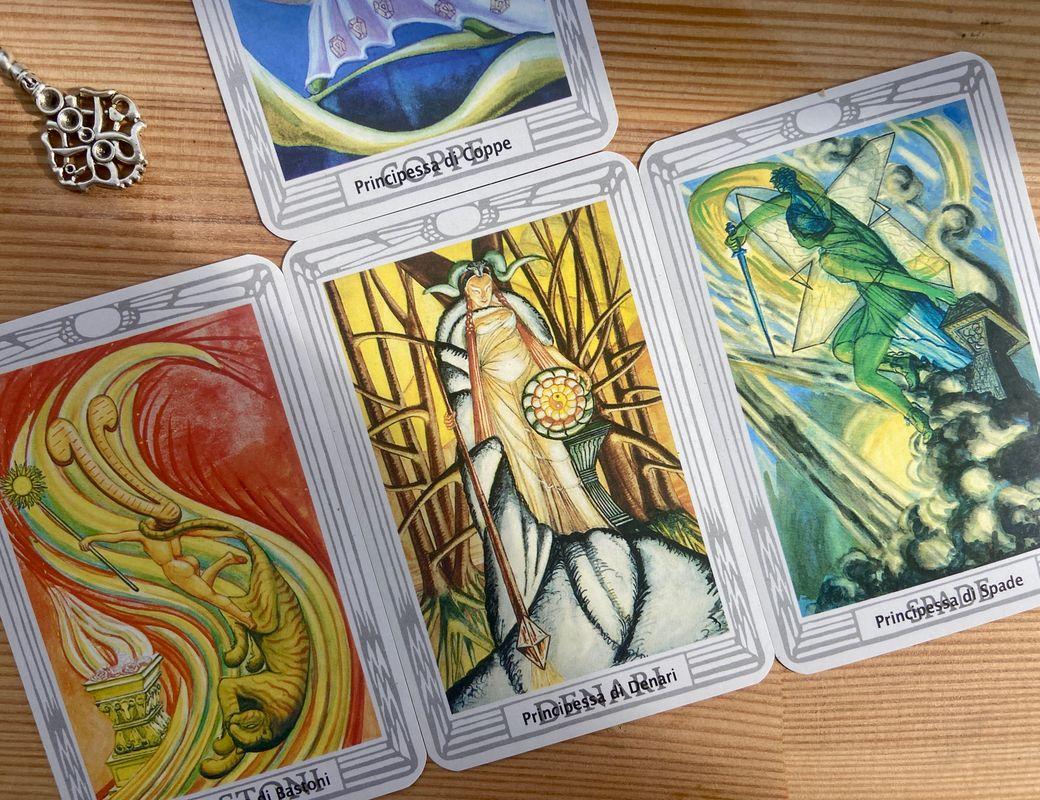
Tarot is not only a system of symbols and archetypes. Behind every card lies a specific type of energy, and one of the most important structures that helps us understand this energy is the system of the four elements. Fire, Water, Air, and Earth form the foundation of the entire Tarot system. When a tarot reader begins to view a spread through the lens of the elements, the cards start revealing much deeper meanings.
Many people focus only on the individual meanings of the cards when interpreting a spread. However, the true magic of Tarot appears when we look at the balance of energies within the entire spread. The elements show the dynamics of a situation: where there is movement, where emotions accumulate, where conflicts arise, and where real results begin to take shape.
Understanding the elements allows us to see not only what is happening, but also why it is happening.
Fire - the energy of action and impulse
In Tarot, the element of Fire is represented by the suit of Wands. It embodies movement, inspiration, willpower, and inner drive. Fire initiates processes - it is the force that pushes us to act, take risks, show initiative, and follow our desires.
When a spread contains many Wands, it often indicates an active period: new ideas, ambitions, and the desire to grow or start something new. A person may feel a strong internal push toward change.
However, balance is important.
An excess of Fire can appear as impulsiveness - acting without a clear plan or long-term strategy.
A lack of Fire, on the other hand, may indicate a loss of motivation, doubts about one’s abilities, or a sense of stagnation.
Practical tip: if there is little Fire in a spread, ask yourself: _Where am I holding back my initiative?_Perhaps it is time to take the first step.
Water - the world of emotions and intuition
The element of Water in Tarot is represented by the suit of Cups. This energy relates to emotions, intuition, inner experiences, and connections between people. Water shows how a person experiences a situation on an emotional level.
When Cups dominate a spread, the situation is often connected to relationships, feelings, emotional attachment, or deep inner processes. Intuition and the ability to listen to one’s heart play an important role here.
Yet imbalance is also possible.
Too much Water may create illusions, emotional dependency, or a loss of clarity due to overwhelming feelings.
A lack of Water can indicate emotional distance or a reluctance to acknowledge one’s true feelings.
Practical tip: if there is a strong presence of Water in a spread, it may be helpful to ask: Am I allowing my emotions to control my decisions?
Air - thinking and inner dialogue
The element of Air appears through the suit of Swords. It is connected with thinking, analysis, communication, and decision-making. Air reflects the mental level - how we interpret and process events.
In spreads, Swords often reveal inner conflicts, doubts, fears, or difficult conversations. This is the realm of ideas, beliefs, and mental patterns.
When Air dominates, a person may overthink the situation, analyze every step, and lose their inner sense of calm.
An excess of Air can manifest as tension, anxiety, and endless mental loops.
A lack of Air may indicate a lack of clarity or an unwillingness to face the facts honestly.
Practical tip: if there are many Swords in a spread, sometimes the best decision is to pause and allow your thoughts to settle.
Earth - material reality
In Tarot, the element of Earth is represented by the suit of Pentacles (also called Disks). This energy relates to the material world: finances, resources, stability, health, and tangible results.
Earth shows what is happening in real life, not just on the level of emotions or thoughts. When many Pentacles appear in a spread, the situation is often connected with work, finances, practical decisions, or long-term stability.
An excess of Earth may point to a fear of change or becoming stuck in comfort.
A lack of Earth often suggests the absence of a solid foundation - ideas exist, but they are not turning into real actions.
Practical tip: if there is little Earth in a spread, ask yourself: What concrete step can I take today?
The balance of elements - the key to reading a spread
When looking at a Tarot spread, it is important to notice not only individual cards but also the overall balance of the elements. Simply counting the suits can provide surprisingly deep insight into the situation.
Ask yourself a few simple questions:
- Which element appears most often?
- Which element is almost absent?
- What does this reveal about the energy of the situation?
For example:
- a lot of Air may indicate that the problem exists mainly in the realm of thoughts;
- a lot of Water suggests strong emotions or emotional reactions;
- a lot of Fire points to a period of active action and momentum;
- a lot of Earth highlights a focus on stability and practical outcomes.
Through the elements, we can see where imbalance occurs, where the root of the problem lies, and which type of energy can help restore harmony.
Tarot is a language of energies. And when you begin reading the cards through the balance of the elements, spreads become clearer, deeper, and far more accurate.
Responses (13)