The Devil
The Shadow of the Chain You Mistook for Jewelry
Article · 9 min read · ·
I need to tell you about something I carried for so long I forgot I was the one holding it.
It wasn't dramatic. No visible scars, no obvious weight. Just a quiet, persistent pressure I had stopped noticing—like a room that's been too warm for hours, the discomfort only registering when someone opens a window and cool air finally moves through.
My chain was called being good.
Good meant small. Good meant agreeable. Good meant never saying "I want" too loudly, never taking up space someone else might need, never letting anyone see the hunger beneath my careful composure. Good meant survival. Good meant I was not a burden, not a problem, not the difficult child passed from home to home.
And so I polished my chain until it gleamed. I wove it into my identity, called it humility, selflessness, consideration. I was not bound. I was virtuous.
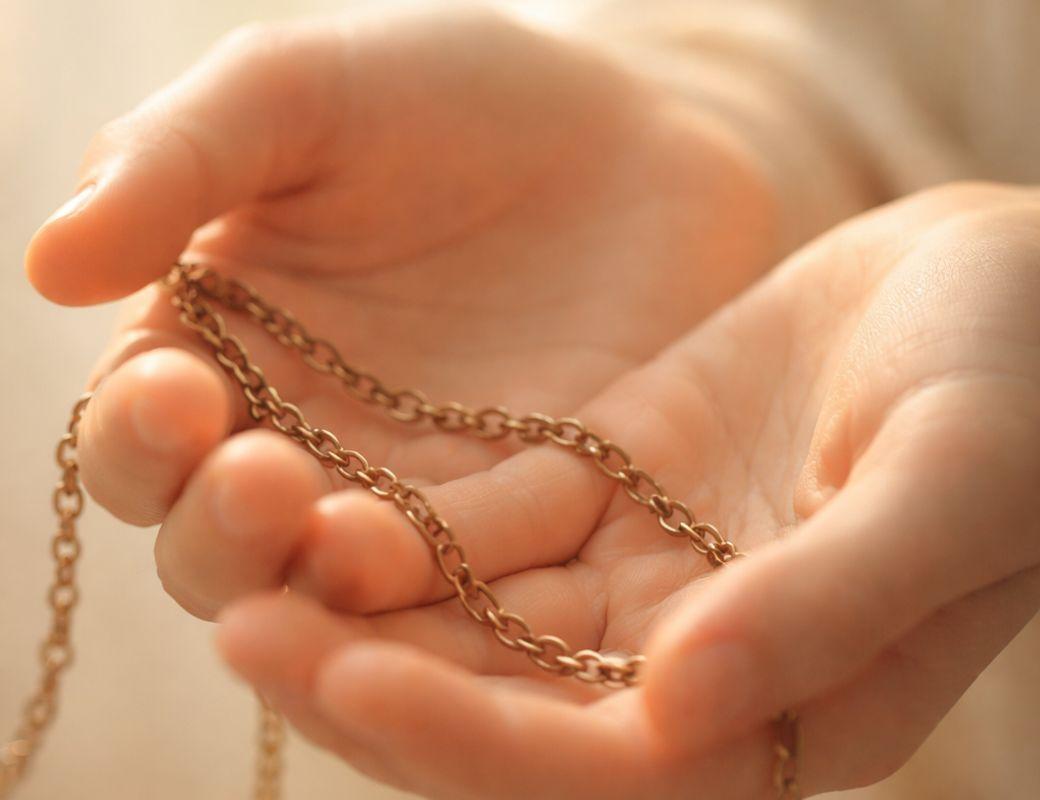
Then one day, in the quiet after years of work, I noticed my own hand curled around a link. Not locked. Not tied. Just… holding.
And I realized: I had been the one gripping all along.
---
The Traditional Blueprint: What We Mistake for Unchangeable
The Devil is Card XV—not the figure of evil we've been taught to fear, but something more intimate and more ordinary. He represents the self-imposed limitations we have mistaken for reality. The beliefs we accepted so long ago we forgot they were ever chosen.
In the imagery of the tarot, a man and woman stand chained to a throne. But if you look closely, you'll notice something important: the chains are loose around their necks. Not locked. Not even tied. They could slip free with a single, conscious movement.
The prison is psychological. The gate has always been open. We simply forgot we were the ones holding it shut.
This is not about evil or darkness. It's about the quiet, familiar ways we keep ourselves smaller than we're meant to be. The beliefs that once protected us, now outgrown. The patterns that served us once, now running on autopilot.
---
When the Chain Becomes Familiar
Most of us don't recognize our chains because they've been with us so long they feel like part of our body.
For some, the chain is people-pleasing—the belief that love must be earned through endless accommodation. For others, it's perfectionism—the conviction that any mistake proves unworthiness. For many, it's the quiet, persistent voice that says "you are too much" or "you are not enough" or "what you want doesn't matter."
These chains weren't always chains. Once, they were survival strategies. A child who learns that staying small keeps them safe isn't wrong—they're adapting. A teenager who discovers that pleasing others earns approval isn't broken—they're surviving. The chain was never placed there maliciously. It was forged in the fire of necessity, wrapped around us by circumstances we did not choose.
But what kept us safe then can keep us small now.
The question is not whether the chain was justified. The question is whether it still serves who you are becoming.
---
Two Ways We Stay in the Familiar
When it's time to examine the chains we've been carrying, we often find ourselves in one of two places:
The first is knowing the chain is there, but not moving.
This part can describe the weight in precise detail—the childhood wound, the pattern that keeps repeating, the belief that has shaped decades. It is not in denial. But it is also not yet ready to release. The chain has become familiar. Freedom is an open door, but beyond that door is the unknown—and the unknown, for this part, is more frightening than the familiar ache of the collar.
The second is insisting the chain doesn't exist.
This part has worked so hard to appear free that it cannot acknowledge what it still carries. It performs liberation—declaring independence, burning ritual papers, speaking affirmations—while the chain remains, undisturbed, around its neck. This is not deception. It is protection. Admitting the chain is still there would mean admitting the work is not yet complete.
Both of these are not failures. They are understandable responses to the vulnerability of change. And both can be met with compassion, not judgment.
---
What I Found When I Looked at My Own Hand
My chain was woven from other people's expectations. I had spent so long becoming what was wanted that I no longer knew what I wanted for myself.
I discovered this not through crisis, but through slow, patient attention. Sitting in the quiet, asking gentle questions. Noticing where I felt tight, where I felt numb, where I felt the familiar pressure of "should" instead of the quiet pull of "want."
The part of me that had been gripping that chain wasn't an enemy. It was tired. It had been working for decades to keep me safe—from rejection, from abandonment, from the terrifying vulnerability of being a person with authentic, unapologetic desire. It wasn't keeping me captive. It was keeping me safe, using the only tools it had.
When I finally looked at my own hand, curled through the link, I didn't banish that part. I thanked it.
And then, gently, I began to loosen my grip.
---
The Sanctuary Question:
"What is one belief or pattern I've been carrying so long I forgot I was the one holding it—not because it's true, but because it's familiar?"
---
The Integration Prompt: A Gentle Inventory
Your task is not to drop every chain today. It is to look at one link with curiosity instead of judgment.
1. Name One Link.
Choose one pattern you suspect might be more habit than truth. Not everything—just one.
- The belief that you must earn rest through productivity.
- The habit of apologizing for taking up space.
- The reflex to say yes when you mean no.
- The voice that says your wants are too much.
2. Trace Its Origin.
Not to assign blame. To understand. This link was once a survival strategy. It served you. Acknowledge this with gentleness.
"This helped me stay safe when safety wasn't guaranteed."
"This earned me love when love felt conditional."
"This was not wrong. It is simply… complete."
3. Feel the Weight.
Place a hand where you feel this pattern in your body. Just notice. Not to fix, not to release—just to acknowledge that it's there.
4. One Small Loosening.
You do not need to drop the entire chain. You just need to loosen one finger.
- If your pattern is people-pleasing: say no to one small request, without over-explaining.
- If your pattern is performing goodness: admit one genuine want to yourself, on paper, where no one else will see.
- If your pattern is hiding your hunger: create something small, just for you, and let it exist without showing anyone.
This is not the grand liberation. It is a first exit. And first exits, repeated gently over time, become freedom.
---
The Liberation Is Not a Single Event
We have been taught to believe that captivity is permanent. That once a chain is placed, we wear it forever. That trauma, conditioning, old patterns—these are life sentences.
They are not.
The chain was never locked. It was never even knotted. It is a loop, and the only thing keeping it around your neck is your own hand, gripping from habit.
This is not blame. This is not failure. This is the nature of survival—when you are focused on keeping your head above water, you don't pause to examine what's around your ankle. And when the water recedes, the rope is still there, and you have grown so accustomed to its weight that you no longer notice you could remove it.
The liberation is not a single, dramatic escape. It is a series of small, gentle exits:
One honest acknowledgment, and the secrecy that fed the pattern loses some of its power.
One boundary drawn without apology, and the old habit develops a hairline fracture.
One moment of genuine want, witnessed by yourself alone, and the chain loosens another link.
---
If You Are Still Gripping
I know how seductive the familiar can be. Not because it feels good—often it doesn't. But because it feels known.
The unknown is vast and trackless. The chain is familiar. You have worn it so long it has shaped your posture, your sense of where you end and the world begins. To loosen your grip is to become, in some ways, a stranger to yourself.
This is the real fear beneath the chain: not that you will be harmed by letting go, but that you will be free. And freedom, after a lifetime of adaptation, can feel less like liberation and more like vertigo.
No one can remove your chain for you. That is the quiet sovereignty of this work. The gate has always been open. Only you can decide to walk through.
But I can tell you what I found on the other side:
Not endless happiness. Not the immediate fulfillment of every suppressed desire. Just… space. Room to move without the familiar pressure. The gradual, surprising discovery of what I actually want, not what I was supposed to want. The slow rebuilding of a self shaped not by the fear of rejection, but by the quiet conviction that I am worthy of occupying space.
---
This is what the guides are for.
Not to remove your chains. To help you see your own hand on the link. To companion you through the vertigo of freedom. To remind you, when the unfamiliar feels unbearable, that you have survived every change you've ever lived through.
The Cornerstone teaches your nervous system to tolerate the wobble of becoming. The Blueprint gives language to the parts that are afraid to release. The Rendering helps you envision who you might be without the chain. And The Inhabitation walks with you through the slow, sacred practice of living from that new place.
---
If you recognize your own hand on a familiar link—
If you know, somewhere beneath the performance, that you are still gripping something that could be gently set down—
I need you to hear this:
The chain is not your identity. It is your adaptation. And adaptations can be outgrown.
You do not need to be ready to drop the entire weight today. You do not need to perform a dramatic liberation. You just need to look at your own hand, curled through the iron, and recognize:
I am the one holding this.
That recognition is not failure. It is not shame. It is the first exit. The crack in the spell. The moment the light enters.
The rest is just practice. Gentle, patient, unhurried practice.
---
🌙 [Linktree]
For the ones who are ready to look at their own hands. For the chains that once kept you safe and now keep you small. For the slow, sacred work of loosening, link by link.
The gate has always been open. You have always held the key.
It's just shaped like your own hand.
With you in the gentle unhooking,
Star