The Chariot's Blueprint
The Shadow of Steering Alone
Article · 6 min read · ·
After The Lovers' choice—after you finally, bravely picked a direction—comes the hardest part.
You have to steer.
I remember the first time I committed to a path I actually wanted. Not the one I was "supposed" to take. Not the survival default. A real, terrifying, mine direction. I felt powerful for about a week. Then the exhaustion set in.
Because here's what no one tells you about willpower: it's a finite resource when you're using it alone. And I was using it for everything. Pushing against old habits. Pulling myself away from familiar self-sabotage. Gripping the reins so tightly my hands ached, terrified that if I relaxed for one second, the horses would bolt in opposite directions and I'd be back where I started.
I thought this was strength. I thought this was what The Chariot asked of me.
I was wrong.
The Traditional Blueprint: Victory Through Integration
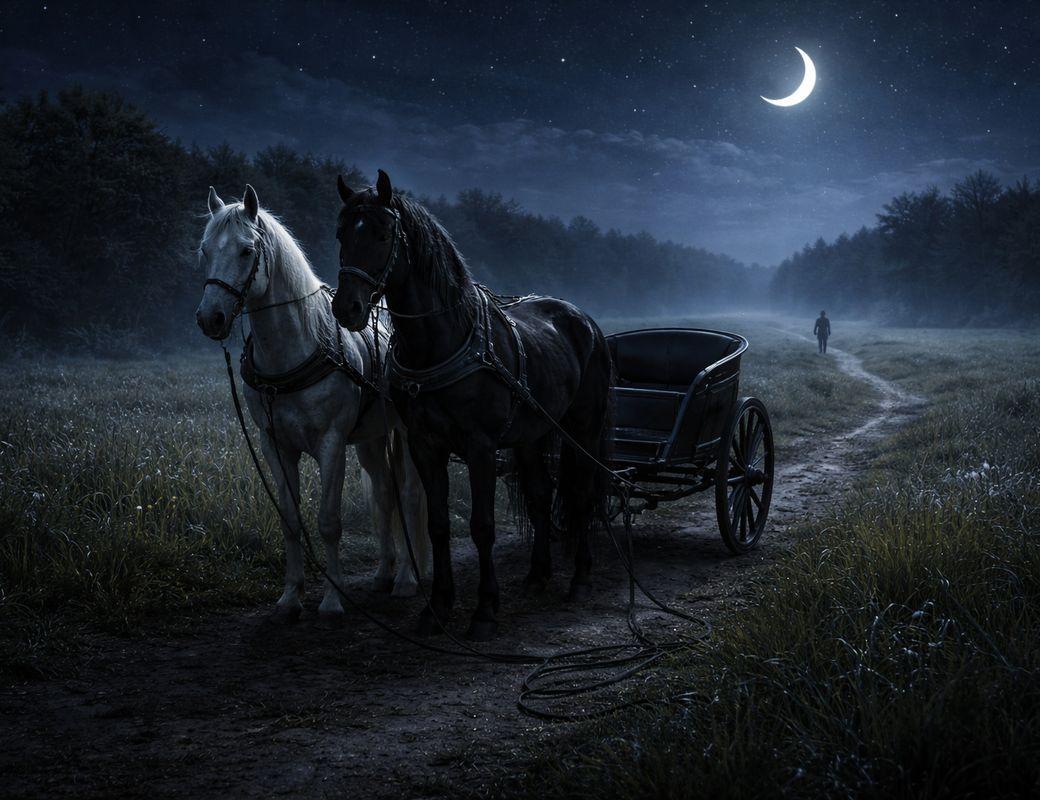
The Chariot (Card VII) is the culmination of the Fool's first major cycle. It represents triumph, focused will, and the ability to direct opposing forces toward a unified goal . The black and white sphinxes—or horses, depending on the deck—pull in opposite directions, yet the chariot moves forward. There are no reins . The Charioteer's power isn't brute force; it's alignment .
Astrologically, this card belongs to Cancer, the sign of the crab who carries home on its back . The crescent moons on the Charioteer's shoulders echo The High Priestess, reminding us that true direction requires intuition as much as will . This is a warrior, yes. But a warrior who wears armor because they are also vulnerable.
The Shadow Reflection: The Exhausted Driver
When The Chariot appears in your shadow, it reveals the part of you that has been steering alone, too long, with no map.
Your "Chariot Shadow" manifests in two ways that look opposite but feel identical from the inside:
-
The Over-Driver: This shadow believes that if it stops pushing, everything will collapse. It wakes up already gripping the reins. It measures worth in momentum and mistakes exhaustion for progress. It cannot ask for help because help feels like losing control. This part likely kept you alive through impossible years. But now it's running a rescue mission in a life that is no longer an emergency—and it's burning out your nervous system.
-
The Stalled One: This shadow has abandoned the chariot entirely. After too many failed attempts, too many directions that led nowhere, it decided that wanting anything at all is unsafe. It tells itself it's "going with the flow," but underneath is a quiet, desperate fear: "What if I try to move forward and discover I've forgotten how?" So it stays parked. Watching others move. Telling itself stillness is a choice.
Both shadows are terrified of the same thing: steering without certainty. The Over-Driver compensates by controlling everything. The Stalled One avoids the risk of moving in the wrong direction by not moving at all. Neither trusts that forward motion can be gentle, intuitive, and supported.
What I Didn't Understand About The Chariot
The Charioteer isn't strong because they never falter. They're strong because they learned to steer from a settled place.
I spent years gripping the reins so hard I couldn't feel my own hands. I thought that's what willpower was. But here's what broke the pattern: I stopped trying to drive myself everywhere and started asking what was already pulling in my direction.
The horses—those opposing forces inside you—they have their own momentum. Your fear and your desire, your logic and your longing: they're already moving. Your job isn't to drag them. Your job is to face them forward together.
You cannot do this from a clenched jaw and a flooded nervous system. You can only do it from the quiet, anchored place The Cornerstone exists to build. The place where you can feel, beneath the chaos, which way is actually home.
The Sanctuary Question:
"Where in my life am I still driving like it's an emergency—white-knuckling, alone, too exhausted to ask if there's another way to move?"
The Integration Prompt: The "Reins Down" Ritual
Your task is not to abandon your direction. It is to feel, for five minutes, what it's like to hold the reins loosely.
-
Identify One Chariot: Pick one area where you are currently in "Over-Driver" mode. A goal. A relationship dynamic. A recovery process you're trying to force.
-
Locate the Grip: Close your eyes. Where in your body are you holding the reins? Clenched jaw? Tight shoulders? Gripping stomach? Place a hand there.
-
The 90-Second Pause: You are not quitting. You are not giving up. You are simply, for ninety seconds, letting the horses stand. Breathe slowly. Whisper: "I am not my urgency. I can move forward without white-knuckling."
-
One Gentle Question: Ask yourself—not from the driver's seat, but from the quiet witness behind your eyes—"What would support look like right now?"
Not "fix." Not "solve." Support.
Here is what I know now, years past that exhausted chariot:
The people who make it across the long distances are not the ones with the strongest wills. They are the ones who learned to stop driving alone.
They found their somatic foundation—the quiet breath that steadies the horses before the race even begins . They did the shadow work that revealed why they were so terrified of losing momentum . They collected blueprints that showed them there is a difference between pushing forward and being pulled by something that truly matters to you.
The Chariot is not a solo vehicle. It was never meant to be.
The wheels? Those are your teachers, your guides, the frameworks you didn't have to invent from scratch. The armor? That's the nervous system regulation you practiced on the days you didn't think it was working. The forward motion itself? That's the alignment of will and intuition, discipline and surrender, effort and the grace of a well-laid foundation.
You don't need to grip harder. You need a better map, a steadier seat, and the quiet knowing that you were never meant to steer alone.
If your hands ache from holding the reins—
I built the Sanctuary for charioteers like us. The ones who mistook exhaustion for strength and control for safety. The ones who are ready to move forward, but differently.
It lives in the soundscapes that teach your nervous system to steer from calm instead of crisis. It lives in the Cornerstone, where you learn what it actually feels like to occupy a body that isn't bracing for impact. It lives in the Blueprint, where you finally meet the parts of you that have been pulling in opposite directions and help them face the same horizon.
You don't need to be fixed. You need support that doesn't ask you to white-knuckle your way through it.
For whenever you're ready to set the reins down, just for a moment.
With you on the path,
Star
Responses
No responses yet — start the conversation.