OCTOBER: IS THE DEATH CARD IN MOTION
Finding Life, Rebirth, and Beauty in the Things We Fear
Article · 14 min read · ·
Every October, we willingly surround ourselves with death. Skeletons hang from porches. Ghosts appear in windows. Gravestones decorate perfectly healthy front lawns. We carve faces into pumpkins, dress ourselves as the dead, tell ghost stories, visit haunted houses, and somehow turn everything that normally terrifies us into a celebration.
But pull the Death card in a Tarot reading and suddenly the room gets quiet.
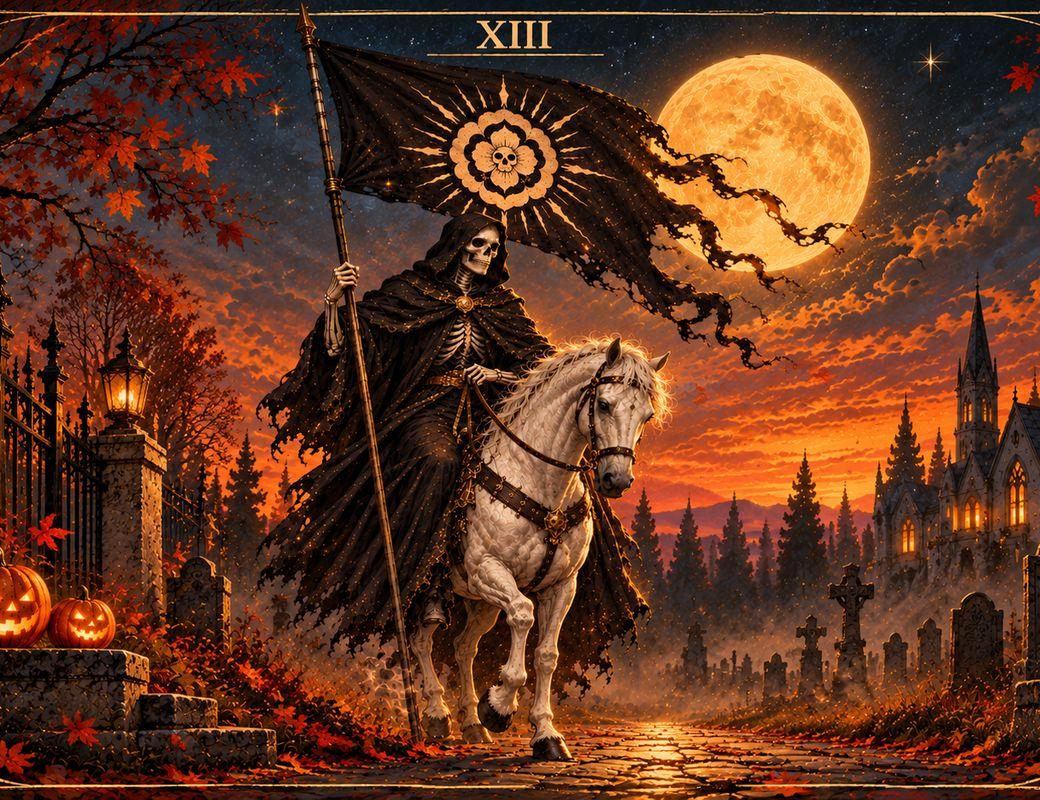
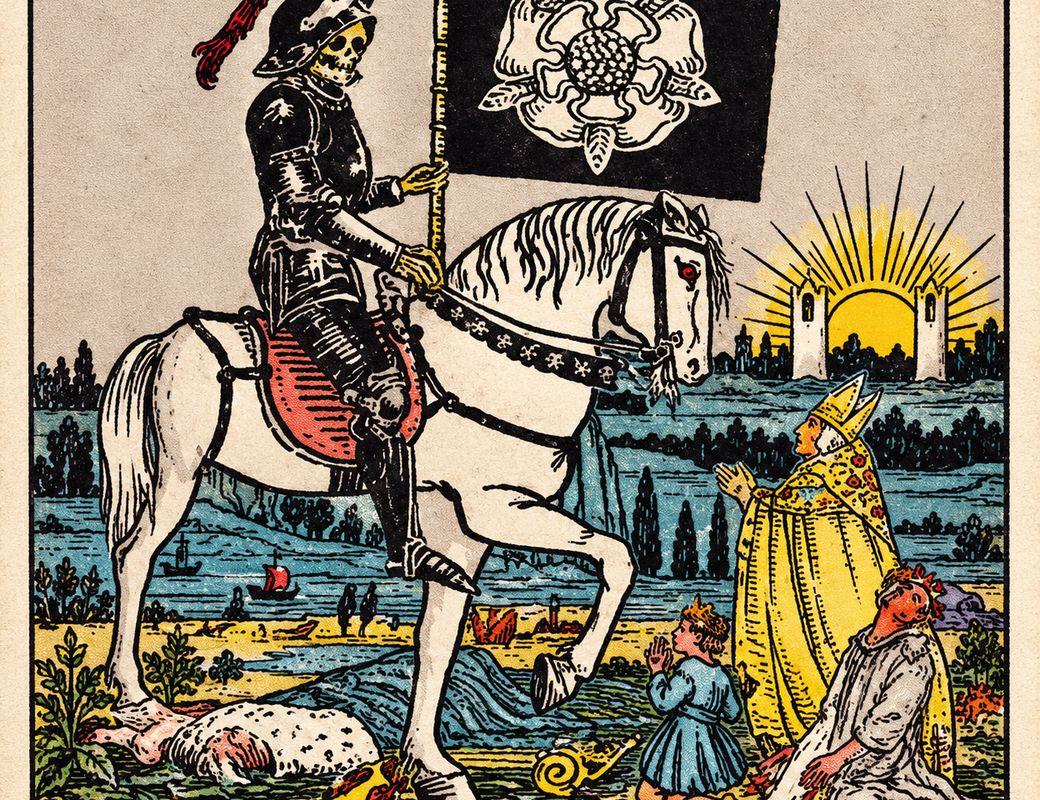
In the Rider-Waite-Smith deck, Death rides a white horse wearing armor. A king lies fallen beneath him. The Roman numerals at the top read XIII (13). And even people who know absolutely nothing about Tarot tend to recognize that card and GASP!
October itself is doing exactly what the Death card represents: Transformation
Leaves are falling and green disappears from the landscape. While the flowers die and the harvest season ends. The days become shorter and darkness sets upon us like a cold starlit blanket. The natural world begins withdrawing into the abyss that is this time of the season as quieter parts of this cycle prepare us for the icy winter days that come ahead. It is an ending happening right in front of us, every single year. And what do we human beings do in response to this now?
We decorate!
We hang skeletons from our houses, carve dead pumpkins into faces, dress like ghosts, eat an unreasonable amount of candy, tell stories about the dead, visit cemeteries, honor ancestors, pray for departed souls, and throw entire celebrations around mortality.
Though as strange as it may seem this all started way back in history. Because throughout centuries; religion, folklore, migration, and cultural traditions, this time of year became one of humanity's recurring opportunities to look directly at death without looking away. To understand how, we have to go much further back than pumpkins and fun-size BabyRuth’s.
BEFORE HALLOWEEN
One of Halloween's oldest roots can be found in Samhain, an ancient Celtic festival particularly associated with the Gaelic traditions of Ireland and Scotland. Samhain marked the transition from the harvest season into the darker winter months, a major seasonal threshold when the harvest was ending, livestock were brought in from summer pastures, and communities prepared for winter. But Samhain wasn't only about changing weather.
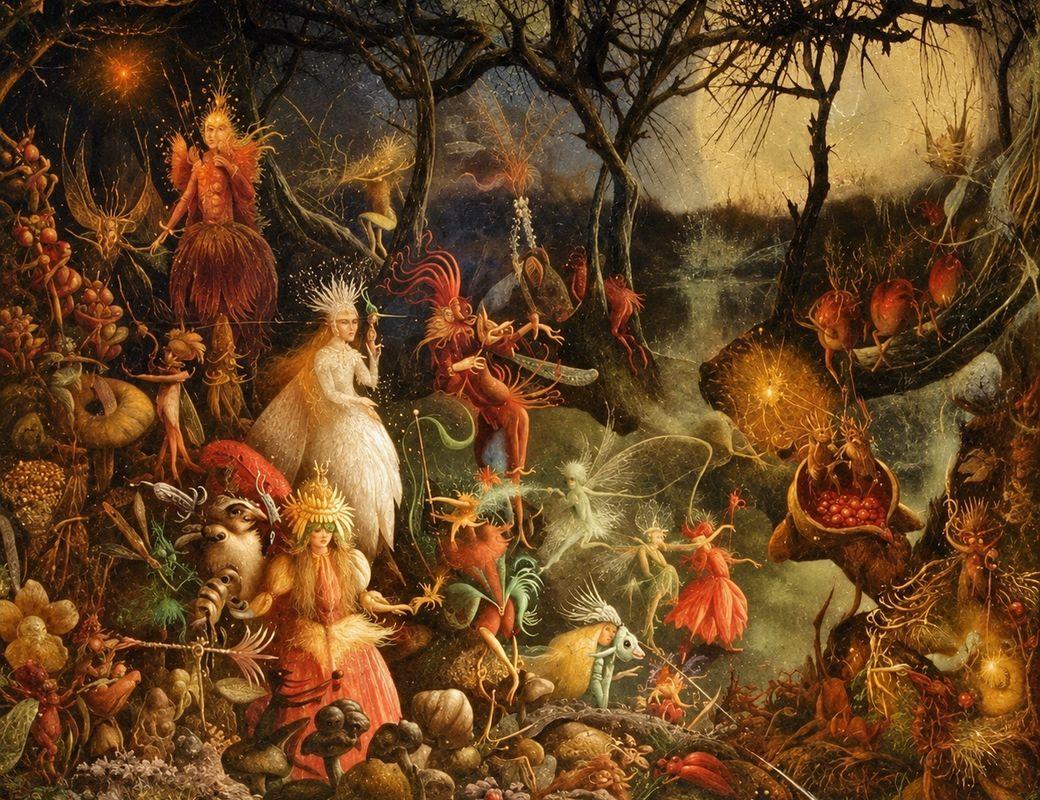
Irish folklore surrounding Samhain is filled with the supernatural. It was understood as a liminal time, a threshold when the ordinary boundary between the human world and the Otherworld was believed to become unusually open. Stories surrounding the season involved supernatural beings, spirits, the dead, strange encounters, and forces that normally existed outside everyday human life.
People gathered around fires, feasted, practiced forms of divination, told stories, played games, and observed customs connected with protection and the supernatural. Food could be left out in connection with visiting spirits or supernatural beings. The night could be celebratory while still carrying a very real sense of uncertainty. You could feast, predict the future, tell stories, remember the dead, and also believe there might be something wandering around outside that you absolutely did not want following you home.
Disguises and frightening masks eventually became part of Irish and Scottish festival traditions as well. In folklore surrounding the season, disguising yourself could offer protection when supernatural beings were believed to be wandering freely. If you had to move through a night filled with things that weren't human, there was some logic in making yourself look a little less human too. Concealing your identity, frightening something away, or blending into the strange company of the night could offer protection.
Suddenly our modern Halloween costumes don't seem so random. Neither do the ghosts, fortune-telling, scary faces, nighttime wandering, food, fire, or our obsession with the idea that once a year the distance between this world and another becomes a little less certain. But Halloween didn't come from Samhain alone.
CHRISTIANITY ENTERED THE STORY
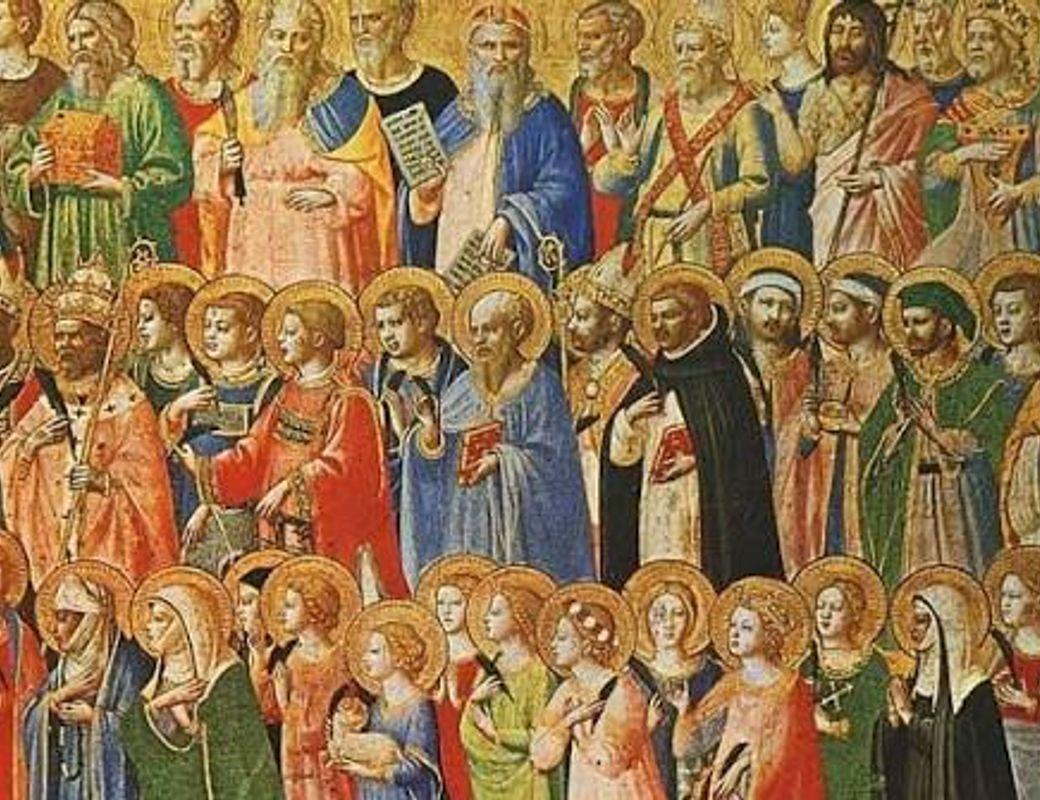
November 1 became the Christian feast of All Saints' Day, also called All Hallows' Day, honoring the saints. And this is where the actual word Halloween comes from. A hallow is a saint or holy person. The evening before All Hallows' Day became All Hallows' Eve. Over centuries of changing language, All Hallows' Eve became Hallow-e'en, with e'en being an older shortened form of evening, and eventually we arrived at the word almost everyone knows today:
Halloween.
November 2 then follows with All Souls' Day, dedicated more broadly to the faithfully departed. In Catholic tradition, that includes praying for souls believed to be undergoing purification in purgatory. Together, October 31 through November 2 became part of the Christian observance known as Allhallowtide: All Hallows' Eve, All Saints' Day, and All Souls' Day.
So now look at what has happened to this tiny section of the calendar. An older Gaelic festival marks the threshold into winter and carries traditions involving the Otherworld and supernatural beings. Christianity places a vigil, a feast honoring saints, and a day devoted to departed souls across virtually the same period.
And the story becomes even more interesting when we cross the Atlantic.
DÍA DE LOS MUERTOS: THE SACRED DEAD
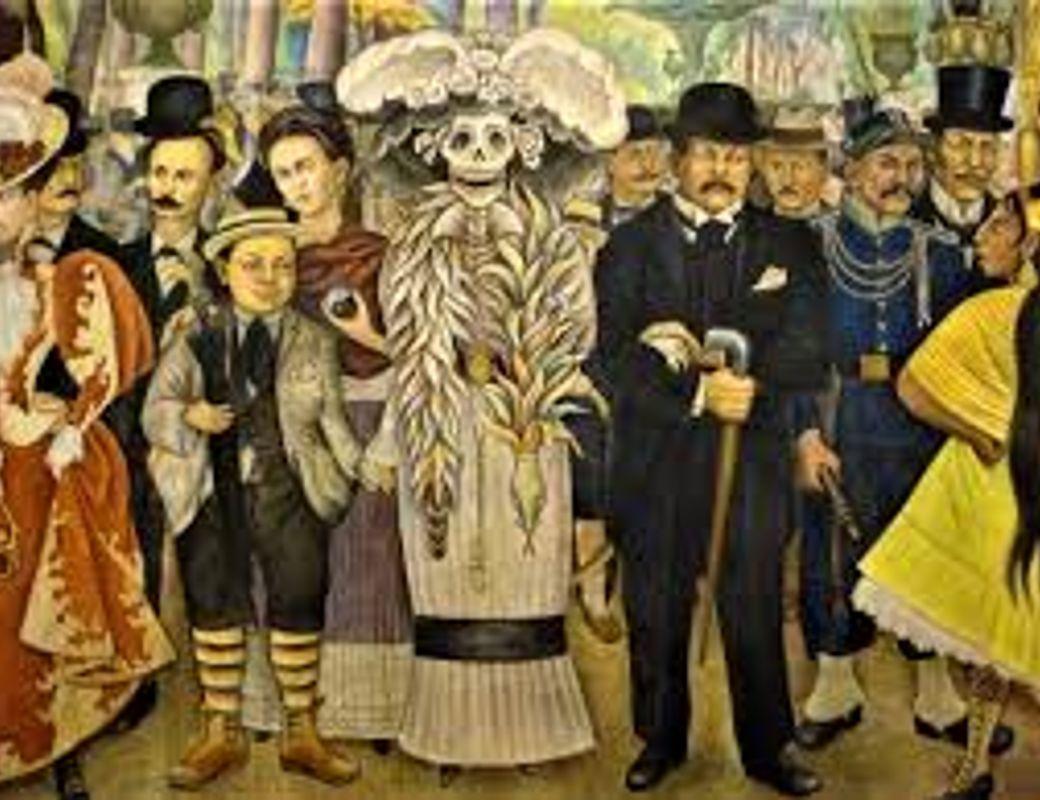
Indigenous peoples in what is now Mexico had traditions honoring the dead long before Spanish colonization. After Catholicism arrived, Indigenous beliefs and practices surrounding death and remembrance interacted over centuries with the Catholic calendar of All Saints' Day and All Souls' Day. From that history developed the distinctly Mexican tradition we now know as Día de los Muertos, traditionally observed around November 1 and 2.
Día de los Muertos is not a Mexican Halloween. The traditions have different histories, meanings, and cultural identities. But there is a reason we find them sitting beside one another on the calendar, and especially here in the United States, sometimes visually beside one another too.
We have Halloween: October 31. All Saints' Day: November 1. All Souls' Day: November 2. Día de los Muertos: observed across those same early November days. While the Samhain festival: marked the threshold from October 31 into November 1.
That gives us this fascinating little window of time when several different cultural and religious traditions are dealing, in their own ways, with death, spirits, remembrance, transition, and our relationship with those who came before us.
Día de los Muertos offers an especially beautiful perspective on that relationship. Families may create ofrendas, altars of remembrance decorated with photographs of loved ones who have died, candles, marigolds, favorite foods and drinks, personal belongings, and offerings connected with the person being honored. Families may visit and decorate graves, gather together, prepare food, play music, tell stories, and speak the names of those who are gone. The colorful skulls and skeletons associated with Día de los Muertos aren't simply there to make death frightening. Death exists alongside affection, humor, beauty, grief, memory, family, food, music, and celebration.
A photograph says, you were here. Their favorite food says, we remember what you loved. Their favorite song says, we remember what made you happy. Telling their stories says, death did not erase your place in this family.
Samhain, Allhallowtide, and Día de los Muertos are not one giant holiday, and we shouldn't flatten completely different cultures into one story. But placing them beside one another reveals something very human. Again and again, people have created rituals that give death a place among the living. And maybe honoring the dead has always been another way of celebrating life!
THE GREAT MIGRATION
When large numbers of Irish and Scottish immigrants came to North America during the nineteenth century, they didn't arrive empty-handed culturally. They brought folklore, seasonal customs, guising, fortune-telling, games, supernatural stories, carved lanterns, and the festivals’ traditions with them. And just like the people carrying them, those traditions changed when they reached a new place.
For example: The jack-o'-lantern.
Before the glowing orange pumpkin became Halloween's unofficial mascot, people in Ireland and parts of Britain carved frightening faces into turnips and other root vegetables. In Irish folklore, carved turnip lanterns could be associated with frightening or warding off unwanted supernatural visitors, although they were also used in processions, games, and pranks.
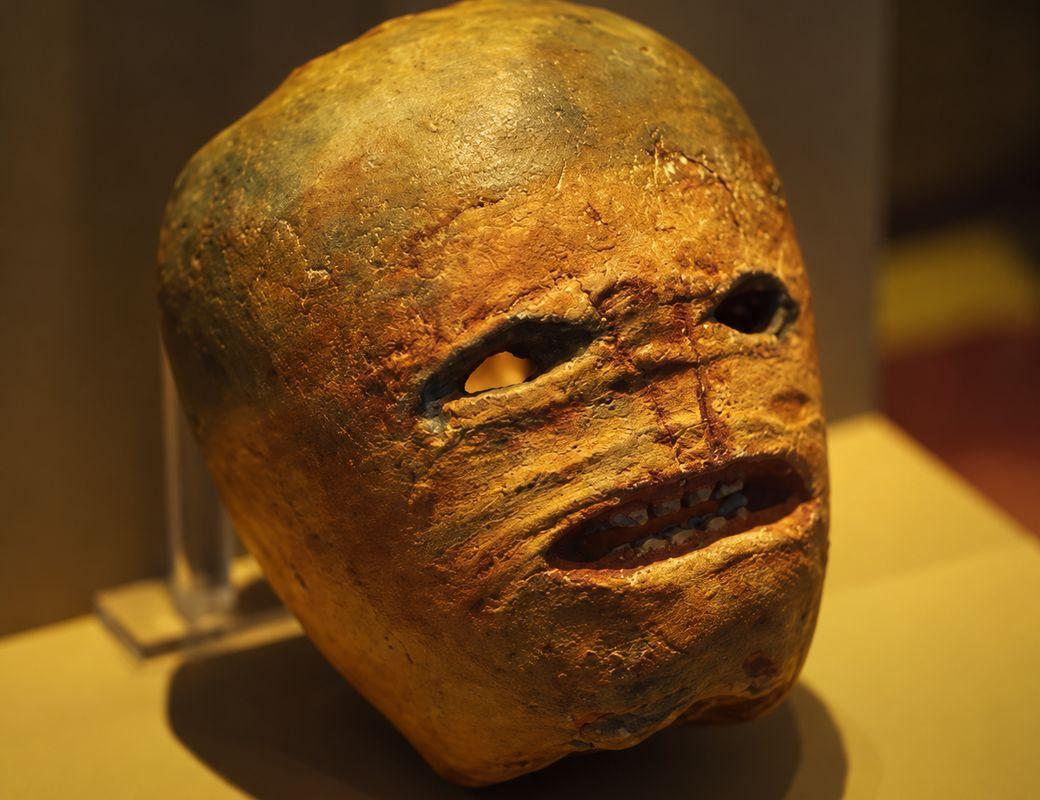
Those little turnips are creepy looking! Imagine a tiny shriveled corpse-potato looking thing staring directly into your soul. No wonder the spirits stayed away.
Then the tradition reaches North America, where pumpkins are plentiful, enormous, compared with turnips and much easier to hollow out and carve. The turnip doesn't disappear. It transforms. And eventually we get the glowing jack-o'-lantern sitting on millions of American porches every October.
The costumes transformed too. Disguises and frightening masks that once carried supernatural and protective associations became guising traditions and eventually helped shape the Halloween costumes we wear today. But Irish and Scottish traditions weren't the only traditions surrounding death that eventually became visible in the American October season.
As Mexicans came to America, the Mexican-American communities became part of the cultural landscape of the United States. Día de los Muertos continued to be practiced here too. In many communities, Halloween on October 31 and Día de los Muertos on November 1 and 2, exist right beside one another. A family might participate in American Halloween traditions one night and then create an ofrenda (offering), visit a cemetery, or honor deceased family members during Día de los Muertos.
Over time, that closeness created cultural exchange. Calaveras, marigolds, colorful skeletons, face painting, and other imagery associated with Día de los Muertos became increasingly visible during the broader American Halloween season. Through the Mexican-American communities; public celebrations, art, entertainment, and eventually commercial Halloween displays; this day became known.
And this where being a blended country can be a beautiful thing!
So modern American October became something of a meeting place: Irish and Scottish festival attire, Christian traditions surrounding the dead, Mexican Día de los Muertos observances, eventually became the American pop-culture; all existing beside one another and influencing what we see around us every fall season.
HOW DID WE GET FROM DEAD PEOPLE TO CANDY?
Candy wasn't part of ancient Samhain. Nobody was handing a wandering Celt a Reese's cup. One important step toward modern trick-or-treating came through a Christian custom known as souling. Around All Souls' Day, poor people and children could go from house to house offering prayers for a family's dead relatives in exchange for food, including small pastries known as soul cakes.
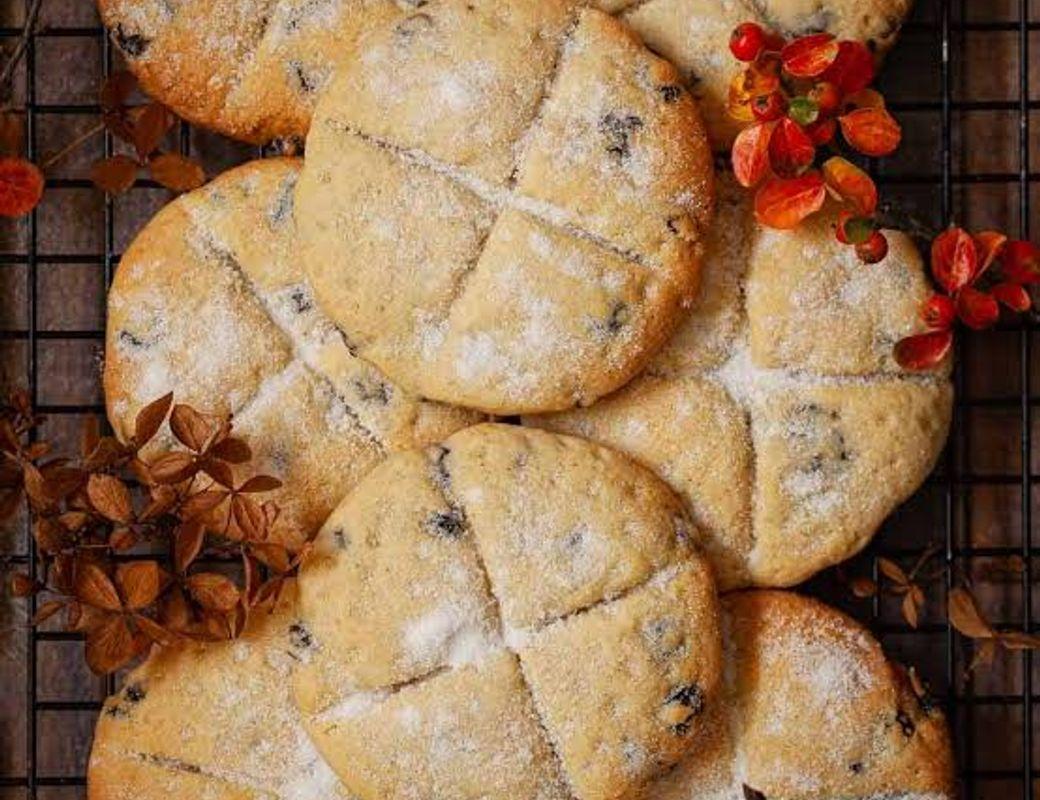
Interesting huh?
Food, the dead, remembrance, and going door to door were already connected centuries before a plastic pumpkin bucket ever existed. Later, traditions of guising in Ireland and Scotland involved people, including children, going from house to house in disguise and performing a song, joke, poem, or other little trick in exchange for things such as apples, nuts, food, or coins.
When Irish and Scottish immigrants brought these customs to North America, the treats still weren't the individually wrapped candy we expect today. Children might receive homemade cookies, pieces of cake, popcorn balls, fruit, nuts, or coins.
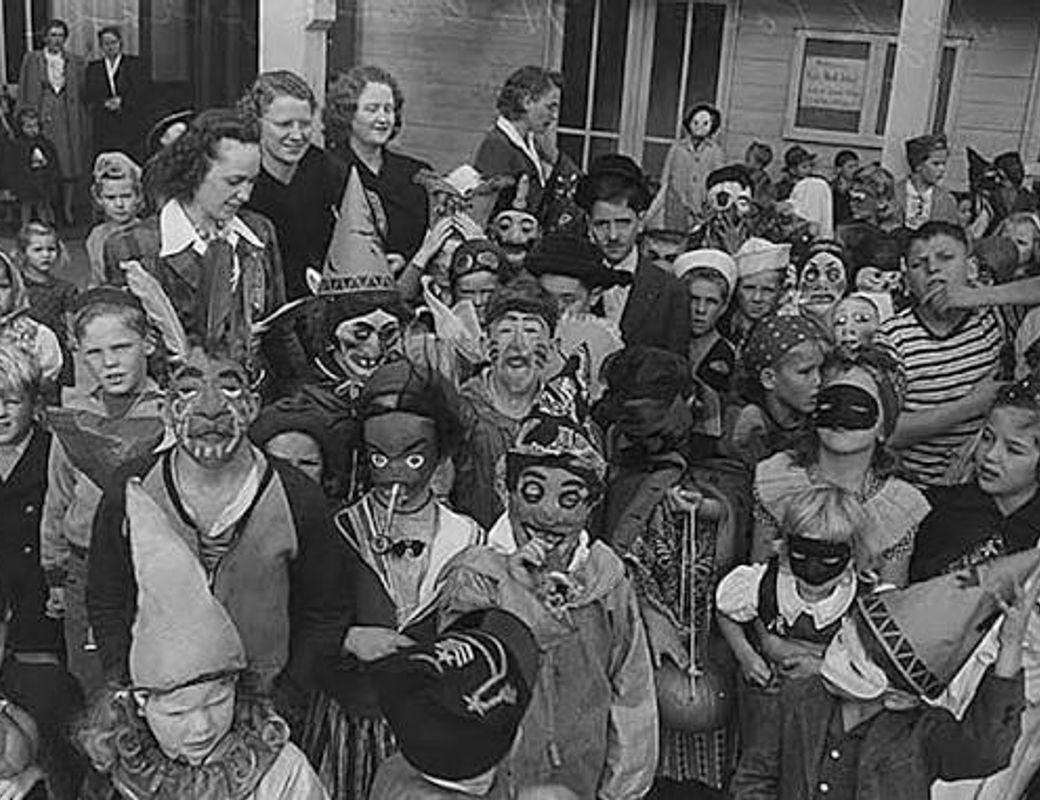
The candy takeover came much later. As trick-or-treating became increasingly popular in American neighborhoods during the twentieth century, particularly during the post-World War II suburban baby boom era. Candy manufacturers realized they had an enormous market sitting on America's front porches. Small, affordable, individually wrapped candies were convenient to buy in bulk, easy to distribute, and eventually became the expected Halloween treat.
So somehow, across centuries:
Soul cakes became treats. Treats became candy.
Turnips became pumpkins.
Protective disguises became costumes.
Guising helped become trick-or-treating.
All Hallows' Eve became Halloween.
The holiday itself went through a Death-card transformation. It changed forms without completely losing what came before it.
WHICH BRINGS US BACK TO THE DEATH CARD XIII (13)
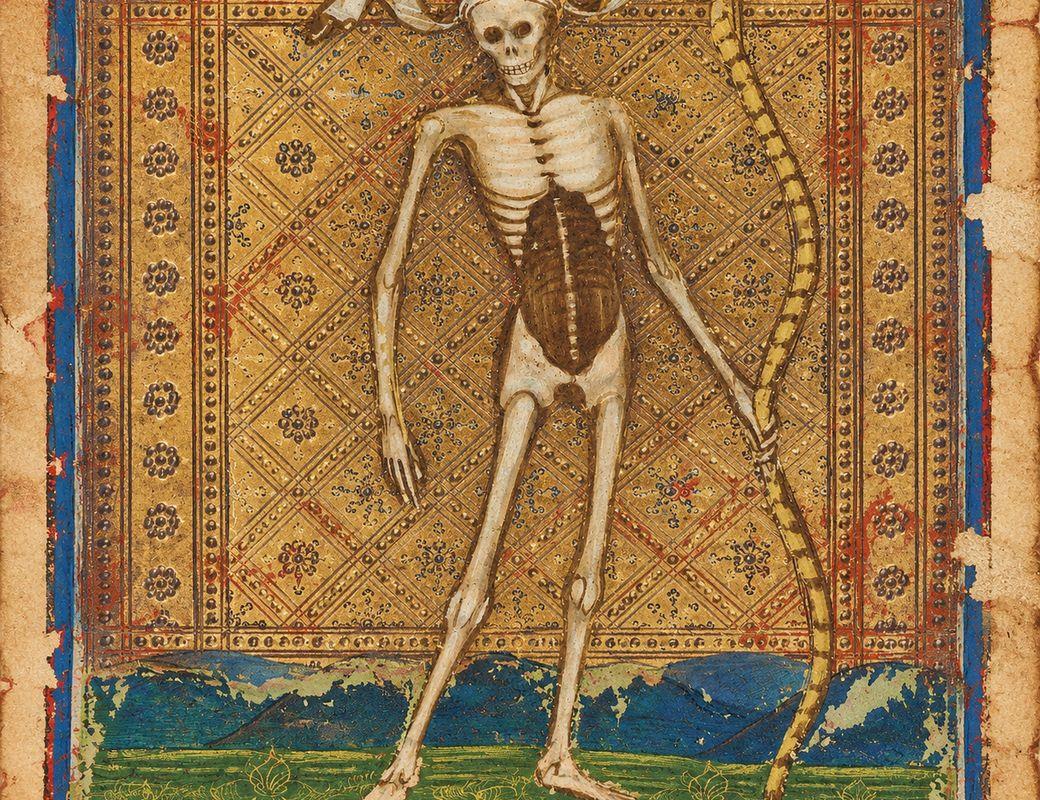
There are 78 cards in a traditional Tarot deck, yet very few make someone freeze quite like Death. But the card itself has undergone a transformation too. The earliest surviving Tarot cards come from fifteenth-century Italy, when Tarot developed as a card game rather than the divination system most of us recognize today. Among the illustrated trump cards appeared the figure we now call Death, commonly represented by a skeleton or skeletal figure. Some early examples weren't even labeled with the word Death.
That imagery existed within a medieval European culture where mortality was much more visible than it is for many of us today. Europe had endured plague, warfare, famine, disease, and high mortality. Art reflected that reality. One of the most striking traditions was the Danse Macabre, or Dance of Death, where Death or skeletal figures appeared alongside people from every level of society: kings, religious figures, wealthy people, workers, and ordinary citizens.
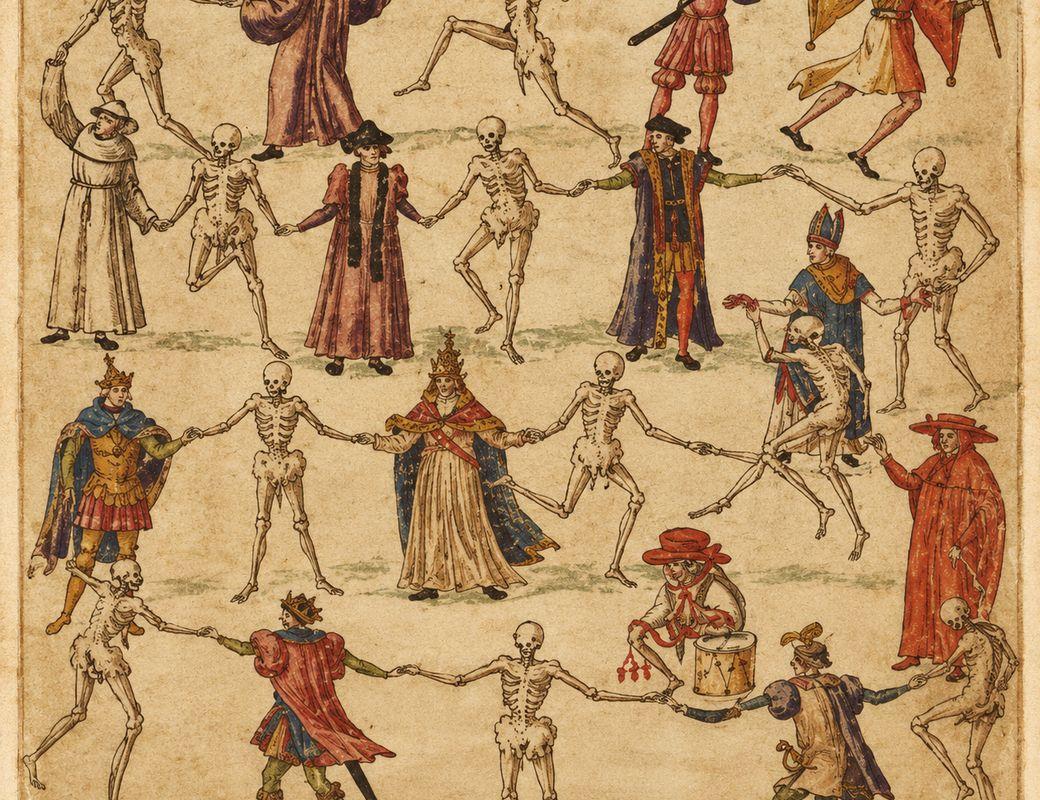
The message? Death comes for everybody.
Money can't bribe it. Power can't command it away. Titles can't outrank it. Status cannot negotiate with Death.
Centuries later, that same unavoidable forward movement appears beautifully in the Rider-Waite-Smith Death card. Death rides forward as a skeleton in armor on a white horse. A king has already fallen. A religious figure stands before him. Other figures react differently to his arrival.
Death keeps moving. Because Death doesn't ask whether we're ready. Neither does change. Neither does the end of a season. Neither does the closing of a chapter in our lives. And suddenly the card starts looking less like a prediction that somebody is going to physically die and more like something every human being has already experienced: An ending.
THE NUMBER 13
If the skeleton wasn't dramatic enough. Thirteen has developed an enormous reputation for being unlucky within Western superstition. Buildings skip the thirteenth floor. Friday the 13th became cultural shorthand for bad luck. Horror movies certainly didn't help the number's public relations department. But 13 has not universally represented bad luck. Different cultures and traditions have given the number very different meanings, and in modern numerological interpretation something especially interesting happens:
1 + 3 = 4.
Four is associated with structure, foundation, grounding, and stability. So the card that visually appears to represent everything falling apart reduces to a number associated with: foundation
Sometimes something has to end because the foundation underneath our lives needs to change. A relationship ends. A career ends. A friendship ends. A belief about ourselves dies. An identity we've carried for twenty years suddenly doesn't fit anymore. A version of ourselves disappears. And yes, sometimes those endings hurt like hell. But eventually we begin rebuilding.
OCTOBER IS THE DEATH CARD XIII (13) IN MOTION
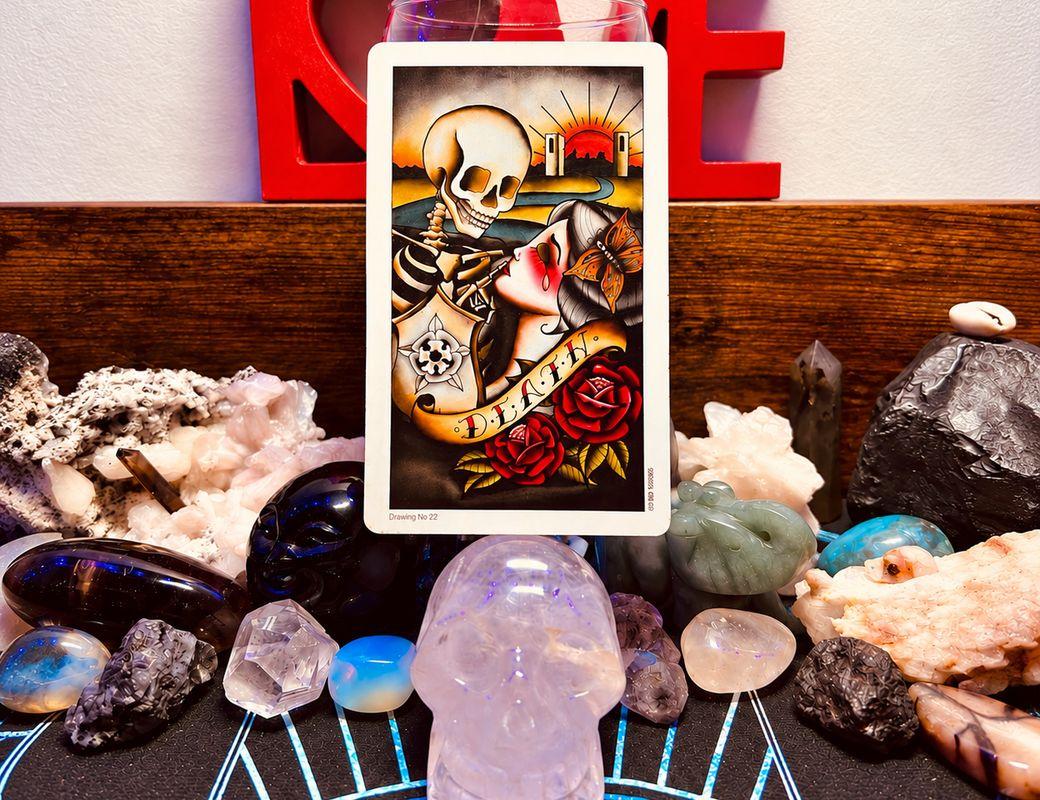
The earliest Tarot cards weren't created with our modern spiritual interpretation of “death and rebirth” printed in a guidebook beside them. That understanding developed as Tarot itself evolved into an occult and divinatory system. Over time, Death became associated not only with mortality, but with: endings, release, transition, transformation, and the movement from one state into another.
Nature demonstrates this every year. A leaf falls from a tree and dies, but the tree isn't dead. Plants disappear beneath the soil, but life hasn't vanished. The harvest ends and as winter approaches, the landscape becomes darker and quieter. Meanwhile underneath what appears to be death, magically, is just another life cycle preparing for its big debut in spring.
And maybe that is why all of these traditions feel so powerful during this particular part of the year. Samhain acknowledged the seasonal threshold into darkness. Allhallowtide created sacred space for saints and departed souls. Día de los Muertos gives loved ones who have died a place at the table of memory. Halloween turned centuries of folklore, migration, fear, food, spirits, disguises, and death into one enormous cultural celebration.
Different histories. Different beliefs. Different purposes. Yet all of them exist beside a natural world demonstrating the same unavoidable lesson:
Nothing stays in the same form forever.
October gives us a strange collective space to practice something the Death card asks us to confront privately. Look at the ending and honor what existed. Let what is finished be finished, but remember what mattered. Understand that an ending does not make everything that came before it meaningless. The dead can be sacred. Memories can remain alive. A culture can cross land and sea, and transform. A turnip become a pumpkin and a soul cake somehow ended up becoming a Snickers bar. And the terrifying skeleton riding toward us on a white horse can become one of Tarot's greatest reminders that sometimes the thing we are desperately trying to keep alive has already completed its purpose. Death is not always the opposite of life. Sometimes, Death is part of the story of life. And every October, the entire world outside our window reminds us of this very beautiful transformation.
Responses
No responses yet — start the conversation.