Justice
The Shadow of the Unweighed Heart
Article · 7 min read · ·

Before this card, I ran.
From The Wheel, I learned that cycles are not punishments. From The Hermit, I learned that solitude is not exile. From Strength, I learned that my wildness is not a monster.
But Justice?
Justice is the card I crossed the street to avoid. Because Justice doesn't ask about the cycles or the cave or the lion.
Justice asks about my own hand in the balance.
I could trace my wounds with precision. I could name everyone who had failed me, the systems that discarded me, the foster homes where fairness was a rumor I heard about other children's lives. My story was true. It was documented. I was the plaintiff, the victim, the one holding the evidence.
But Justice—cold, sword-bearing, scale-holding Justice—sat in her chair and said nothing. She just looked at me. Then at the scales. Then back at me.
And slowly, terribly, I understood.
The scales do not care who hurt you first. They only care about what you are holding right now.
The Traditional Blueprint: The Weight of Truth
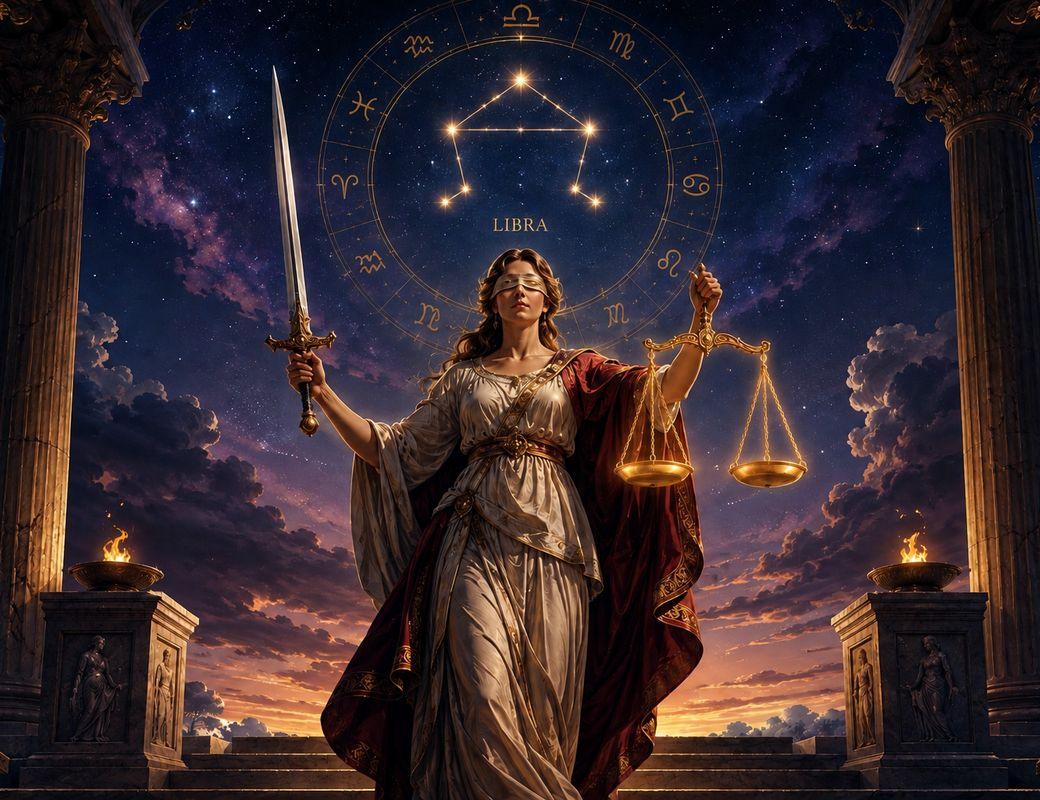
Justice is Card XI—the number of balance, of duality integrated, of the pause before the verdict . She holds a sword in one hand and scales in the other. The sword is not for punishment; it is for discernment, the ability to cut through illusion and self-deception . The scales are not for measuring innocence and guilt; they are for weighing the heart against the feather of truth, an image borrowed from the Egyptian goddess Ma'at .
Astrologically, Justice belongs to Libra, the sign of relationship, harmony, and the excruciating labor of seeing both sides . Libras are not wishy-washy; they are perpetually aware that every story has a shadow story, and every wound inflicted was once a wound received.
This card does not ask: "Were you wronged?"
It asks: "What have you become, in response?"
The Shadow Reflection: The Plaintiff and The Judge
When Justice appears in your shadow, it reveals the two positions you hide in to avoid the terrifying work of true accountability.
Your "Justice Shadow" manifests in two robes, both ill-fitting:
1. The Perpetual Plaintiff.
This shadow has built an identity around its grievances. It can recite the timeline of betrayals, the names of those who failed it, the exact weight of every unfairness. And all of it is true. The Plaintiff is not lying.
But it is also not moving.
The Plaintiff believes that being right is the same as being healed. It waits for an apology that will never come, for a cosmic rebalancing that will finally tip the scales in its favor. It mistakes the documentation of justice for the experience of freedom. Its sword is rusted from disuse; it has forgotten it was ever meant to cut, not just point.
2. The Reluctant Judge.
This shadow has swung to the opposite extreme. Terrified of becoming the Plaintiff—bitter, stuck, vindicated but empty—it refuses to acknowledge its own wounds at all. It says: "Everyone was doing their best." "Holding grudges only hurts me." "I forgive, I release, I move on."
But this isn't forgiveness. This is premature parole. The Reluctant Judge has released the defendant without ever hearing the case. It has confused spiritual bypass with spiritual maturity. Beneath the serene mask, the unexamined wounds still fester, still leak into new relationships, still demand a verdict that was never rendered.
Both shadows are terrified of the same thing: the radical, vulnerable act of holding two truths at once.
The Plaintiff fears that if it acknowledges its own culpability, its pain will be invalidated. The Reluctant Judge fears that if it fully feels its own wound, it will drown.
But Justice does not ask you to choose between your pain and your accountability.
She asks you to weigh them together.
What I Found When I Finally Sat in Her Chair
I spent years as the Plaintiff. I had the files. I had the timeline. I had the righteous rage that insulated me from the far more terrifying question: "And what did you do with what you were given?"
Not blame. Not "you asked for it." Just… an accounting.
I had been hurt. This was true.
And I had also, in response to that hurt, developed strategies that later hurt myself and others. I had pushed away people who tried to love me, called it self-protection. I had refused to ask for help, called it independence. I had hoarded my resources, called it survival.
None of this made the original wound less real. It just made the ledger more complete.
The day I finally sat in Justice's chair—not as plaintiff, not as defendant, but as the weigher—I wrote two columns in my journal.
On the left: "What was done to me."
On the right: "What I did, and do, with the weight of it."
The left column was longer. It always will be. But the right column was mine.
That was the shift. Not absolution. Not a verdict. Just the quiet, adult recognition that I am no longer only the recipient of my story. I am also its author.
The Sanctuary Question:
"What truth about my own role—my adaptations, my defenses, my unintentional harms—have I been refusing to weigh, because I'm afraid it will tip the scales away from my pain?"
And the question beneath it:
"What would it feel like to hold both: 'I was wronged' AND 'I am responsible for what I build with the aftermath'?"
The Integration Prompt: The "Two-Column" Accounting
Your task is not to absolve anyone—including yourself. It is to see the full ledger.
-
Draw the Scale. On a fresh journal page, draw a simple set of scales. Label the left pan: "What I Received." Label the right pan: "What I Became."
-
Left Column: With Compassion. List the injustices, the wounds, the moments when the weight was placed on you without your consent. Be specific. Do not minimize. This is not about "letting go" or "forgiving." It is about witnessing.
-
Right Column: With Honesty, Not Shame. List the adaptations you made to survive that weight. The walls. The deflection. The people you pushed away. The needs you buried. The ways you learned to take up less space—or too much, in the wrong directions.
-
The Integration Sentence. Below the scale, write one sentence that holds both truths. Not to resolve them. Just to hold them.
"I was not responsible for what happened to me. I am responsible for what I do with what remains."
The Balance That Moves
Here is what I have learned, years past that first ledger:
Justice does not demand that the scales be perfectly level. She demands that they be honestly read.
Some days, the left pan still hangs lower. The weight of the past is not evenly distributed, and pretending otherwise is its own kind of dishonesty. On those days, Justice does not scold. She simply asks: "What are you going to do with the imbalance?"
This is where the deeper work lives.
Not in proving you were wronged. Not in pretending you emerged unscathed. Not in performing forgiveness before the grief has finished its testimony.
In the honest, daily accounting of who you are becoming, given what you were given.
The Cornerstone taught me how to stay in my body while holding the full weight of both columns. Because the truth is heavy—both the pain and the accountability—and without a regulated nervous system, I would have capsized.
The Blueprint gave me the structured dialogue to meet the parts of me that had adapted in ways I was ashamed to admit: the Plaintiff who needed her day in court, the Judge who was terrified of her own gavel.
And The Rendering—The Rendering showed me who I could become when I stopped defining myself solely by the ledger, and started drafting the next page.
If you have been avoiding your own scales—
I know why. I avoided mine for years.
Because once you weigh your own heart, you can no longer pretend you are merely a victim of circumstance. You become something far more frightening and far more beautiful:
An adult. An architect. The one who holds the sword and the scale, and chooses, each day, how to wield them.
This work is not easy. It is not a single journal entry or a solitary full moon. It is a practice—a continual, compassionate returning to the question: "What am I holding, and is it time to set some of it down?"
I built the Sanctuary for this practice.
Not to give you answers. To give you the container in which you can safely ask the questions.
For the truths you've been afraid to weigh. For the scale that's been waiting, patiently, for your hand.
With you at the balancing,
Star