How Tarot Works
The Language of the Soul, Symbols, and Synchronicity
Article · 3 min read · ·
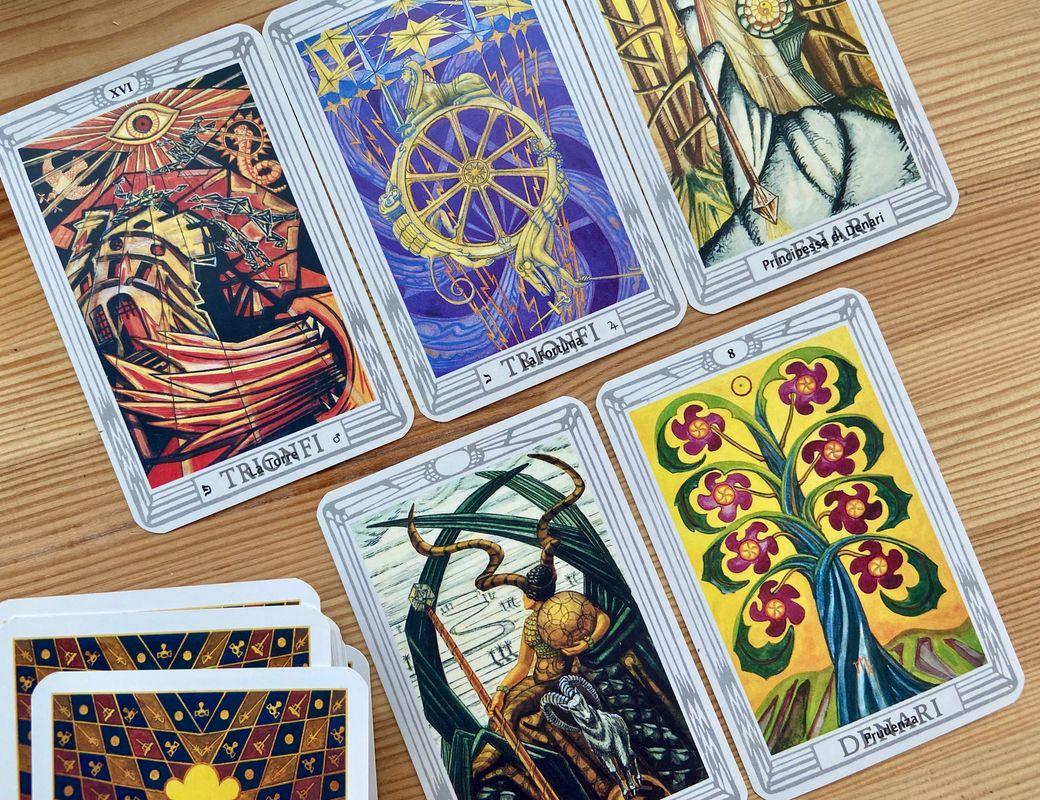
In a world ruled by logic and facts, Tarot gently reminds us of something deeper - intuition, the unseen, the language of the soul. For some, the cards are an ancient system of divination; for others, a psychological tool for self-discovery. But the true magic of Tarot begins when we realize: the cards don’t tell us the future - they reflect it. They mirror our inner world, our questions, our path.
Tarot as a Mirror of the Subconscious
When you shuffle a deck, you create an energetic link. Your intention, thoughts, and even unspoken emotions form a current of energy that guides which cards appear. This isn’t random - it’s the law of synchronicity, described by Carl Jung: certain events coincide not by cause and effect, but because they resonate with your inner reality.
Tarot doesn’t predict the future literally. It shows patterns, energies, and potentials already in motion. It’s like gazing into a mirror that doesn’t just reflect - it gently shows you where to go next.
Where Tarot Draws Its Information
There are several perspectives on this - esoteric, energetic, and psychological.
The esoteric view says Tarot connects us to the collective consciousness, a field containing information about all things - past, present, and future.
The energetic view sees Tarot as reading a person’s unique vibration, translating it into symbols.
The psychological approach says that working with Tarot activates our intuition, and the cards serve as the language of the subconscious.
All of these views share one truth: Tarot is a bridge between your inner and outer worlds.
Each card is an archetype - a timeless image that speaks directly to the soul. That’s why even beginners sometimes “feel” a card’s meaning without memorizing it - their inner self simply recognizes the symbol.
What Tarot Can Reveal
Tarot helps illuminate what’s hidden beneath the surface:
- your energetic state - where tension or strength lies;
- inner conflicts and subconscious beliefs;
- the potential of a situation - which doors are open, which are closing;
- the best direction to move in - how to act with awareness and self-love.
The cards don’t give commands - they offer perspective.
What Tarot Does Not Do, and Why
Tarot won’t solve math problems, pick lottery numbers, or tell you “2 + 2.” It isn’t about rational precision - it’s a symbolic system that works with energies, emotions, and meaning.
It’s also unethical to ask about someone else’s private life or free will without their consent. Tarot isn’t a tool of control - it’s a practice of alignment and understanding.
The future is not fixed. The cards reveal tendencies, but outcomes always depend on your choices and emotional state.
Tarot, Psychology, and Archetypes
Carl Jung saw Tarot as a map of archetypes - universal symbols within the collective unconscious.
The Tower, the Star, the Sun, Death, the Devil - each represents a stage of human evolution. When one of these cards appears, it activates an archetype in you, helping you understand which phase of transformation your soul is currently experiencing.
This is how the law of energetic resonance works: we attract the symbols that reflect our current vibration.
How to Get the Clearest Answers
1. Ask clear questions. Instead of “Will everything be okay?”, try “What can I do to improve this situation?”
2. Trust your intuition. Your first emotional reaction to a card is your subconscious speaking.
3. Keep a Tarot journal. Record your spreads - patterns will emerge over time.
4. See the cards as a dialogue, not a verdict. Look for meaning, not certainty.
Conclusion: Tarot as a Path to Self-Awareness
Tarot isn’t about fortune-telling - it’s about awakening consciousness.
It reveals how your thoughts and emotions shape reality and helps you see where you can bring light.
Each card is a mirror. Each reading, a conversation with your soul. Each answer, a reminder: everything you seek already lives within you.
Tarot is not the magic of the future - it’s the art of seeing the present clearly.
Responses (5)