What Matcha taught me about Philosophy
Leaving room for the deeper meditation on ritual, presence and philosophical living.
Article · 4 min read · ·
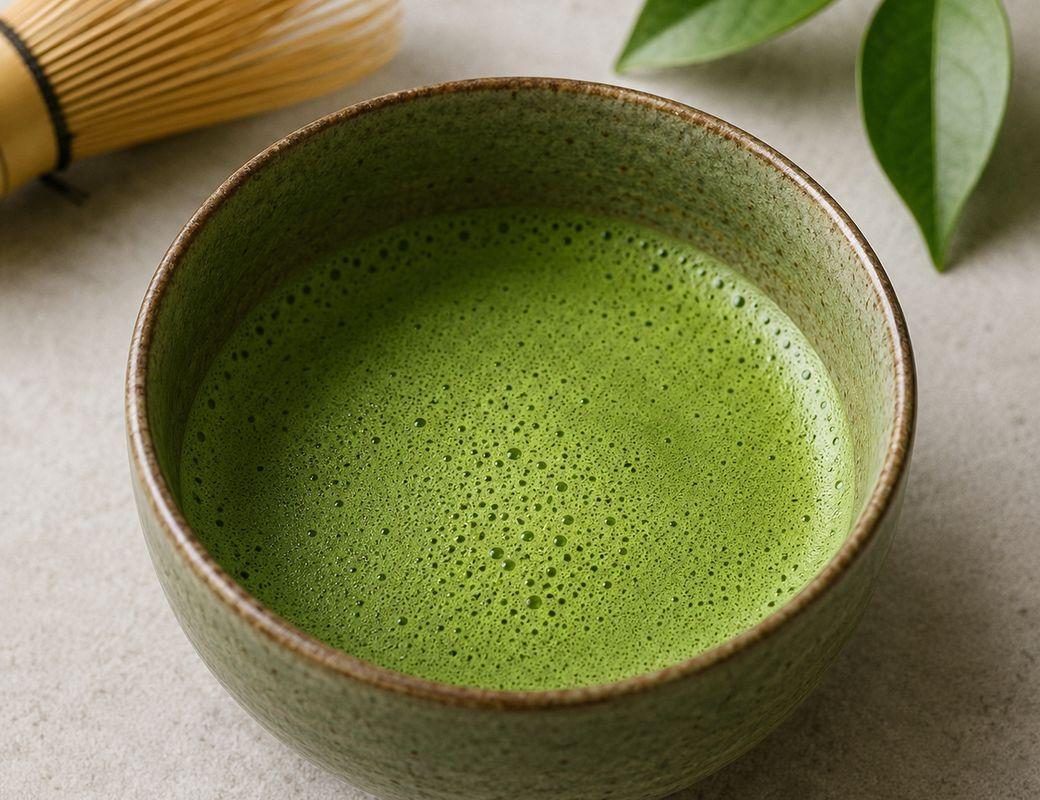
I recently bought my first ceremonial-grade matcha, not because I was searching for another health trend in fact that’s the reason I had avoided another spiritual instafamous product. If anything, I approached it with quiet scepticism because there is something faintly absurd about believing that a finely ground green tea might alter the texture of one’s life. Yet a work acquaintance had built a business around ethically sourced matcha and cacao, and curiosity has always proved stronger than cynicism in me. So I ordered some.
The first bowl surprised me, though not for the reason I expected.
I had imagined that if anything happened, it would be physiological. A smoother energy than coffee, perhaps. A calmer alertness. The familiar language of antioxidants and amino acids. Those things may well be true, but they were not what I noticed first.
What I noticed was my own pace.
The whisk moved slowly through the emerald liquid until the surface became almost luminous beneath the morning light. The bowl warmed my hands before it reached my lips. The fragrance arrived before the flavour did, and somewhere within those few unremarkable moments, I realised I had stopped trying to arrive at the next part of my day.
Nothing mystical had happened. In fact, nothing seemed to happen at all.
Or perhaps that was precisely the point.
It struck me that almost everything in modern life has become an act of consumption. Coffee is consumed, breakfast is consumed, books are consumed, and even ideas are often gathered as quickly as possible before we move on to the next one. We measure ourselves by how much we finish rather than by how deeply we inhabit what is already before us.
Ritual belongs to an entirely different world.
The object itself is almost incidental. Tea possesses no secret wisdom. A handcrafted bowl is still clay, and a bamboo whisk is simply bamboo. What transforms the experience is not the object but the quality of attention we bring to it. A ritual is, perhaps, nothing more mysterious than an ordinary act performed with extraordinary presence.
That thought stayed with me for the rest of the morning because it quietly rearranged something much larger than tea.
For years I have been drawn toward the great questions: consciousness, reality, dreams, mythology, religion, philosophy, and the invisible architecture beneath ordinary life. I have spent countless hours reading thinkers separated by centuries, each attempting to illuminate some fragment of the same mystery. Yet it occurred to me, standing in my kitchen with a bowl of vivid green tea between my hands, that I had devoted far less attention to another question.
How does one actually live philosophically?
Not merely discuss philosophy, study it or identify with it, but allow it to descend from the bookshelf and enter the texture of an ordinary day.
Perhaps philosophy begins long before the books are opened. Perhaps it begins in the manner with which breakfast is prepared, in whether we truly listen when another person speaks, or in whether we notice the warmth of a ceramic bowl before absent-mindedly lifting it to our lips.
The ancient Greeks gathered for symposiums where conversation unfolded over wine. The Japanese refined the tea ceremony into an art of attention. Benedictine monasteries shaped the day through bells, meals and silence. Indigenous traditions across the world have long understood that ordinary acts become sacred when they are woven back into relationship.
Their symbols and customs differ, yet they appear to circle the same observation.
Human beings do not become wise simply by thinking deeply. We become wise by paying attention deeply.
I wonder whether that is what we have quietly forgotten. Not ritual itself, but what ritual was always for.
It was never merely an act of appeasing gods or performing perfection. Ritual created a vessel spacious enough for attention to settle. When attention settles, something else often arrives of its own accord.
Wonder.
Over the past few months, I have found myself saying that Philosophia is not about collecting answers but cultivating better questions. Until now, I had imagined those questions arising from books, conversations and moments of intellectual discovery. Yet I suspect I overlooked one of their oldest homes.
Inquiry needs stillness.
Not because stillness answers questions, but because stillness makes them audible.
The world has become astonishingly efficient at capturing our attention. Perhaps ritual is simply the gentle practice of giving it back.
By the time I finished that first bowl of matcha, I realised it had never really been about tea. It was about remembering that philosophy does not belong exclusively in libraries, lecture halls or podcasts. It belongs just as naturally in kitchens, gardens, workshops and long walks beneath an ordinary sky. It belongs wherever a human being slows down enough to participate fully in the moment already unfolding before them.
Perhaps consciousness was never asking us to think more. Perhaps it has always been inviting us to arrive.
And so the question I am left holding is not whether matcha should become part of everyone’s morning, nor whether every ordinary act must be made sacred through ceremony. It is something quieter, and perhaps more useful:
What ordinary act in your own life is quietly waiting to become a ritual?
Responses
No responses yet — start the conversation.