The Safe Room I Found in a Book
How fiction became my gateway to shadow work.
Article · 2 min read · ·
I’ve talked about the park bench, the moon, and my heartbeat. But there was another sanctuary, one I could crawl into no matter where I was: the world inside a book.
At first, it was pure escape. But I started to notice a pattern. I’d weep over fantasy orphans discovering they were secret royalty. I’d feel my chest tighten reading about heroes terrified of their own hidden power. I thought I was just invested in the plot, but the emotions were too personal, too raw.
It wasn't the plot I was connecting with; it was the **shadow**.
The psychologist **Carl Jung** coined the term "shadow self" to describe the parts of our personality we repress, deny, or deem unacceptable—our hidden fears, our shame, our untapped power. He believed that until we bring this shadow into conscious awareness, it will control us from the dark, often by projecting our own "unacceptable" traits onto other people.
My shadow was a terrified orphan. It was a person afraid of their own power. It was shrouded in shame. And I saw it reflected back at me in every protagonist's journey.
But in a book, it was safe. I could touch those raw, messy parts of myself through a character. I could watch them struggle with their darkness, make terrible mistakes, and still be the hero. This was my unconscious, accidental introduction to **shadow work**: the process of making the unconscious conscious, of befriending the hidden parts of ourselves so they no longer run the show.
It gave me permission to have a story that was messy, too. I started scribbling in the margins of my notebooks—not about the plot, but about the feelings. "Why did that character's betrayal hurt so much? What does that say about what *I* fear?" "That moment of forgiveness… could I ever do that?"
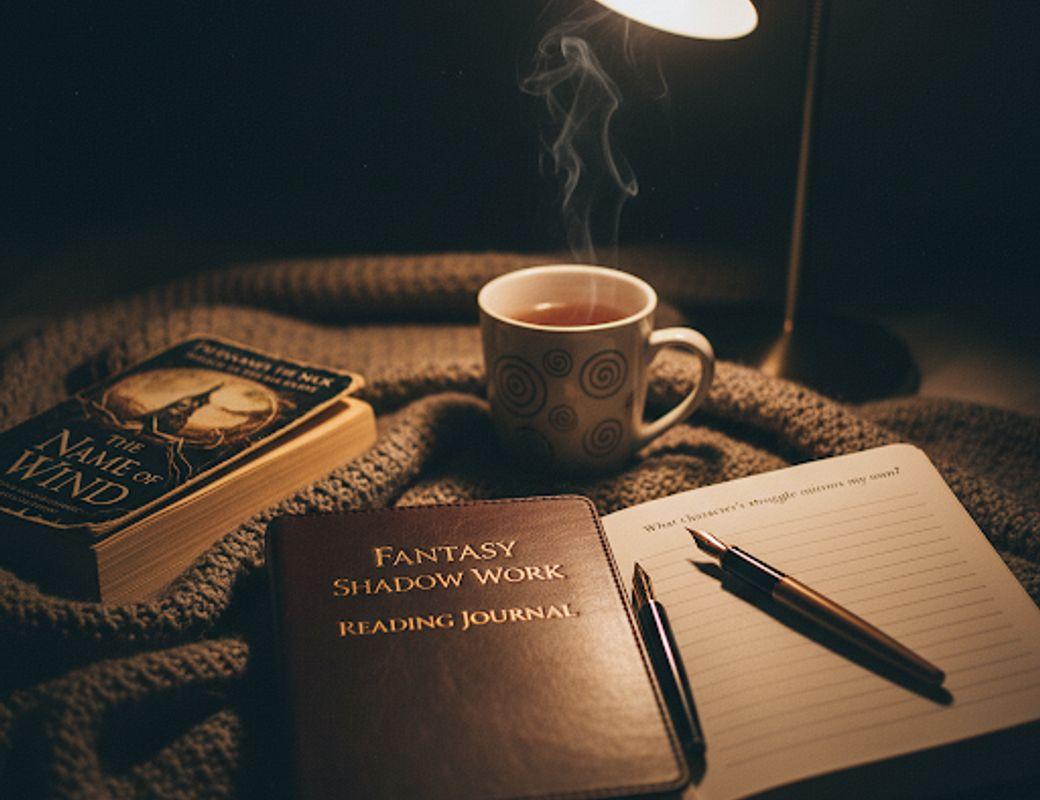
This is the entire purpose behind my **Fantasy Shadow Work Reading Journal**. It’s a guided container for this exact process. It helps you consciously use the stories you read as a map for your own inner world. It provides prompts that ask, "What is this character's journey showing me about my own hidden fears, desires, and power?"
Because sometimes, the bravest way to face your own darkness is to first walk alongside a fictional character through theirs. It’s a gentle, powerful start to the most important journey you'll ever take: the one back to your whole self.
Responses (6)