The Fundamentals of Numerology
The Fundamentals of Numerology in Major Religious and Spiritual Traditions
Article · 3 min read · ·
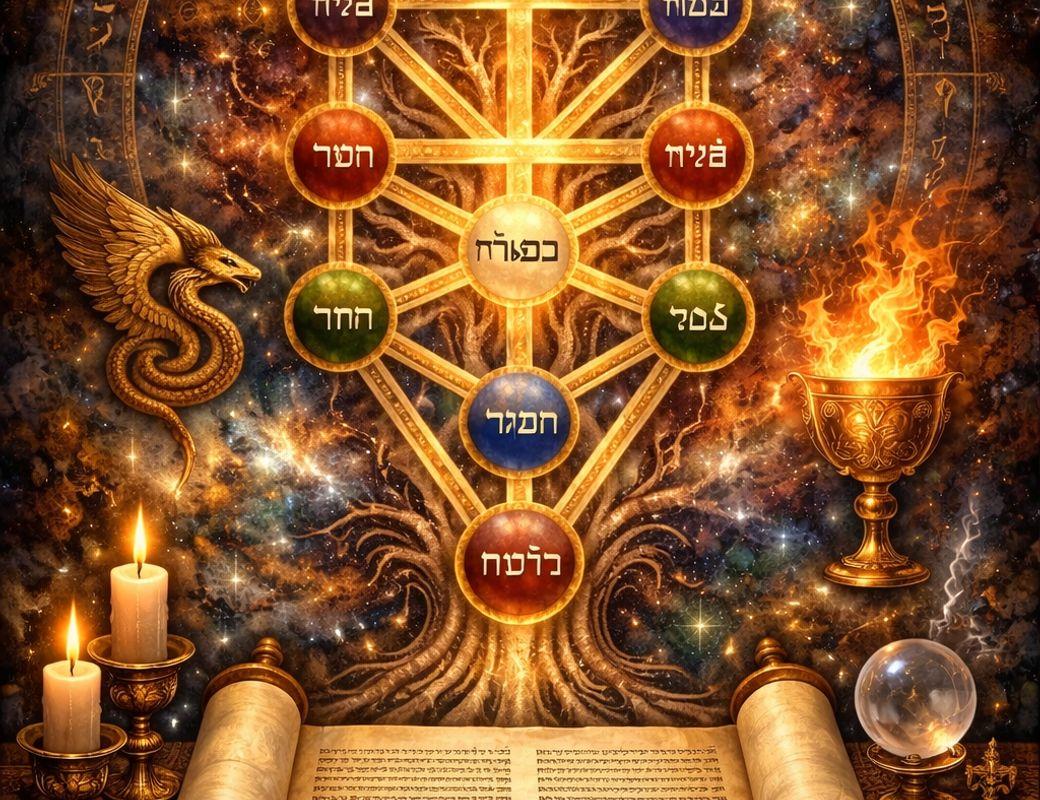
I want to now delve deeper into how numerology is deeply intertwined with some of the major spiritual and religious movements throughout human history, and how this relationship continues to evolve in contemporary practices.
Numerology and Kabbalah:
Exploring the connections between numerology and Jewish mysticism. First and foremost, the relationship between numerology and Kabbalah, Jewish mysticism, dates back centuries and has been the subject of study and interpretation by scholars and practitioners of Jewish spirituality.
Kabbalah is an esoteric tradition that seeks to understand the secrets of the universe and the nature of God through the interpretation of sacred texts and the exploration of concepts such as the sefirot (spheres) and Hebrew letters.
Let's now examine the main connections between numerology and Kabbalah: The Sefirot and Numerology:
In Kabbalah, the sefirot are ten attributes or aspects through which God manifests and creates the universe. Each sefirah is associated with a specific number, from one to ten, and has its own meaning and symbolic correspondence.
For example, the first sefirah, Keter (Crown), is associated with the number 1 and represents unity and divine will. The second sefirah, Chochmah (Wisdom), is associated with the number 2 and represents understanding and divine knowledge. Thus, each sefirah is linked to a number and forms part of a complex numerical system used to understand the nature of God and the universe.
The Tree of Life:
The Tree of Life is a graphic representation of the sefirot and their interconnections in Kabbalah. This diagram consists of ten sefirot arranged in three vertical columns, with lines connecting each sefirah and forming an intricate pattern. Each sefirah is associated with a number, and through the Tree of Life, the relationships between these numbers and the divine attributes they represent are explored.
Gematria:
Gematria is a numerical interpretation technique used in Kabbalah to find hidden meanings in words and phrases.
In gematria, each Hebrew letter has a numerical value, and by adding up the values of the letters in a word or phrase, numbers are obtained that are considered significant.
For example, the Hebrew word "chai" (life) has a numerical value of 18, making it a symbol of good luck and prosperity in Jewish culture.
Numerology in the Torah:
The Torah, the sacred text of Judaism, also lends itself to numerical interpretation in Kabbalah. It is believed that numbers have symbolic meaning and that the combination of numbers in passages of the Torah can reveal hidden or profound messages about divine will and the purpose of creation.
The Number 7:
In Kabbalah, the number 7 is considered one of the most sacred and significant numbers, representing perfection, wholeness, and completeness. It is associated with divine creation and the manifestation of God's will in the world. The idea that God rested on the seventh day after creating the world is interpreted as a symbol of the perfection and completion of creation. Additionally, the number 7 is present in various important aspects of Jewish practice and tradition. For example, there are seven major festivals in the Jewish calendar, which are linked to significant historical events and the seasons of the year.
In summary, numerology and Kabbalah are closely intertwined in the Jewish spiritual tradition, using numbers as tools to understand the mysteries of the universe and the relationship between God and humanity.
The numerical interpretation of the sefirot, the Tree of Life, gematria, and the Torah are just some of the ways numerology is integrated into Kabbalistic practice, offering a deeper vision of the nature of reality and existence.
Mayau Wicca 🌸
Responses
No responses yet — start the conversation.