Why Are We So Afraid to Let Go?
things we keep holding onto not for what they are but for what we still hope they might become
Article · 12 min read · ·
There are people who are no longer in our lives, but still occupy an enormous space in our thoughts.
Conversations we ended months ago that we still replay in our heads.
Plans that no longer make sense, but that we struggle to abandon.
Promises someone made that we're still waiting to see fulfilled.
Sometimes we know that something has changed. We can even recognize that what we're clinging to is no longer good for us.
And yet, we stay.
Checking our phone.
Searching for explanations.
Remembering the good moments.
Imagining that this time will be different.
The curious thing is that we often wonder why someone won't let us go, why a situation won't end, or why life insists on keeping us trapped in the same cycle.
But there's another question, a much more uncomfortable one:
What are we trying to hold onto ourselves?
Perhaps the answer isn't as simple as we think.
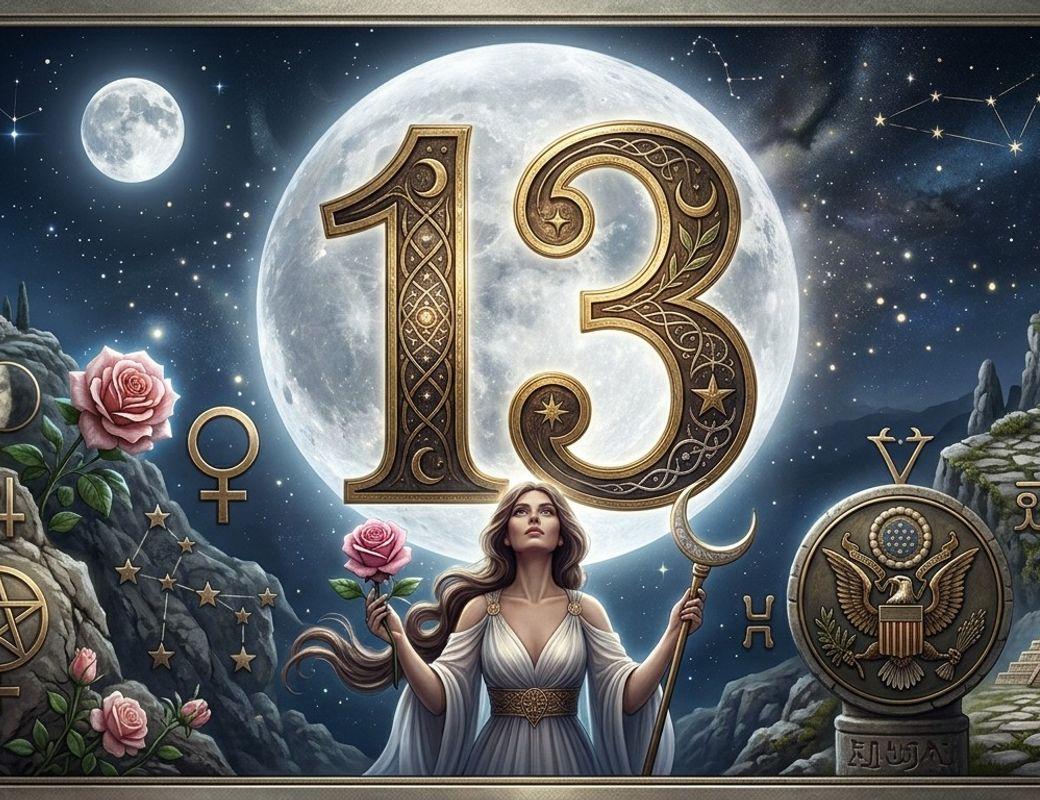
🌖 The Moon doesn't cling to its own light
On October 25, 2026, we'll have a full moon. Three days later, on the 28th, we'll see it in its waning gibbous phase.
Astronomically, this happens because of the geometry between the Sun, Earth, and Moon. There's no proven spiritual energy loss or emotional process triggered by that phase.
But as a symbol, I've always found it interesting.
The Moon doesn't need to stay full to remain the Moon.
Its appearance changes constantly, and yet, it doesn't cease to exist.
We, on the other hand, sometimes cling so tightly to a stage of our lives that we begin to believe losing it means losing a part of our identity too.
We struggle to accept that a relationship changed.
That a dream no longer represents what we desire.
That a friendship stopped being reciprocal.
That the person we were five years ago doesn't have to keep making all our decisions.
Perhaps that's why the waning moon works as such a powerful metaphor.
It reminds us that something can change form without disappearing completely.
And that not every change has to be understood as a defeat.
🕯️ Sometimes we hold on because we've already given too much
Imagine you've spent years trying to make something work.
A relationship.
A project.
A business.
An important decision.
You've invested time, money, effort, hope. You've given up other possibilities and defended your choice to those who advised you differently.
One day you begin to recognize that things aren't working.
But a thought appears:
"After everything I've invested, I can't give up now."
And you continue.
Not necessarily because the future looks promising, but because giving up would make you feel like everything before was wasted.
In behavioral economics, there's a concept related to this: the sunk cost effect.
Researchers Hal R. Arkes and Catherine Blumer studied it in their article The Psychology of Sunk Cost, published in 1985.
Their research showed that people can feel more inclined to continue with an activity when they've already invested money, time, or effort in it, even when those past investments shouldn't determine the current decision.
Their studies focused on economic decisions and behaviors. They didn't prove that all difficult relationships work this way.
But the concept allows us to ask ourselves a very human question:
Am I continuing because I still want to be here, or because I find it hard to accept everything I've already given?
They're not the same thing.
And perhaps recognizing that difference is one of the first steps in understanding why we find it so hard to let go.
🌑 The familiar can feel safer than the possible
There's something strange about uncertainty.
We can be uncomfortable within a familiar situation and still feel more afraid imagining a different life.
We know what it feels like to wait for a message that might never come.
We know how to behave within a relationship where we always give in.
We know the job that exhausts us, the promises we postpone, and the disappointments we've learned to anticipate.
All of that can hurt.
But it's familiar.
The unknown, however, forces us to imagine questions we don't yet have answers to.
What if I regret it?
What if I don't find something better?
What if I never feel the same way again?
What if I'm making a mistake?
Researcher R. Nicholas Carleton reviewed different psychological models related to fear of the unknown and intolerance of uncertainty in 2016.
His work shows the importance our way of responding to what we cannot anticipate can have, especially in relation to worry and anxiety.
That doesn't mean that everyone who has difficulty letting go suffers from a psychological problem.
It means that not knowing what comes next can be a profoundly uncomfortable experience.
And perhaps that's why, sometimes, we confuse the familiar with the safe.
Though they're not always the same thing.
🔮 We don't just miss what was
I think there's a part of letting go that we almost never mention.
Sometimes we're not trying to recover a relationship.
We're trying to recover the possibility that relationship represented.
The house we imagined.
The trips we never took.
The conversations we thought we'd have.
The life we believed we were building.
That's why it can hurt so much to abandon something that, seen from the outside, seemed to offer us very little.
Because we weren't just looking at what we had.
We were also looking at everything we hoped would someday happen.
And that difference matters.
It's one thing to fondly remember what we actually experienced.
It's another to keep waiting for a future possibility to retrospectively transform everything that hurt us.
Maybe we should ask ourselves:
Do I miss the reality of what I lived, or the story I built about what it could become?
There's no universal answer.
But there may be an answer you need to hear from yourself.
✨ Letting go doesn't mean stopping feeling
This is where many spiritual discourses end up complicating something that's already difficult.
They tell us we must let go, release, forgive, close cycles, and not look back.
As if a decision could automatically erase everything we feel.
But emotions don't work that way.
You can decide not to return to a relationship and still miss that person.
You can accept that a project ended and feel sadness about the effort invested.
You can recognize that a stage no longer fits you and still experience nostalgia.
And none of that necessarily means you made the wrong decision.
In his book A Liberated Mind, psychologist Steven C. Hayes develops ideas related to Acceptance and Commitment Therapy, known as ACT.
One of the central concepts of this approach is psychological flexibility: developing the capacity to relate more openly to our thoughts and emotions while directing our actions toward what we value.
That doesn't imply eliminating pain at will.
Nor does it mean we should resign ourselves to any situation.
It means we can learn to act without first demanding that we stop feeling fear, sadness, or uncertainty.
And I think that's an important distinction.
Because many people wait to stop missing someone before moving forward.
They wait to stop being afraid before deciding.
They wait to feel completely certain before changing anything.
But perhaps it's not always necessary.
You can feel sadness about what ends and, at the same time, recognize that you need a different future.
Both things can be true.
🌙 What if letting go wasn't forgetting?
There are memories that deserve to remain.
People who were important.
Experiences that changed us.
Stages that, even though they've ended, continue to be part of our story.
Letting go doesn't have to mean destroying photographs, deleting every conversation, or pretending that none of it mattered.
And much less should we turn the idea of letting go into an obligation for those going through grief.
When we lose someone through death, keeping memories and symbolic connections can be part of our way of living with that absence.
Not all bonds need to be broken.
Perhaps the question is different:
How do I want to relate now to what is no longer in my life in the same way?
Sometimes that means keeping a memory without trying to recover the past.
Sometimes it means being grateful for what was lived without using it as a reason to remain in a situation that harms us.
Other times it means recognizing that we're not yet ready to decide.
And that also deserves understanding.
Because healing isn't a competition to see who stops feeling first.
🕯️ A ritual to distinguish the past from the future
I want to propose a simple exercise for this waning moon.
You don't need to do it at a specific time, buy special objects, or attribute supernatural powers to it.
You can do it in front of a candle, under the sky, or simply in a quiet place.
The intention is to use a symbolic gesture to observe something you may have been avoiding.
Take a piece of paper and write these three sentences.
1. What actually existed
Describe the facts, without idealizing them or punishing yourself.
What did you receive from that experience?
What did you learn?
What was valuable?
What was difficult?
Try to recognize both the good and what you'd prefer not to live through again.
2. What I'm still waiting for
Here I want you to be especially honest.
Are you waiting for an apology?
A change someone promised?
To recover the time invested?
For a person to finally become who you expected?
For a past decision to stop hurting?
Or are you simply waiting to feel enough certainty to move forward?
You don't have to answer everything.
Just try to identify what expectation continues to keep you tied to that story.
3. What I can still choose
Now stop looking for a moment at what you can't control.
What depends on you?
Perhaps you can have a conversation.
Ask for information.
Set a boundary.
Change a routine.
Seek support.
Stop checking something that constantly reopens a wound.
Or perhaps you need time to understand what decision is possible given your circumstances.
Don't look for a spectacular gesture.
Look for one you can sustain.
When you finish, keep the paper.
If you want to tear up a copy as a symbolic gesture, you can, but it's not necessary.
What matters isn't what happens to the paper. It's what you discover while writing.
🌘 Not everything we hold onto deserves to be abandoned
I want to clarify something before finishing.
Persisting isn't always a mistake.
There are relationships that go through difficulties and can be rebuilt.
There are projects that need more time.
There are learnings that require effort and patience.
And there are moments when a pause is wiser than a hasty decision.
The sunk cost effect doesn't mean we should abandon something simply because it has demanded a lot from us.
The question is whether there are current and future reasons to continue.
Whether there's reciprocity.
Whether there are observable changes.
Whether conditions allow for progress.
Whether what you're building still makes sense to you.
And whether your staying is a choice or an obligation you feel unable to question.
Because we can also fall into the opposite error: turning the idea of letting go into an excuse to abandon anything that involves discomfort.
It's not about that.
It's about learning to distinguish between persisting out of conviction and remaining out of fear.
🌖 The Moon will keep changing
In a few days, the Moon will appear smaller and smaller from Earth.
Then another new moon will come.
And later it will grow again.
This happens because of its orbital movement and the way we see its illuminated part.
Not because the Moon is deciding what to keep and what to abandon.
But we do have to make decisions.
Some will be easy.
Others will take time.
There will be situations where moving forward means leaving.
And others where it means staying, but in a different way.
Perhaps the hardest thing about letting go isn't losing something.
Perhaps it's accepting that we can't keep using the past as a guarantee of a future no one has promised us.
That having loved doesn't obligate us to stay.
That having invested years doesn't mean we must invest all the ones we have left.
And that changing direction doesn't automatically make the path traveled useless.
Sometimes a story can have been important...
without having to last forever.
And perhaps that's one of the most human ways to learn to let go.
Not erasing.
Not denying.
Not pretending it doesn't hurt.
Simply stopping demanding that the past deliver us a different future.
🤍 Before you go
I'd like to leave you with a question:
What's harder for you to let go of: what actually was, or the hope of what it could still become?
If you feel moved to, you can share your reflection in the comments. You don't need to share anything you'd prefer to keep private.
MÍSTICO is a space to talk about the Moon, our rituals, and the questions we ask ourselves when we search for meaning. But also to approach those questions with curiosity and honesty.
If this article helped you look at a situation from a different perspective, you can voluntarily support my work with a tip. That support allows me to keep researching books, studies, and traditions to create texts like this one.
And if you can't today, reading, commenting, or sharing is also a valuable way to support this project.
Thank you for being here.
The Moon changes phases without ceasing to be the Moon. Perhaps we too can change without losing who we are.
📚 Sources and research
These are the actual sources that support the explanations in this article:
Hal R. Arkes and Catherine Blumer (1985). The Psychology of Sunk Cost. Organizational Behavior and Human Decision Processes, 35(1), 124–140. Consult research. Studies how past investments of time, effort, or money can influence the decision to continue.
R. Nicholas Carleton (2016). Into the Unknown: A Review and Synthesis of Contemporary Models Involving Uncertainty. Journal of Anxiety Disorders, 39, 30–43. Consult review. Analyzes fear of the unknown and intolerance of uncertainty.
Steven C. Hayes (2019). A Liberated Mind: How to Pivot Toward What Matters. Avery. Consult book and publisher. Explains principles of Acceptance and Commitment Therapy, such as acceptance, values, and psychological flexibility.
William Samuelson and Richard Zeckhauser (1988). Status Quo Bias in Decision Making. Journal of Risk and Uncertainty, 1, 7–59. Consult study. Examines the tendency to maintain an existing situation over other alternatives.
Time and Date. Lunar calendar for San Salvador, October 2026. Source of the astronomical dates used.
Editorial note: Psychological research helps us understand phenomena related to persistence, decisions, and uncertainty. It doesn't prove that all bonds are maintained through these mechanisms. The waning moon is used here as a metaphor for change, not as a scientifically established cause of our emotional states.
Responses
No responses yet — start the conversation.