How to Interpret Your Own Tarot Questions
Without Letting Emotions Control the Reading
Article · 5 min read · ·
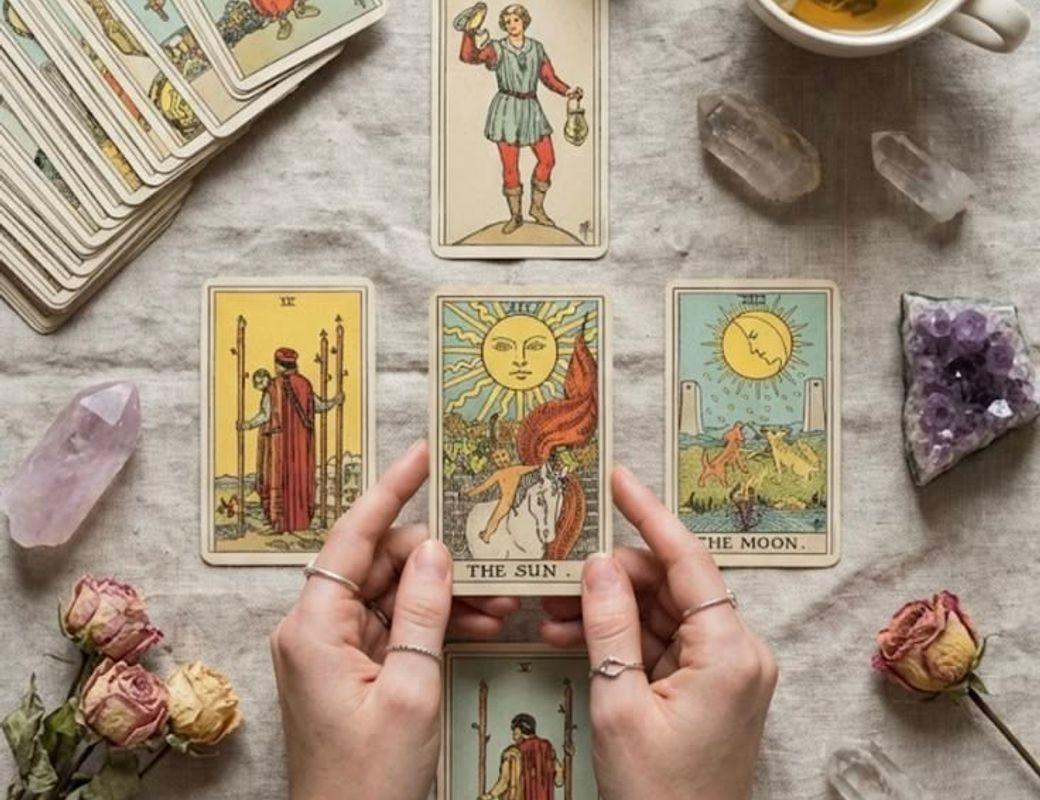
Reading Tarot for other people can feel much easier than laying out the cards for your own life. There is a reason for this: when the question is ours, we are emotionally involved in the answer.
After more than 2 years of working with Tarot, I have learned that knowing the Arcana deeply does not automatically mean you will be able to interpret everything that appears in a personal reading with complete clarity.
Why Is It So Difficult to Read Tarot for Yourself?
When we read for someone else, there is a natural distance between us and their situation. We can observe the cards, connect the symbols, and recognize patterns without needing a particular outcome to happen.
When the question is ours, that distance disappears.
Our expectations, fears, desires, insecurities, and past experiences all enter the reading. And the more emotionally important the question is, the harder it can become to separate what the cards are actually showing from what we want them to show.
This difficulty is recognized even among experienced Tarot readers: personal readings can be influenced by emotional involvement and by our tendency to interpret cards in ways that match what we hope to find.
Imagine asking:
“Will he come back to me?”
You desperately want reconciliation.
The Six of Cups appears.
Immediately, your emotions may tell you:
“He misses me. He is coming back.”
But is that really the message?
The Six of Cups could also be showing that you are holding on to memories, idealizing the past, or needing to understand what that relationship represents emotionally before you can move forward.
Intuition and Desire Are Not the Same Thing
One of the most important skills for anyone who wants to read Tarot for themselves is learning to distinguish intuition from expectation.
Intuition usually arrives simply.
You look at the cards and something makes sense before you even begin constructing a long explanation.
Desire, on the other hand, often begins negotiating with the reading.
So, Can You Read Tarot for Yourself?
Yes.
I do my own readings, but I had to develop the discipline to recognize when I am truly in the right emotional state to interpret a personal matter.
The secret is not to stop feeling.
You will still have fears, hopes, anxiety, and preferences about what you would like to happen.
The goal is to be able to say:
“I know what I want to happen. Now I am going to observe what this reading is actually showing me.”
With practice, this separation becomes much easier.
Here are five techniques I consider especially important.
1. Write Down What You Want to Hear Before Drawing the Cards
This is one of the most useful techniques for recognizing your own bias.
Before shuffling, write:
“The answer I would like to receive is…”
Then complete the sentence with absolute honesty.
For example:
“I want the cards to tell me that he will come back.”
“I want this job opportunity to work out.”
“I want this person to be honest with me.”
You have now placed your expectation directly in front of you.
When you interpret the cards, it becomes much easier to notice when you are trying to force the reading to fit that desired answer.
2. Do Not Read at the Height of an Emotional Moment
This rule completely changed the way I approach personal readings.
If you have just ended a relationship, received a message that triggered your anxiety, had an argument with someone, or feel desperate for an answer, that may not be the best moment to consult the cards.
First, allow yourself to feel.
Cry if you need to.
Write.
Take a walk.
Breathe.
Sleep.
Then return to the Tarot.
When we are intensely emotionally involved, our ability to observe a reading objectively decreases.
3. Ask Neutral Questions
The quality of your interpretation begins with the quality of your question.
Compare:
“Does he still love me, and will he come back?”
with:
“What do I need to understand about the current dynamic between us?”
The first question already carries desire and expectation, while also combining two separate questions.
4. Pretend the Reading Belongs to Someone Else
This is probably the technique I use most often.
Once the cards are on the table, forget for a few minutes that the question belongs to you.
Imagine that a client has come to you with exactly the same situation.
5. Record the Reading and Return to It Later
Take a picture of the cards.
Write down:
Question:
Cards:
First interpretation:
What I felt when I saw the cards:
What I wanted the answer to be:
Then put the Tarot away.
Return to the same reading the next day or a few days later, without drawing new cards.
When Should You Avoid Interpreting Your Own Question?
Even after many years of experience, recognizing your own lack of neutrality can be a sign of maturity.
If you are deeply emotionally involved and realize that you will immediately reject any answer that differs from what you want, it may be better to put the deck away for the moment.
You can wait.
You can talk to someone.
You can consult another Tarot reader.
And you can return to the question when you feel more centered.
Knowing how to read Tarot does not mean you need to interpret absolutely everything for yourself.
The Real Secret of Reading Tarot for Yourself
Over time, I realized that the greatest skill involved in giving yourself a good Tarot reading is not memorizing hundreds of card combinations.
It is learning to observe yourself while you interpret.
Ask yourself:
Am I seeing this card, or am I seeing my fear?
Am I interpreting this Arcana, or am I searching for confirmation?
Would I reach the same conclusion if these cards belonged to someone else?
The more honestly you can answer these questions, the clearer your readings tend to become.
Tarot can be a powerful tool for reflection and self-knowledge, but it does not have to carry the entire weight of your decisions.
Use the cards to recognize possibilities, patterns, and blind spots.
Then look at reality.
And make your choices.
Because learning to read Tarot for yourself does not mean learning to predict every step of your own story.
Responses
No responses yet — start the conversation.
More from the Magazine

EL APOCALIPSIS HA LLEGADO… Y MUY POCOS SE HAN DADO CUENTA
No habrá necesariamente trompetas en el cielo ni señales de fuego en el horizonte.
Persephone and the Power of Transformation
Explore the Greek goddess whose myth connects the changing seasons with loss, return, and renewal.

VENUS RETRÓGRADO: EL REGRESO AL CORAZÓN
Cuando el amor deja de mirar hacia fuera y se atreve a descubrir la verdad que habita dentro.