THE APOCALYPSE IS HERE… AND VERY FEW HAVE NOTICED
There won’t necessarily be trumpets in the sky or fiery signs on the horizon.
Article · 6 min read · ·
Maybe the true end times are unfolding quietly within us, while the world keeps turning as if nothing were happening.
There are endings that don’t announce their arrival. They make no noise, knock down no buildings, and don’t darken the sky. They simply begin to transform everything we thought would last forever until, one day, we wake up and discover that the world we knew no longer exists.
Maybe that’s why so few people have noticed.
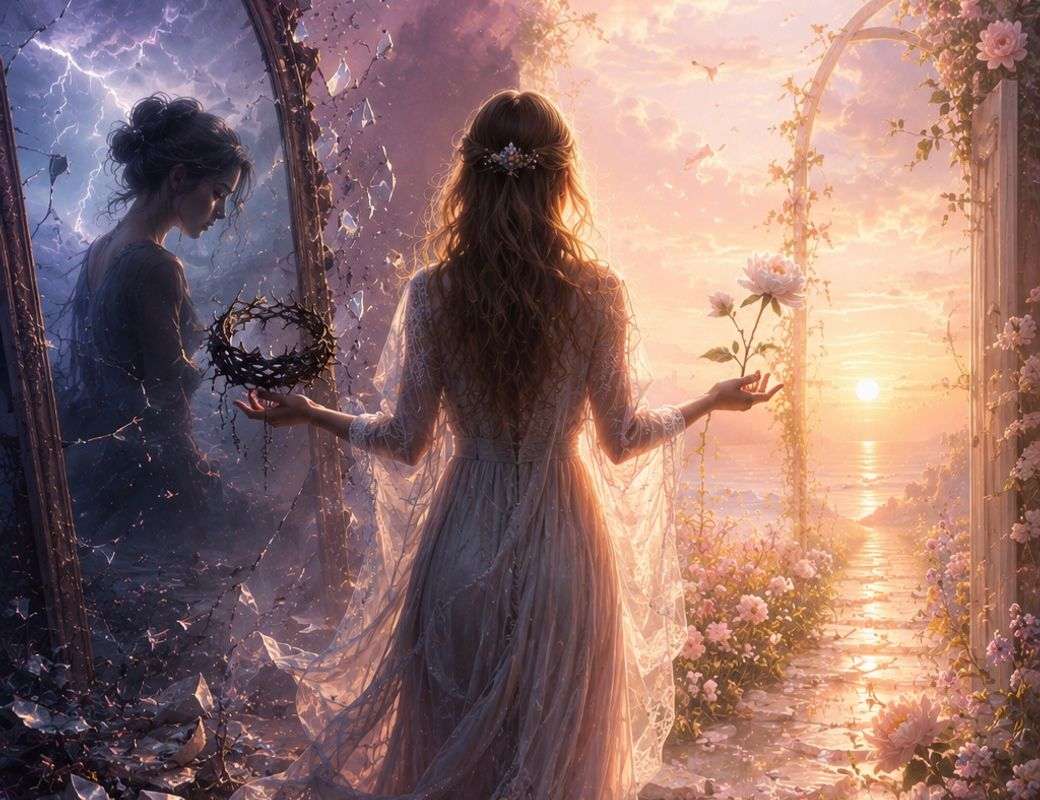
When we hear the word apocalypse, our minds jump to catastrophic scenes: destroyed cities, wars, natural disasters, and humanity facing its own extinction. But the Greek word apokálypsis originally means revelation or unveiling. In other words, lifting the veil that covers something so we can see what was hidden before.
And when we look at our times from this perspective, an unsettling question arises: What if the real apocalypse isn’t just the end of a world, but the revelation of everything that can no longer stay hidden?
The collapse of a world that seemed indestructible
For generations, we’ve learned to build our sense of security on certain certainties: money, recognition, possessions, other people’s approval, and the idea that tomorrow will carry on exactly as it always has.
But what happens when those certainties start to crumble?
Relationships break apart because they can no longer be sustained by lies. People start questioning jobs that drain them, relationships that leave them feeling empty, and lifestyles that may look perfect from the outside but leave them deeply dissatisfied within.
What we once accepted without question starts to unsettle us. What seemed normal for years begins to feel unbearable.
It doesn’t necessarily mean the world is literally coming to an end. It means that many of the personal and social structures we’ve built our lives on are being called into question.
And that can feel like the end of an era, too.
Because once a truth comes to light, it’s not so easy to go back to living as if we’d never seen it.
The real darkness isn’t always outside
We live surrounded by information, images, opinions, and constant stimulation. We can find out in seconds what’s happening on the other side of the planet, yet spend years without asking ourselves what’s going on inside us.
We know what other people are doing, but have no idea why we feel empty.
We talk about freedom while remaining chained to the need to please others. We seek peace but feed thoughts that constantly put us at odds with ourselves. We long for love, yet sometimes choose relationships where we have to stop being ourselves to avoid being alone.
This is one of the great contradictions of our time: we’ve never had so many ways to communicate, and yet many people feel profoundly emotionally disconnected.
The quietest apocalypse begins when we stop recognizing our own soul beneath all the masks we’ve learned to wear.
It doesn’t happen overnight. It happens slowly, every time we betray our intuition, ignore our boundaries, or silence our truth to fit into a world that expects us to play a part.
Until one day, something inside us refuses to go on.
And then the revelation begins.
When the shadows come to light
From a spiritual perspective, we could see this period as a collective invitation to face our own shadows.
What’s been hidden starts demanding our attention: fear, arrogance, emotional dependence, the need for control, wounds we never healed, and truths we’d rather avoid.
But this isn’t only happening within each of us. We can also see society grappling with inequality, the manipulation of information, environmental degradation, conflict, and the power technology has over our decisions.
We don’t need to attribute these events to a prophecy to understand their significance.
The question is what we do with what we see.
Because discovering a shadow doesn’t mean we’re doomed to live in it. It means that, for the first time, we have a chance to acknowledge it and decide whether we want to keep feeding it.
Darkness can destroy when we refuse to look at it, but it can also show us where we need to shine a light.
And maybe that’s the part of the apocalypse people understand least: revelation doesn’t just show us what needs to end; it also helps us discover what’s worth saving.
What if the end were a chance to wake up?
Many spiritual traditions share a deeply rooted idea: before a major transformation, what once seemed stable can go through a period of uncertainty.
A seed has to open for a plant to grow. Leaves fall before a tree turns green again. And some chapters of our lives need to end before we can recognize possibilities we couldn’t even imagine before.
It doesn’t mean that all suffering has a predetermined purpose or that every crisis hides a reward. It means that even in difficult circumstances, we can find ways to respond with greater awareness, responsibility, and humanity.
Maybe real change isn’t about waiting for extraordinary signs in the sky, but paying attention to the everyday signs we’ve been ignoring for a long time.
A conversation we need to have. An apology we need to offer. A boundary we can’t keep putting off. A life we’ve built to please everyone but ourselves.
Sometimes, waking up starts with a simple question: Am I living in a way that reflects what I truly believe matters?
The answer may be uncomfortable. But it can also be the beginning of a transformation.
The message many still aren’t hearing
Maybe the apocalypse we should be talking about isn’t an announced date or an inevitable catastrophe, but the symbolic end of a way of life that has taught us to have more, look like more, and listen less.
Maybe it’s not that a few people have discovered a secret truth while everyone else is asleep. Maybe each person wakes up in their own way, when they’re ready to question what they once thought could never be questioned.
And that takes courage.
Because waking up doesn’t always mean feeling better. Sometimes it means admitting mistakes, letting go of certainties, and accepting that we need to change.
But it also means reclaiming something extraordinary: the ability to consciously choose who we want to be.
The world may be going through profound changes, but we don’t have to experience them through fear. We can face them with clear eyes, compassion, and a commitment to what truly matters.
So before you ask yourself whether the apocalypse has arrived, pause for a moment and ask yourself something much closer to home:
Is there any part of your life that’s already over, even though you’re still trying to keep it alive?
Maybe that relationship, that identity, that fear, or that former version of you no longer fits the person you’re becoming.
And maybe the most important revelation isn’t discovering that the world is changing.
Maybe it’s discovering that you can’t build a different future if you keep defending everything that ties you to the past.
Because some endings don’t come to destroy us.
They come to show us what we can no longer ignore.
And when we finally open our eyes, we understand that the real event wasn’t the collapse of the outside world.
It was the moment we stopped sleepwalking through it.
Editorial note: This article explores the apocalypse from a symbolic, spiritual, and social perspective, without presenting the literal end of the world as having begun as a proven fact.
Mayau Wicca 🌸
Responses (2)