Amulet Activation. Chapter 2
Origins and Traditions of Amulets
Article · 4 min read · ·
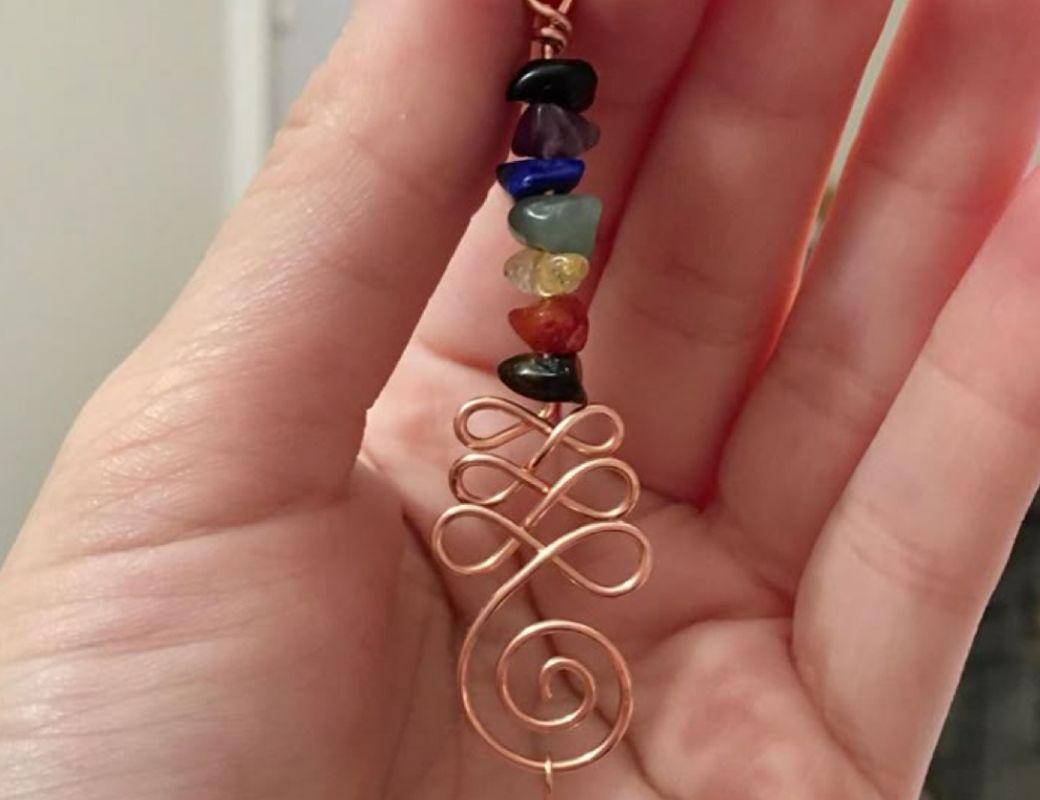
Amulets have accompanied humanity since its very beginnings. Before books, governments, or organized religions, people were already using animal teeth, stones, bones, or engraved symbols for protection and guidance.
Why? Because they sensed something we're rediscovering today: objects can be vessels of energy, intention, and memory. This isn't magic in the fantastical sense, but rather a projection of our meaning onto the world we touch.
Amulets in Ancient Civilizations
Ancient Egypt: Amulets were essential in both life and death. Pregnant women wore Taweret amulets for protection during childbirth, while children carried Bes figures for safeguarding. Symbols like the ankh (symbol of life), the Eye of Horus (protection), and the scarab (emblem of Khepri, rebirth) were crafted from Egyptian faience, stone, metal, bone, wood, or even gold. Phylacteries with protective texts were also used, showing how written intention reinforced their power.
Greece and Rome: Amulets were tied to religion and magic.
Gemstones were associated with gods: milky chalcedony for Jupiter, heliotrope for Sol, red jasper for Mars, green jasper for Ceres, and amethyst for Bacchus. Inscriptions like "utere fexix" (use with fortune) sought to attract good luck. Roman children wore bullas, lunulas, or crepundia, and amulet boxes containing sulfur were used for their protective properties.
Near East: In regions like Palestine, Syria, Mesopotamia, Asia Minor, and Iran, metal amulets (silver, gold, copper, lead) were rolled into containers with rings to be worn around the neck. Engraved with incantations and references to the Tetragrammaton (the name of God), they used Aramaic dialects, Hebrew, and sometimes Greek, showing a fusion of cultures and beliefs.
China, Japan, and Korea: In China, Taoist specialists created fulu calligraphy to protect against evil spirits. In Japan, ofuda and mamorifuda serve similar functions, while in Korea, bujeok are kept in brocade pouches to be carried, integrating Taoist rituals (Wikipedia - Amulet).
Judaism: Due to the prohibition against idols, Jewish amulets emphasized texts and divine names. The Silver Scroll (c. 630 BCE), the Chai necklace, and inscriptions with names of God (He, YaH, Shaddai) on parchment or metal are examples. The Hamsa and Solomon's Seal were also used.
In the Middle Ages, there were debates: Maimonides and Sherira Gaon disapproved of them, while others accepted them. Birth traditions included bands with coins or coral for children during Brit Milah. Christianity: Sacraments, such as the crucifix (used since the fifth century), the Medal of Saint Benedict (approved in 1742), and holy water, require faith and blessing to be effective. Early Egyptian Christians used textual amulets with Gospel fragments, the Lord's Prayer, or Psalm 91 (c. 300–700 CE) in Greek and Coptic.
Islam: Around 10% of the Muslim population uses amulets with Quranic texts, hadiths, or protective names. The Hamsa (Hand of Fatima) protects against the evil eye, and astrological symbols, such as those of the Zodiac, were common in the Middle Ages. Materials like carnelian ('aqiq, Muhammad's stone), jade, and jasper were valued for their protective properties (Metropolitan Museum of Art).
The Power Doesn't Come from Novelty. Many people think only modern things are effective, but symbols that have endured for centuries hold special power. Not because they're ancient, but because they've been tested by generations. When you use a symbol like the Eye of Horus or the Hamsa, you inherit a current of collective energy, a language etched into human consciousness. Tradition as a map.
Each culture created its own codes to make sense of the world: thunder, death, fertility, the hunt… Everything had its amulet. This wasn't ignorance, but intuition. Today, we continue seeking protection, guidance, and clarity.
Ancient symbols aren't obsolete; they're simply waiting for us to awaken them with our intention.
How to Activate Your Amulet or Talisman:
For an amulet or talisman to be effective, you must infuse it with your energy. Here are some practical steps, inspired by ancient and modern traditions (House of Sand):
Cleansing: Use moon water, sea salt, or incense to remove any residual energy.
Charging with Intention: Hold the object and clearly visualize your purpose. You can recite an affirmation or prayer that reflects what you seek.
Consecration: If you follow a specific tradition, perform the corresponding rituals to consecrate it.
Use with Faith: Wear or use the object with confidence. Its power grows with your emotional and spiritual connection.
For example, in Islamic tradition, talismans are purified over three nights with specific prayers.
In modern practices, meditating with the object or exposing it to moonlight can reinforce its energy.
Conclusion: Amulets and talismans are more than objects; they are bridges between the physical and spiritual, activated by our intention and faith. Their history, from Ancient Egypt to contemporary practices, demonstrates their universality and their capacity to connect people with their deepest desires.
By understanding their meaning and using them with purpose, we can transform them into powerful allies in our daily lives.
Responses
No responses yet — start the conversation.