When the Sky Turns Its Pattern
A New Cosmic Compass: What Is Happening and Why It Matters
Article · 15 min read · ·
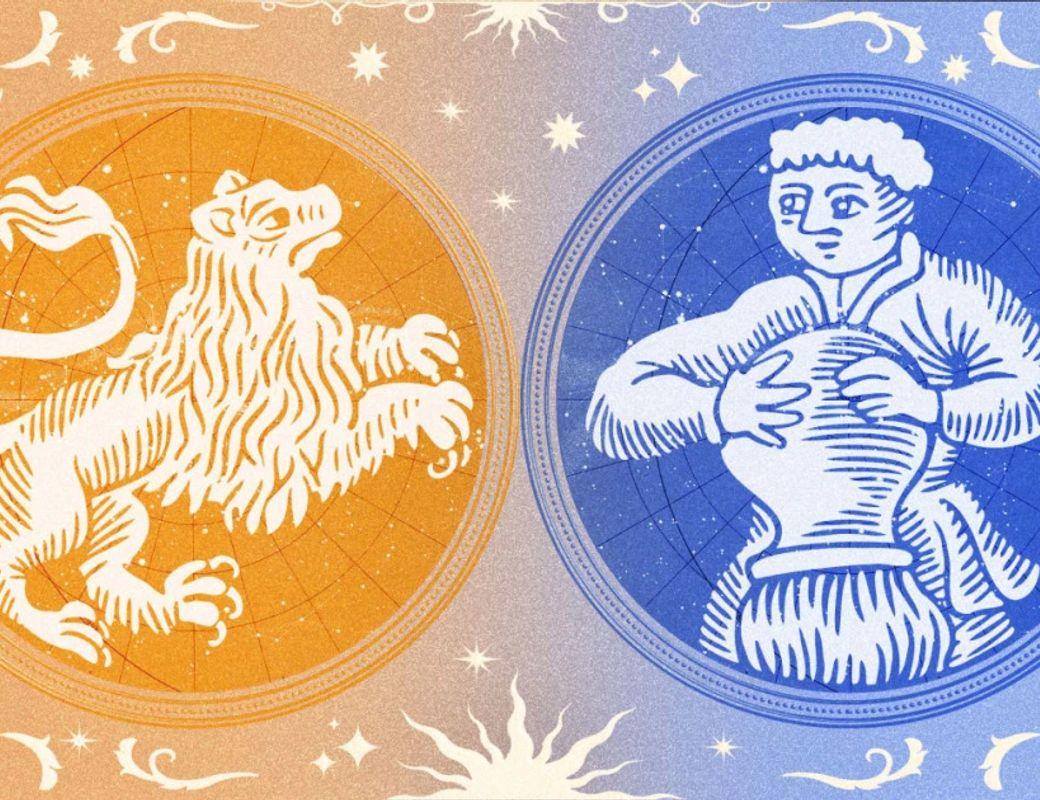
On July 26, 2026, the lunar nodes shift into Aquarius and Leo, marking the beginning of a new chapter in the symbolic cycle of the sky.
The lunar nodes are not physical objects moving through space. They are mathematical intersections formed by the relationship between the Moon’s orbit and the Earth–Sun plane, known as the ecliptic. Astronomically, they mark the two points where the Moon crosses this plane as it moves through its tilted orbit.
In astrology, these same points are read symbolically as a directional axis. They describe movement over time, not through space, pointing toward patterns of development that unfold across generations.
This shift marks a transition in collective focus. The previous Virgo–Pisces cycle emphasized refinement, healing, and the dissolution of old patterns. The incoming Aquarius–Leo cycle shifts attention toward identity, visibility, and the relationship between individual expression and collective evolution.
At the center of this transition is a simple question that will quietly shape the next eighteen months: how do we move from defining meaning through personal recognition, into defining meaning through participation in something larger than ourselves?
To understand why this shift carries weight in both astronomy and astrology, we first need to understand what the lunar nodes actually are, and why they have been treated for centuries as markers of change.
Ghosts in the Sky: The Nodes in Astronomy
The lunar nodes are not bodies in space, but geometric points created by the intersection of two orbital planes.
The Moon’s orbit is tilted about five degrees relative to Earth’s orbit around the Sun. Because of this tilt, the Moon spends part of its cycle above the Earth–Sun plane and part below it. The points where it crosses that plane are the nodes.
The North Node is where the Moon moves upward, crossing from south of the ecliptic to north. The South Node is the opposite crossing, where it moves from north to south. Together, they form a single axis, always directly opposite each other in the zodiac.
These points are also what make eclipses possible. Eclipses occur only when the Sun and Moon align near the nodes, meaning these intersections act as the conditions under which the light of the Sun or Moon is temporarily obscured.
Unlike planets, the nodes move in retrograde motion, slowly shifting backward through the zodiac. One full cycle takes approximately 18.6 years, with each sign axis lasting about 18 months.
In astronomical terms, they are simple geometry. In symbolic traditions, they become something else entirely: markers of threshold, timing, and transition.
Dragons of Fate: The Nodes Across Cultures
Long before astronomers could calculate the movements of celestial bodies, people watched the heavens and searched for patterns in the sky. Among the most mysterious were eclipses, moments when the familiar lights of the Sun or Moon suddenly disappeared. Over centuries of observation, ancient sky-watchers discovered that these events occurred in repeating cycles linked to specific places along the Moon’s path.
The earliest known records of these celestial crossings come from ancient Mesopotamia, where Babylonian astronomers carefully tracked the motions of the Sun and Moon. Their observations revealed that eclipses were not random occurrences but part of a predictable rhythm, laying the foundation for later astronomical traditions throughout the ancient world.
As knowledge of these crossings spread, they became more than astronomical markers. They became symbols.
In the Vedic tradition of India, the lunar nodes are known as Rahu and Ketu, two shadow planets associated with karma, destiny, and eclipses. According to legend, a serpent-demon named Svarbhanu disguised himself among the gods and drank the nectar of immortality. Before he could finish, Vishnu discovered the deception and severed him in two. Because the nectar had already touched him, he could not die. His head became Rahu and his body became Ketu, forever pursuing the Sun and Moon across the heavens. When they catch their prey, an eclipse occurs.
Centuries later, medieval European astrologers envisioned a similar image. They called the nodes Caput Draconis, the Dragon’s Head, and Cauda Draconis, the Dragon’s Tail. Rather than a severed serpent, they imagined a great celestial dragon whose body stretched across the sky, with eclipses occurring near its head and tail.
Though these traditions emerged in different cultures and centuries, they arrived at remarkably similar imagery. Again and again, the nodes were associated with dragons, serpents, and powerful forces that interrupted the ordinary order of the heavens.
Perhaps that is why the lunar nodes continue to hold such fascination today. Invisible to the eye yet responsible for some of the sky’s most dramatic events, they have long been viewed as symbols of transition, marking the places where one cycle ends and another begins.
The Backward Current: How the Nodes Move Through Time
Unlike the planets, the lunar nodes do not travel forward through the zodiac. Instead, they move in retrograde motion, gradually drifting backward through the signs over time.
This reverse movement gives the nodal cycle its distinctive rhythm. While the Sun, Moon, and planets appear to progress through the zodiac in the familiar sequence of Aries, Taurus, Gemini, and beyond, the nodes move in the opposite direction, tracing a slow journey backward through the astrological wheel.
Completing one full revolution takes approximately 18.6 years. As they travel, the nodes spend about eighteen months in each pair of opposing signs, shifting the collective focus from one set of themes to another.
On July 26, 2026, that focus changes once again.
The North Node leaves Pisces and enters Aquarius, while the South Node departs Virgo and enters Leo. Symbolically, the emphasis shifts from a cycle concerned with healing, discernment, service, faith, and surrender into one centered on individuality, community, creativity, innovation, and collective vision.
Every nodal cycle leaves its own imprint on the cultural atmosphere. The signs involved do not dictate events, but they often describe the questions a particular period asks us to explore.
Because the nodes move in repeating cycles, we can look to earlier Aquarius–Leo periods for echoes of the themes now returning.
The most recent occurred between 2017 and 2018, when the North Node traveled through Leo and the South Node moved through Aquarius. That cycle emphasized personal expression, identity, leadership, and the courage to stand out as an individual.
The last time the polarity matched the one we are entering now, with the North Node in Aquarius and the South Node in Leo, was between 2008 and 2009. During that period, many people experienced shifts involving community, social networks, technology, and the relationship between individual ambition and collective responsibility.
History never repeats itself exactly, nor do nodal cycles. Yet they often return to familiar themes, offering new perspectives on questions that were left unresolved or only partially understood the first time around.
For many readers, these dates may serve as useful reference points. What was unfolding in your life during those years? What concerns occupied your attention? What ambitions were beginning to emerge, and what beliefs were beginning to change?
The answers will be different for everyone, but the nodal cycle invites us to recognize that growth rarely unfolds in a straight line. More often, it moves in spirals, bringing us back to familiar territory with new experience, broader perspective, and a different understanding of who we have become.
As the nodes settle into Aquarius and Leo, the collective conversation begins to shift once more. The question is no longer simply how we express ourselves, but how our individual gifts contribute to something larger than the self.
Aquarius and Leo: The Axis of Self and Collective
The Aquarius–Leo axis represents one of the most fundamental tensions in astrology: the relationship between individual identity and collective belonging.
Leo is associated with the Sun, the center of the solar system and the symbol of personal identity. It governs creativity, self-expression, visibility, and the development of a strong sense of “I am.” At its highest expression, Leo is radiant, generous, and creatively alive, offering warmth and originality that naturally draw others in. At its most imbalanced, it can become dependent on attention, validation, or external affirmation to feel secure in its own identity.
Aquarius represents the opposite principle. It is linked to collective intelligence, systems, innovation, and future-oriented thinking. It emphasizes the group, the network, and the shared structure that connects individuals into something larger than themselves. At its highest expression, Aquarius is visionary, collaborative, and oriented toward progress that benefits the wider whole. At its shadow, it can become detached, overly intellectual, or more focused on ideals than lived human connection.
Together, these two signs form a polarity that is not meant to cancel itself out, but to be integrated.
The North Node in Aquarius shifts collective attention toward cooperation, shared vision, and participation in broader systems of change. It encourages stepping outside purely individual frameworks and recognizing the value of contribution to something beyond personal recognition.
The South Node in Leo highlights what is being released or rebalanced. It brings awareness to patterns around performance, identity, and the need to be seen in a particular way. This does not mean creativity or individuality are diminished. Rather, they are being asked to evolve beyond self-referential expression into something more connected and relational.
This is not a rejection of the self. It is a reorientation of the self within a wider field.
In practical terms, this axis asks a quiet but persistent question: what happens when personal brilliance is no longer the end goal, but becomes part of a shared creative ecosystem?
The invitation of this transit is not to step out of individuality, but to step beyond isolation. Leo’s light is not being dimmed. It is being redistributed, so that it can exist in dialogue with something larger, more complex, and more collective than the individual alone.
As the nodal axis moves through Aquarius and Leo from 2026 into 2028, this tension between self-expression and collective participation becomes one of the defining themes of the period.
The Eclipses of 2026–2027
The lunar nodes do not remain abstract. Their movement becomes visible through eclipses, which occur when the Sun and Moon align near the nodal axis.
As the North Node enters Aquarius and the South Node enters Leo on July 26, 2026, the first eclipses of this new cycle arrive shortly after, activating the shift in a direct and unmistakable way.
On August 12, 2026, a total solar eclipse in Leo occurs near the South Node. Solar eclipses in Leo tend to emphasize themes of identity, visibility, creative direction, and personal narrative. Because this eclipse aligns closely with the South Node, it carries a strong undertone of release. Patterns connected to self-expression, recognition, and the need to be seen in a particular way may reach a turning point, opening space for a more grounded and authentic relationship with the self.
Just two weeks later, on August 27, 2026, a deep partial lunar eclipse in Aquarius occurs near the North Node. Lunar eclipses in Aquarius tend to illuminate collective dynamics, social structures, and the relationship between individuality and community. With the North Node active, this eclipse emphasizes growth, awareness, and a directional shift toward broader systems of connection, collaboration, and shared purpose.
Together, these two eclipses form the first activation of the Aquarius–Leo axis in this nodal cycle. They operate as a paired threshold: one highlighting what is ready to be released from older patterns of identity and performance, and the other revealing what is emerging in relation to collective participation and future-oriented vision.
These eclipses mark the opening of the Aquarius–Leo nodal period, establishing the tone of the cycle as it begins to unfold through the coming years.
How This Transit May Affect Your Sign
While the nodal shift influences the collective, each of us experiences it through a different area of life. The following interpretations are written for your Sun sign, though you may find them even more accurate if read for your Rising sign.
Aries
The Aquarius North Node highlights friendships, communities, and long-term aspirations. Over the coming months, you may find yourself drawn toward new groups, collaborations, or causes that broaden your perspective. The South Node in Leo encourages releasing the need for every creative endeavor to revolve around personal recognition. Your gifts grow stronger when shared.
Taurus
This cycle emphasizes career, purpose, and public contribution. Opportunities may arise to redefine your role in the world or align your ambitions with a larger vision. The South Node in Leo asks you to examine old attachments to family expectations, comfort zones, or identities rooted in the past. Growth comes through looking forward.
Gemini
The North Node in Aquarius encourages learning, exploration, and expanding your worldview. New educational pursuits, spiritual studies, or experiences that challenge familiar beliefs may become increasingly important. The South Node in Leo invites you to release the need to always have the last word and remain open to perspectives beyond your own.
Cancer
This transit brings focus to transformation, trust, and shared resources. Themes involving intimacy, vulnerability, and mutual support may take center stage. The South Node in Leo asks you to reconsider where self-worth has become overly tied to possessions, income, or external measures of success.
Leo
With the South Node moving through your sign, this is one of the most significant personal cycles you have experienced in years. You are being invited to release outdated identities, roles, and expectations that no longer reflect who you are becoming. Meanwhile, the North Node in Aquarius highlights relationships, partnerships, and the lessons that emerge through meaningful connection with others.
Virgo
The Aquarius North Node encourages greater attention to health, daily routines, and purposeful service. Small adjustments made now can have lasting effects over time. The South Node in Leo highlights hidden patterns, subconscious habits, or old narratives that may be ready for release. Sometimes growth begins behind the scenes.
Libra
This cycle activates creativity, joy, romance, and authentic self-expression. The North Node encourages you to take your talents seriously and share them more freely. The South Node in Leo may bring changes within friendships or social circles, helping you distinguish genuine connection from the need for approval.
Scorpio
Home, family, roots, and emotional foundations come into focus. The North Node in Aquarius encourages building stability from the inside out. The South Node in Leo may prompt shifts in career direction or public identity, asking you to redefine success according to your own values rather than external expectations.
Sagittarius
The coming months highlight communication, writing, learning, and local connections. New ideas, conversations, and opportunities for sharing knowledge may emerge. The South Node in Leo encourages releasing rigid beliefs or the need to always appear certain. Curiosity becomes more valuable than certainty.
Capricorn
Questions of value, resources, and self-worth take center stage. The North Node in Aquarius encourages developing a stronger sense of personal security based on your own principles and priorities. The South Node in Leo may reveal where old power dynamics, obligations, or entanglements have outlived their purpose.
Aquarius
With the North Node entering your sign, this cycle places significant emphasis on your personal growth and future direction. You may feel called to step more fully into your individuality, vision, and authentic path. At the same time, the South Node in Leo asks you to release relationship patterns that limit growth or keep you tied to outdated versions of yourself.
Pisces
The North Node in Aquarius turns attention inward, encouraging reflection, healing, and spiritual development. This can be a deeply restorative period when intuition and inner wisdom become valuable guides. The South Node in Leo invites you to simplify routines and let go of habits that drain your energy without supporting your well-being.
The Dragon’s Gift
For thousands of years, human beings have looked toward the sky and searched for meaning in its patterns. Ancient astronomers tracked the movements of the Sun and Moon with extraordinary care. Storytellers imagined celestial dragons and immortal serpents. Astrologers saw in these crossings a symbolic map of growth, change, and becoming.
Today, we understand the lunar nodes as astronomical intersections, yet their symbolism continues to resonate because they describe something deeply human: the tension between where we have been and where we are being called to go.
As the North Node enters Aquarius and the South Node enters Leo on July 26, 2026, a new chapter begins. Over the next eighteen months, the collective emphasis gradually shifts away from familiar patterns of recognition, performance, and personal validation toward community, innovation, collaboration, and shared vision.
This does not mean abandoning individuality. The lesson of the Aquarius–Leo axis is not that one matters more than the other. Leo reminds us that every person carries a unique spark, a creative voice that cannot be replicated. Aquarius reminds us that those sparks shine brightest when they become part of something larger than themselves.
The total solar eclipse in Leo on August 12 and the deep partial lunar eclipse in Aquarius on August 27 offer the first glimpse of this unfolding story. Together, they open a doorway into a cycle that asks us to examine how we define ourselves, how we connect with others, and how our gifts can contribute to the future we hope to build.
Perhaps that is why the dragon remains such a powerful symbol for the nodal cycle. In myth, dragons guard treasures, thresholds, and places of transformation. They mark the boundary between what was and what may yet become.
The lunar nodes occupy a similar space in the sky. They are not planets or stars, but crossing points, places where paths intersect and directions change.
And so, as the dragon shifts from Leo into Aquarius, we find ourselves standing at one of those crossings.
The question is not whether change is coming. It is already underway.
The question is what we choose to carry forward, and what we are finally ready to leave behind.
Responses
No responses yet — start the conversation.