When the Moon Goes Dark
Lunar Deities and the Myths Behind the Eclipse
Article · 27 min read · ·
Author’s Note
The Moon has always been more than a light in the night sky. Across civilizations, it has been a storyteller, a guide, and a symbol of the endless cycles that shape our world. A lunar eclipse reminds us that even something as constant and familiar as the Moon can enter a moment of darkness and still return.
The myths surrounding lunar eclipses reflect humanity’s earliest attempts to understand the mysteries of the heavens. Long before modern astronomy explained the movements of the Earth, Moon, and Sun, ancient peoples created stories that gave meaning to what they witnessed above them. These tales of gods, monsters, battles, sacrifice, and cosmic struggles were not simply explanations for a natural event — they were expressions of the fears, hopes, beliefs, and values of the societies that created them.
As we explore these stories today, it is important to remember that we are viewing them through a modern lens. Some of the myths contain themes that may feel unfamiliar, difficult, or even troubling to contemporary audiences, including violence, conflict, and ideas about power and sacrifice. However, these elements should be understood within the historical and cultural contexts in which they developed. Ancient myths were not created with modern values in mind; they were attempts by people of their time to explain existence, nature, and humanity’s place within the cosmos.
The purpose of exploring these traditions is not to judge the beliefs of ancient cultures, but to understand the powerful ways they used storytelling to make sense of the world around them. The Moon’s disappearance during an eclipse became a canvas upon which civilizations painted stories of struggle, transformation, renewal, and hope.
Today, astronomy allows us to understand the science behind a lunar eclipse, but mythology allows us to understand something equally important: the human need to find meaning in the universe. When we look at the Moon passing through shadow, we are witnessing not only a celestial event, but a moment that has connected generations of people across time.
The Moon has disappeared countless times throughout history, and every time, it has returned. Perhaps that is why it has remained one of humanity’s greatest symbols of resilience, transformation, and the promise that light always follows darkness.
— Author
Exploring the gods and goddesses who have watched over the Moon’s mysteries, cycles, and celestial transformations across ancient cultures
Throughout human history, few celestial events have inspired as much wonder and uncertainty as the moment when the Moon disappears into shadow. A lunar eclipse transforms one of the night sky’s most familiar sights into something mysterious and extraordinary, as the bright face of the Moon slowly darkens before emerging once again. Today, we understand this phenomenon through astronomy, but for ancient civilizations, the eclipse was a powerful encounter with the unknown.
The Moon has always been more than a distant object in the sky. Its phases guided calendars, influenced agricultural traditions, marked religious festivals, and shaped the rhythms of daily life. The waxing and waning Moon became a symbol of endless cycles, reflecting themes of birth, death, renewal, and transformation. When the Moon vanished during an eclipse, many cultures saw it as a moment when the natural order of the heavens was disrupted.
Across the world, civilizations created stories to explain the Moon’s mysteries and honored divine beings who embodied its power. Lunar gods and goddesses watched over the night sky, governed the passage of time, protected travelers, inspired prophecy, and represented the hidden forces of creation and change. Some were gentle guardians of illumination, while others represented the darker, more mysterious aspects of the Moon’s influence.
From the silver chariot of Selene crossing the Greek night sky to the immortal Chang’e dwelling upon the Moon in Chinese mythology, lunar deities became reflections of humanity’s relationship with the cosmos. In Mesopotamia, Egypt, Japan, Polynesia, and countless other cultures, the Moon was given a divine presence, becoming a bridge between the earthly world and the mysteries of the heavens.
A lunar eclipse was therefore not simply the absence of light. It was a sacred moment, a celestial drama that invited questions about fate, transformation, and the relationship between humanity and the universe. The shadow that crossed the Moon inspired legends of battles between gods and monsters, journeys into darkness, and the eternal promise of return.
As we explore the lunar deities who have shaped mythology across civilizations, we uncover a shared human fascination with the Moon’s ability to disappear and return, reminding us that even in darkness, transformation can lead to renewal.
The Ancient Fear and Wonder of Lunar Eclipses
Before science explained the movements of the Earth, Moon, and Sun, a lunar eclipse was one of the most mysterious events humans could witness. The familiar glow of the full Moon would slowly fade, sometimes taking on a deep red hue, creating the impression that something powerful had entered the heavens. For ancient observers, this was not merely a change in the sky, but a moment when the boundary between the ordinary and the supernatural seemed to grow thin.
Many cultures interpreted lunar eclipses as struggles taking place among divine forces. The sudden disappearance of the Moon could represent a celestial battle, a powerful being consuming the Moon, or a temporary disruption in the balance of the universe. These stories reflected a common human desire to understand unexpected events and place them within a larger cosmic story.
In Mesopotamia, eclipses were viewed as serious omens connected to the fate of kings and kingdoms. Because the Moon was associated with the powerful god Sin, its darkening could be interpreted as a warning from the divine realm. Ancient scholars carefully observed the skies, recording eclipses and developing methods of prediction, while also performing rituals intended to protect society from possible misfortune.
In ancient China, one of the most enduring eclipse legends described a celestial creature, often imagined as a dragon, swallowing the Moon. Communities would make noise with drums, bells, and other instruments to frighten the creature away and restore the Moon’s light. Although these traditions were rooted in mythology, they also reflected the deep importance of the Moon in Chinese calendars and seasonal cycles.
Across many Indigenous cultures, lunar eclipses carried meanings connected with transformation, renewal, and spiritual change. Some traditions viewed the darkened Moon as a time of reflection, while others understood it as a powerful moment when hidden forces became visible. The eclipse was not always feared; in many societies, it was respected as a reminder of the greater cycles governing life on Earth.
The mystery surrounding eclipses reveals something universal about humanity’s relationship with the sky. Before telescopes and modern astronomy, the heavens were not viewed as distant and separate from human existence. The movements of the Sun, Moon, and stars were woven into stories, rituals, and beliefs that helped civilizations understand their place within the cosmos.
The lunar eclipse became a moment when the Moon’s divine nature was revealed most dramatically. As the familiar light disappeared and then returned, ancient peoples saw a powerful symbol of struggle, transformation, and rebirth, themes that would continue to shape the mythology of lunar deities for thousands of years.
The Moon’s Death and Rebirth: Why Eclipses Became Sacred Symbols
Throughout history, the Moon’s disappearance during an eclipse was often understood as more than a celestial event. To ancient civilizations, the darkening of the Moon represented a moment when the natural order of the universe was interrupted. A source of light vanished into shadow, only to return again, creating a powerful symbol of death, transformation, and rebirth.
The Moon was uniquely suited to represent these ideas because it was already a symbol of constant change. Unlike the fixed stars, the Moon appeared to live through a repeating cycle of growth, fullness, decline, and renewal. Each month, it seemed to be born as a thin crescent, mature into a brilliant full Moon, fade away into darkness, and then begin its journey again. This pattern reflected the cycles observed throughout nature: the changing seasons, the growth of plants, and the stages of human life.
A lunar eclipse intensified this symbolism. For a brief moment, the Moon’s familiar light disappeared, creating the impression that it had entered another realm or faced a powerful force beyond human control. The return of the Moon after the eclipse became a reminder that darkness was temporary and that renewal could follow even the greatest periods of uncertainty.
Many lunar deities reflected this same cycle. They were not simply rulers of the night sky, but divine representations of transformation itself. Some embodied healing and restoration, others represented death and rebirth, while others carried the mystery of moving between different states of existence. Their stories helped ancient peoples understand that endings were not always final, but could be part of a larger cosmic rhythm.
This connection between the Moon and rebirth appears across cultures. The Egyptians saw lunar cycles as connected to renewal and restoration through figures such as Khonsu. The Maya associated the Moon with fertility, healing, and the continuation of life through Ix Chel. In Polynesian traditions, figures such as Hina represented transformation and the changing nature of existence. These myths reveal a shared human understanding: the Moon’s return after darkness was a promise that cycles continue.
A lunar eclipse, therefore, became a powerful metaphor for the human experience. It represented moments when life enters shadow, when the familiar disappears, and when transformation becomes possible. The Moon’s return was not simply the restoration of light, but a reminder that change itself is part of the eternal rhythm of the universe.
Khonsu: The Egyptian Moon God of Renewal and Healing
Among the lunar deities of the ancient world, Khonsu stands out as a god whose journey across the night sky reflected the Moon’s enduring cycle of disappearance and return. Worshiped throughout ancient Egypt, Khonsu was associated with the passage of time, healing, protection, and the renewing power of the Moon. His very name is often translated as “the Traveler,” a fitting title for the deity who crossed the heavens each night.
Khonsu was the son of Amun and Mut and formed the famous Theban Triad with his divine parents. Although often depicted as a youthful god wearing the sidelock of youth and crowned with the full Moon and lunar crescent, he possessed immense power. The Egyptians believed his movement through the heavens measured the months and seasons, making him an important guardian of both sacred and everyday time.
The Moon’s changing phases were seen as expressions of Khonsu’s divine cycle. As the Moon waxed, it symbolized growth, vitality, and increasing strength. As it waned, it represented rest, reflection, and preparation for renewal. Rather than viewing these changes as signs of weakness, the Egyptians understood them as necessary stages in the natural order established by the gods.
A lunar eclipse would have been especially significant because it interrupted this familiar rhythm. Although surviving Egyptian texts do not describe a single, unified eclipse myth involving Khonsu, the temporary darkening of the Moon could be understood within the broader Egyptian belief that order, known as ma’at, was constantly challenged by the forces of chaos. Just as the Sun god Ra faced the serpent Apophis during his nightly journey through the underworld, the Moon’s disappearance could be seen as a moment when cosmic balance was tested before harmony was restored.
Khonsu’s role as a healer also reinforced the symbolism of the eclipse. Temples dedicated to him attracted those seeking relief from illness, protection from harmful spirits, and divine guidance. His association with restoration reflected the comforting belief that darkness and suffering were temporary, and that health, balance, and light would return.
For the ancient Egyptians, Khonsu’s nightly journey reminded them that every period of darkness was followed by renewal. During a lunar eclipse, when the Moon briefly vanished into Earth’s shadow before shining once more, that lesson became even more profound. The eclipse served as a visible reminder that even when light seems lost, it is never gone forever. Like Khonsu himself, it returns, bringing with it the promise of healing, renewal, and the continuation of the cosmic order.
Nanna, Also Known as Sin: The Mesopotamian Moon God Who Traveled Through Darkness
Long before the rise of the great empires of Greece and Rome, the people of ancient Mesopotamia looked to the Moon as one of the most powerful forces in the heavens. They worshiped the lunar deity Nanna, known later in Akkadian tradition as Sin, whose steady journey across the night sky brought order to the passage of time and connected the human world with the divine.
Nanna was one of the most important gods in the Sumerian pantheon and was revered in the great temple cities of Ur and Harran. As the father of the sun god Utu and the goddess Inanna, he occupied a central place in Mesopotamian cosmology. His monthly cycle governed the calendar, agricultural activities, religious festivals, and the timing of sacred rituals, making the Moon an essential guide for both everyday life and royal authority.
Unlike many later lunar traditions that emphasized beauty or romance, Nanna’s mythology centered on wisdom, divine judgment, and cosmic order. His regular waxing and waning demonstrated that the universe followed predictable patterns established by the gods. Even as the Moon disappeared at the end of each lunar month, its return reassured people that the divine order remained intact.
Lunar eclipses, however, were viewed very differently. Mesopotamian astronomer-priests carefully recorded eclipses because they believed these events could signal danger for the king or the kingdom. Since the Moon represented the authority of Nanna, its sudden darkening was often interpreted as a warning that the balance between the heavens and Earth had been disturbed.
To protect the kingdom, elaborate rituals were sometimes performed during particularly ominous eclipses. In certain periods, rulers even appointed a temporary substitute king who would symbolically absorb any misfortune foretold by the eclipse. After the danger had passed, the rightful king resumed the throne, reflecting the belief that the cosmic order had been restored. These ceremonies reveal just how seriously the ancient Mesopotamians regarded the Moon’s temporary descent into darkness.
Despite the fear surrounding eclipses, the return of the Moon carried an equally important message. Nanna’s reappearance in the night sky affirmed that even moments of uncertainty were part of a greater divine rhythm. His journey through darkness was never permanent, but another stage in an eternal cycle of disappearance and return.
For the people of Mesopotamia, the Moon was not defeated by the eclipse. Like Nanna himself, it emerged once more from the shadows, reaffirming that order could overcome chaos and that every ending carried the promise of a new beginning.
Hina: The Polynesian Moon Goddess of Transformation
Across the islands of Polynesia, the Moon is illuminated by the stories of Hina, one of the region’s most beloved and enduring divine figures. Rather than appearing in a single, unified mythology, Hina takes many forms across Hawaiʻi, Tahiti, Samoa, Aotearoa (New Zealand), and other Pacific cultures. Though her stories differ from island to island, they are united by themes of transformation, renewal, wisdom, and the ever-changing rhythms of life.
In many traditions, Hina grows weary of the hardships of the earthly world and journeys to the Moon, where she finds peace and immortality. Some legends tell of her climbing a rainbow or a great vine into the heavens, while others describe her escaping an unhappy life to begin a new existence among the stars. From her home upon the Moon, Hina becomes a guardian whose presence is reflected in its changing light.
The Moon’s constant cycle of waxing, waning, disappearance, and return mirrored Hina’s own story of transformation. Rather than seeing change as something to fear, Polynesian traditions often embraced it as a natural part of existence. Life, like the Moon, moved through seasons of growth, decline, rest, and renewal. Hina’s journey reminded people that endings often lead to new beginnings and that renewal follows even the darkest moments.
The Moon also played an essential role in everyday Polynesian life. Its phases guided fishing, navigation across the vast Pacific Ocean, planting, harvesting, and ceremonial observances. Because survival depended on understanding the rhythms of nature, the Moon was viewed not simply as a celestial object but as a trusted companion whose cycles reflected the balance of the natural world. Hina’s presence reinforced this intimate relationship between humanity and the heavens.
Although there are few traditions that directly connect Hina with lunar eclipses, her mythology naturally complements the symbolism of these rare events. An eclipse temporarily hides the Moon before allowing it to shine once again, echoing Hina’s own themes of departure, transformation, and return. The brief darkness becomes part of a larger cycle rather than a permanent loss.
For those who honored Hina, the Moon was a reminder that life is never static. Every ending gives way to another beginning, every shadow eventually yields to light, and every transformation carries the possibility of renewal. During a lunar eclipse, that enduring lesson becomes visible in the sky itself, as the Moon emerges from darkness unchanged in its essence, yet forever reminding us that change is woven into the fabric of the universe.
Ix Chel: The Maya Moon Goddess of Cycles and Rebirth
Among the ancient Maya, the Moon was closely associated with the goddess Ix Chel, one of the most revered female deities in Mesoamerican religion. She embodied the rhythms of life that mirrored the Moon’s changing phases, including birth, fertility, healing, aging, death, and renewal. Like the Moon itself, Ix Chel represented the idea that life moves in cycles rather than straight lines.
Ix Chel was honored as a goddess of medicine, midwifery, weaving, rain, and prophecy. Women often called upon her for protection during pregnancy and childbirth, while healers sought her blessings in matters of health and restoration. These roles made her a powerful symbol of creation and regeneration, reflecting the Moon’s influence over both the natural world and human life.
Maya artists sometimes portrayed Ix Chel as a youthful maiden, representing fertility and new beginnings, while other depictions show her as an aged wise woman pouring water from a vessel. Rather than portraying two separate deities, many scholars interpret these images as different aspects of the same goddess, illustrating the continuous cycle of youth, maturity, wisdom, and renewal. Like the waxing and waning Moon, Ix Chel was never fixed in a single form.
Although surviving Maya texts offer few direct accounts of lunar eclipses involving Ix Chel, eclipses were carefully observed by Maya astronomers and priests. Their advanced understanding of celestial movements allowed them to predict many astronomical events, yet these events also carried deep religious significance. A lunar eclipse may have been viewed as a powerful interruption in the Moon’s normal cycle, a moment that invited ritual, reflection, and reverence for the cosmic forces governing the heavens.
The symbolism of Ix Chel naturally complements the meaning of a lunar eclipse. As the Moon slips into Earth’s shadow and later reemerges, it echoes the goddess’s connection to life’s continual pattern of endings and beginnings. Darkness is not the conclusion of the story but a necessary passage within a greater cycle of transformation.
For the Maya, the heavens reflected the rhythms of life on Earth. Through Ix Chel, the Moon became a reminder that change is inevitable, wisdom grows through experience, and renewal follows every season of decline. A lunar eclipse made those truths visible, transforming a fleeting astronomical event into a profound expression of the eternal cycles that govern both the cosmos and the human spirit.
Coyolxauhqui: The Aztec Moon Goddess of Cosmic Conflict
Among the Aztecs, the Moon was associated with one of the most dramatic and powerful myths in Mesoamerican religion. Coyolxauhqui, whose name means “She of the Golden Bells,” was the daughter of the earth goddess Coatlicue and the sister of the sun god Huitzilopochtli. Unlike many lunar deities who embodied healing or renewal, Coyolxauhqui’s story is one of rebellion, sacrifice, and the eternal struggle between light and darkness.
According to Aztec tradition, Coatlicue miraculously became pregnant after placing a ball of feathers inside her clothing. Believing their mother had been dishonored, Coyolxauhqui and her four hundred brothers, the Centzon Huitznahua, conspired to kill her. Before they could carry out their plan, Huitzilopochtli was born fully grown and armed for battle. He defeated his siblings, dismembered Coyolxauhqui, and cast her body down the mountainside.
Rather than disappearing from the cosmos, Coyolxauhqui became part of it. Many scholars interpret her dismembered body as representing the Moon, while Huitzilopochtli became the rising Sun that triumphs over darkness each day. Their myth explains the daily and nightly struggle between the Sun and the Moon, illustrating the Aztec belief that the universe was sustained through continual cycles of conflict and renewal.
Although the Aztecs left no single myth describing a lunar eclipse as Coyolxauhqui’s death or rebirth, an eclipse would have fit naturally within this worldview. The temporary darkening of the Moon could be understood as another moment in the ongoing cosmic struggle between celestial powers, when the balance of the heavens appeared uncertain before order was restored.
Coyolxauhqui’s story differs from many other lunar deities in this article because it emphasizes that transformation often comes through struggle. Her defeat did not erase her presence from the heavens. Instead, it ensured that she remained part of the cosmic order, forever participating in the great rhythm of day and night, light and shadow.
During a lunar eclipse, the Moon once again appears to enter a period of defeat before emerging into the light. Whether interpreted as a reminder of cosmic conflict or the resilience of great so let’s do that section the heavens, Coyolxauhqui’s myth reflects one of humanity’s oldest beliefs: that darkness is never the final chapter, but part of an eternal cycle that gives meaning to the return of light.
The Moon Devoured by Darkness: Eclipse Myths of Cosmic Battles and Celestial Monsters
Across the world, one of the oldest and most powerful explanations for a lunar eclipse was the belief that the Moon was being attacked. Before astronomy revealed the movements of the Earth, Moon, and Sun, people looked into the night sky and saw the disappearance of lunar light as a dramatic struggle between cosmic forces.
The Moon was not simply hidden — it was hunted, swallowed, wounded, or challenged by beings from the darkness. Wolves chased it through the heavens, demons attempted to consume it, dragons reached upward to devour it, and supernatural creatures were blamed for temporarily stealing its glow.
Yet these myths share a remarkable pattern: the Moon is threatened, but never truly destroyed. Darkness arrives, the cosmic struggle reaches its peak, and then the Moon returns. The eclipse becomes not a story of defeat, but a story of endurance, transformation, and renewal.
The Wolves That Hunt the Moon
Among the most famous eclipse traditions are the stories of wolves pursuing the Moon across the heavens. In Norse mythology, the Moon was personified as Máni, a divine figure who guided the Moon’s journey through the night sky.
Máni was never allowed to travel peacefully. He was relentlessly pursued by the wolf Hati Hróðvitnisson, a monstrous creature whose purpose was to capture and consume him. The chase continued endlessly, creating a cosmic struggle between the light of the Moon and the darkness that sought to overcome it.
The Norse believed that this pursuit would continue until Ragnarök, the final battle that would bring the old world to an end. During that great cosmic event, Hati would finally catch Máni and swallow the Moon, plunging the heavens into darkness.
But even this destruction carried the promise of renewal. Ragnarök was not only an ending but also a transformation, after which a new world would rise. The Moon’s fate reflected one of the central ideas found throughout eclipse mythology: darkness may arrive, but it is never the final state of existence.
The image of wolves reaching toward the Moon also continued in later folklore and storytelling. Wolves became symbols of wild forces that existed beyond human control — creatures powerful enough to cross the boundary between Earth and sky. When the Moon disappeared during an eclipse, people could imagine that the celestial hunter had finally reached its prey.
The Vârcolac: The Romanian Creature That Devours the Moon
In Romanian folklore, lunar eclipses were sometimes connected with the vârcolac, a mysterious supernatural being believed to attack and consume the Moon. Traditions surrounding the vârcolac varied by region, with some describing it as a wolf-like creature, others as a monstrous spirit, and some connecting it with werewolf-like beings.
When the Moon darkened during an eclipse, some believed the vârcolac had climbed into the heavens and begun devouring the Moon’s light. The shadow covering the lunar surface became evidence of a battle between a creature of darkness and the celestial order.
As the eclipse ended and the Moon emerged again, the creature was believed to have been defeated or forced to release its hold. The return of the Moon’s light represented the restoration of balance and the victory of cosmic order over chaos.
The vârcolac tradition connects closely with other eclipse myths around the world. Like the Norse wolf Hati chasing Máni, the vârcolac represents the fear that a powerful being could reach the heavens and overcome the Moon. But, like all of these stories, the creature’s victory is temporary. The Moon always escapes.
Rahu and the Endless Hunger for the Moon
In Hindu traditions, the eclipse is explained through the story of Rahu, a shadow being whose endless hunger creates a recurring battle with the Moon god Chandra.
According to the myth, during the churning of the cosmic ocean, gods and demons worked together to obtain the nectar of immortality. The demon Rahu disguised himself and managed to drink some of the sacred nectar before being discovered. The god Vishnu struck him down, separating his head from his body, but immortality had already been granted.
Rahu’s immortal head became a powerful celestial force filled with anger and desire for revenge. From that moment onward, Rahu was said to chase and swallow Chandra, causing the Moon to disappear during eclipses.
However, Rahu could never hold the Moon forever. Because he existed only as a head without a body, Chandra eventually escaped and returned to the sky. The eclipse became a visible reminder of a cosmic struggle that could never permanently end.
Dragons and Creatures That Consume the Moon
The belief that a great creature could swallow the Moon appears in many traditions around the world. In Chinese folklore, eclipses were sometimes explained as moments when a celestial dragon attacked and consumed the Moon.
Communities would create loud sounds with drums, bells, and other instruments in an attempt to frighten the creature away and restore harmony to the heavens. These actions reflected the belief that humans could participate in restoring balance when the cosmic order was threatened.
Similar stories appear across cultures where serpents, jaguars, demons, and other supernatural beings were blamed for the Moon’s disappearance. Although the creatures changed from one tradition to another, the meaning remained the same: a force of darkness had temporarily overcome the light.
The Moon Always Returns
The most powerful element shared by these eclipse myths is that the Moon is never permanently lost.
The wolf cannot hold it forever. The vârcolac cannot consume it completely. Rahu cannot keep it hidden. The dragon cannot erase it from the heavens.
The Moon always returns.
This recurring pattern reflects a deep human understanding of the universe. Darkness and light exist together. Loss can lead to renewal. Endings can become beginnings. The lunar eclipse became a symbol of transformation because it showed humanity something profound: even the greatest darkness is temporary.
For ancient peoples watching the Moon disappear and return, the eclipse was not merely an astronomical event. It was a moment when the hidden drama of the cosmos became visible — a struggle between destruction and rebirth, shadow and illumination, chaos and order.
The Moon was not defeated by darkness. It passed through darkness, only to emerge again.
So you don’t want to write a concluding sectionThe Eternal Return: Why the Eclipse Became a Symbol of Transformation
Across civilizations separated by oceans, languages, and thousands of years, humanity has looked toward the Moon and recognized the same powerful pattern: disappearance followed by return. The lunar eclipse became one of the clearest expressions of this ancient idea — that darkness is not an ending, but a passage through transformation.
The stories of lunar deities reveal how deeply people connected the Moon’s cycles with the rhythms of life itself. Khonsu’s journey through the night sky reflected renewal and healing. Nanna and Sin represented the Moon’s movement through darkness while maintaining cosmic order. Hina embodied transformation and the changing nature of existence. Ix Chel reflected the cycles of birth, aging, wisdom, and rebirth. Coyolxauhqui showed that even destruction could become part of a greater celestial story.
Beyond the deities themselves, eclipse myths revealed humanity’s fascination with forces that could challenge the Moon’s light. Wolves pursued it across the heavens. The vârcolac attempted to consume it. Rahu swallowed it in an endless act of revenge. Dragons and other celestial creatures threatened to extinguish it. These stories transformed a natural phenomenon into a cosmic drama where light and darkness were constantly in balance.
What makes these myths remarkable is that they rarely focus on the Moon’s defeat. The darkness always passes. The creature always releases its hold. The Moon always returns.
This return gave the eclipse a meaning far beyond astronomy. It became a symbol of resilience, reminding people that periods of uncertainty, loss, and darkness are part of larger cycles. Just as the Moon disappears and reappears, life itself moves through seasons of change, endings, and renewal.
Modern astronomy explains the mechanics of a lunar eclipse, revealing the precise movement of Earth’s shadow across the Moon. Yet understanding the science does not erase the wonder that inspired these ancient stories. Instead, it allows us to appreciate both the physical beauty of the eclipse and the imagination it has awakened throughout human history.
When the Moon goes dark, humanity still looks upward with the same sense of wonder our ancestors felt. The shadow passes, the light returns, and the oldest lesson of the Moon remains unchanged: transformation is not the end of the story. It is part of the eternal cycle.
Conclusion: When the Moon Returns From Darkness
For thousands of years, the Moon has been a mirror for humanity’s deepest questions. Its disappearance during an eclipse inspired stories of gods, monsters, battles, and cosmic struggles — but beneath all of these myths was a shared understanding that darkness was never the end.
From the wolf chasing Máni through the Norse heavens, to Rahu’s endless pursuit of Chandra, to the vârcolac and the countless creatures believed to consume the Moon, cultures around the world imagined the eclipse as a moment when the universe itself was tested. The Moon entered shadow, but it always returned.
The lunar deities who watched over these cycles represented more than the object shining in the night sky. They embodied renewal after loss, transformation after change, and the belief that every ending exists within a larger cycle. Whether through the healing journey of Khonsu, the wisdom of Nanna, the transformations of Hina and Ix Chel, or the cosmic struggle of Coyolxauhqui, the Moon became a symbol of endurance.
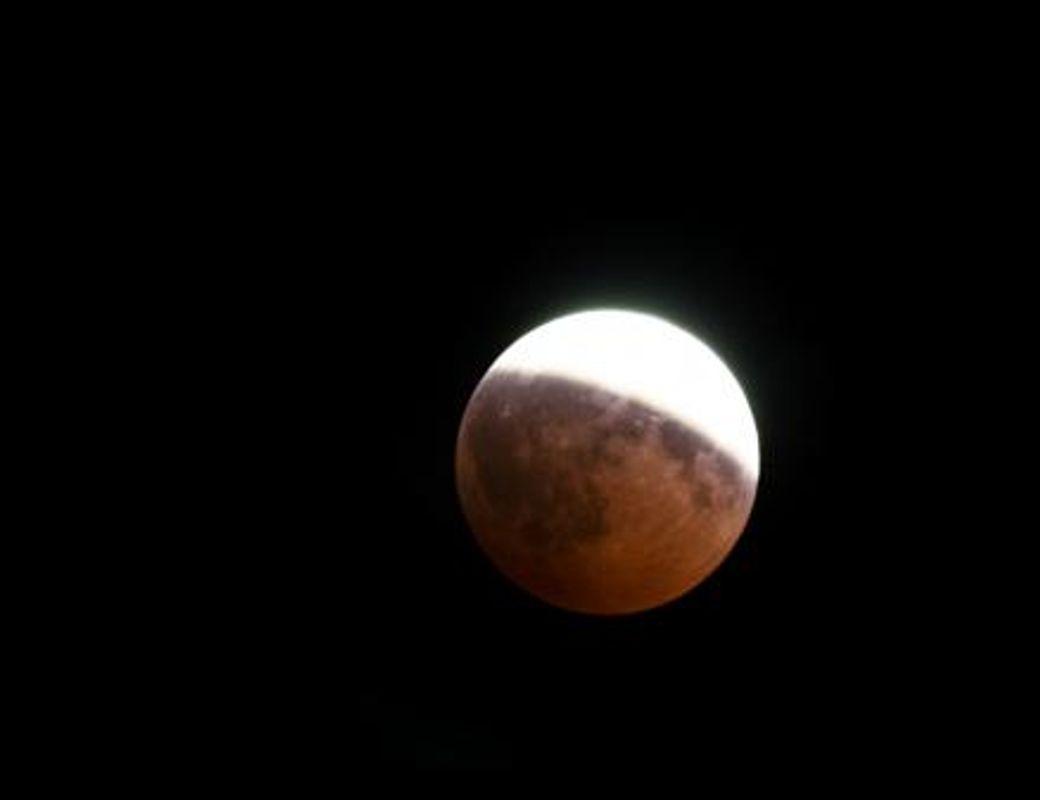
Today, we understand the science behind a lunar eclipse — the Earth passing between the Sun and the Moon, casting its shadow across the lunar surface. Yet the wonder remains. The same event that once inspired ancient myths still causes people around the world to stop, look upward, and feel connected to something larger than themselves.
When the Moon goes dark, it does not disappear forever. It passes through shadow and emerges again, carrying with it one of the oldest messages written across the heavens:
Darkness is temporary. Transformation is inevitable. And the light always returns.