What the Post-Eclipse Full Moon Is Actually Asking
When the full moon requires release, rather than manifest
Article · 4 min read · ·
The eclipse already happened. You’re not bracing for it anymore — you’re standing in what’s left.
That’s the part nobody prepares you for. Everyone talks about eclipse season like it’s a storm to survive: batten down, journal your feelings, wait for the sky to clear. But the real work isn’t in the eclipse. It’s in the days after, when the sky goes quiet and you’re left holding whatever it shook loose.
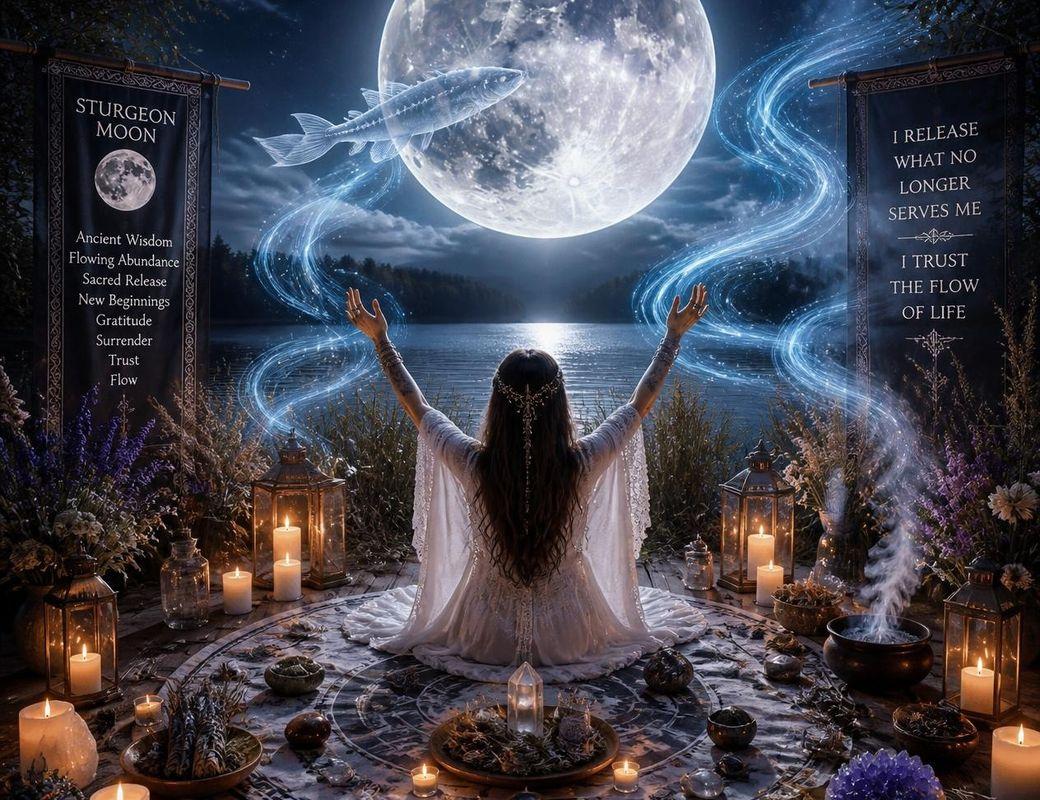
This full moon — the Sturgeon Moon, arriving on the tail end of a partial lunar eclipse — isn’t asking you to manifest. It’s asking you to release. And those are not the same practice, even though the wellness world loves to collapse them into one love and light language.
Why This Full Moon Feels Different
Eclipses don’t just illuminate. They rupture. They take whatever you’ve been quietly avoiding — the relationship you’ve outgrown, the identity you’ve outperformed, the grief you’ve been managing instead of moving through — and they crack it open in full view, whether you consented to the timing or not.
By the time the full moon arrives after an eclipse, you’re not starting fresh. You’re standing in wreckage you didn’t choose, trying to figure out what’s actually yours to carry forward and what was only ever debris.
This is where most people get it wrong. They rush to “set an intention” because that’s what the moon calendar told them to do. But you cannot build on ground you haven’t cleared. Release has to come first, or everything you plant afterward just grows sideways.
The Body Keeps the Eclipse Even After the Sky Clears
Here’s something I’ve learned across eleven years of holding space for people through transformation: the body doesn’t process rupture the way the mind wants it to. Your brain moves on. Your nervous system does not.
If you’ve felt foggy, exhausted, weirdly emotional, or like your skin doesn’t fit right this week — that’s not you being dramatic. That’s your Four Bodied Approach™ out of alignment: your physical body running on adrenaline fumes, your mental body trying to narrate a story that hasn’t finished happening yet, your emotional body holding grief with nowhere to put it, and your energetic body wide open from the eclipse’s rupture with no membrane back up yet.
You cannot think your way through this phase. You have to move through it, body first.
A Release Ritual for This Moon
You don’t need an altar full of crystals to do this correctly. You need honesty and about twenty uninterrupted minutes.
1. Open. Sit somewhere you won’t be interrupted. Place both feet flat on the ground. Ask yourself, out loud if you can: What did this eclipse crack open that I’ve been keeping sealed? Don’t answer yet. Just let the question sit in your chest.
2. Witness. Write down everything that surfaces — the relationship, the job, the version of yourself you’ve been performing, the grief you scheduled around instead of feeling. Do not edit it. Do not make it sound spiritual. Write it the way you’d say it to someone you trust completely.
3. Release. Choose one item from that list — the loudest one — and write a single sentence of release. Not a resolution. Not a plan. Just permission. “I release the version of myself who stayed small to keep the peace.” Burn it, bury it, tear it, or simply close the notebook. The moon doesn’t need a performance. It needs your consent to let go.
4. Return. Place a hand on your chest or your stomach — wherever you feel the most tension right now — and stay there until your breath slows on its own. This is the step people skip, and it’s the one that actually matters. Return means coming back into your body as the person who just released something, not the person who was still carrying it.
What Comes After
The waning moon that follows this full moon isn’t dead space. It’s integration. Resist the urge to immediately fill the space you just cleared with a new five-year plan. Let it stay empty for a few days. Emptiness is not the same as lack — sometimes it’s just room.
The eclipse already told you the truth. This full moon is simply asking whether you’re willing to stop arguing with it.
Responses
No responses yet — start the conversation.