YULE
WHAT IS BORN AT THE DARKEST POINT OF THE YEAR
Article · 5 min read · ·
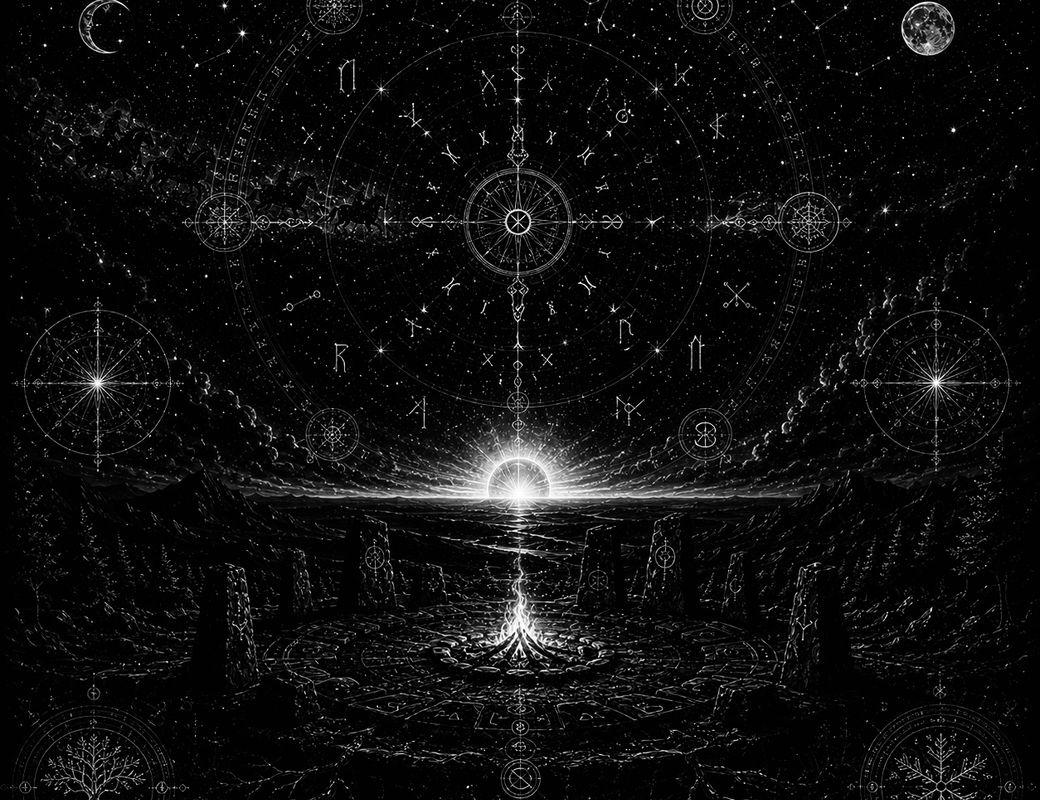
June 21, 2026 | Winter Solstice | Southern Hemisphere
The Longest Night of the Year
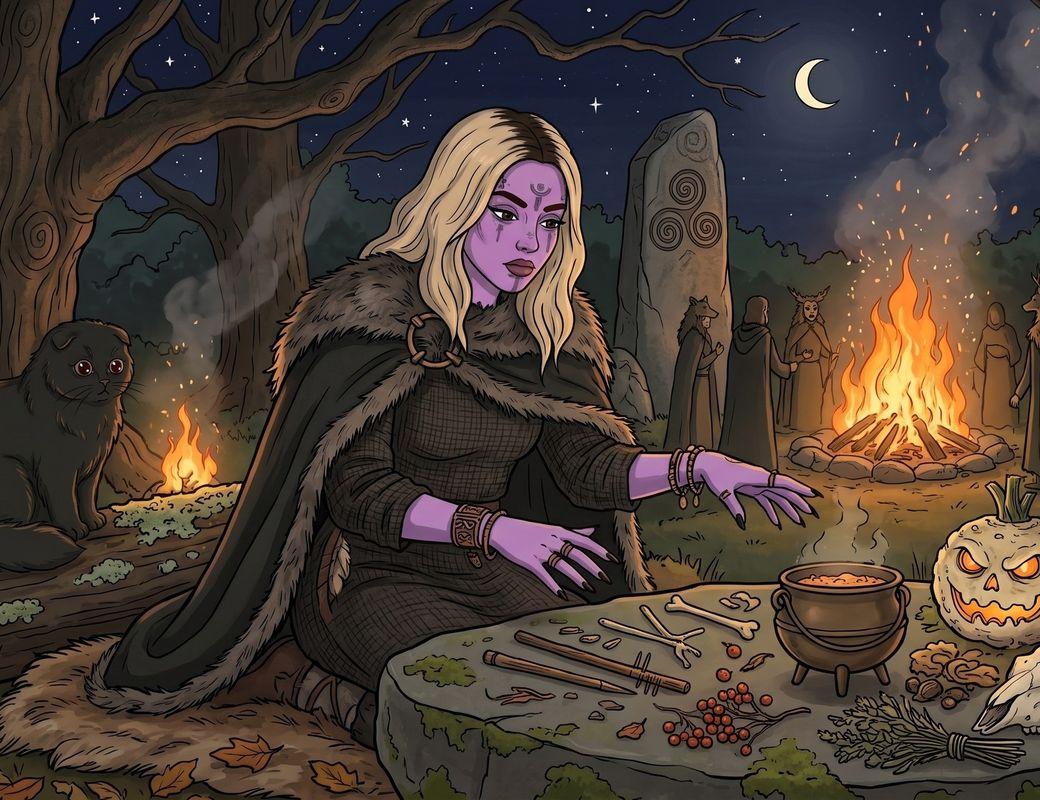
The word jól, from which Yule descends, belonged to the Germanic tribes of northern Europe. Before it became a festival, it was simply what they called deep winter. The time when the sun disappeared early, nights stretched until they seemed endless, and the cold wasn't a metaphor for anything. It was the real cold on which survival depended.
What these tribes recognized at this darkest point of the year was precise: the sun stopped retreating. From the solstice onward, however slight the difference, the days began to lengthen. The longest night wasn't the end. It was the threshold before the return.
Yule is the celebration of that threshold.
What Happens Astronomically
In the southern hemisphere, June 21 is the shortest day of the year. The sun rises late, traces a low arc across the sky, and sets early. The night that follows is the longest of the entire cycle.
After it, without anything visibly changing in the first few days, something reverses. The days begin to lengthen. Imperceptibly at first, by seconds, until weeks later the difference is already measurable.
The tradition of Yule doesn't celebrate winter's arrival. It celebrates the fact that winter has passed its maximum point. The darkness reached its limit, and what comes now, even though it may take months to be felt as warmth, has already begun moving toward the light.
The Wild Hunt and the Side of Yule Most People Ignore
The Norse tradition of Yule wasn't just about cozy fires and family gatherings. It had a side that syncretism with Christian Christmas progressively erased.
During the twelve nights of Yule, the Wild Hunt rode across the sky. Odin, mounted on Sleipnir, led a procession of the dead and spirits through the night. This was the season when the veil between the living and the dead grows thin in its second great opening of the year, the first being Samhain.
Doors were marked with symbols of protection. Food was left outside as offering to those who passed. The fire inside the house served a dual purpose: to warm the living and signal to the dead that conscious presence dwelt here, not just bodies sleeping without protection.
Yule carries this memory. It's not just the festival of returning light. It's also the acknowledgment that maximum darkness has its own inhabitants, and that crossing this threshold demands respect for what moves in the dark.
The Yule Log and the Chain It Maintains
The Yule Log wasn't decoration. It was a ritual of continuity.
Tradition required that a piece of the previous year's log be kept for the following twelve months. On the night of the solstice, this piece was used to kindle the new fire. The Yule fire of 2026 is thus born from the flame of Yule 2025. And so on for years, for generations, maintaining a chain of fire that crosses time.
What this preserves is an idea ancient traditions took seriously: nothing begins from nothing. The new carries the old within it. The returning light doesn't erase what the darkness was. It is born from it.
This chain was broken for most families centuries ago. Modern Yule, practiced with awareness, is the act of reconnecting with it. Not necessarily through literal fire, but through the principle it represents: what you're kindling now has roots in something that came before you.
The Esoteric Meaning: Sol Invictus and What the Romans Understood
In 274 CE, Roman Emperor Aurelian instituted the festival of Sol Invictus, the Unconquered Sun, to be celebrated on December 25, four days after the winter solstice in the northern hemisphere. The date wasn't chosen randomly: it was when the lengthening of days became perceptible to the naked eye.
The sun that cannot be conquered. That reaches its point of least strength, remains there for days without apparent change, and then begins to grow again.
Medieval alchemy had an internal parallel for this process: the albedo, the whitening, which followed the nigredo, the darkest phase of the work. The nigredo wasn't the failure of transmutation. It was the condition that made albedo possible. The material had to descend to its darkest point before purification could begin.
Yule is the solstice of the soul: the moment when what was descending finally stops. What comes after has already begun to rise.
The Twelve Nights
The celebration of Yule traditionally extended for twelve nights, from the solstice to early July in the southern hemisphere. Each night had correspondence with one of the months of the year ahead.
This practice isn't superstition. It's a method of attention. Using the twelve days after the darkest point of the year to observe dreams, omens, internal states, is to use the particular quality of this transitional period as a mirror of what lies ahead.
What appears in the twelve nights after June 21—in dreams, in unexpected conversations, in themes that insist on returning—has a relationship with what the coming cycle will work through.
How to Work with Yule
Light fire with intention. A candle, a hearth, any flame on this night. The Yule fire consciously marks that you recognize the turning point. That the dark has been honored and the light that will begin to return is awaited.
Observe the twelve nights. From the 21st to early July, pay attention to dreams and themes that arise. Without forcing interpretation. Just noticing.
Honor what winter was. Yule doesn't jump straight to celebrating the light. First it acknowledges what the darkness was. What did this winter take? What did it reveal? What became clearer precisely because there was less light?
Keep something for next year. The tradition of the log has a simple principle: preserve continuity. What do you want today's flame to kindle at next Yule? This question is more concrete than it seems.
Reflection
Yule doesn't celebrate that winter is over. It isn't over. It celebrates that winter has passed beyond its furthest point. That darkness reached its limit.
There's something fundamentally different between being in the middle of winter and being on the other side of the solstice. The cold may continue for months. But the direction has changed. And direction, in traditions that took the calendar seriously, mattered more than the temperature of the moment.
A noite mais longa não é o fim do fogo. É o motivo pelo qual ele foi aceso.