When the Veil Burns Away
The Ancient Fires, Dark Folklore, and Modern Rebirth of Walpurgis Night
Article · 8 min read · ·
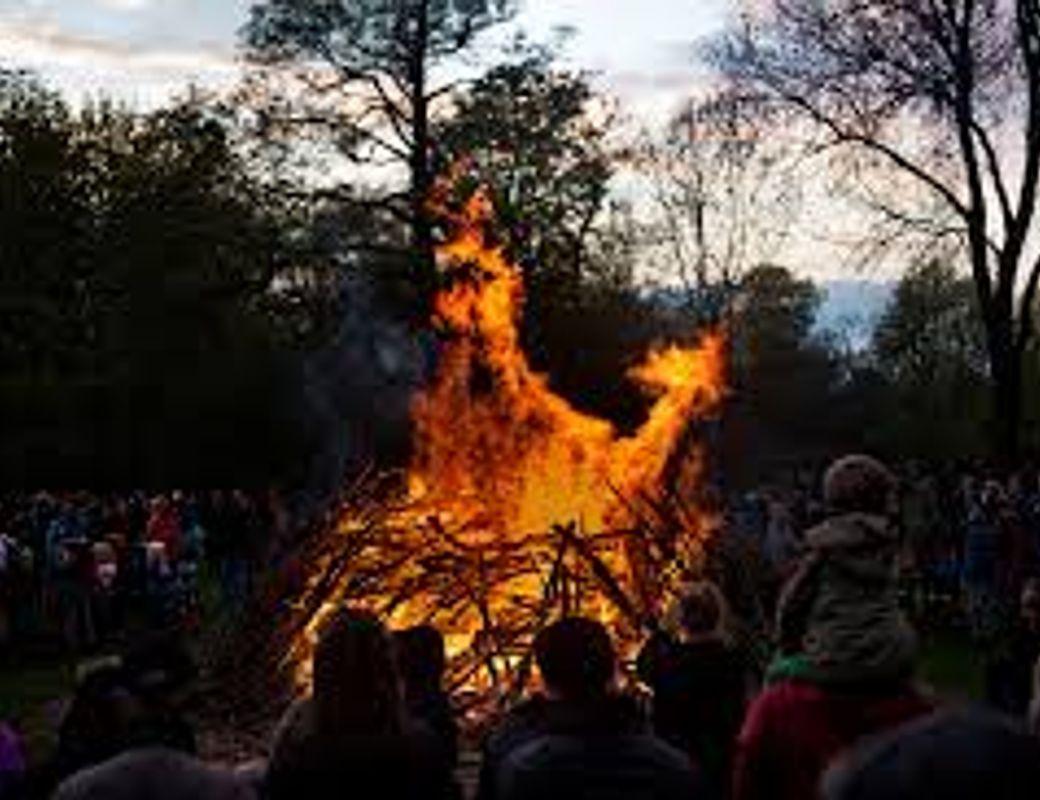
Every year, as April tips into May and the last cold fingers of winter begin to loosen their grip on the Northern Hemisphere, an ancient restlessness stirs across parts of Europe. Bonfires are lit on hilltops. Costumes of witches and demons fill the streets. The smell of woodsmoke drifts through medieval town squares and modern city parks alike. This is Walpurgis Night, Walpurgisnacht in German, Valborg in Sweden, a festival that is equal parts pagan revel, Christian adaptation, and enduring cultural phenomenon. To understand it is to peer through a window into the layered, often contradictory soul of European tradition.
Roots in the Old World: Celtic and Germanic Origins
The roots of Walpurgis Night reach back well before the Christian era, tangled deep in the seasonal beliefs of Celtic and Germanic peoples. The festival falls on April 30th, the midpoint between the spring equinox and the summer solstice, a date that carried enormous cosmological weight for agrarian societies whose survival depended on reading the rhythms of the natural world.
For the Celts, this liminal period was related to Beltane, a fire festival that marked the beginning of the pastoral summer season. Livestock were driven between two great bonfires to purify and protect them before being led out to summer pastures. The fire was seen as a protective force, capable of warding off malevolent spirits that were believed to roam freely during these transitional moments when the boundary between the world of the living and the world of the otherworldly grew thin.
Germanic peoples held parallel beliefs. The period around May 1st was one of two great “between-times” in the year, the other being Samhain (the forerunner of Halloween) at the opposite end of the calendar. During both windows, protective rituals were essential. Herbs were gathered, charms were laid at doorways, and noise was made to frighten away spirits. The bonfire was central, its light represented warmth and community, its smoke a cleansing agent, its embers carried home to rekindle domestic hearths with sacred fire.
The Christian Overlay: Saint Walpurga and the Church’s Compromise
The name “Walpurgis” belongs not to any pagan deity, but to a real woman, Saint Walpurga, an English-born nun who traveled to Germany in the 8th century as a Christian missionary. Born around 710 AD in Devon, she was a woman of considerable education and influence, eventually becoming abbess of the double monastery at Heidenheim in what is now Bavaria. She died on February 25th, 779 AD, and was canonized on May 1st, 870 AD, the date her relics were moved to Eichstätt, where they are venerated to this day.
The coincidence of her canonization with the existing pagan spring festival was almost certainly not accidental. The early medieval Church was strategic in its approach to the conversion of Germanic peoples, frequently placing Christian commemorations atop existing sacred dates in order to ease the transition and redirect spiritual energy toward new, sanctioned forms. The eve of May 1st, already charged with supernatural meaning in folk tradition, became the Eve of Saint Walpurga’s Day, a night associated with her protection against magic, disease, and witchcraft.
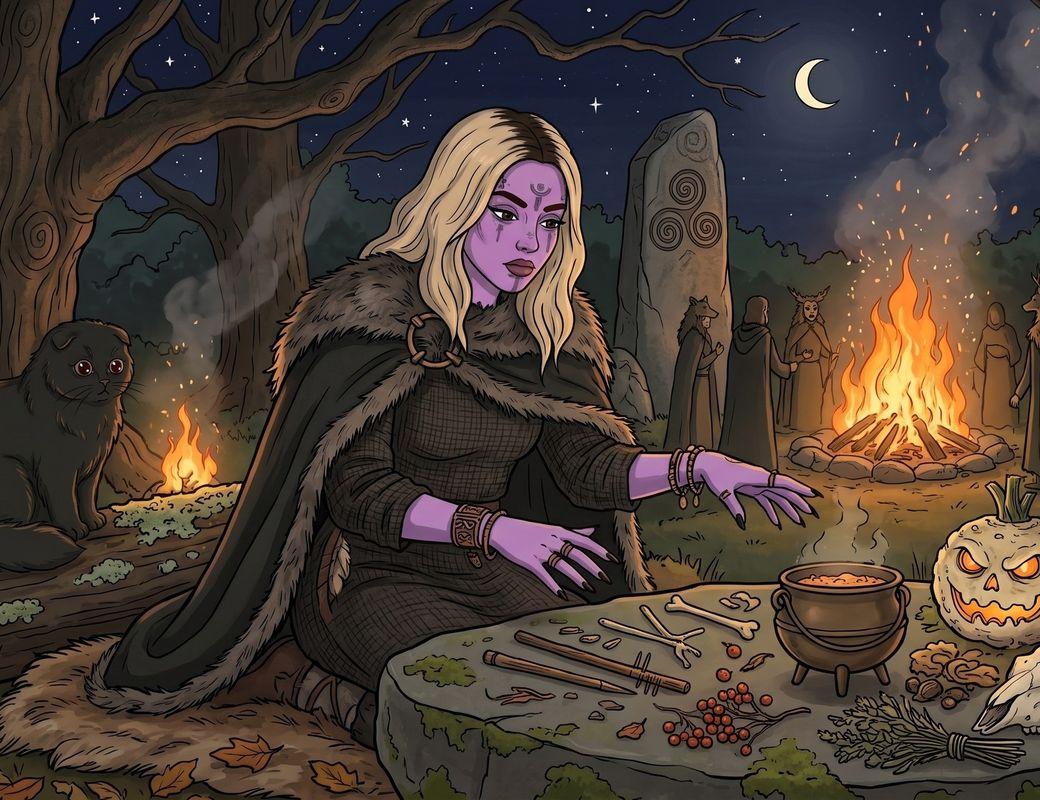
Ironically, the very night the Church designated to honor a protector against witchcraft became, in popular imagination, the night when witches were most active. Medieval folklore across Germany, Scandinavia, and Central Europe held that on Walpurgis Night, witches flew to a great mountaintop sabbath, most famously the Brocken, the highest peak in the Harz Mountains, to feast, dance, and commune with the devil before winter’s power was broken entirely. The bonfires that had long been protective tools were now reinterpreted as defenses against this specific, terrifying supernatural gathering.
The Witch’s Sabbath: Folklore, Fear, and the Brocken
The mythology of the witches’ sabbath on Walpurgis Night is among the most vivid and enduring in European folklore. The image of crones astride broomsticks, streaming through the night sky toward the Brocken, was so potent that it seeped into high culture and never quite left. Johann Wolfgang von Goethe immortalized it in Faust, in which Mephistopheles leads Faust to the Brocken for the Walpurgis Night revelry, a chaotic, hallucinatory sequence of dancing, temptation, and supernatural excess that Goethe clearly saw as a mirror of human appetites unleashed.
The association between Walpurgis Night and witchcraft was not merely literary fantasy. During the height of the European witch trials in the 16th and 17th centuries, the date was cited in actual legal proceedings as a night of particular demonic danger. Confessions extracted under torture frequently referenced Walpurgis Night gatherings. The social hysteria around the festival reflected and amplified the broader persecution of women accused of witchcraft, a dark chapter in which folklore and institutional fear combined with lethal effect.
Yet even as the authorities feared it, ordinary people continued to celebrate. Across German-speaking lands and Scandinavia, communities gathered around fires, made noise with pots and pans, left offerings of food, and engaged in rituals meant to protect livestock, homes, and families. The witch imagery was real in the cultural imagination, but it coexisted with a more fundamental, earthy celebration of spring’s arrival that no amount of ecclesiastical disapproval could suppress.
Across Borders: Regional Variations Through the Centuries
Though Walpurgis Night is most associated with Germany and Scandinavia, variants of the festival spread across much of northern and central Europe, each absorbing local color and custom. In Sweden, Valborg evolved into a celebration of students and the advent of spring, with torch-lit processions, choral singing, and the burning of effigies representing winter. In Finland, Vappu became one of the most important popular celebrations of the year, a raucous street festival combining elements of the old spring ritual with the modern carnival spirit, particularly beloved by university students who don their white graduation caps.
In the Czech Republic, the burning of a witch effigy (called pálení čarodějnic, or “burning of the witches”) remains a widespread popular tradition on April 30th, with communities gathering around bonfires to symbolically drive out evil and cold. In the Netherlands, the holiday survives in certain regional traditions. Even in parts of England and Ireland, the Beltane fire traditions maintained echoes that mirrored continental Walpurgis customs, though they were rarely called by that name.
The Modern Revival: Paganism, Pop Culture, and the Search for Ritual
In the 20th and 21st centuries, Walpurgis Night has undergone a striking cultural renaissance that goes well beyond the continuation of folk customs. The modern pagan and Wiccan movements, which began gaining momentum in the mid-20th century, particularly after the publication of Gerald Gardner’s foundational works on Wicca in the 1950s, embraced Beltane and its continental counterpart as key points in the “Wheel of the Year,” the eight-holiday calendar that structures contemporary pagan religious life.
For modern Wiccans and pagans, Walpurgis Night (often celebrated as Beltane) is a fertility festival, a time to honor the union of the divine feminine and divine masculine in nature, to celebrate the exuberance of life returning to the world. Rituals may involve maypoles, flower crowns, fire-jumping, and the honoring of the Green Man and the May Queen, figures drawn from a broad synthesis of European folk traditions. It is a joyful, sensual celebration, stripped of the witch-panic associations and returned to something closer in spirit to its pre-Christian roots.
Popular culture has also kept Walpurgis Night alive as a potent aesthetic touchstone. It appears in horror fiction and film, in gothic and metal music, German bands in particular have long been drawn to the Walpurgisnacht imagery, and in video games and fantasy literature that draw on European mythological tradition. The night has become a shorthand for the uncanny, the liminal, the moment when the ordinary world briefly reveals its stranger, more dangerous underside. Bands from Black Sabbath to symphonic metal acts across Europe have invoked Walpurgis Night as a setting for exploring themes of transgression, magic, and the breakdown of conventional order.
Meanwhile, on the streets of Germany and Scandinavia, the festival endures with remarkable vitality. In Berlin, Walpurgis Night has become associated with the Myfest street celebration in the Kreuzberg neighborhood, though the date also carries memories of political unrest, with past May Day demonstrations reshaping the night’s character in the modern city. In smaller German towns, the traditional bonfire and costumed processions continue as they have for generations. In Uppsala, Sweden, the Valborg celebrations draw tens of thousands, with students floating down the river on makeshift rafts in a custom that somehow fuses ancient spring rites with undergraduate bravado.
A Fire That Will Not Go Out
What makes Walpurgis Night so persistently compelling is the sheer density of meaning it has accumulated over millennia. It is, at once, a prehistoric agrarian rite, a Christian saint’s day, a vehicle for medieval fears about witchcraft and disorder, a folk tradition that outlasted every attempt to suppress or redirect it, a sacred observance for modern pagans, and a boisterous popular festival that students, city-dwellers, and revelers embrace with little thought for its theological dimensions.
Perhaps most fundamentally, Walpurgis Night speaks to something that no institutional calendar has ever fully managed to domesticate, the human need to mark the great turning points of the year with fire, with community, with noise, and with a flicker of controlled wildness. When those bonfires are lit each April 30th, whether on a German hilltop, a Swedish riverbank, a Czech village green, or in the backyard of a modern pagan circle, they carry forward an unbroken thread of human experience stretching back to a time before memory, when the return of spring was not a given, but a miracle worth celebrating with everything you had.
The witches may or may not be flying tonight. But the fire will be lit regardless.
Responses (2)